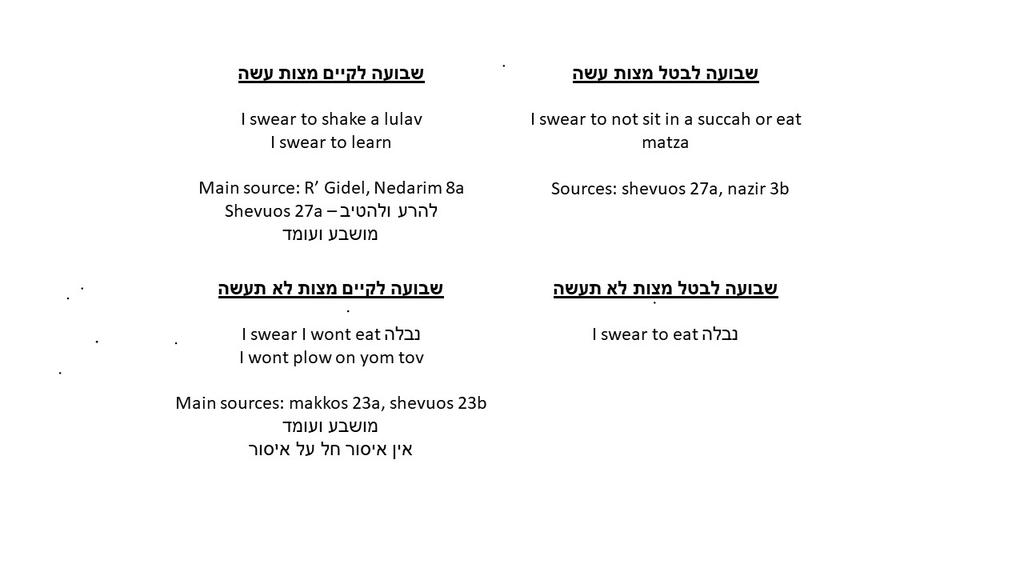
Save ":שבועה לא טוב

מושבע ועומד מהר סיני?
"
:שבועה לא טוב מושבע ועומד מהר סיני?
1 - I solemnly swear to tell the truth...
השבעת העדים נשאלתי: א. מדוע לא נהגו בתי דינין שבישראל להשביע את העדים על אמתת עדותם? ב. אם ראוי לתקן השבעת העדים, כמו שנהוג בכל בתי המשפט של הערכאות? ג. אם תובע מי שכנגדו להשביע את העד אם שומעין לו?
- In what circumstance do witnesses swear?
- What is the obligation for witnesses to tell the truth?
- What might be the problem with witnesses swearing outside of this rubric?

(יב) שְׁבוּעַת הָעֵדוּת כֵּיצַד. הָעֵדִים שֶׁיָּדְעוּ עֵדוּת מָמוֹן וּתְבָעָם בַּעַל הָעֵדוּת לְהָעִיד לוֹ וְכָפְרוּ בְּעֵדוּתָן וְלֹא הֵעִידוּ וְנִשְׁבְּעוּ שֶׁאֵינָן יוֹדְעִין לוֹ עֵדוּת זוֹ הִיא נִקְרֵאת שְׁבוּעַת הָעֵדוּת. וְחַיָּבִין עַל שְׁבוּעָה זוֹ קָרְבָּן עוֹלֶה וְיוֹרֵד בֵּין שֶׁהָיוּ מְזִידִין בֵּין שֶׁהָיוּ שׁוֹגְגִים שֶׁנֶּאֱמַר (ויקרא ה א) "נֶפֶשׁ כִּי תֶחֱטָא וְשָׁמְעָה קוֹל אָלָה וְהוּא עֵד" וְלֹא נֶאֱמַר בָּהּ וְנֶעְלַם, לְחַיֵּב עַל הַזָּדוֹן כִּשְׁגָגָה:

(12) What is the oath of testimony? If witnesses in a case of property are summoned by the plaintiff to testify for him and they deny their knowledge of evidence and refuse to testify, swearing that they know no testimony concerning him, it is what is called the oath of testimony.— —

וְנֶ֣פֶשׁ כִּֽי־תֶחֱטָ֗א וְשָֽׁמְעָה֙ ק֣וֹל אָלָ֔ה וְה֣וּא עֵ֔ד א֥וֹ רָאָ֖ה א֣וֹ יָדָ֑ע אִם־ל֥וֹא יַגִּ֖יד וְנָשָׂ֥א עֲוֺנֽוֹ׃

If a person incurs guilt—When one has heard a public imprecation but (although able to testify as having either seen or learned of the matter) has not given information and thus is subject to punishment;

(יג) לֹֽא־תַעֲנֶ֥ה בְרֵעֲךָ֖ עֵ֥ד שָֽׁקֶר׃ {ס}

(13) You shall not murder. You shall not commit adultery. You shall not steal. You shall not bear false witness against your neighbor.

מצות עדות - להגיד העדות בפני (בר''ד לפני) הדינים. בכל מה שנדעהו, בין שיתחיב בעדות מיתה או ממון המועד עליו או שיהיה הצלתו בממונו או בנפשו, שנאמר (ויקרא ה א) והוא עד או ראה או ידע אם לא יגיד ונשא עונו. בכל ענין, חובה (רמב''ם פ''א עדות ה''א) עלינו להגיד העדות לפני הבית דין (ב''ק נה ב).... והעובר עליה ולא העיד בדיני ממונות כשתבעוהו לעדות בעל דבר או בית דין, או בדיני נפשות ומכות או ובאסורין של תורה מעצמו, בטל עשה וענשו גדול מאד...

The commandment of testimony: To say the testimony in front of the judges, in all that we know of it - whether with the testimony, [the accused] will become liable for death or money that is earmarked for him, or whether it will be his salvation for his money or for his life - as it is stated (Leviticus 5:1), "and he is a witness or saw or knew, if he does not say, he will carry his iniquity." In every matter, it is an obligation (Mishneh Torah, Laws of Testimony 1:1) upon us to say the testimony in front of the court (Bava Kamma 55b). However there is a difference between monetary laws, and capital and other laws in the Torah. As with monetary laws, a man is not obligated to testify about them on his own, unless a party in the case or the court solicits him. But with capital laws and other prohibitions in the Torah - for example, he saw someone that transgressed a prohibition; and so [too,] with capital testimony, that he saw someone kill his fellow; or in the testimony of blows, that one hit his fellow - with all of this, a man is obligated to come on his own and say the testimony in front of a court, so as to destroy the evil and to separate a man from a prohibition. It is from the roots of the commandment [that it is] because there is great benefit to people with this commandment. It is not necessary to write at length about it, as the things are known to all who see the sun. The laws of the commandment: For example, the differences that the Sages, may their memory be blessed, revealed to us that there are in this commandment between one man and another, such that not every man is obligated to come in front of the court to testify to them: As if the witness was a great sage and the court less than he, he may - if he wants - withhold from testifying in front of them; as the positive commandment of honor of the Torah pushes off the positive commandment of testimony (as is elucidated in Shevuot 36b). And a high priest is also not obligated to testify except only for testimony [that pertains] to a king (Mishneh Torah, Laws of Testimony 1:3). And kings of Israel do not testify about others, and others [do not testify] about them, because of a case that happened, as it appears in Sanhedrin 19a in the chapter [entitled] Kohen Gadol. But kings of the House of David testify and [others] testify about them and judge them. And we do not withhold from accepting the testimony on account of love or hate, as 'the remnant of Israel will not do injustice' in their testimony (Sanhedrin 27b). But regarding judgement, it is not so; as a friend and an enemy may not judge, because the enemy cannot see a merit and the friend cannot see a liability. And Rambam, may his memory be blessed, wrote (Mishneh Torah, Laws of Testimony 3:4) that the main testimony of the Torah is from the mouth of witnesses and not from the mouth of their writing, as it is stated (Deuteronomy 17:6), "By the mouth, etc."; except that because of the betterment of the world, such that people would find [those from whom] to borrow, the Sages ordained that we establish law with regard to money according to witnesses in a deed, the same as from their mouth. But Ramban, may his memory be blessed, (in the Sefer HaMitzvot at the end of the second root) challenged him greatly about this in the Sefer HaMitzvot. And if I would come to write the whole matter, it would be lengthy. But the essence of the thing is that Ramban, may his memory be blessed, holds that the testimony of a deed is from Torah writ, as it is written (Jeremiah 32:44), "write in the book, and seal." And from the laws of the commandment is also that which they, may their memory be blessed, said (Ketuvot 18b) that any man who said (testified) his testimony in front of a court and they investigated him according to their will, may not go back and contradict anything from all that he said in front of them, and say that he erred or was inadvertent or that he remembered afterwards that the matter was not like he testified. And even if he gave a reason for his words, we do not listen to him. And also testimony in a deed is like testimony that the court investigated according to their will, and [so] the witnesses may not recant on anything in the deed. And we judge [the case] according to the signatories about everything written in the deed - and that is when we are sure that those signatories are are the ones that signed the deed, not that a forger forged them. And this investigation we should do by way of men that recognized those signatures - that they are the writing of those people that are signed. And we need two witnesses that recognize the two signatures - each one of them that recognizes both of the witnesses. And so [too,] if two of the judges, themselves, recognize them, it is enough for us with that (Ketuvot 21b); or if the signatories, themselves, are in front of us and each one testifies about his signature, it is enough with that. But one cannot testify about his writing and the writing of his fellow (Ketuvot 20b). And so [too,] if the writing of their hand is [validated] from another place that is in front of us, we certify them from it. And it is explained in the Gemara (Ketuvot 20a) that we only certify a deed from two [other] deeds of two fields [through which] their owners ate [from] them openly without fear or trepidation about a claim from the [previous] owners; or from two marriage deeds (ketuvot) - and that is when they come from under the hand of another, not from under the hand of this one that wants validation [of the document], as we are concerned lest it is all a forgery. And so [too, we validate] from another deed that was challenged and [then] ratified by the court. And that which they, may their memory be blessed, also said (Ketuvot 28a) that with testimony about a signature, a relative is trusted to testify about the writing of his relative, that he recognizes it - and he combines with another to validate the deed. And with this testimony a man is trusted when he is an adult to testify and say, "When I was small, I saw the writing of my father - or my brother - and I recognize it now, that it is the one that I saw." And that which they said that ten creatures are disqualified for testimony from Torah writ, and like I wrote above in the commandment of "do not place your hand with an evildoer to be a witness" (Sefer HaChinukh 75). And so [too,] one who is not [involved] in Scripture, nor in Mishnah, nor in the way of the world (productive work) is disqualified by the words of [the Rabbis], as there is an assumption about him that he is an evildoer - and behold, it is written (Exodus 23:1), "do not place [...] an evildoer to be a witness." But if he has [involvement] in the way of the world and is involved in some commandments, we accept his testimony, even though he is an ignoramus. You will be found to say that any Torah scholar is assumed to be fit until he is disqualified and [any] ignoramus is assumed to be disqualified until his status is established with us for the good. And so [too,] the most debased men are disqualified [rabbinically], such as those that eat in the marketplace in front of everyone. And included in the debased (Sanhedrin 26b) are those that consume the charity of gentiles publicly. And the rest of its details are elucidated in Sanhedrin and in Shevuot (see Mishneh Torah, Laws of Testimony 1). And [it] is practiced in every place and at all times by males, but not by women - as women are not in the category of testimony due to the weakness of their minds. And one who transgresses it and does not testify - in monetary laws when he is solicited by a party in the case or [by] the court; and with capital laws, or blows or Torah prohibitions, on his own - has violated a positive commandment. And his punishment is very great, as civilizations are preserved with the power of testimony. Therefore, it it written about it (Leviticus 5:1), "if he does not say, he will carry his iniquity." And if the testimony that he suppressed was monetary testimony and the witness denied it and swore about it - meaning to say, he swore that he does not know testimony for him - he is obligated to bring a sacrifice that varies up and down; and under the conditions that are known about the matter, as it is explained in its place in Shevuot 30a. And it is one of three sacrifices that come whether [it is] inadvertent or whether [it is] volitional.

אדם רשאי להחרים בבית הכנסת על כל מי שיודע לו עדות שיבא ויעיד: הגה אבל לא יוכל להשביען אלא אם לא יגיד ונשא עונו (תשובת הרשב"א סי' תרנ"ח) מיהו אם נראה לב"ד צורך שעה להשביען שיגידו האמת הרשות בידן (ב"י בשם הרא"ש)

2. A person is permitted to place a cherem in the synagogue on anyone who knows testimony for him to come and testify. He cannot, however, force them to swear. If they don’t testify, they will carry their sin. Nevertheless, if the court sees a need to have them swear to say the truth, they may do so. See earlier 17:3 and later 71:7-8. There are those that say that when a cherem is placed, even relatives and the party himself must testify. There are those that disagree and this is the primary ruling. See Yoreh Deah Siman 232 regarding a king who commands the placement of a cherem for testimony.

כתב ה"ר שלמה בר"ש בר צמח בתשובה ח"ג סימן ה' מה שנוהגים בארצות אדום להשביע העדים גם בעיני יפלא ואם ראיתי רבים ונכבדים נוהגים כן וגם אני מעיד כמוך שהריב"ש היה נוהג כן במקום הזה וא"ל שעל עדות שנמסרה בברצלונ"א היה אומר הר"ן אני רוצה שבועה בעדות זו ובאמת שאין זו שבועת העדות שנזכר בתורה ובדברי חז"ל דהתם בנשבע שאינו יודע עדות והוא יודע ונראה שאע"פ שאינם חייבים לישבע כשנשבעים להעיד אמת אינה שבועה שאינה צריכה דהא קי"ל דנשבעים לקיים את המצוה כדאיתא בנדרים (דף ח.) ותמורה (ג:) ועוד אני מוסיף שיכולין להשביע אם רואים שהעם מקילין בעדות שקר ואינם מקילין בשבועה ..

שבועת ביטוי vs שבועת שוא - 2

... שְׁבוּעַת בִּטּוּי הוּא שֶׁנֶּאֱמַר בַּתּוֹרָה (ויקרא ה ד) "אוֹ נֶפֶשׁ כִּי תִשָּׁבַע לְבַטֵּא בִשְׂפָתַיִם לְהָרַע אוֹ לְהֵיטִיב". וְהִיא נֶחְלֶקֶת לְאַרְבָּעָה חֲלָקִים. שְׁתַּיִם לְהַבָּא. וּשְׁתַּיִם לְשֶׁעָבַר...כֵּיצַד לְשֶׁעָבַר. שֶׁאָכַלְתִּי. אוֹ שֶׁזָּרַקְתִּי אֶבֶן לַיָּם. אוֹ שֶׁדִּבֵּר פְּלוֹנִי עִם פְּלוֹנִי. אוֹ שֶׁלֹּא אָכַלְתִּי. אוֹ שֶׁלֹּא זָרַק אֶבֶן לַיָּם. אוֹ שֶׁלֹּא דִּבֵּר פְּלוֹנִי עִם פְּלוֹנִי. כֵּיצַד לְהַבָּא. שֶׁאֹכַל אוֹ שֶׁלֹּא אֹכַל. אוֹ שֶׁאֶזְרֹק אוֹ שֶׁלֹּא אֶזְרֹק אֶבֶן לַיָּם. הֲרֵי אֵלּוּ שְׁתַּיִם לְשֶׁעָבַר וּשְׁתַּיִם לְהַבָּא:

(ג) נִשְׁבַּע אַחַת מֵאַרְבַּע מַחֲלוֹקוֹת אֵלּוּ וְהֶחְלִיף... הֲרֵי זוֹ שְׁבוּעַת שֶׁקֶר. וְעַל זֶה וְכַיּוֹצֵא בּוֹ נֶאֱמַר (ויקרא יט יב) "לֹא תִשָּׁבְעוּ בִשְׁמִי לַשָּׁקֶר". וְאִם נִשְׁבַּע לַשֶּׁקֶר בְּמֵזִיד לוֹקֶה. בְּשׁוֹגֵג מֵבִיא קָרְבַּן עוֹלֶה וְיוֹרֵד שֶׁנֶּאֱמַר (ויקרא ה ד) "וְנֶעְלַם מִמֶּנּוּ וְהוּא יָדַע וְאָשֵׁם" וְגוֹ':

(1) There are four types of oaths: the futile oath, the false oath, the oath concerning a deposit, and the oath of testimony.— —

(2) The law concerning the futile oath applies only to things that are possible of performance whether in the future or in the past. Examples of the past: "I ate; I threw a stone into the sea; A conversed with B; I did not eat; I did not throw a stone into the sea; A did not converse with B." Examples of the future: "I will eat; I will not eat; I will throw; I will not throw a stone into the sea." Thus there are two kinds of a futile oath that include positive and negative assertions about things past, and two kinds that include positive and negative assertions about the future.

(3) If anyone took one of these four classes of oaths and did the reverse, if for example he swore not to eat and ate, or to eat and did not eat; or if he swore "I ate" when in fact he did not eat, or "I did not eat" when in fact he did eat, it is a false oath. Of this and similar oaths it is written: "You shall not swear falsely by my name" (Leviticus 19:12).— —

(ד) שְׁבוּעַת שָׁוְא נֶחְלֶקֶת לְאַרְבַּע מַחֲלוֹקוֹת...

(ו) שְׁלִישִׁית שֶׁנִּשְׁבַּע לְבַטֵּל אֶת הַמִּצְוָה. כֵּיצַד. כְּגוֹן שֶׁנִּשְׁבַּע שֶׁלֹּא יִתְעַטֵּף בְּצִיצִית. שֶׁלֹּא יִלְבַּשׁ תְּפִלִּין. וְשֶׁלֹּא יֵשֵׁב בַּסֻּכָּה בְּחַג הַסֻּכּוֹת. וְלֹא יֹאכַל מַצָּה בְּלֵילֵי הַפֶּסַח. אוֹ שֶׁיִּתְעַנֶּה בְּשַׁבָּתוֹת וּבְיָמִים טוֹבִים. וְכֵן כָּל כַּיּוֹצֵא בָּזֶה.... כָּל הַנִּשְׁבָּע שְׁבוּעַת שָׁוְא מֵאַרְבַּע שְׁבוּעוֹת אֵלּוּ עוֹבֵר בְּלֹא תַּעֲשֶׂה שֶׁנֶּאֱמַר (שמות כ ז) (דברים ה יא) "לֹא תִשָּׂא אֶת שֵׁם ה' אֱלֹקֶיךָ לַשָּׁוְא". וְאִם הָיָה מֵזִיד לוֹקֶה וְאִם הָיָה שׁוֹגֵג פָּטוּר מִכְּלוּם:

(4) The futile oath is [likewise] divisible into four classes. The first is a case where one has sworn that a known fact is not a fact. For example, one has sworn that a man is a woman, or that a woman is a man, or that a pillar of marble is made of gold, or anything of this sort.

(5) The second is a case where one has sworn about a known fact which is not doubted by anybody, as when he has sworn that heaven is heaven, or that a particular stone is a stone, or that the number two is two, or anything of this sort. Since this is not doubted by any normal person, there is no need to confirm it by oath.

(6) The third is a case where one has sworn to break a commandment, as when he has sworn not to enwrap himself in a fringed garment, or not to wear tefillin, or not to dwell in a sukkah during the festival of Sukkoth, or not to eat matzah on Passover nights, or to fast on Sabbaths and festivals, or something like this.

(7) The fourth is a case where one has sworn about something that is not within his power to do. He has, for example, sworn not to sleep for three days in succession, both night and day, or not to taste anything for seven consecutive days, or something like this. Anyone who swears a vain oath belonging to one of these four classes transgresses a prohibitive law, as it is written: "You shall not take the name of the Lord your God in vain" (Exodus 20:7). If he has committed the transgression deliberately he is to be lashed; if unintentionally, he is altogether exempt from liability.

א֣וֹ נֶ֡פֶשׁ כִּ֣י תִשָּׁבַע֩ לְבַטֵּ֨א בִשְׂפָתַ֜יִם לְהָרַ֣ע ׀ א֣וֹ לְהֵיטִ֗יב לְ֠כֹ֠ל אֲשֶׁ֨ר יְבַטֵּ֧א הָאָדָ֛ם בִּשְׁבֻעָ֖ה וְנֶעְלַ֣ם מִמֶּ֑נּוּ וְהוּא־יָדַ֥ע וְאָשֵׁ֖ם לְאַחַ֥ת מֵאֵֽלֶּה׃
Or when a person utters an oath to bad or good purpose (whatever a human being may utter in an oath) and, though having known about it, the fact has escaped notice, but later that person realizes guilt in any of these matters—
אִישׁ֩ כִּֽי־יִדֹּ֨ר נֶ֜דֶר לַֽה' אֽוֹ־הִשָּׁ֤בַע שְׁבֻעָה֙ לֶאְסֹ֤ר אִסָּר֙ עַל־נַפְשׁ֔וֹ לֹ֥א יַחֵ֖ל דְּבָר֑וֹ כְּכׇל־הַיֹּצֵ֥א מִפִּ֖יו יַעֲשֶֽׂה׃
If a householder makes a vow to ה' or takes an oath imposing an obligation on himself, he shall not break his pledge; he must carry out all that has crossed his lips.
מושבע ועומד מהר סיני - 3
How shevuot interact with mitzvot

נִשְׁבַּע לְבַטֵּל אֶת הַמִּצְוָה וְלֹא בִטֵּל, פָּטוּר. לְקַיֵּם וְלֹא קִיֵּם, פָּטוּר. שֶׁהָיָה בַדִּין, שֶׁיְּהֵא חַיָּב, כְּדִבְרֵי רַבִּי יְהוּדָה בֶּן בְּתֵירָא. אָמַר רַבִּי יְהוּדָה בֶּן בְּתֵירָא, מָה אִם הָרְשׁוּת שֶׁאֵינוֹ מֻשְׁבָּע עָלֶיהָ מֵהַר סִינַי, הֲרֵי הוּא חַיָּב עָלֶיהָ, מִצְוָה שֶׁהוּא מֻשְׁבָּע עָלֶיהָ מֵהַר סִינַי, אֵינוֹ דִין שֶׁיְּהֵא חַיָּב עָלֶיהָ. אָמְרוּ לוֹ, לֹא, אִם אָמַרְתָּ בִשְׁבוּעַת הָרְשׁוּת, שֶׁכֵּן עָשָׂה בָהּ לָאו כְּהֵן, תֹּאמַר בִּשְׁבוּעַת מִצְוָה שֶׁלֹּא עָשָׂה בָהּ לָאו כְּהֵן, שֶׁאִם נִשְׁבַּע לְבַטֵּל וְלֹא בִטֵּל, פָּטוּר:

If one takes an oath to refrain from performing a mitzva and he does not refrain, he is exempt from bringing an offering for an oath on an utterance. If he takes an oath to perform a mitzva and he does not perform it, he is also exempt, though it would have been fitting to claim that he is liable to bring the offering, in accordance with the statement of Rabbi Yehuda ben Beteira. The mishna explains: Rabbi Yehuda ben Beteira said: What? If, with regard to an oath concerning an optional matter, for which one is not under oath from Mount Sinai, he is liable for breaking it, then with regard to an oath about a mitzva, for which he is under oath from Mount Sinai, is it not logical that he would be liable for breaking it?The Rabbis said to him: No, if you said that one is liable for breaking an oath concerning an optional action, where the Torah rendered one liable for a negative oath not to perform it like for a positive oath to perform it, shall you also say one is liable with regard to breaking an oath concerning a mitzva, where the Torah did not render one liable for a negative oath like for a positive oath, since if one takes an oath to refrain from performing a mitzva and did not refrain, he is exempt.
ולא ביטל פטור
משבועת בטוי. אבל חייב מלקות מיד כשנשבע, משום שוא:
ולא קיים פטור
פטור לגמרי, דאפילו משום שוא לא לקי. דאף דלא חלה שבועה, אפ"ה מצוה לזרוזי נפשיה בשבועה [י"ד ר"ג ו']:

לקיים המצוה פטור שהיה בדין שהוא חייב דברי ר' יהודה בן בתירא. בקונטרס גורס כדברי ר' יהודה בן בתירא ולא גרס דברי משום דבמתני' קתני פטור ולר' יהודה בן בתירא הוי חייב כדקתני לקמן במתניתין ולריב"א היה נראה לקיים גירסת הספרים דמודה ר' יהודה בנשבע שלא לאכול נבילה ואכל דפטור דאין איסור חל על איסור ולעיל (שבועות ד' כג:) נמי פריך גבי נבילה מושבע ועומד מהר סיני הוא משמע דליכא מאן דפליג ודוקא בלקיים המצות כגון לישב בסוכה או לאכול מצה מחייב ר' יהודה וטעמא כדאמר בנדרים (ד' ח.) מנין שנשבעין לקיים המצות שנא' נשבעתי ואקיימה וה"נ מחייב עליה קרבן והכי איתא בירושל' דבשלא אוכל נבילה ואכל מודה רבי יהודה דפטור דאי תימא חייב ליתני לא אם אמרת בשבועת הרשות שכן עשה בה לאו כהן והן כלאו תאמר בשבועת מצוה שלא עשה בה לאו כהן והן כלאו פי' הן כלאו שאוכל נבילות כמו שלא אוכל נבילות אלא ודאי מודה רבי יהודה בן בתירא דפטור והשתא גרסי' דברי ר' יהודה שפיר דהכל מדר' יהודה בן בתירא וה"פ לקיים מצוה פטור דהיינו שלא אוכל נבילות ויש מקום שבדין חייב כגון לישב בסוכה דברי רבי יהודה בן בתירא:

גמ׳ ת"ר יכול נשבע לבטל את המצוה ולא ביטל יהא חייב ת"ל (ויקרא ה, ד) להרע או להיטיב מה הטבה רשות אף הרעה רשות אוציא נשבע לבטל את המצוה ולא ביטל שהוא פטור יכול נשבע לקיים את המצוה ולא קיים שיהא חייב ת"ל להרע או להיטיב מה הרעה רשות אף הטבה רשות אוציא נשבע לקיים את המצוה ולא קיים שהוא פטור

The Rabbis said to him: No, if you said that one is liable for breaking an oath concerning an optional action, where the Torah rendered one liable for a negative oath not to perform it like for a positive oath to perform it, shall you also say one is liable with regard to breaking an oath concerning a mitzva, where the Torah did not render one liable for a negative oath like for a positive oath, since if one takes an oath to refrain from performing a mitzva and did not refrain, he is exempt. GEMARA: The Sages taught in a baraita: One might have thought that when one takes an oath to refrain from performing a mitzva and he does not refrain, he would be liable to bring an offering for an oath on an utterance. To counter this, the verse states: “To do evil, or to do good” (Leviticus 5:4). Just as doing good is referring to an oath about an optional action, so too, doing evil is referring to an oath about an optional action. I will therefore exclude from liability one who takes an oath to refrain from performing a mitzva and does not refrain, so that he is exempt from bringing the offering. The baraita continues: One might have thought that when one takes an oath to perform a mitzva and does not perform it, that he would be liable. To counter this, the verse states: “To do evil, or to do good.” Just as doing evil is referring to an oath about an optional action, so too, doing good is referring to an oath about an optional action. I will therefore exclude from liability one who takes an oath to perform a mitzva and does not perform it, so that he is exempt from bringing the offering. One might have thought that when one takes an oath to harm himself and he does not harm himself, that he could be exempt from liability. The verse states: “To do evil, or to do good.” Just as doing good is referring to an oath about an optional action, so too, doing evil is referring to an oath about an optional action. I include as liable one who takes an oath to harm himself and does not harm himself, since it is his prerogative to harm himself or not. One might have thought that when one takes an oath to harm others and does not harm them, that he would be liable. To counter this, the verse states: “To do evil, or to do good.” Just as doing good is referring to an oath about an optional action, so too, doing evil is referring to an oath about an optional action. I will therefore exclude from liability one who takes an oath to harm others and he does not harm them, since it is not his prerogative to do so. From where is it derived that taking an oath that concerns doing good to others is included among the oaths for which one may be liable? The verse states: “Or to do good.” And what is harming others? An example is when one takes an oath saying: I will strike so-and-so and injure his brain.

וְאָמַר רַב גִּידֵּל אָמַר רַב מִנַּיִן שֶׁנִּשְׁבָּעִין לְקַיֵּים אֶת הַמִּצְוָה שֶׁנֶּאֱמַר נִשְׁבַּעְתִּי וָאֲקַיֵּמָה לִשְׁמֹר מִשְׁפְּטֵי צִדְקֶךָ וַהֲלֹא מוּשְׁבָּע וְעוֹמֵד מֵהַר סִינַי הוּא אֶלָּא הָא קָא מַשְׁמַע לַן דְּשָׁרֵי לֵיהּ לְאִינִישׁ לְזָרוֹזֵי נַפְשֵׁיהּ וְאָמַר רַב גִּידֵּל אָמַר רַב הָאוֹמֵר אַשְׁכִּים וְאֶשְׁנֶה פֶּרֶק זֶה אֶשְׁנֶה מַסֶּכְתָּא זוֹ נֶדֶר גָּדוֹל נָדַר לֵאלֹקֵי יִשְׂרָאֵל וַהֲלֹא מוּשְׁבָּע וְעוֹמֵד הוּא וְאֵין שְׁבוּעָה חָלָה עַל שְׁבוּעָה מַאי קָא מַשְׁמַע לַן דַּאֲפִילּוּ זָרוֹזֵי בְּעָלְמָא הַיְינוּ דְּרַב גִּידֵּל קַמַּיְיתָא הָא קָא מַשְׁמַע לַן כֵּיוָן דְּאִי בָּעֵי פָּטַר נַפְשֵׁיהּ בִּקְרִיַּת שְׁמַע שַׁחֲרִית וְעַרְבִית מִשּׁוּם הָכִי חָיֵיל שְׁבוּעָה עֲלֵיהּ

From where is it derived that one may take an oath to fulfill a mitzva? It is as it is stated: “I have sworn and I have confirmed it, to observe Your righteous ordinances” (Psalms 119:106). The Gemara asks: Is he not already under oath from when each Jew took an oath at Mount Sinai to fulfill all the mitzvot? An oath cannot take effect if one is already bound by a different oath. Rather, it teaches us this: It is permitted for a man to motivate himself to fulfill the mitzvot in this manner, although the oath is not technically valid. And Rav Giddel said that Rav said: One who says: I will rise early and study this chapter, or: I will study this tractate, has taken a great vow to the God of Israel. This clearly indicates that the vow takes effect. The Gemara asks: Is he not already under oath due to the general obligation to study Torah? And an oath does not take effect upon a preexisting oath. What is he teaching us? If one claims that Rav Giddel is teaching that such a vow may be made even merely to motivate oneself to study, this is the same as the first statement of Rav Giddel. The Gemara answers: It teaches us this: Since if he desires he can exempt himself from the obligation to study Torah with the recitation of Shema in the morning and evening, due to that reason the oath takes effect upon him and he is obligated to study the chapter or tractate that he specified.

....וְחֹמֶר בַּנְּדָרִים מִבַּשְּׁבוּעוֹת, כֵּיצַד, אָמַר, קוֹנָם סֻכָּה שֶׁאֲנִי עוֹשֶׂה, לוּלָב שֶׁאֲנִי נוֹטֵל, תְּפִלִּין שֶׁאֲנִי מֵנִיחַ, בַּנְּדָרִים אָסוּר, בַּשְּׁבוּעוֹת מֻתָּר, שֶׁאֵין נִשְׁבָּעִין לַעֲבֹר עַל הַמִּצְוֹת:

As taught earlier (10a), one of the primary methods of taking a vow is by invoking an offering. The mishna provides several examples where invoking the term korban is not effective. If one says: An offering [korban] that I will not eat of yours, or: This offering [ha korban] that I will eat of yours, or: That which I will not eat of yours is not an offering [la korban], the food is permitted. If one says: An oath that I will not eat of yours, or: This is an oath that I will eat of yours [she’okhal lekha], or: Not an oath that I will not eat of yours, the food is forbidden. This rule, that oaths can render actions, which do not have actual substance, either prohibited or obligatory, is a stringency of oaths vis-à-vis vows, which do not take effect with regard to matters that do not have actual substance. And there is also a stringency of vows vis-à-vis oaths. How so? With regard to one who said: Making a sukka is konam for me, or: Taking a lulav is konam for me, or: Donning phylacteries is konam for me, in the case of vows, the items are rendered forbidden, and he may not perform the mitzva until the vow is dissolved. However, in the case of similar oaths, these items are permitted, as one cannot take an oath to transgress the mitzvot.

חוֹמֶר בַּנְּדָרִים מִבַּשְּׁבוּעוֹת כֵּיצַד כּוּ׳ רַב כָּהֲנָא מַתְנֵי אָמַר רַב גִּידֵּל אָמַר רַב וְרַב טָבְיוֹמֵי מַתְנֵי אָמַר רַב גִּידֵּל אָמַר שְׁמוּאֵל מִנַּיִן שֶׁאֵין נִשְׁבָּעִין לַעֲבוֹר עַל הַמִּצְוֹת תַּלְמוּד לוֹמַר לֹא יַחֵל דְּבָרוֹ דְּבָרוֹ לֹא יַחֵל אֲבָל מֵיחֵל הוּא לְחֶפְצֵי שָׁמַיִם מַאי שְׁנָא נֶדֶר דִּכְתִיב אִישׁ כִּי יִדֹּר נֶדֶר לַה׳ לֹא יַחֵל דְּבָרוֹ שְׁבוּעָה נָמֵי הָא כְּתִיב אוֹ הִשָּׁבַע שִׁבְעָה לַה׳ לֹא יַחֵל דְּבָרוֹ אָמַר אַבָּיֵי הָא דְּאָמַר הֲנָאַת סוּכָּה עָלַי הָא דְּאָמַר שְׁבוּעָה שֶׁלֹּא אֶהֱנֶה מִן הַסּוּכָּה אָמַר רָבָא וְכִי מִצְוֹת לֵיהָנוֹת נִיתְּנוּ אֶלָּא אָמַר רָבָא הָא דְּאָמַר יְשִׁיבַת סוּכָּה עָלַי וְהָא דְּאָמַר שְׁבוּעָה שֶׁלֹּא אֵשֵׁב בַּסּוּכָּה וְשֶׁאֵין נִשְׁבָּעִין לַעֲבוֹר עַל הַמִּצְוֹת מֵהָכָא נָפְקָא לֵיהּ מֵהָתָם נָפְקָא לֵיהּ דְּתַנְיָא יָכוֹל נִשְׁבַּע לְבַטֵּל אֶת הַמִּצְוָה וְלֹא בִּיטֵּל יָכוֹל יְהֵא חַיָּיב לְמוּד לוֹמַר לְהָרַע אוֹ לְהֵיטִיב מָה הֲטָבָה רְשׁוּת אַף הֲרָעָה רְשׁוּת יָצָא נִשְׁבַּע לְבַטֵּל אֶת הַמִּצְוָה וְלֹא בִּיטֵּל שֶׁאֵין הָרְשׁוּת בְּיָדוֹ חַד קְרָא לְמִיפְטְרֵיהּ מִקׇּרְבַּן שְׁבוּעָה וְחַד לְמִיפְטְרֵיהּ מִן לָאו דִּשְׁבוּעָה:

The Gemara answers: This is taught with regard to the latter clause of the other section. As opposed to a vow that is taken with regard to a matter that does not have actual substance, which takes effect only by rabbinic law, as articulated in the mishna (14b) and Gemara (15a), the subsequent mishna (15b) teaches that if someone says: An oath that I will not sleep, or: That I will not speak, or: That I will not walk, this activity is forbidden to him. It is concerning this contrast that the mishna says: This is a stringency of oaths vis-à-vis vows. § It is stated in the mishna that there is a stringency of vows vis-à-vis oaths. How so? Whereas a vow can override a mitzva, an oath cannot. Rav Kahana teaches that Rav Giddel said that Rav said, and Rav Tavyumei teaches the same statement with a different attribution, i.e., Rav Giddel said that Shmuel said: From where is it derived that one cannot take an oath to transgress the mitzvot? The verse states: “He shall not profane his word” (Numbers 30:3). It is inferred that his word, i.e., the prohibition he accepted upon himself, he shall not profane. However, he may profane it for the desires of Heaven. If he took an oath to act against the will of God, the oath does not take effect. The Gemara asks: What is different about a vow that enables it to override mitzvot? Granted, as it is written in the Torah: “When a man takes a vow to the Lord…he shall not profane his word” (Numbers 30:3), which indicates that even with regard to matters that pertain to the Lord, i.e., mitzvot, one shall not profane his word, as the vow takes effect. However, with regard to an oath it is also written in the same verse: “Or swears an oath” to God, “he shall not profane his word.” Abaye said: The distinction is not between oaths and vows per se, but rather between the phraseology in each case. How so? This case, in which the prohibition overrides the mitzva, is referring to one who said: The benefit derived from a sukka is hereby forbidden to me. Since the vow renders the sukka a forbidden object, it takes effect and overrides the mitzva, as one may not be fed what is forbidden to him, even if it is forbidden only to him. By contrast, that case, in which the prohibition does not take effect, is referring to one who said: I hereby take an oath that I will not derive benefit from the sukka. The oath does not take effect, as one is not entitled to take an oath to abstain from an act that he is obligated to perform. Rava said in objection to the explanation of Abaye: But were mitzvot given for the purpose of deriving benefit? The performance of mitzvot is not considered benefit. Why then would performance of the mitzva with the sukka be considered deriving benefit? Rather, Rava said a different explanation: This case is referring to one who said: Dwelling in a sukka is hereby prohibited to me, and that case is referring to one who said: I hereby take an oath that I will not dwell in a sukka. § The Gemara asks: And is the principle that one cannot take an oath to transgress the mitzvot derived from here, i.e., the above verse? It is derived from there, i.e., another verse, as it is taught in a baraita: One might have thought that if one takes an oath to nullify a mitzva and does not nullify it, one might have thought that he will be liable for violating an oath on a statement.

א"ל רבי זעירא לרבי מני וליחשוב נמי כגון דאמר שבועה שלא אחרוש ביום טוב התם לא קא חלה שבועה מושבע ועומד מהר סיני הוא א"ל כגון דאמר שבועה שלא אחרוש בין בחול בין ביו"ט דמגו דחלה עליה שבועה בחול חלה עליה נמי ביו"ט מידי דאיתיה בשאילה לא קתני

Rabbi Zeira said to Rabbi Mani: And let the tanna also enumerate a case where one says: On my oath I will not plow on the Festival, and then proceeds to violate his oath. Rabbi Mani said: There, the oath does not take effect, as he is already under oath from Mount Sinai not to plow on a Festival, and an oath does not take effect when another oath is already in effect. Rabbi Zeira said to him: The oath can take effect in a case where one says: On my oath I will not plow whether during the week or on a Festival, as in that case, since the oath takes effect in his regard during the week, it takes effect in his regard on a Festival as well. Rabbi Mani replied: The mishna did not include that prohibition because the tanna is not teaching a matter that is in the category of those matters subject to dissolution by means of posing a request to a Torah scholar. As oaths fall into that category, this case is not enumerated in the mishna.

שבועה שלא אוכל וכו': הא גופא קשיא אמרת שבועה שלא אוכל ואכל אוכלין שאין ראוין לאכילה ושתה משקין שאין ראוין לשתיה פטור והדר תני שבועה שלא אוכל ואכל נבילות וטריפות שקצים ורמשים חייב מאי שנא רישא דפטור ומאי שנא סיפא דחייב הא לא קשיא רישא בסתם וסיפא במפרש מפרש נמי גופיה תיקשי אמאי מושבע מהר סיני הוא רב ושמואל ורבי יוחנן דאמרי בכולל דברים המותרין עם דברים האסורין וריש לקיש אמר אי אתה מוצא אלא אי במפרש חצי שיעור ואליבא דרבנן אי בסתם אליבא דרבי עקיבא דאמר אדם אוסר עצמו בכל שהוא ...

Rava said: How can these cases be compared? There, in the case of an oath of a deposit, he is liable for the general oath and for the specific oath, since if a bailee takes an oath denying that he is in possession of a deposit and then takes another oath to the same effect, he is liable for taking two false oaths on a deposit. Here, with regard to an oath to prohibit oneself from eating, if it enters your mind that he is bound by a general oath, why would he be liable for the specific oaths? He is already under an oath due to the general oath, and an oath cannot take effect when the matter it prohibits is already forbidden by another oath. § The mishna teaches that if one said: On my oath I will not eat, and he ate foods that are inedible, he is exempt. If he said: On my oath I will not eat, and then he ate the meat of unslaughtered carcasses, he is liable. The Gemara asks: This mishna itself is difficult. You said that if one said: On my oath I will not eat, and he ate foods that are inedible, or drank liquids that are not potable, he is exempt. And then the mishna teaches that if one says: On my oath I will not eat, and then he ate the meat of unslaughtered carcasses or tereifot, repugnant creatures or creeping animals, he is liable. What is different about the first clause that he is exempt and what is different about the latter clause that he is liable? Non-kosher animals are also unfit to be eaten. The Gemara answers: This is not difficult. The first clause is where he took an oath not to eat without specifying what is included in it. Presumably, his oath did not include items that are not ordinarily eaten. And the latter clause is a case where he specifies what it is he will not eat, e.g., unslaughtered carcasses, and nevertheless eats them. The Gemara asks: You may also raise a difficulty with regard to the case where he specifies that he will not eat non-kosher items: Why? He is under oath from Mount Sinai, and an oath does not take effect to prohibit that which is already forbidden. Rav and Shmuel and Rabbi Yoḥanan all say that this is a case where he incorporates into the oath that he will not eat some permitted items, along with the statement concerning the forbidden items. Since the oath takes effect with regard to the permitted items, it extends also to the forbidden ones. And Reish Lakish says: You find that one is liable for eating non-kosher food as the result of an oath only if it is an oath where he specifies that it includes a half-measure, and in accordance with the opinion of the Rabbis that one is not liable for eating a half-measure unless it is specified in the oath. Since eating a half-measure is not prohibited by Torah law, the oath takes effect. Alternatively, you find that one is liable if he took the oath without specifying that the oath prohibits less than the usual measure, and in accordance with the opinion of Rabbi Akiva, who says that a person renders himself prohibited from eating any amount by taking an oath not to eat. The Gemara asks: Granted, it is understood why Rabbi Yoḥanan did not say like Reish Lakish, as he interprets the mishna so that it is in accordance with the opinion of everyone; but what is the reason that Reish Lakish does not say like the opinion of Rabbi Yoḥanan? The Gemara answers: Reish Lakish could say to you: When we say that a more inclusive prohibition, which adds additional aspects to the prohibition for the same individual, can take effect where there already is a prohibition in place, it is with regard to a prohibition that occurs on its own, like the prohibition against eating on Yom Kippur, which is more inclusive than the prohibition against eating non-kosher food and therefore takes effect. But with regard to a prohibition that occurs by the act of a person himself, i.e., an oath or a vow, we do not say that because it is more inclusive it can take effect also with regard to items that are already forbidden by Torah law. The Gemara asks: Granted, according to Reish Lakish, who understands the mishna to be dealing with the case of one who took an oath about less than a full measure, it is due to this reason that Rabbi Shimon deems exempt one who takes an oath prohibiting himself from eating non-kosher food, as it is taught in a baraita: Rabbi Shimon says: Any amount is sufficient to render one liable to receive lashes, and the Sages stated the measure of an olive-bulk to determine only liability to bring an offering. According to Reish Lakish, Rabbi Shimon holds that one is already under oath from Mount Sinai even with regard to less than a full measure, and for that reason the oath does not take effect. But according to Rabbi Yoḥanan, who understands the mishna to be referring to an oath that includes erstwhile permitted items, what is the reason that Rabbi Shimon deems one exempt from bringing an offering for breaking his oath not to eat non-kosher food? The Gemara answers: Isn’t the reason that the first tanna holds that the individual is liable for violating his oath only due to the fact that the oath generates a more inclusive prohibition? In this matter Rabbi Shimon conforms to his standard line of reasoning in that he does not hold that a more inclusive prohibition takes effect where a preexisting prohibition is in place. This is in accordance with that which is taught in a baraita: Rabbi Shimon says: One who eats non-kosher meat on Yom Kippur is exempt from bringing an offering for eating on Yom Kippur, despite the fact that the prohibition against eating on Yom Kippur is a more inclusive prohibition than that of eating non-kosher meat, as on that day one may not eat anything. From the verse: “Or if any one take an oath clearly with his lips to do evil, or to do good” (Leviticus 5:4), the Sages derived that one is liable to bring an offering for an oath on an utterance only when the oath is such that it could be inverted from the positive to the negative or vice versa. For example, one is liable for violating an oath to eat because one can also take an oath not to eat. The Gemara asks: Granted, according to the opinion of Reish Lakish, you find a case where the oath can be negative or positive. Therefore, one is liable according to the Rabbis when he takes an oath that he will eat any amount, since he could also take an oath that he will not eat any amount. But according to the opinion of Rabbi Yoḥanan, granted, that you can find a case of a negative oath, as the oath not to eat non-kosher animals takes effect when it includes other erstwhile permitted items. But how can you find a positive version of this oath? An oath to eat non-kosher animals cannot take effect, as eating non-kosher animals is prohibited by Torah law. Rather, do not distinguish between the former and the latter clauses of the mishna based on whether he specifies what he is eating. In both cases he takes an oath not to eat, without specifying. In the case where he eats something inedible, he is exempt, in accordance with that which Rava says, as Rava says that if one said: On my oath I will not eat, and he ate dirt, he is exempt, since eating an inedible substance is not considered to be eating. Eating non-kosher meat is considered to be eating; for that reason, the latter clause of the mishna states that one is liable for doing so if he took an oath not to eat. The oath takes effect with regard to the non-kosher items because, as Rabbi Yoḥanan noted, it includes items that would otherwise be permitted.
אֲבָל אִם נִשְׁבַּע שֶׁלֹּא יֹאכַל נְבֵלָה וּטְרֵפָה וְכַיּוֹצֵא בָּהֶן בֵּין אָכַל בֵּין לֹא אָכַל אֵין כָּאן חִיּוּב שְׁבוּעָה כְּלָל לֹא שְׁבוּעַת בִּטּוּי וְלֹא שְׁבוּעַת שָׁוְא:

נִשְׁבַּע לְקַיֵּם אֶת הַמִּצְוָה וְלֹא קִיֵּם פָּטוּר מִשּׁוּם שְׁבוּעַת בִּטּוּי. כֵּיצַד. כְּגוֹן שֶׁנִּשְׁבַּע שֶׁיַּעֲשֶׂה לוּלָב אוֹ סֻכָּה אוֹ שֶׁיִּתֵּן צְדָקָה לְעָנִי אוֹ שֶׁיָּעִיד לוֹ אִם יֵדַע לוֹ עֵדוּת וְלֹא עָשָׂה וְלֹא נָתַן וְלֹא הֵעִיד הֲרֵי זֶה פָּטוּר מִשּׁוּם שְׁבוּעַת בִּטּוּי. שֶׁאֵין שְׁבוּעַת בִּטּוּי חָלָה אֶלָּא עַל דִּבְרֵי הָרְשׁוּת שֶׁאִם רָצָה עוֹשֶׂה וְאִם לֹא רָצָה אֵינוֹ עוֹשֶׂה שֶׁנֶּאֱמַר (ויקרא ה ד) "לְהָרַע אוֹ לְהֵיטִיב".

וכן מן הטעם הזה אין שבועה חלה על שבועה ונדר חל על נדר, שהרי בשבועה כיון שנכנס האדם בעצמו במחיצת הקיום כמו שאמרנו אפילו יכפל הדבור אלף פעמים שהוא נכנס שם, כניסת גופו במקום אחר בפעם אחת היא נעשית, ואין זה אחר מכן אלא ככופל דברים לבטלה. אבל הנדר שהוא כמקבל על עצמו להיות לו דבר המתר כאלו נאסר בכל עת שהוא שונה בקבלתו מוסיף על עצמו אסור אם יבטל קבלותיו, ולפיכך הוא חיב על כל אחת ואחת. וזהו הענין בעצמו שהשבועה (שם טז, א) אינה חלה על דבר מצוה, והנדר חל אפילו על דבר מצוה, שהנשבע מדבר על גופו, וגופו כבר נתחיב באותו ענין מהר סיני, אבל בנדר אינו מדבר אלא על הדבר שרוצה להכניס בגדר האסור, ועל אותו דבר ממש לא נתחיב הוא מעולם, ולפיכך חל עליו האסור, ואין מאכילין לו לאדם דבר האסור לו. וזהו שאמרו ז''ל (ר''ן נדרים ח, א ד''ה והלא מושבע) שהנשבע אסר נפשו על החפץ, והנודר אסר החפץ על נפשו.
And so from this reason, an oath cannot rest upon an oath [about the same matter], but a vow can rest upon a vow [about the same matter]. As with an oath, behold once a man has himself entered into the partition of [something's] existence, as we have said, even if he repeats his word that he is entering there a thousand times, the entrance of his body into another place is done [only] one time. And this that he does after that is only repeating words pointlessly. But with a vow in which he is like one that accepts upon himself that something permissible is as if it is forbidden; with each time that he repeats his acceptance, he adds [a further] prohibition if he [breaks his vow]. And hence he is liable for each and every one. And it is the same matter itself that an oath cannot rest upon the matter of a commandment (Nedarim 16a), but a vow can rest even upon the matter of a commandment. As one who makes an oath speaks about his body, and his body is already obligated in that matter [of the commandment] from Mount Sinai. But with a vow, he is only speaking about the object that he wants to bring into the category of the forbidden, and about this specific object, he was never obligated. And hence [his new] prohibition rests upon it. And we do not feed a person something that is forbidden for him [because of an oath or a vow]. And this is what they, may their memory be blessed, said (Ran on Nedarim 8a, s. v. Vehalo mushva) that the one who makes an oath forbids himself to the object and the one who makes a vow forbids the object to himself.
4 - What is the source for מושבע ועומד
- How does it work?

שכן מצינו במשה רבינו כשהשביע את ישראל אמר להן דעו שלא על דעתכם אני משביע אתכם אלא על דעת המקום ועל דעתי שנאמר (דברים כט, יג) ולא אתכם לבדכם וגו' כי את אשר ישנו פה אין לי אלא אותן העומדין על הר סיני דורות הבאים וגרים העתידין להתגייר מנין ת"ל (דברים כט, יד) ואת אשר איננו ואין לי אלא מצוה שקיבלו עליהם מהר סיני מצות העתידות להתחדש כגון מקרא מגילה מנין ת"ל (אסתר ט, כז) קימו וקבלו קיימו מה שקבלו כבר

The baraita continues: If the defendant says at this point: I will not take an oath, the court dismisses him immediately, and rules him liable to pay. And if he says: I will take an oath, the people standing there say to each other: “Depart, I pray you, from the tents of these wicked men, and touch nothing of theirs, lest you be swept away in all their sins” (Numbers 16:26). And when the judges administer the oath to him, they say to him: Be aware that we administer an oath to you not according to your understanding of the oath, but according to the objective understanding of the Omnipresent and according to the understanding of the court, i.e., the judges’ intention. This is as we have found written with regard to Moses, our teacher. When he administered an oath to the Jewish people in the plains of Moab so that they would accept the Torah upon themselves, he said to them: Know that it is not according to your understanding that I administer an oath to you, but according to the understanding of the Omnipresent and according to my understanding. As it is stated: “Neither with you only do I make this covenant and this oath” (Deuteronomy 29:13), which is homiletically interpreted to mean: Not only according to your intention. Having quoted a verse, the baraita tangentially interprets the subsequent verse. From the phrase: “But with he who stands here with us this day” (Deuteronomy 29:14), I have derived only that those who stood at Mount Sinai were included in this covenant. From where do I derive that the subsequent generations, and the converts who will convert in the future, were also included? The verse states: “And also with he who is not here with us this day” (Deuteronomy 29:14). And I have derived only that the mitzvot that the Jewish people accepted upon themselves at Mount Sinai were included in the oath. From where is it derived that mitzvot that were to be initiated in the future, for example, the reading of the Megilla, the Scroll of Esther, on Purim, were also included? The verse states: “The Jews ordained and took upon themselves…that they would keep these two days” (Esther 9:27), which is homiletically interpreted to mean: They ordained, in the generation of Esther, mitzvot that they had already accepted upon themselves by oath in the plains of Moab.
אלון מורה. הוּא שְׁכֶם. הֶרְאָהוּ הַר גְּרִיזִים וְהַר עֵיבָל, שֶׁשָּׁם קִבְּלוּ יִשְׂרָאֵל שְׁבוּעַת הַתּוֹרָה:
אלון מורה THE PLAIN OF MOREH — This is Shechem (Sotah 32a). He showed him Mount Gerizim and Mount Ebal where Israel took upon themselves the oath to observe the Torah (cf. Deuteronomy 11:29 and Deuteronomy 111:30).
ובעבור השרש הזה אין ראוי למנות ברכות וקללות שנצטוו בגריזים ועיבל, ולא בנין המזבח שנצטוינו לבנות בבואנו בארץ כנען, כי אלו כלם מצות לפי שעה,
You should know that that which they said (Makkot 23b), "613 commandments were stated to Moshe at Sinai," indicates that this is the number of the commandments that are practiced for [all] generations. For commandments that are not practiced for [all] generations do not have a connection to Sinai - whether they were stated at Sinai or elsewhere. However their intention in saying, "at Sinai," was that the main giving of the Torah was at Sinai. And that was His, may He be elevated, saying, "Come up to Me on the mountain and be there, and I will give [it] to you" (Exodus 24:12). And in explanation, they said, "What is the verse [that alludes to this]? 'Moshe commanded us the Torah, an inheritance of the congregation of Yaakov' (Deuteronomy 33:4)" - meaning to say - "the numerical value of [the word,] Torah is 611. In addition, 'I am the Lord your God' and 'You shall have no other gods' (Exodus 20:2, 3), that we heard from the mouth of the Almighty." And with them, the total of the commandments is 613. They wanted to say with this indication that the thing that Moshe commanded us - and that we did not hear from anyone but him - was the number of 611 commandments. And he called it, "an inheritance of the congregation of Yaakov." And a commandment that is not practiced for [all] the generations is not an inheritance for us. For it is indeed only that which will be continuous for the generations - as it is stated (Deuteronomy 11:21), "like the days of the heavens upon the earth" - that will be called an inheritance for us. And likewise, their statement (Tanchuma, Ki Tetzeh), that it is as if each and every limb commands a person to do a commandment; and it is as if each and every day is warning a person from sin. This is a proof that the number will never be lacking. But if commandments that are not practiced for [all] generations were included in the count of the commandments, behold that the number would be lacking once the obligation of such a commandment ceased. And then this statement would only be correct for a limited time. However someone besides us already erred in this principle as well and counted - because he was forced by a need - "But let them not go inside and witness the dismantling of the sanctuary" (Numbers 4:20); and "he shall serve no more" (Numbers 8:25), concerning the Levites. Yet these were also only practiced in the wilderness. And even though they said (Sanhedrin 81b:18), "From where is there a hint about one who steals a jar for the Temple service (that he is killed)? 'But let them not go inside and witness the dismantling of the sanctuary'" - there is enough [clarification here] in their saying, "a hint." But the simple understanding of the verse is not like this; and it is not even included in those liable for the death penalty at the hands of the Heavens - as is explained in the Tosefta (Tosefta Keritot 1) and in Sanhedrin (Sanhedrin 83a). And I am wondering about this, why they mentioned these negative commandments. Why did they not [also] count about the manna, "Let no one leave any of it over until morning" (Exodus 16:19); or that which He, may He blessed said, "Do not harass the Moabites or provoke them to war" (Deuteronomy 2:9), and likewise the prohibition that came about the the Children of Ammon, "do not harass them or start a fight with them" (Deuteronomy 2:19). And likewise should he count among the positive commandments, "Make a seraph figure and mount it on a standard" (Numbers 21:8); and its saying, "Take a jar and put one omer of manna in it" (Exodus 16:33) - like he counted the tithe of the [booty] (Numbers 31) and the dedication of the altar (Numbers 7). And he should have also counted, "Be ready for the third day" (Exodus 19:15); "neither shall the flocks and the herds graze" (Exodus 34:3); "they shall not destroy, to come up" (Exodus 19:24); and many like these. And no intelligent person will doubt that all of these commandments were given to Moshe at Sinai as commands and [prohibitions; however they were all temporary and not practiced for [all] generations. And therefore they were not counted. And because of this principle, it is inappropriate to count the blessings and the curses that they were commanded at Gerizim and Eval; nor to count the building of the altar that we were commanded to build when we entered the Land of Canaan - for all of these were temporary commandments. And likewise, not the command that we were commanded to sacrifice any animal, from which we want to eat, as peace-offerings - as this was only a temporary command. And that was its saying, "and you shall bring them to the Lord" (Leviticus 7:8)." And they said in Sifrei, Achrei Mot, "'And you shall bring them' is a positive commandment" - but it was only so in the wilderness. For the dispensation to eat meat for pleasure is explained in [Deuteronomy]; and that is its saying, "you may eat meat whenever you wish" (Deuteronomy 12:20). And had it been appropriate to count everything of this type - meaning all that Moshe was commanded from the day he was appointed to be a prophet until the day he died - there would be more than three hundred commandments, besides the commandments that are practiced for [all] generations. This is when we count all the commands that came in Egypt, everything about the preparations [for the tabernacle service], and the other ones besides them - some are positive commandments and some are negative commandments, but they are all written in the Torah. And since he did not count all of them, he is perforce also obligated not to count any of them; and not like this other man, who took [only] some of these things to help him, when he toiled to find the [right] tally. And this is the critique we wanted to make about him regarding this principle.

. ומנה פרשת ברכות וקללות שהיא קבלה שקבלו אבותינו עליהם ועל זרעם לדורות התורה כולה בפרט וכלל וקבלו אותה באלה ובשבועה.
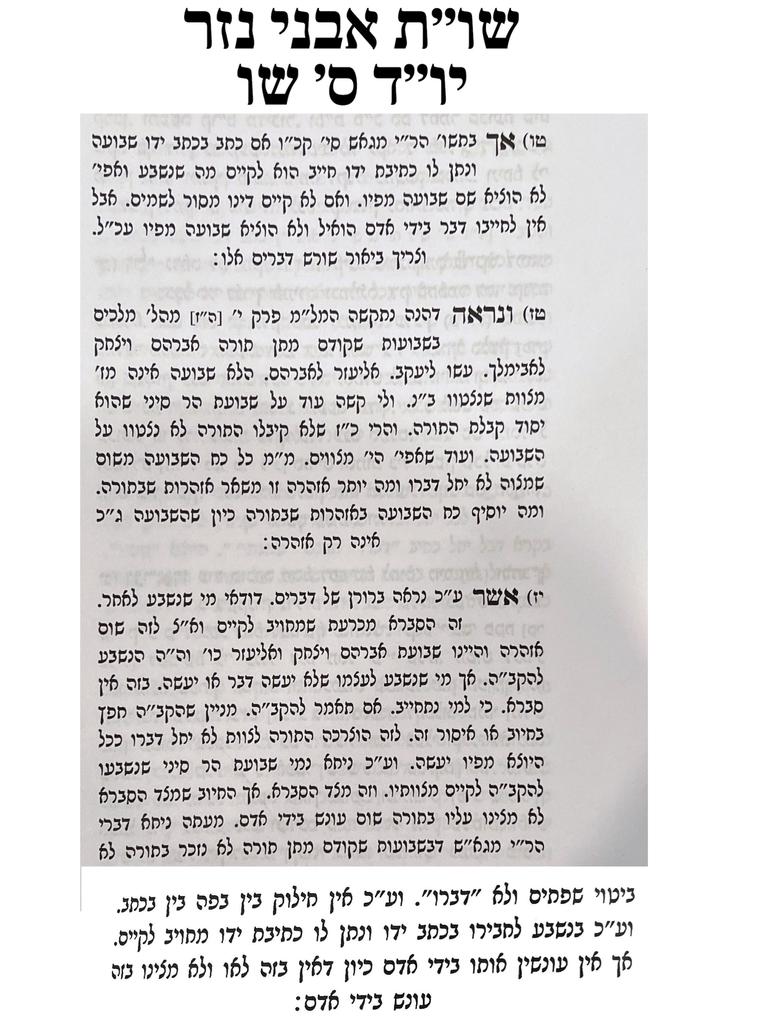
הא קמ''ל דכיון דאי בעי פטר נפשיה וכו' - מסתברא לי דלאו דווקא דבהכי מיפטר שהרי חייב כל אדם ללמוד תמיד יום ולילה כפי כחו ואמרינן בפ''ק דקדושין (דף ל.) ת''ר ושננתם שיהו דברי תורה מחודדין בפיך שאם ישאלך אדם דבר שלא תגמגם ותאמר לו וכו' וק''ש שחרית וערבית לא סגי להכי אלא מכאן נראה לי ראיה למה שכתבתי בפרק שבועות שתים בתרא דכל מידי דאתא מדרשא אע''פ שהוא מן התורה כיון דליתיה מפורש בקרא בהדיא שבועה חלה עליו והכא הכי קאמרינן כיון דאי בעי פטר נפשיה ממאי דכתיב בקרא בהדיא דהיינו בשכבך ובקומך בקרית שמע שחרית וערבית מש''ה חלה שבועה עליה לגמרי אפילו לקרבן והיינו דקאמר נדר גדול כלומר לכל דיניו כדבר הרשות וכבר כתבתי זה שם בראיות גמורות בס''ד:

החשוד על הדבר אינו נאמן עליו אפילו בשבועה:
One suspected about an act is not believed regarding it, even if he takes an oath.

החשוד על הדבר אינו נאמן עליו אפילו בשבועה. הטעם שכבר חשוד הוא לעבור על השבועה שמושבע ועומד הוא מהר סיני (וע' בריש פ' יום הכפורים ובשבועות דף כ"ב ע"ב)...
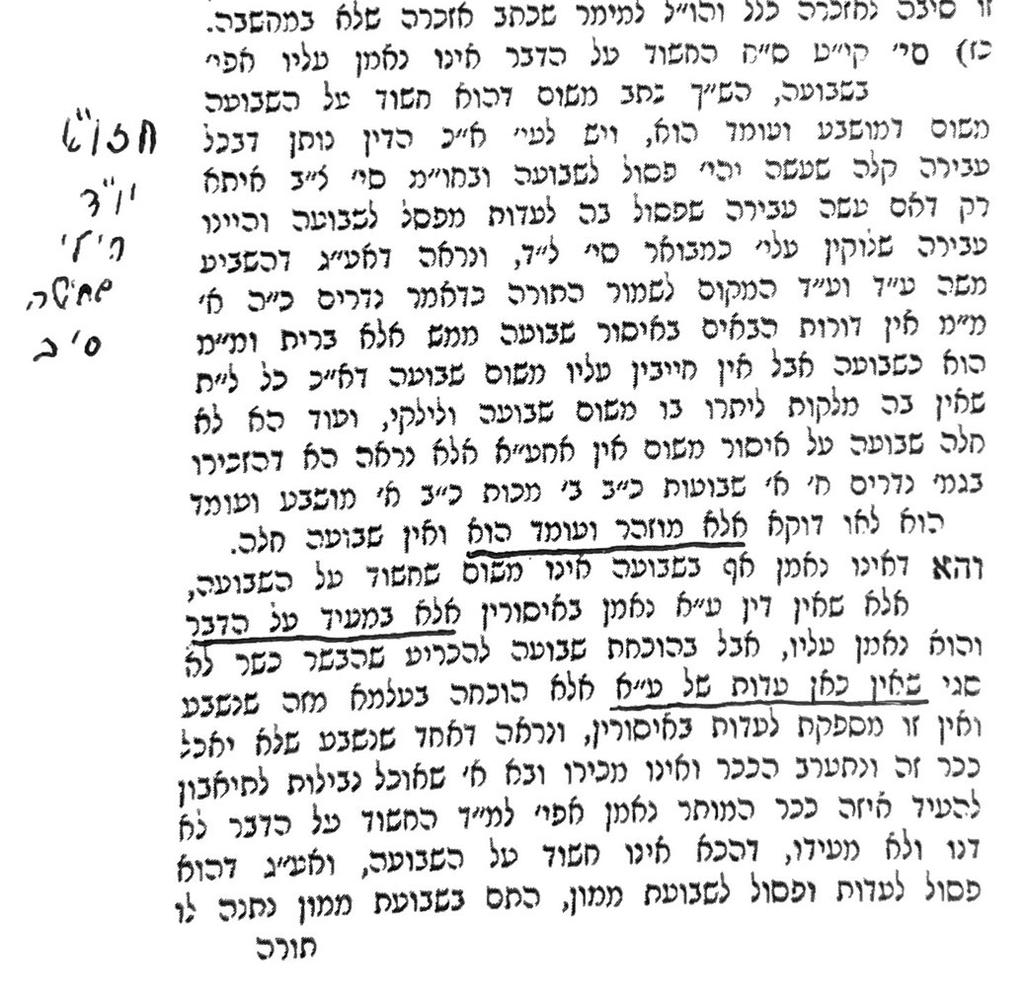
5 - Swearing to do a mitzva - what is חל?

והלא מושבע ועומד מהר סיני הוא אלא הא קמ״ל וכו' - מסתברא לי דהכי פירושא דמעיקרא קס״ד דרב גידל אתא לאשמועינן ששבועה חלה על דבר מצוה כדבר הרשות ומוכח לה מדכתיב נשבעתי ואקיימה ומש״ה פריך והלא מושבע ועומד הוא דהא מוכיחין בפרק שבועות שתים בתרא (שבועות כז.) דהא דכתיב להרע או להיטיב בדבר הרשות כתיב קרא ולא בדבר מצוה וכי תימא ה״מ לקרבן דלהרע או להיטיב גבי קרבן כתיבא אבל בל יחל איכא אפילו בדבר מצוה אם כן מאי נשבעתי ואקיימה הכי הוה ליה למימר דנהי דאמעיטא מצוה מקרבן לא אמעיטא מבל יחל כדחזינן התם בפרק שבועות שתים בתרא (שבועות כה.) דמילתא דליתא בלאו והן אי נמי בלהבא דאמעיטא מקרבן מלהרע או להיטיב ולא אמעיטא ממלקות ולהא לא צריך קרא א״כ מאי קאמר שנאמר נשבעתי ואקיימה ומתרצינן אלא הא קמ״ל דשרי ליה לזרוזי נפשיה כלומר ודאי לא איצטריך האי קרא לומר שהיא חלה לגבי בל יחל אלא ה״ק מנין שדבר הגון הוא להשבע לקיים את המצוה ואפי' כשרים שנמנעין משבועה נשבעין הן בכך שנאמר נשבעתי ואקיימה כלומר שהרי דוד היה עושה כן:

מנין שנשבעין לקיים המצוה. ול"ח שמא יבא לידי תקלה ויעבור על שבועתו: והלא מושבע ועומד הוא. לקיים המצוה ואין שבועה חלה על שבועה דדרשינן ליה בשבועות מלהרע או להיטיב דבהטבת רשות איירי ולא בקיום מצוה: אלא הא קמשמע לן דשרי לזרוזי נפשיה. ולא הוי מזכיר שם שמים לבטלה אם נשבע בשם ואם נשבע בלא שם נמי סד"א דאסור כדי שלא יתרגל אדם בשבועות ויבא לישבע גם על דברים אחרים:
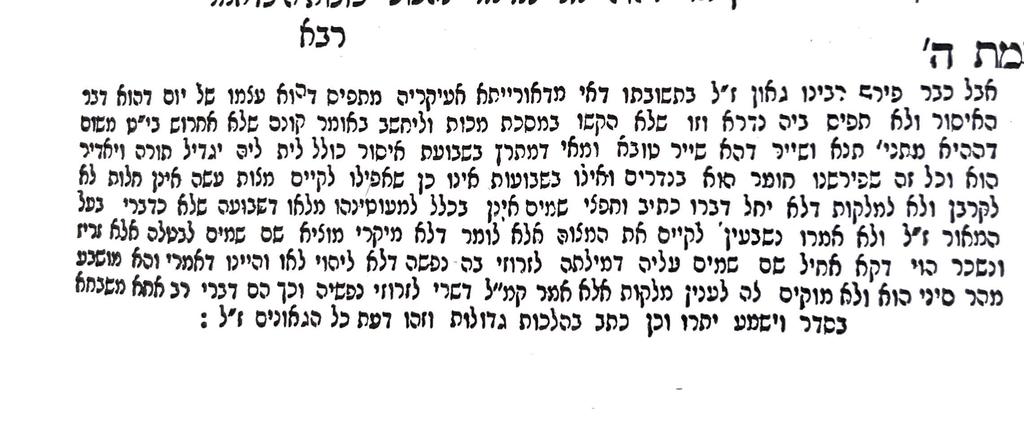
איש כי ידור נדר ... אבל השבועות אינן כלל אלא לאסור את המותר אינן נוהגות בדבר מצוה כלל לא בבטול מצות לא תעשה ולא בקיומו ולא בביטול מצות עשה כגון שבועה שלא אעשה סוכה ושלא אניח תפילין ואפילו בקיום מצות עשה אינן חלות שאלו נשבע לקיים את המצוה ולא קיים אינו מתחייב בה משום שבועה ולא מלקות ולא קרבן אלא דשרי ליה לזרוזי נפשיה (שם ח) דכתיב (תהלים קיט קו) נשבעתי ואקימה לשמור משפטי צדקך ומפני כן בשבועות בלבד הוא נדרש לאסור אסר על נפשו והלכות גדולות הן הבקי ימצאם במקומותם:

IF A MAN ‘YIDOR NEDER’ (VOWETH A VOW). “[This means if] a person says: ‘May there be konam upon me that I shall not eat, or that I shall not do such-and-such a thing.’ I might think that even [if he vowed] that he would eat n’veilah [which is forbidden by the Torah to be eaten] I apply to him [the verse], he shall do according to all that proceedeth out of his mouth. Scripture therefore says, to bind his soul with a bond, which means [that he has the power] to forbid [upon himself] that which was [hitherto] permitted to him, but not to allow himself to do that which is forbidden [by means of vowing to do it].” This is Rashi’s language. But the text of the Sifre is not so. Instead the Rabbis taught there [the following explanation] of [the expression] to bind his soul with a bond: “I might think that even if ‘he swore’ to eat n’veiloth and treifoth, abominable things and reptiles, I apply to him [the verse], he shall do according to all that proceedeth out of his mouth. Scripture therefore says, to bind his soul with a bond, which means [that he has the power] to forbid [upon himself] that which was [hitherto] permitted to him, but not to bind himself to do that which is forbidden [by means of vowing to do that which is prohibited by the Torah].” Thus the Rabbis [in the Sifre] mentioned this matter in connection with shevuoth (oaths), and the Rabbi [Rashi] changed it to apply to nedarim (vows). And in my opinion he was not mindful [about this], for the Rabbis have said that in the case of vows one makes the [actual] object [referred to in the vow] forbidden to oneself [as when one says: “May this bread be konam upon me”], and therefore [vows] do not take effect upon non-tangible matters, such as when one says, “A vow be upon me that I shall not speak to you, or that I shall not walk, or that I shall not sleep,” and similar expressions [affecting non-tangible matters]. Now this being so, it would appear that even in the case of a permitted object, if one said: “A vow be upon me that I shall eat today,” or “that I shall eat this loaf,” it is not a [valid] vow since this vow does not have any object at all on which to take effect, but [was expressed in such a way as to impose] a duty upon him [personally] to do it. And we do not find mentioned anywhere in the Gemara vows about [matters which require one] to “get up and do” [a particular action, but only about matters which require one to abstain from certain things, such as when he says, “May this loaf be konam upon me,” in which case he must fulfill the vow by not eating it]. And although we find in the case of vows [to G-d Who is] on high [that they are valid if uttered in the following manner]: “I undertake upon myself [to bring] a burnt-offering,” or “I undertake upon myself [to bring] a peace-offering” [which would seem to indicate that vows do take effect when expressed as an obligation resting upon a person, and not, as explained above, that they only take effect upon a specific object which itself becomes forbidden], this [vow is valid] because [there is a general principle that] dedicating something [verbally] to the Sanctuary creates an obligation on one’s property exactly as if it had been handed over to an ordinary person. Or [it may be that] this is a stringency applicable [only] to vows to the Sanctuary, because they [such vows] involve an object which becomes forbidden to an ordinary person and invested [with sanctity] for the Sanctuary when [the object is actually] set aside [as an offering]; therefore right from the start [when he merely bound himself verbally to separate an animal as an offering at some future date], the obligation created by the vow takes effect upon his property. But the case of [ordinary] vows of utterance [about a secular matter] we have no such rule, because there is no [tangible] object existing at all, neither at the beginning [i.e., at the time of uttering the vow], nor at the end [i.e., at the time that the vow is to be fulfilled]. Similarly, [the expression of the Sifre mentioned by Rashi that] he can “forbid [upon himself] that which was [hitherto] permitted to him, but cannot allow himself to do that which is forbidden [by vowing to do that which is prohibited by the Torah]” is a statement which is not correct to make in connection with vows [as Rashi did], because they do take effect on matters of [religious] commandments, just as they do on secular matters [i.e., on matters which do not come within the scope of the commandments]. Thus someone who says in the form of a vow “I will not make a Booth [for the Festival of Tabernacles]” or “I will not put on phylacteries” is indeed forbidden [to make the Booth, or to put on the phylacteries] although he thereby violates a positive commandment. Similarly a man who vowed not to have [sexual] intercourse with his wife is forbidden [to have such intercourse with her] although he thereby violates a negative commandment. Similarly, vows take effect to oblige one to observe a negative commandment [although, of course, he already is bound not to transgress it], such as if he vowed not to eat n’veilah — [so that if he does it he violates two prohibitions: against eating n’veilah, and against breaking his vow, this principle being deduced] from the words of the Mishnah: “A vow may take effect upon a vow etc.”
Thus a vow takes effect to forbid [not only that which was previously permitted, but also to forbid] that which was [already] forbidden [such as when he vows not to eat n’veilah], and [a vow takes effect] not to do [something] which he is [commanded to do and] forbidden to transgress [such as the duty to have sexual intercourse with his wife, as mentioned above], except that vows do not take effect to allow him to actively transgress a negative commandment. But oaths are only able to render forbidden that which was [hitherto] permitted, and they do not apply at all to matters involving commandments, neither to transgress [the prohibition of] a negative commandment [even passively, such as by swearing not to have intercourse with his wife], nor to strengthen its observance [such as by swearing not to eat n’veilah], nor to neglect [the performance of] a positive commandment, such as [by saying]: “I swear that I will not make a Booth,” or “[I swear] that I will not put on phylacteries.” Even to strengthen the performance of a positive commandment [an oath] cannot take effect, so that if a person swears to fulfill a commandment and does not fulfill it, he is not liable for [breaking his] oath either to [the punishment of] stripes [if he deliberately neglects it] or to [bring] an offering [if he neglects it accidentally]. But it is permitted for a person to encourage himself [to fulfill a commandment by swearing to do so], for it is written, I have sworn, and have confirmed it, to observe Thy righteous ordinances. Therefore it is only with reference to swearing [and not, as implied by Rashi, to vows] that one can interpret [the expression] to bind his soul with a bond [as the Sifre does, that he may forbid upon himself that which was hitherto permitted to him, but may not allow himself to do that which is forbidden, by means of swearing to do it]. These are great [i.e., complex and important] laws, and the scholar will find them [explained in the Talmud] in their [proper] places.
מושבע ועומד vs אאחע"א - 6

אמר שבועה שלא אוכל נבילות וטריפות ואכל אינו חייב משום שבועה שהרי מושבע ועומד מהר סיני הוא ואם אמר שבועה שלא אוכל כל שהוא מנבילות וטריפות ואכל פחות מכזית חייב על השבועה שהרי אינו מושבע מהר סיני על חצי שיעור וכן אם אמר שבועה שאוכל פחות מכזית נבילה וטריפה חייב על השבועה. (רמב"ם פ"ה מה"ש דין ח'):

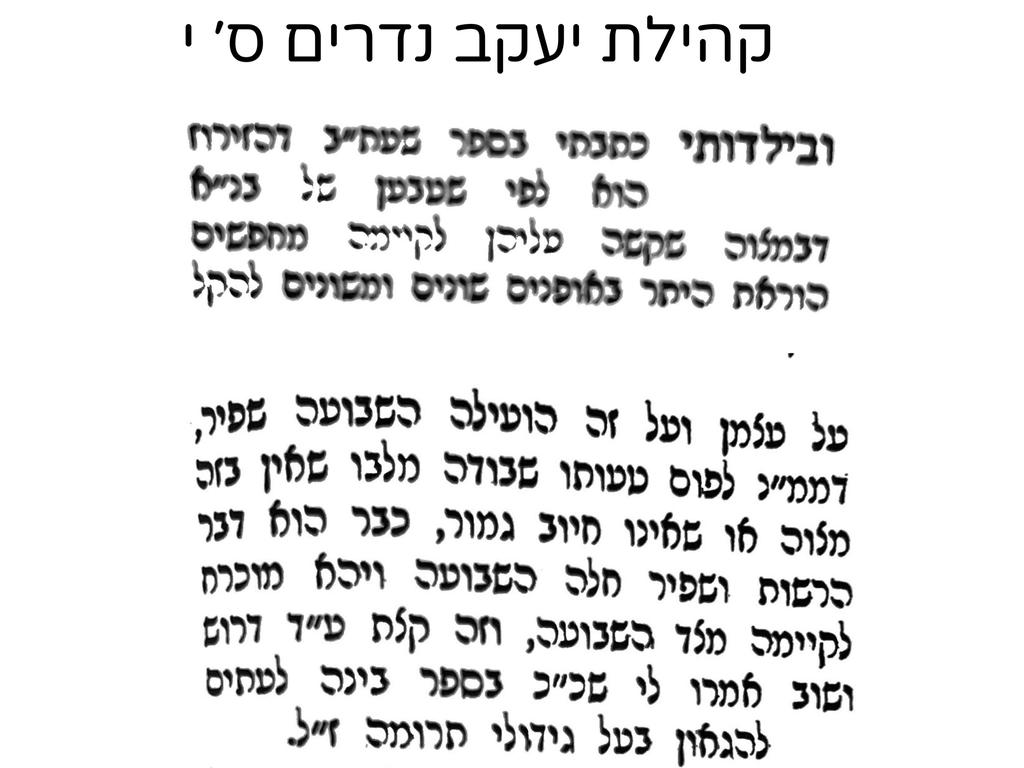
אינו חייב. נראה דנ"מ אף האידנא לענין חולה שמותר להאכילו נבלה שא"צ להתיר שבועתו מיהו היינו בנשבע כשהוא בריא שהיה אז אסור בנבלות וטריפות אבל נשבע כשהוא חולה כיון שאז מותר לו לאכול אם כך חלה השבועה ויש להתיר לו מיהו י"ל דאף בכה"ג לא חיילה השבועה כיון דמותר לו לאכול משום פקוח נפש אם כן השבועה נמי לא חלה דנשבע ועומד מהר סיני על המצוה דפקוח נפש והוא נשבע לבטל מצוה זו ונראה דיש להחמיר ולהתיר לו:
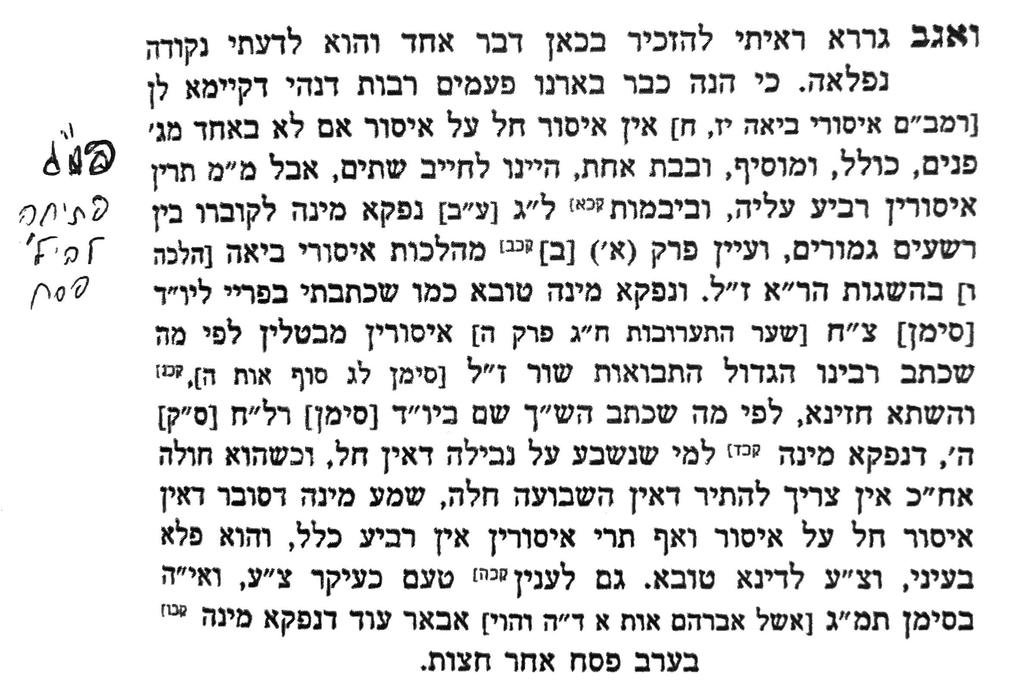
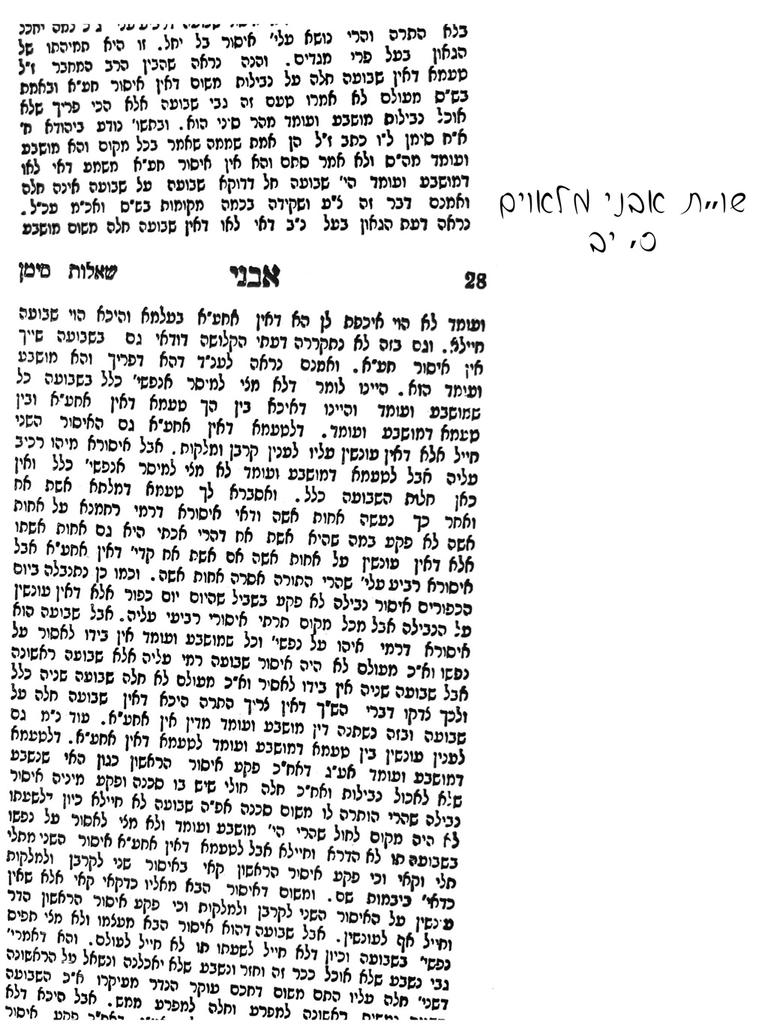
(ש"ך ס"ק כ"ו) וכ"כ בת' מהר"מ מינ"ץ. ודקדק כן מלשון רש"י כיון דחכם עוקר הנדר מעיקרו ולענ"ד אינו ראיה עפ"מ שכ' הר"ן נדרים (ח' ע"א) דבנשבע לקיים המצוה חלה לענין בל יחל אבל לא לקרבן דאמעיט מלהרע או להיטיב ע"ש ואולם זהו דוקא בנשבע לקיים מ"ע לישב בסוכה וכדומה אבל בנשבע לקיים מצות ל"ת כגון שלא לאכול נבילה ודאי דאינה חלה אפילו לענין בל יחל כדאיתא להדיא בסוגיא דמכות (כ"ב ע"א) במה דפרכינן שם ולחשוב נמי שבועה שלא אחרוש בי"ט ומשני התם לא חלה השבועה דמושבע ועומד מה"ס והתם מיירי הכל לענין מלקות וע"כ הטעם מדין אין איסור חל על איסור כמו בעלמא וממילא אפילו לאו ליכא אבל בנשבע לקיים מ"ע דל"ש בזה אין אחע"א בזה כתב הר"ן דחל לענין לאו דבל יחל וכזה כ' בתוספות שבועות (כ"ז ע"א) דר' יהודא בן בתירא דמחייב בנשבע לקיים ולא קיים דס"ל דא"צ להיות בלאו והן דמ"מ מודה בנשבע שלא לאכול נבילה משום דאין אחע"א עי"ש וה"נ לדידן דקי"ל כת"ק דנשבע לקיים ולא קיים דפטור משום דליתא בלאו והן היינו לענין קרבן אבל לענין מלקות יש חילוק בין לקיים מ"ע בין לקיים מצות ל"ת וזהו ברור בכוונת הר"ן ולפ"ז י"ל דמה דכתב רש"י הטעם דחכם עוקר נדר מעיקרו היינו דלישנא דרבא דאם נשאל על הא' עלתה לו שניה תחתיה משמע דיש לשניה כל דין שבועה ובזה יקשה הא מקרי נשבע לקיים את המצוה דשבועה ראשונה וליכא קרבן [וביותר למה דכ' רש"י במכות שם גבי שבועה שלא אחרוש דלא חייל דנפקא לן מלהרע או להיטיב מבואר דפ"ל לרש"י דגם לענין הלאו ממעטי' מלהרע או להיטיב דלא כהר"ן הנ"ל] מש"ה צריך הטעם דחכם עוקר נדר מעיקרו ולא הוי בכלל נשבע לקיים ובאמת אם הפר הבעל הראשונה אינה חייבת קרבן על השניה אבל מ"מ לענין לאו דבל יחל דלא אמעיט מקרא ואנו באין לדון רק מדין אין אחע"א י"ל דהוי כמו בעלמא דמתלי תלי וקאי ואי פקע ראשונה חלה שניה כדאיתא ביבמות (דל"ב ע"א) ואף בהפרת הבעל חלה השניה לענין הלאו כיון דפקע הראשונה ודוק היטב:

מכאן מוכח דנשבע שלא לעבור על אסור, אין שבועה חלה עליו. והיינו טעמא משום דאינו מוסיף כלום בשבועתו והוה ליה שבועה שאינה צריכה, שהיא שבועת שוא וכיון שעבר על לא תשא אינו חייב עליה קרבן שבועת בטוי, שאין קרבן מכפר עון שבועת שוא, וכיון שכן אין להתיר שבועה זו אפילו אם יראו בית דין שמזלזלים בעדות אמת, דאטו משום דעבר עבירה נוסיף עליו עוד עבירה בידים?... אדרבה חובת בית דין היא ללמד את הטועים בינה ששבועה זו אסורה בין אם הוא נשבע בלשון שלילה: שלא אגיד שקר; או בלשון חיובית: שאגיד אמת, שהרי בשניהם מושבע ועומד מהר סיני, ואדרבה חובת בית דין היא ללמד ולחנך את כל אדם מישראל להגיד דבר אמת...

לא תשא את שם ה"א לשוא כי לא ינקה וגו' ובש"ס שבועות (ל"ט.) שכל העולם כולו נזדעזע בשעה שאמר הקב"ה לא תשא וכו' וכל עבירות שבתורה נאמר בהן ונקה וכאן נאמר לא ינקה כל עבירות שבתורה נפרעין ממנו וכאן ממנו וממשפחתו ומכל העולם כולו, וכ"ק אבי אדומו"ר זצללה"ה הקשה הא כל התורה כולה קבלו עליהם באלה ובשבועה, א"כ בכל עבירה ועבירה נמי הרי הוא עובר על לא תשא, ולמה לא יהי' החומר הנ"ל בכל עבירות שבתורה עכ"ד: ונראה ליישב דהנה שבועת הר סיני לדורות הבאים הוא חל משום דכל נשמות העתידים להבראות שם היו, ואף דאין ביד הנשמה לבדה לעשות מאומה אלא בצירוף הגוף, בהכרח לומר דהשבועה הי' שתכניס מחשבות טובות בהגוף לעוררה וללמדה להשכיל ולהיטיב, כי זהו תעודת הנשמה ולדבר הזה נשתלחה לעוה"ז, וכמו שיסד ר"י הלוי זצ"ל בפייט ברכי נפשי שקודם נעילה, ובכן אם הנשמה עשתה מה שעלי' לעשות לעורר את הנפש המתאוה והגוף שיתאוו לעשות רצון אביהם שבשמים אף שאין נפש המתאוה שומעת להנשמה ותתגבר ותמשול על כחות הנשמה שוב אין על הנשמה אשם, שהרי היא עשתה את שלה אבל נפש המתאוה התגבר עלי', וגדולה מזה איתא בדברי חכמי האמת שעוד קודם שעושה אדם העבירה הנשמה מסתלקת ממנו, ע"כ אם הנשמה עשתה את שלה ובראותה שאין נפש המתאוה שומע לה היא מסתלקת ממנו, ממילא שוב אין כאן עונש שבועה כלל, הנשמה היא עשתה את שלה והיא אנוסה ומסתלקת, והגוף ונפש המתאוה הרי לא היו שם, ולא חלה השבועה עליהם, וע"כ בשבועת הר סיני אין נפרעין ממנו על לא תשא, אלא דווקא על שבועה שנשבע בעוה"ז בגוף ונפש: וממוצא הדברים שבקיום מ"ע שמשתתפים בזה כל חלקי האדם הנשמה ונפש המתאוה והגוף שוב מקיים מצות שבועה, וידועין דברי הרמב"ם שמעונשין של עבירות אתה יודע מתן שכרן של מצוות, שממה שהמחלל שבת נסקל אתה יודע כמה גדול שכר המשמר את השבת, כ"כ י"ל שמעונש של העובר על השבועה אתה יודע שכר המקיימה, וא"כ בקיום כל מצוה ומצוה שבתורה כמה יגדל שכר הנשמה שקיימה את השבועה והגוף ונפש המתאוה שהי' לה לסייע בקיום השבועה: