Save "We Don't Talk About You Know Who
"
We Don't Talk About You Know Who
References in Some Editions that Do Not Appear in the Vilna Edition

והנאך ועליו נתפסת אמר לו עקיבא הזכרתני פעם אחת הייתי מהלך בשוק העליון של ציפורי ומצאתי אחד ומתלמידי ישו הנוצרי ויעקב איש כפר סכניא שמו אמר לי כתוב בתורתכם (דברים כג, יט) לא תביא אתנן זונה [וגו'] מהו לעשות הימנו בהכ"ס לכ"ג ולא אמרתי לו כלום
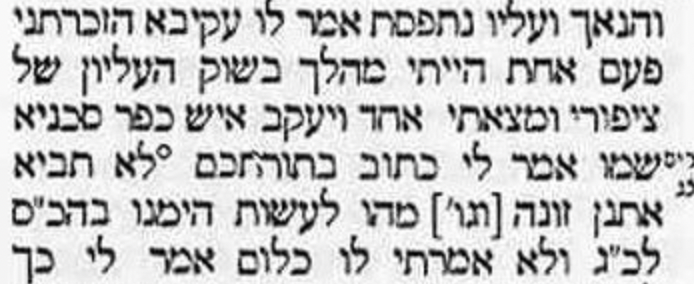
and you derived pleasure from it, and because of this you were held responsible by Heaven. Rabbi Eliezer said to him: Akiva, you are right, as you have reminded me that once I was walking in the upper marketplace of Tzippori, and I found a man who was one of the students of Jesus the Nazarene, and his name was Ya’akov of Kefar Sekhanya. He said to me: It is written in your Torah: “You shall not bring the payment to a prostitute, or the price of a dog, into the house of the Lord your God” (Deuteronomy 23:19). What is the halakha: Is it permitted to make from the payment to a prostitute for services rendered a bathroom for a High Priest in the Temple? And I said nothing to him in response.
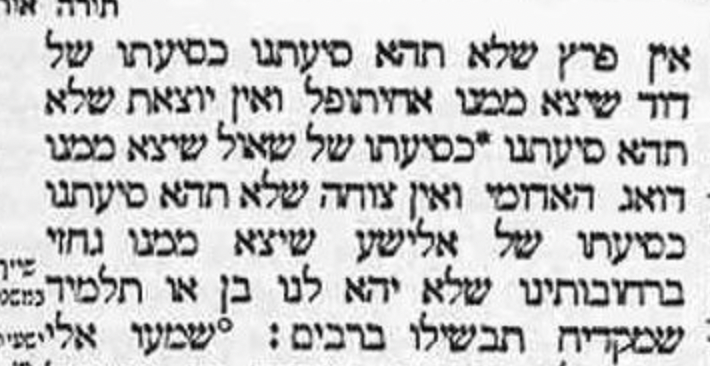
״אֵין פֶּרֶץ״ — שֶׁלֹּא תְּהֵא סִיעָתֵנוּ כְּסִיעָתוֹ שֶׁל דָּוִד שֶׁיָּצָא מִמֶּנּוּ אֲחִיתוֹפֶל. ״וְאֵין יוֹצֵאת״ — שֶׁלֹּא תְּהֵא סִיעָתֵנוּ כְּסִיעָתוֹ שֶׁל שָׁאוּל שֶׁיָּצָא מִמֶּנּוּ דּוֹאֵג הָאֲדוֹמִי. ״וְאֵין צְוָחָה״ — שֶׁלֹּא תְּהֵא סִיעָתֵנוּ כְּסִיעָתוֹ שֶׁל אֱלִישָׁע שֶׁיָּצָא מִמֶּנּוּ גֵּחֲזִי. ״בִּרְחוֹבוֹתֵינוּ״ — שֶׁלֹּא יְהֵא לָנוּ בֵּן אוֹ תַּלְמִיד שֶׁמַּקְדִּיחַ תַּבְשִׁילוֹ בָּרַבִּים, כְּגוֹן יֵשׁוּ הַנּוֹצְרִי.
“There is no breach”; that our faction of Sages should not be like the faction of David, from which Ahitophel emerged, who caused a breach in the kingdom of David.
“And no going forth”; that our faction should not be like the faction of Saul, from which Doeg the Edomite emerged, who set forth on an evil path.
“And no outcry”; that our faction should not be like the faction of Elisha, from which Geihazi emerged.
“In our open places”; that we should not have a child or student who overcooks his food in public, i.e., who sins in public and causes others to sin, as in the well-known case of Jesus the Nazarene.
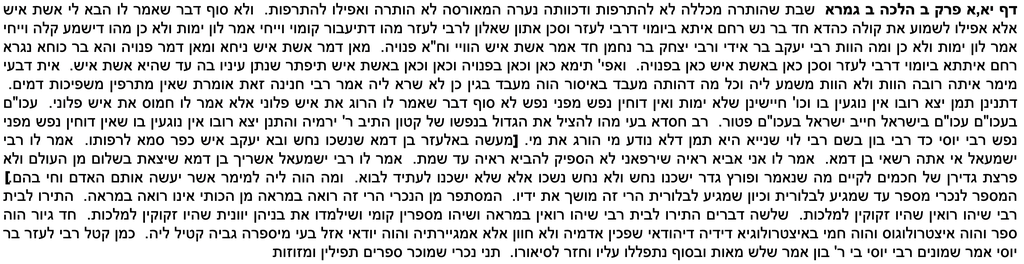
גמ׳ אמר אביי וצריך למימר ביום פלוני ובשעה פלונית ובמקום פלוני דילמא איכא דידעי ואתו ומזים להו: וכרוז יוצא לפניו לפניו אין מעיקרא לא והתניא בערב הפסח תלאוהו לישו והכרוז יוצא לפניו מ' יום ישו יוצא ליסקל על שכישף והסית והדיח את ישראל כל מי שיודע לו זכות יבא וילמד עליו ולא מצאו לו זכות ותלאוהו בערב הפסח אמר עולא ותסברא בר הפוכי זכות הוא מסית הוא ורחמנא אמר (דברים יג, ט) לא תחמול ולא תכסה עליו אלא שאני ישו דקרוב למלכות הוה ת"ר חמשה תלמידים היו לו לישו מתאי נקאי נצר ובוני ותודה אתיוהו למתי אמר להו מתי יהרג הכתיב (תהלים מב, ג) מתי אבוא ואראה פני אלהים אמרו לו אין מתי יהרג דכתיב (שם מא, ו) מתי ימות ואבד שמו אתיוהו לנקאי אמר להו נקאי יהרג הכתיב (שמות כג, ז) ונקי וצדיק אל תהרוג אמרו לו אין נקאי יהרג דכתיב (תהלים י, ח) במסתרים יהרג נקי אתיוהו לנצר אמר נצר יהרג הכתיב (ישעיה יא, א) ונצר משרשיו יפרה אמרו לו אין נצר יהרג דכתיב (שם יד, יט) ואתה השלכת מקברך כנצר נתעב אתיוהו לבוני אמר אמר בוני יהרג הכתיב (שמות ד, כב) בני בכורי ישראל אמרו לי' אין בוני יהרג דכתיב (שם, כג) הנה אנכי הורג את בנך בכורך אתיוהו לתודה אמר תודה יהרג הכתיב (תהלים ק, א) מזמור לתודה אמרו לו אין תודה יהרג דכתיב (שם נ, כג) זובח תודה יכבדנני

GEMARA: Abaye says: And the crier must also publicly proclaim that the transgression was committed on such and such a day, at such and such an hour, and at such and such a place, as perhaps there are those who know that the witnesses could not have been in that place at that time, and they will come forward and render the witnesses conspiring witnesses. The mishna teaches that a crier goes out before the condemned man. This indicates that it is only before him, i.e., while he is being led to his execution, that yes, the crier goes out, but from the outset, before the accused is convicted, he does not go out. The Gemara raises a difficulty: But isn’t it taught in a baraita: On Passover Eve they hung the corpse of Jesus the Nazarene after they killed him by way of stoning. And a crier went out before him for forty days, publicly proclaiming: Jesus the Nazarene is going out to be stoned because he practiced sorcery, incited people to idol worship, and led the Jewish people astray. Anyone who knows of a reason to acquit him should come forward and teach it on his behalf. And the court did not find a reason to acquit him, and so they stoned him and hung his corpse on Passover eve. Ulla said: And how can you understand this proof? Was Jesus the Nazarene worthy of conducting a search for a reason to acquit him? He was an inciter to idol worship, and the Merciful One states with regard to an inciter to idol worship: “Neither shall you spare, neither shall you conceal him” (Deuteronomy 13:9). Rather, Jesus was different, as he had close ties with the government, and the gentile authorities were interested in his acquittal. Consequently, the court gave him every opportunity to clear himself, so that it could not be claimed that he was falsely convicted. Apropos the trial of Jesus, the Gemara cites another baraita, where the Sages taught: Jesus the Nazarene had five disciples: Mattai, Nakai, Netzer, Buni, and Toda. They brought Mattai in to stand trial. Mattai said to the judges: Shall Mattai be executed? But isn’t it written: “When [matai] shall I come and appear before God?” (Psalms 42:3). Mattai claimed that this verse alludes to the fact he is righteous. They said to him: Yes, Mattai shall be executed, as it is written: “When [matai] shall he die, and his name perish?” (Psalms 41:6). Then they brought Nakai in to stand trial. Nakai said to the judges: Shall Nakai be executed? But isn’t it written: “And the innocent [naki] and righteous you shall not slay” (Exodus 23:7)? They said to him: Yes, Nakai shall be executed, as it is written: “In secret places he kills the innocent [naki]” (Psalms 10:8). Then they brought Netzer in to stand trial. He said to the judges: Shall Netzer be executed? But isn’t it written: “And a branch [netzer] shall grow out of his roots” (Isaiah 11:1)? They said to him: Yes, Netzer shall be executed, as it is written: “But you are cast out of your grave like an abhorred branch [netzer]” (Isaiah 14:19). Then they brought Buni in to stand trial. Buni said to the judges: Shall Buni be executed? But isn’t it written: “My firstborn son [beni] is Israel” (Exodus 4:22)? They said to him: Yes, Buni shall be executed, as it is written: “Behold, I shall kill your firstborn son [binkha]” (Exodus 4:23). Then they brought Toda in to stand trial. Toda said to the judges: Shall Toda be executed? But isn’t it written: “A psalm of thanksgiving [toda]” (Psalms 100:1)? They said to him: Yes, Toda shall be executed, as it is written: “Whoever slaughters a thanks-offering [toda] honors Me” (Psalms 50:23).

כיצד עושין לו מדליקין לו את הנר בבית הפנימי ומושיבין לו עדים בבית החיצון כדי שיהו הן רואין אותו ושומעין את קולו והוא אינו רואה אותן והלה אומר לו אמור מה שאמרת לי ביחוד והוא אומר לו והלה אומר לו היאך נניח את אלהינו שבשמים ונעבוד עבודת כוכבים אם חוזר בו מוטב ואם אמר כך היא חובתנו וכך יפה לנו העדים ששומעין מבחוץ מביאין אותו לבית דין וסוקלין אותו: [הוספה מחסרונות הש"ס: וכן עשו לבן סטדא בלוד ותלאוהו בערב הפסח בן סטדא בן פנדירא הוא אמר רב חסדא בעל — סטדא בועל — פנדירא בעל פפוס בן יהודה הוא אלא אֵימא אמו סטדא אמו מרים מגדלא נשיא הואי כדאמרי בפומדיתא סטת דא מבעלה:]
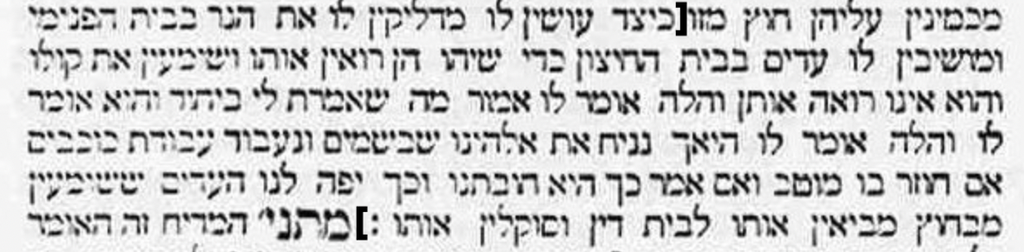

How does the court do this to him? The agents of the court light a candle for him in an inner room, and they place witnesses for him in an outer room in the dark, so that they can see him and hear his voice but he cannot see them. And the other person, whom the inciter had previously tried to incite, says to him: Say what you said to me when we were in seclusion. And he says to him again that he should worship the idol. And the other person says to him: How can we forsake our God in Heaven and worship idols? If the inciter retracts his suggestion, that is good. But if he says: This idol worship is our duty, and this is what suits us, the witnesses, who are listening from outside, bring him to court, and they have him stoned. And the court did the same to an inciter named ben Setada, from the city of Lod, and they hanged him on Passover eve. The Gemara asks: Why did they call him ben Setada, when he was the son of Pandeira? Rav Ḥisda says: Perhaps his mother’s husband, who acted as his father, was named Setada, but his mother’s paramour, who fathered this mamzer, was named Pandeira. The Gemara challenges: But his mother’s husband was Pappos ben Yehuda, not Setada. Rather, perhaps his mother was named Setada, and he was named ben Setada after her. The Gemara challenges: But his mother was Miriam, who braided women’s hair. The Gemara explains: That is not a contradiction; Setada was merely a nickname, as they say in Pumbedita: This one strayed [setat da] from her husband.
דבר אחר לא תאונה אליך רעה שלא יבעתוך חלומות רעים והרהורים רעים ונגע לא יקרב באהלך שלא יהא לך בן או תלמיד שמקדיח תבשילו ברבים [כגון ישו הנוצרי]
Alternatively, the phrase “no evil shall befall you” means that you will be frightened neither by bad dreams nor by evil thoughts. “Nor shall any plague come near your tent” means that you will not have a child or student who overcooks his food in public, i.e., sins in public and causes others to sin, such as in the well-known case of Jesus the Nazarene.

תָּנוּ רַבָּנַן לְעוֹלָם תְּהֵא שְׂמֹאל דּוֹחָה וְיָמִין מְקָרֶבֶת לֹא כֶּאֱלִישָׁע שֶׁדְּחָפוֹ לְגֵחֲזִי בִּשְׁתֵּי יָדָיו וְלֹא כִּיהוֹשֻׁעַ בֶּן פְּרַחְיָה שֶׁדְּחָפוֹ לְיֵשׁוּ הַנּוֹצְרִי מִתַּלְמִידָיו בִּשְׁתֵּי יָדָיו אֱלִישָׁע מַאי הִיא דִּכְתִיב וַיֹּאמֶר נַעֲמָן הוֹאֵל קַח כִּכָּרָיִם וּכְתִיב וַיֹּאמֶר אֵלָיו לֹא לִבִּי הָלַךְ כַּאֲשֶׁר הָפַךְ אִישׁ מֵעַל מֶרְכַּבְתּוֹ לִקְרָאתֶךָ הַעֵת לָקַחַת אֶת הַכֶּסֶף וְלָקַחַת בְּגָדִים וְזֵיתִים וּכְרָמִים וְצֹאן וּבָקָר וַעֲבָדִים וּשְׁפָחוֹת וּמִי שָׁקֵיל כּוּלֵּי הַאי כֶּסֶף וּבְגָדִים הוּא דְּשָׁקֵיל אָמַר רַבִּי יִצְחָק בְּאוֹתָהּ שָׁעָה הָיָה אֱלִישָׁע עוֹסֵק בִּשְׁמֹנָה שְׁרָצִים אָמַר לוֹ רָשָׁע הִגִּיעַ עֵת לִיטּוֹל שְׂכַר שְׁמֹנָה שְׁרָצִים וְצָרַעַת נַעֲמָן תִּדְבַּק בְּךָ וּבְזַרְעֲךָ לְעוֹלָם וְאַרְבָּעָה אֲנָשִׁים הָיוּ מְצֹרָעִים אָמַר רַבִּי יוֹחָנָן זֶה גֵּחֲזִי וּשְׁלֹשֶׁת בָּנָיו וַיָּבֹא אֱלִישָׁע דַּמֶּשֶׂק לָמָּה הָלַךְ אָמַר רַבִּי יוֹחָנָן שֶׁהָלַךְ לְהַחְזִירוֹ לְגֵחֲזִי בִּתְשׁוּבָה וְלֹא חָזַר אָמַר לוֹ חֲזוֹר בָּךְ אָמַר לוֹ כָּךְ מְקוּבְּלַנִי מִמְּךָ כׇּל מִי שֶׁחָטָא וְהֶחְטִיא אֶת הָרַבִּים אֵין מַסְפִּיקִין בְּיָדוֹ לַעֲשׂוֹת תְּשׁוּבָה מַאי עֲבַד אִיכָּא דְּאָמְרִי אֶבֶן שׁוֹאֶבֶת תָּלָה לוֹ לְחַטַּאת יָרָבְעָם וְהֶעֱמִידוֹ בֵּין שָׁמַיִם לָאָרֶץ וְאִיכָּא דְּאָמְרִי שֵׁם חֲקַק לַהּ אַפּוּמַּהּ וְהָיְתָה אוֹמֶרֶת אָנֹכִי וְלֹא יִהְיֶה לְךָ וְאִיכָּא דְּאָמְרִי רַבָּנַן דְּחָה מִקַּמֵּיהּ דִּכְתִיב וַיֹּאמְרוּ בְנֵי הַנְּבִיאִים אֶל אֱלִישָׁע הִנֵּה נָא הַמָּקוֹם אֲשֶׁר אֲנַחְנוּ יֹשְׁבִים שָׁם לְפָנֶיךָ צַר מִמֶּנּוּ מִכְּלָל דְּעַד הָאִידָּנָא לָא הֲוָה דְּחִיק יְהוֹשֻׁעַ בֶּן פְּרַחְיָה מַאי הִיא כְּדַהֲוָה קָא קָטֵיל יַנַּאי מַלְכָּא לְרַבָּנַן שִׁמְעוֹן בֶּן שָׁטַח (אַטְמִינֵהוּ) [אַטְמַרְתֵּיהּ] אֲחָתֵיהּ רַבִּי יְהוֹשֻׁעַ בֶּן פְּרַחְיָה אֲזַל עֲרַק לַאֲלֶכְּסַנְדְּרִיָּא שֶׁל מִצְרַיִם כִּי הֲוָה שְׁלָמָא שְׁלַח לֵיהּ שִׁמְעוֹן בֶּן שָׁטַח מִנַּי יְרוּשָׁלַיִם עִיר הַקּוֹדֶשׁ לִךְ אֲלֶכְּסַנְדְּרִיָּא שֶׁל מִצְרַיִם אֲחוֹתִי בַּעֲלִי שָׁרוּי בְּתוֹכֵךְ וַאֲנִי יוֹשֶׁבֶת שׁוֹמֵמָה אֲמַר שְׁמַע מִינַּהּ הֲוָה לֵיהּ שְׁלָמָא כִּי אֲתָא אִקְּלַע לְהָהוּא אוּשְׁפִּיזָא קָם קַמַּיְיהוּ בִּיקָרָא שַׁפִּיר עָבְדִי לֵיהּ יְקָרָא טוּבָא יָתֵיב וְקָא מִשְׁתַּבַּח כַּמָּה נָאָה אַכְסַנְיָא זוֹ אֲמַר לֵיהּ יֵשׁוּ הַנּוֹצְרִי רַבִּי עֵינֶיהָ טְרוּטוֹת אֲמַר לֵיהּ רָשָׁע בְּכָךְ אַתָּה עוֹסֵק אַפֵּיק אַרְבַּע מְאָה שִׁפּוּרֵי וְשַׁמְּתֵיהּ כׇּל יוֹמָא אֲתָא לְקַמֵּיהּ וְלָא קַבְּלֵיהּ יוֹמָא חַד הֲוָה קָרֵי קְרִיַּת שְׁמַע אֲתָא לְקַמֵּיהּ הֲוָה בְּדַעְתֵּיהּ לְקַבּוֹלֵיהּ אַחְוִי לֵיהּ בִּידֵיהּ סְבַר מִדְחָא דָּחֵי לֵיהּ אֲזַל זְקַף לְבֵינְתָּא פַּלְחַאּ אֲמַר לֵיהּ חֲזוֹר בָּךְ אֲמַר לֵיהּ כָּךְ מְקוּבְּלַנִי מִמְּךָ כׇּל הַחוֹטֵא וּמַחְטִיא אֶת הָרַבִּים אֵין מַסְפִּיקִין בְּיָדוֹ לַעֲשׂוֹת תְּשׁוּבָה דְּאָמַר מָר יֵשׁוּ הַנּוֹצְרִי כִּישֵּׁף וְהִסִּית וְהִדִּיחַ וְהֶחְטִיא אֶת יִשְׂרָאֵל
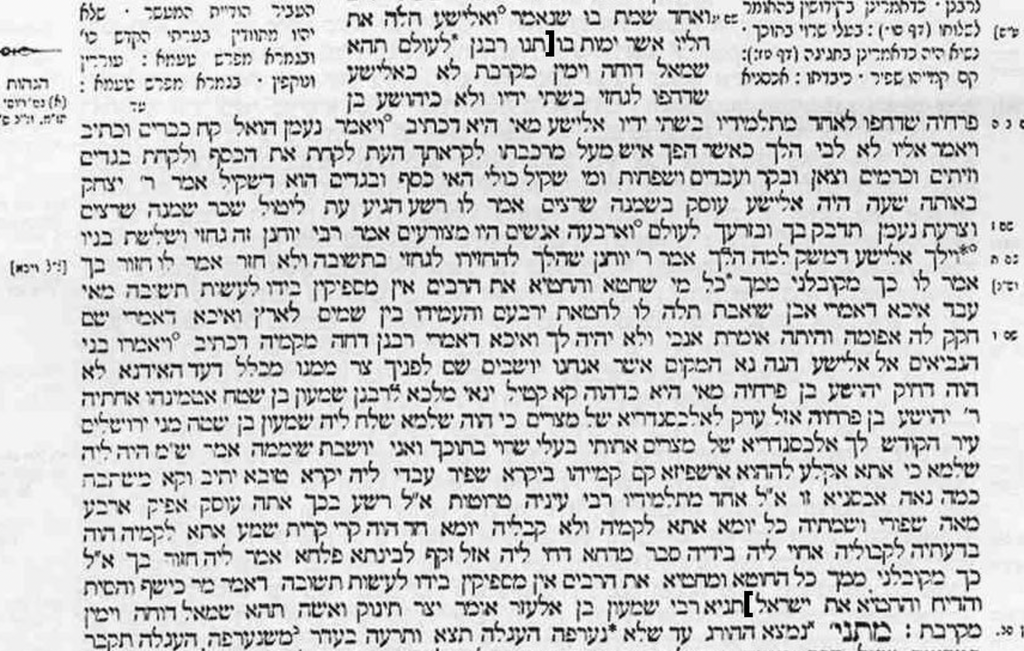
The Sages taught: It should always be the left, weaker, hand that pushes another away and the right, stronger, hand that draws him near. In other words, even when a student is rebuffed, he should be given the opportunity to return. This is not like Elisha, who pushed Gehazi away with both hands, and not like Yehoshua ben Peraḥya, who pushed Jesus the Nazarene, one of his students, away with both hands. The Gemara specifies: What was that incident with Elisha? As it is written: “And Naaman said: Pray, take talents” (II Kings 5:23). Naaman offered Gehazi payment for the help Elisha had given him, and when the verse recounts Elisha’s words to Gehazi, it is written: “And he said to him: Did not my heart go, when the man turned back from his chariot to meet you? Is it a time to take money, and to take garments, and olives, and vineyards, and sheep, and oxen, and servants, and maidservants?” (II Kings 5:26). Here Elisha criticizes Gehazi for taking the payment. The Gemara clarifies the criticism: And did he take all that? But it was only money and garments that he took. Rabbi Yitzḥak says: At that time, Elisha was engaged in the study of the topic of the eight impure creeping animals. He said to Gehazi: Wicked one, it is time for you to receive now, in this temporal world, the reward for studying the topic of the eight impure creeping animals. This is why the verse lists eight items. The Gemara adds parenthetically that Elisha also said to Gehazi: “And the leprosy of Naaman shall cleave to you and to your descendants forever” (II Kings 5:27), and that the verse later states: “Now there were four leprous men” (II Kings 7:3), about whom Rabbi Yoḥanan says: This is referring to Gehazi and his three sons. The verse states: “And Elisha came to Damascus” (II Kings 8:7). The Gemara asks: For what purpose did he go there? Rabbi Yoḥanan says: He went to help Gehazi in repentance, but Gehazi would not agree to repent from his evil ways. Elisha said to him: Return from your sins. Gehazi said to him: This is the tradition that I received from you: Whoever sins and caused the masses to sin is not given the opportunity to repent. The Gemara asks: What did Gehazi do that caused the masses to sin? There are those who say that he hung a magnetic rock on Jeroboam’s calf, the golden calf that Jeroboam established as an idol, and used a magnet to pull the calf off the ground so that he suspended it between heaven and earth, i.e., caused it to hover above the ground. This seemingly miraculous occurrence caused the people to worship it even more devoutly. And there are those who say: He engraved the sacred name on its mouth, and it would say: “I am the Lord your God” and: “You shall not have other gods” (Exodus 20:2). The idol would quote the two prohibitions from the Ten Commandments against idol worship, causing people to worship it even more devoutly. And there are those who say: Gehazi pushed the Sages away from coming before him, preventing them learning from Elisha, as it is written, after the aforementioned incident: “And the sons of the prophets said to Elisha, behold this place where we are staying before you is too cramped for us” (II Kings 6:1). This proves by inference that until that time the place was not cramped, as Gehazi would turn people away. The Gemara returns to the incident in which Yehoshua ben Peraḥya turned away Jesus the Nazarene: What is this incident? When King Yannai was killing the Sages, Shimon ben Shataḥ was hidden by his sister, Yannai’s wife, while Rabbi Yehoshua ben Peraḥya went and fled to Alexandria of Egypt. When peace was made between Yannai and the Sages, Shimon ben Shataḥ sent him the following letter: From myself, Jerusalem the holy city, to you, Alexandria of Egypt. My sister, my husband dwells within you, and I am sitting desolate. Rabbi Yehoshua ben Peraḥya said: I can learn from it that there is peace, and I can return. When he came back to Eretz Yisrael, Rabbi Yehoshua arrived at a certain inn. The innkeeper stood before him, honoring him considerably, and overall they accorded him great honor. Rabbi Yehoshua ben Peraḥya then sat and was praising them by saying: How beautiful is this inn. Jesus the Nazarene, one of his students, said to him: My teacher, but the eyes of the innkeeper’s wife are narrow [terutot]. Rabbi Yehoshua ben Peraḥya said to him: Wicked one, is this what you are engaged in, gazing at women? He brought out four hundred shofarot and excommunicated him. Every day Jesus would come before him, but he would not accept his wish to return. One day, Rabbi Yehoshua ben Peraḥya was reciting Shema when Jesus came before him. He intended to accept him on this occasion, so he signaled to him with his hand to wait. Jesus thought he was rejecting him entirely. He therefore went and stood up a brick and worshipped it as an idol. Rabbi Yehoshua ben Peraḥya said to him: Return from your sins. Jesus said to him: This is the tradition that I received from you: Anyone who sins and causes the masses to sin is not given the opportunity to repent. The Gemara explains how he caused the masses to sin: For the Master said: Jesus the Nazarene performed sorcery, and he incited the masses, and subverted the masses, and caused the Jewish people to sin.
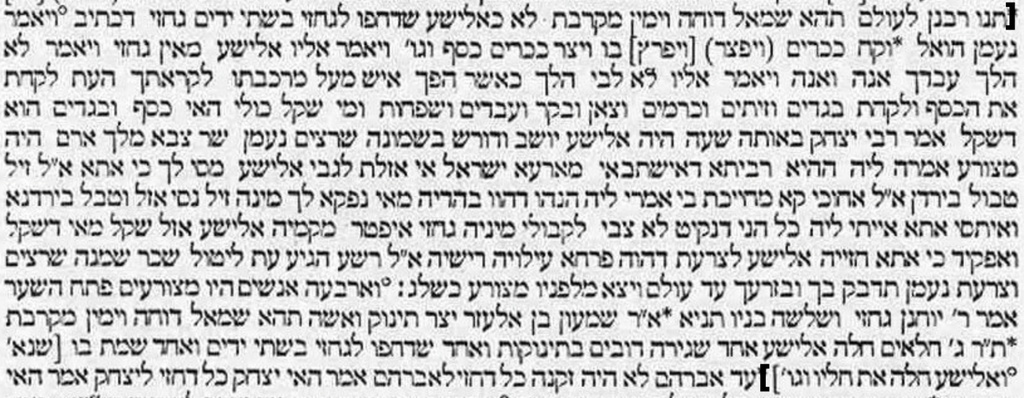
תנו רבנן לעולם תהא שמאל דוחה וימין מקרבת לא כאלישע שדחפו לגחזי בשתי ידים [ולא כרבי יהושע בן פרחיה שדחפו ליש"ו בשתי ידים] גחזי דכתיב (מלכים ב ה, כג) ויאמר נעמן הואל וקח ככרים (ויפצר) [ויפרץ] בו ויצר ככרים כסף וגו' ויאמר אליו אלישע מאין גחזי ויאמר לא הלך עבדך אנה ואנה ויאמר אליו לא לבי הלך כאשר הפך איש מעל מרכבתו לקראתך העת לקחת את הכסף ולקחת בגדים וזיתים וכרמים וצאן ובקר ועבדים ושפחות ומי שקל כולי האי כסף ובגדים הוא דשקל אמר רבי יצחק באותה שעה היה אלישע יושב ודורש בשמונה שרצים נעמן שר צבא מלך ארם היה מצורע אמרה ליה ההיא רביתא דאישתבאי מארעא ישראל אי אזלת לגבי אלישע מסי לך כי אתא א"ל זיל טבול בירדן א"ל אחוכי קא מחייכת בי אמרי ליה הנהו דהוו בהדיה מאי נפקא לך מינה זיל נסי אזל וטבל בירדנא ואיתסי אתא אייתי ליה כל הני דנקיט לא צבי לקבולי מיניה גחזי איפטר מקמיה אלישע אזל שקל מאי דשקל ואפקיד כי אתא חזייה אלישע לצרעת דהוה פרחא עילויה רישיה א"ל רשע הגיע עת ליטול שכר שמנה שרצים וצרעת נעמן תדבק בך ובזרעך עד עולם ויצא מלפניו מצורע כשלג: (מלכים ב ז, ג) וארבעה אנשים היו מצורעים פתח השער אמר ר' יוחנן גחזי ושלשה בניו [הוספה מחסרונות הש"ס: רבי יהושע בן פרחיה מאי הוא כדקטלינהו ינאי מלכא לרבנן אזל רבי יהושע בן פרחיה ויש"ו לאלכסנדריא של מצרים כי הוה שלמא שלח לי' שמעון בן שטח מני ירושלים עיר הקודש ליכי אלכסנדרי' של מצרים אחותי בעלי שרוי בתוכך ואנכי יושבת שוממה קם אתא ואתרמי ליה ההוא אושפיזא עבדו ליה יקרא טובא אמר כמה יפה אכסניא זו אמר ליה רבי עיניה טרוטות אמר ליה רשע בכך אתה עוסק אפיק ארבע מאה שיפורי ושמתיה אתא לקמיה כמה זמנין אמר ליה קבלן לא הוי קא משגח ביה יומא חד הוה קא קרי קריאת שמע אתא לקמיה סבר לקבולי אחוי ליה בידיה הוא סבר מידחא דחי ליה אזל זקף לבינתא והשתחוה לה אמר ליה הדר בך אמר ליה כך מקובלני ממך כל החוטא ומחטיא את הרבים אין מספיקין בידו לעשות תשובה ואמר מר יש"ו כישף והסית והדיח את ישראל:] תניא א"ר שמעון בן אלעזר יצר תינוק ואשה תהא שמאל דוחה וימין מקרבת ת"ר ג' חלאים חלה אלישע אחד שגירה דובים בתינוקות ואחד שדחפו לגחזי בשתי ידים ואחד שמת בו [שנא' (מלכים ב יג, יד) ואלישע חלה את חליו וגו']
The Sages taught: Always have the left hand drive sinners away and the right draw them near, so that the sinner will not totally despair of atonement. This is unlike Elisha, who pushed away Gehazi with his two hands and caused him to lose his share in the World-to-Come, and unlike Yehoshua ben Peraḥya, who pushed away Jesus the Nazarene with his two hands. Elisha drove Gehazi away, as it is written: “And Naaman said: Be content, take two talents. And he urged him, and bound two talents of silver in two bags, with two changes of garments” (II Kings 5:23). Naaman offered Gehazi payment for the help Elisha had given him. The verse states: “And Elisha said to him: Where from, Gehazi? And he said: Your servant went nowhere at all. And he said to him: Went not my heart with you, when the man turned back from his chariot to meet you? Is it the time to receive silver and to receive garments, and olive groves, and vineyards, and sheep and cattle, and menservants and maidservants?” (II Kings 5:25-26). The Gemara asks: And did Gehazi take all that? It is merely silver and garments that he took. Rabbi Yitzḥak says: This was the incident involving Gehazi: At that moment, Elisha was sitting and teaching the halakhot of the eight impure creeping animals. Now Naaman, the general of the army of Aram, was a leper. A certain young Jewish woman who had been taken captive from Eretz Yisrael said to him: If you go to Elisha, he will heal you. When Naaman came to him, Elisha said to him: Go immerse in the Jordan. Naaman said to him: Are you mocking me by suggesting that this will cure me? Those companions who were with Naaman said to him: What is the difference to you? Go, try it. Naaman went and immersed in the Jordan and was healed. Naaman came and brought to Elisha all those items that he had taken with him from Aram, and Elisha did not agree to receive them from him. Gehazi took leave from before Elisha and went and took from Naaman what he took, and he deposited them. When Gehazi came, Elisha saw the leprosy that had grown on Gehazi’s head. Elisha said to him: Wicked one! The time has arrived to take your reward for studying the matter of the eight creeping animals. Since the silver Gehazi received was his reward for studying the matter of the eight creeping animals, Elisha enumerated eight items that Gehazi sought to purchase with the silver that he took. Then Elisha said to Gehazi: “The leprosy of Naaman shall cleave to you and to your seed forever. And he went out of his presence a leper as white as snow” (II Kings 5:27). With regard to the verse: “And there were four men afflicted with leprosy at the entrance of the gate” (II Kings 7:3), Rabbi Yoḥanan says: These were Gehazi and his three sons, as he and his descendants were cursed. § What is the incident involving Yehoshua ben Peraḥya? The Gemara relates: When King Yannai was killing the Sages, Yehoshua ben Peraḥya and Jesus, his student, went to Alexandria of Egypt. When there was peace between King Yannai and the Sages, Shimon ben Shataḥ sent a message to Yehoshua ben Peraḥya: From me, Jerusalem, the holy city, to you, Alexandria of Egypt: My sister, my husband is located among you and I sit desolate. The head of the Sages of Israel is out of the country and Jerusalem requires his return. Yehoshua ben Peraḥya understood the message, arose, came, and happened to arrive at a certain inn on the way to Jerusalem. They treated him with great honor. Yehoshua ben Peraḥya said: How beautiful is this inn. Jesus, his student, said to him: But my teacher, the eyes of the innkeeper’s wife are narrow [terutot]. Yehoshua ben Peraḥya said to him: Wicked one! Do you involve yourself with regard to that matter, the appearance of a married woman? He produced four hundred shofarot and ostracized him. Jesus came before Yehoshua ben Peraḥya several times and said to him: Accept our, i.e., my, repentance. Yehoshua ben Peraḥya took no notice of him. One day Yehoshua ben Peraḥya was reciting Shema and Jesus came before him with the same request. Yehoshua ben Peraḥya intended to accept his request, and signaled him with his hand to wait until he completed his prayer. Jesus did not understand the signal and thought: He is driving me away. He went and stood a brick upright to serve as an idol and he bowed to it. Yehoshua ben Peraḥya then said to Jesus: Repent. Jesus said to him: This is the tradition that I received from you: Whoever sins and causes the masses to sin is not given the opportunity to repent. And the Master says: Jesus performed sorcery, incited Jews to engage in idolatry, and led Israel astray. Had Yehoshua ben Peraḥya not caused him to despair of atonement, he would not have taken the path of evil. It is taught in a baraita that Rabbi Shimon ben Elazar says: With regard to the evil inclination, to a child, and to a woman, have the left hand drive them away and the right draw them near. Total rejection of the evil inclination will lead to inaction, unlike channeling its power in a positive direction. One should not draw them too near, lest they lead him to sin, but one should not drive his wife or his child away completely, lest he cause them to abandon the path of righteousness. The Sages taught: Elisha fell ill with three illnesses: One illness was due to the fact that he incited bears to attack and eat children (see II Kings 2:24-25); and one was due to the fact that he pushed Gehazi away with two hands and caused him to despair of atonement; and one was the illness from which he died, as it is stated: “And Elisha was fallen ill of his illness from which he was to die” (II Kings 13:14), indicating that he had previously suffered other illnesses.
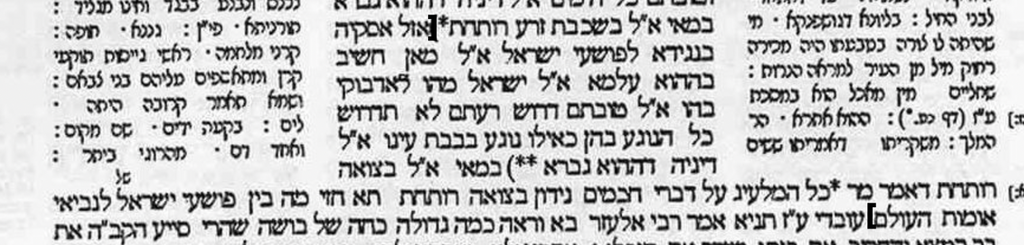
אֲזַל אַסְּקֵיהּ בִּנְגִידָא לְיֵשׁוּ הַנּוֹצְרִי אֲמַר לֵיהּ מַאן חֲשִׁיב בְּהָהוּא עָלְמָא אֲמַר לֵיהּ יִשְׂרָאֵל מַהוּ לְאִדַּבּוֹקֵי בְּהוּ אֲמַר לֵיהּ טוֹבָתָם דְּרוֹשׁ רָעָתָם לֹא תִּדְרוֹשׁ כׇּל הַנּוֹגֵעַ בָּהֶן כְּאִילּוּ נוֹגֵעַ בְּבָבַת עֵינוֹ אֲמַר לֵיהּ דִּינֵיהּ דְּהָהוּא גַּבְרָא בְּמַאי אֲמַר לֵיהּ בְּצוֹאָה רוֹתַחַת דְּאָמַר מָר כׇּל הַמַּלְעִיג עַל דִּבְרֵי חֲכָמִים נִידּוֹן בְּצוֹאָה רוֹתַחַת תָּא חֲזִי מָה בֵּין פּוֹשְׁעֵי יִשְׂרָאֵל לִנְבִיאֵי אוּמּוֹת הָעוֹלָם
Onkelos then went and raised Jesus the Nazarene from the grave through necromancy. Onkelos said to him: Who is most important in that world where you are now? Jesus said to him: The Jewish people. Onkelos asked him: Should I then attach myself to them in this world? Jesus said to him: Their welfare you shall seek, their misfortune you shall not seek, for anyone who touches them is regarded as if he were touching the apple of his eye (see Zechariah 2:12). Onkelos said to him: What is the punishment of that man, a euphemism for Jesus himself, in the next world? Jesus said to him: He is punished with boiling excrement. As the Master said: Anyone who mocks the words of the Sages will be sentenced to boiling excrement. And this was his sin, as he mocked the words of the Sages. The Gemara comments: Come and see the difference between the sinners of Israel and the prophets of the nations of the world. As Balaam, who was a prophet, wished Israel harm, whereas Jesus the Nazarene, who was a Jewish sinner, sought their well-being.
Possibly Elided References to Jesus in the Vilna Edition
הַמְסָרֵט עַל בְּשָׂרוֹ. תַּנְיָא, אָמַר לָהֶן רַבִּי אֱלִיעֶזֶר לַחֲכָמִים: וַהֲלֹא בֶּן סָטָדָא הוֹצִיא כְּשָׁפִים מִמִּצְרַיִם בִּסְרִיטָה שֶׁעַל בְּשָׂרוֹ? אָמְרוּ לוֹ: שׁוֹטֶה הָיָה, וְאֵין מְבִיאִין רְאָיָה מִן הַשּׁוֹטִים. ״בֶּן סָטָדָא״? בֶּן פַּנְדִּירָא הוּא! אָמַר רַב חִסְדָּא: בַּעַל ״סָטָדָא״, בּוֹעֵל ״פַּנְדִּירָא״. בַּעַל פַּפּוּס בֶּן יְהוּדָה הוּא? אֶלָּא אִמּוֹ ״סָטָדָא״. אִמּוֹ מִרְיָם מְגַדְּלָא שְׂעַר נְשַׁיָּא הֲוַאי? אֶלָּא כִּדְאָמְרִי בְּפוּמְבְּדִיתָא: סְטָת דָּא מִבַּעְלַהּ.

We learned in the mishna: If one unwittingly scratches letters on his flesh on Shabbat, Rabbi Eliezer deems him liable to bring a sin-offering and the Sages deem him exempt. It was taught in a baraita that Rabbi Eliezer said to the Rabbis: Didn’t the infamous ben Stada take magic spells out of Egypt in a scratch on his flesh? They said to him: He was a fool, and you cannot cite proof from a fool. That is not the way that most people write. Incidentally, the Gemara asks: Why did they call him ben Stada, when he was the son of Pandeira? Rav Ḥisda said: His mother’s husband, who acted as his father, was named Stada, but the one who had relations with his mother and fathered him was named Pandeira. The Gemara asks: Wasn’t his mother’s husband Pappos ben Yehuda? Rather, his mother was named Stada and he was named ben Stada after her. The Gemara asks: But wasn’t his mother Miriam, who braided women’s hair? The Gemara explains: That is not a contradiction. Rather, Stada was merely a nickname, as they say in Pumbedita: This one strayed [setat da] from her husband.

Expurgated Versions from the Talmud Yerushalmi
מַעֲשֶׂה בְּאֶלְעָזָר בֶּן דָּמָא שֶׁנְּשָׁכוֹ נָחָשׁ וּבָא יַעֲקֹב אִישׁ כְּפַר סָמָא לְרַפּוֹתוֹ. אָמַר לוֹ. נֵימָא לָךְ בְּשֵׁם יֵשׁוּ בֶּן פַנְדֵּרָא. אָמַר לוֹ רִבִּי יִשְׁמָעֵאל. אֵי אַתָּה רַשַּׁאי בֶּן דָּמָא. אָמַר לוֹ. אֲנִי אָבִיא רְאַייָה שֶׁיְּרַפְּאֵינִי. לֹא הִסְפִּיק לְהָבִיא רְאָייָה עַד שֶׁמֵּת. אָמַר לוֹ רִבִּי יִשְׁמָעֵאל. אַשְׁרֶיךָ בֶּן דָּמָה. שֶׁיָּצָאתָ בְשָׁלוֹם מִן הָעוֹלָם וְלֹא פָרַצְתָּ גְדֵירָן שֶׁלַּחֲכָמִים. לְקַייֵם מַה שֶׁנֶּאֱמַר וּפוֹרֵץ גָּדֵ֖ר יִשְּׁכֶ֥נּוּ נָחָֽשׁ. וְלֹא נָחָשׁ נְשָׁכוֹ. אֶלָּא שֶׁלֹּא יִשְׁכֶּנּוּ לְעָתִד לָבוֹא. וּמַה הֲוָה לֵיהּ לְמֵימַר. אֲשֶׁ֨ר יַֽעֲשֶׂ֥ה אוֹתָם הָֽאָדָ֖ם וָחַ֣י בָּהֶ֑ם

(Page 11a)

It happened that Eleazar ben Dama was bitten by a snake and Jacob from Kefar-Sama came to heal him (,and told him, I shall speak to you) in the name of Jesus ben Pandera. Rebbi Ismael said to him, Ben Dama you are not allowed. He told him, I shall bring a proof that he can heal me. He could not bring proof before he died. Rebbi Ismael said to him, you are blessed, ben Dama, that you left this world in peace and did not tear down the fences of the Sages, (to confirm) as it is written, he who tears down a fence will be bitten by a snake. But did not a snake bite him? But that it will not bite him in the Future World. What could he have said? Which a person should do and live by them.
Kinah 41, written in commemoration of the burning of the Talmud in Paris in 1240

(א) שַׁאֲלִי שְׂרוּפָה בָּאֵשׁ לִשְׁלוֹם אֲבֵלַיִךְ הַמִּתְאַוִּים שְׁכֹן בַּחֲצַר זְבֻלָיִךְ:

(ב) הַשּׁוֹאֲפִים עַל עָפָר אֶרֶץ וְהַכּוֹאֲבִים הָמִּשְׁתּוֹמְמִים עָלֵי מוֹקֵד גְּלִילַיִךְ:

(ג) הוֹלְכִים חֲשֵׁכִים וְאֵין נֹגַהּ, וְקַוִּים לְאוֹר יוֹמָם, עֲלֵיהֶם אֲשֶׁר יִזְרַח וְעָלֶיךְ:

(ד) וְשָׁלוֹם אֱנוֹשׁ נֶאֱנָח, בּוֹכֶה בְּלֵב נִשְׁבָּר תָּמִיד מְקוֹנֵן עָלי צירֵי חֲבָלָיִךְ:

(ה) וַיִּתְאוֹנֵן כְּתַנִּים וּבְנוֹת יַעֲנָה וַיִּקְרָא מִסְפֵּד מַר בִּגְלָלָיִךְ:

Inquire, consumed in fire, after the well-being of your mourners, who so strongly desire to reside in your dealings, who yearn for the earth of the land [Israel], and who are pained and shocked by the conflagration of your scrolls./They walk in darkness, unillumined, but hope for the light of day to shine upon them and upon you; and inquire, too, of the welfare of that sighing man, crying with a broken heart, constantly moaning your pangs of torment!/Who wails like jackals and ostriches, and calls for a bitter eulogy on your behalf.