19 Adar 5777 | March 17, 2017
Parshat Ki Tissa
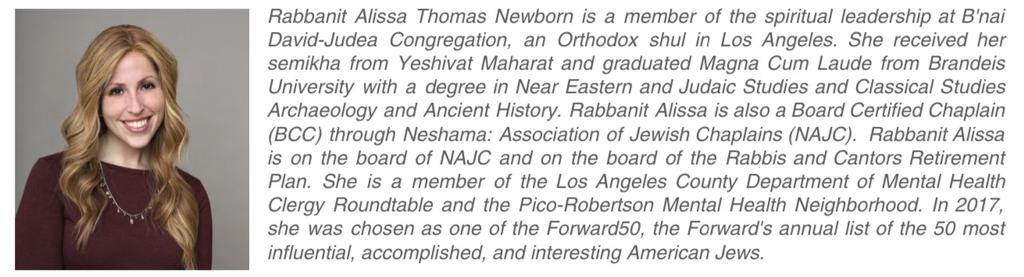
Rabbanit Alissa Thomas Newborn
Class of 2016
מחני נא, “Erase me”. Moshe utters this famous ultimatum, demanding that God either forgive B’nai Yisrael for Chet HaEigel, the sin of the golden calf, or erase him from God’s book. God’s reply is haunting, מי אשר חטא-לי אמחנו מספרי, “Whoever has sinned against Me, I will erase from My book” (Shemot 32:33). Moshe did not sin, so he is not blotted out. But moments ago, we, B’nai Yisrael, did sin against God. Don’t we then deserve to be erased from God’s book? Which leads us to ask as the story continues, why were we not erased entirely?
In addressing this question, Ibn Ezra reasons that God only intended to erase those who meant to sin against Him. God searched B’nai Yisrael’s hearts and discovered that they did not truly serve the עגל מסכה, they did not really believe it was their new God. So they were not erased. The Malbim, on the other hand, argues that God did in fact erase those who sinned against Him, but they were limited to ערב רב, the Egyptians who had come with B’nai Yisrael out of Egypt. According to the Malbim, we were not erased from God’s book because we were not at fault for Chet HaEigel.
We can agree that Ibn Ezra and the Malbim answer the textual problem of God’s potential inconsistency in blotting out those who sin against Him. But in doing so, they erase B’nai Yisrael’s culpability in the sin of the golden calf. Whether because of their rejection of the עגל as divine, or because of ערב רב, B’nai Yisrael is not complicit in the sin.
I would like to step back though and look at our story and accept it at its face. From the pshat of our parsha, we did sin-- we messed up big time. If we accept responsibility for our sin, what are we to learn from the fact that we were not erased from God’s book?
Brene Brown, who is a social worker and research professor in the field of vulnerability, gives us a powerful framework that I believe sheds light on our question. Brown writes,
Let’s be honest. It would have been easy to erase the story of Chet HaEigel from our history. We might have felt more whole, more faithful without this blemish on our story as God’s chosen people. We might have felt less ashamed, less vulnerable and flawed. But God did not write the Torah to conceal our flaws, or even His moments of regret. And we have had enough faith throughout history to adhere to that wisdom.
As Brown indicated, we have a natural inclination to disown our difficult stories. But in rereading the painful story of Chet HaEigel every year-- in drashing on this moment of our greatest failure as a people tasked with being holy and serving God-- we cultivate the spiritual practice of challenging that very inclination. We live a lesson that is essential to our humility and empathy: God requires our wholeness and holiness to include the recognition of our failures and limitations.
Why tell our story of failure? Why not just erase it? When I hurt someone, I cannot erase the hurt that I have caused. Yes, I can do teshuvah. But I cannot erase the hurt. To think otherwise would be a denial of the victim’s reality. When we revisit our difficult stories, we see ourselves in natural light, not airbrushed with tales of what we could have been. Only once we face our failures and feel the visceral pain of doing so are we able to humbly respond to the hurt we have caused and transform ego into empathy.
We each have our individual and collective difficult stories. We may have rewritten the times when we thought we got away with something or when we hurt another person. We can justify many things to avoid guilt and shame. But from Parshat Ki Tisa, we recognize that no matter what, we cannot erase these stories. We must face our struggles and mistakes as parts of ourselves in order to ultimately be a more holy and whole community.
Why didn’t God erase us from His book even though we sinned? We may have deserved to be erased. We did mess up. But in keeping us and our failures in the Torah, God gave us the transformative practice of honestly confronting our failures with the hope of finding relief, healing, and humility. When we accept responsibility, we can begin to rebuild God’s home in this world and write a new chapter in our story.