11 Nisan 5777 | April 7, 2017
Parshat Tzav
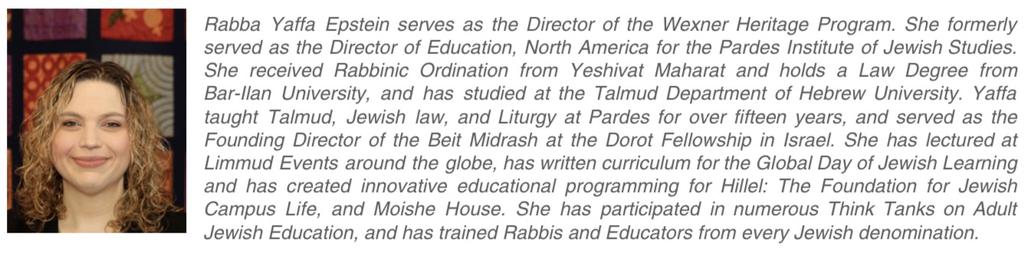
Rabba Yaffa Epstein
Advanced Kollel: Executive Ordination Track Class of 2015
This week’s Parsha opens with the instructions for how to offer a Korban Olah, a burnt offering.
Vayikra 6:2 states:
(2) Command Aaron and his sons thus: This is the ritual of the burnt offering: The burnt offering itself shall remain where it is burned upon the altar all night until morning, while the fire on the altar is kept going on it.
The Korban Olah is completely burnt up, completely dedicated to God and its ashes are left on the mizbeach, the altar, all night until the morning. In a time of sparse resources, the idea of giving an entire animal to God, without any human benefit teaches us that this Korban is one of real sacrifice and complete devotion. It demands intense commitment on the part of the giver.
Interestingly, the Midrash Rabbah in Vayikra 7:3 tells us that the Korban Olah is offered as atonement for a very specific transgression.
(ג) גּוּפָא אָמַר רַבִּי שִׁמְעוֹן בֶּן יוֹחָאי לְעוֹלָם אֵין הָעוֹלָה בָּאָה אֶלָּא עַל הַרְהוֹר הַלֵּב.
Rabbi Shimon Bar Yochai said – The Olah comes to atone for Hirhur Halev, the thoughts of our heart.
The concept of Hirhur Halev is classically understood to mean thoughts of sin. The Olah therefore comes to atone not for our transgressive actions, for which we have other sacrifices and paths to atonement, but rather for our thoughts and desires to sin.
What is the connection between a completely burnt offering and our thoughts of sin? Perhaps the answer lies in the word Halev – the heart. The Midrash is interested in exploring the idea that the Olah, a sacrifice that represents total dedication to God, is deeply connected to our emotional commitment to God. Serving God is not simply about our behaviors, but rather we must be emotionally engaged and involved in our service of God.
Mizmor Tehillim 51 describes the process of King David pleading with God for forgiveness after his sin with Batsheva. In one of the most famous passages in psalm, he says
You do not want me to bring sacrifices; You do not desire burnt offerings; True sacrifice to God is a broken spirit; God, You will not despise a broken and crushed heart.
Here King David understands that our true offerings to God are those of the heart; those that are emotional and spiritual, not simply behavioral. Further, God wants those hearts that are broken, not our whole and perfect heart, but rather, our broken heart, our broken spirit.
In another passage in Vayikra Rabbah 7:2 we are taught:
אָמַר רַבִּי אֲלֶכְּסַנְדְּרִי הַהֶדְיוֹט הַזֶּה אִם מְשַׁמֵּשׁ הוּא בְּכֵלִים שְׁבוּרִים גְּנַאי הוּא לוֹ, אֲבָל הַקָּדוֹשׁ בָּרוּךְ הוּא כְּלֵי תַּשְׁמִישׁוֹ שְׁבוּרִים, שֶׁנֶּאֱמַר (תהלים לד, יט): קָרוֹב ה' לְנִשְׁבְּרֵי לֵב.
Rabbi Alexandri said, “If an ordinary person uses broken vessels, it is a disgrace for him, but the vessels used by the Holy one Blessed be He are all broken, as it is said “God is close to the broken hearted.”
Rabbi Alexandri teaches us that God sees things differently than we do. While human beings see brokenness as something negative, God utilizes those things that are broken, those things that are imperfect. This Midrash expresses a beautiful idea; Hashem desires to be in relationship with the Human not despite our being broken, but actually because of it.
A similar idea can be found on Seder night. There is a moment in the Seder, at Yachatz, where we take the middle matzah of the three matzot on our table, and we break it in half. This action, the breaking of the innermost Matzah, which can be likened to our innermost thoughts, our Hirhurei Lev, instructs us that in order to experience the transformative power of redemption, we must first break open our hearts and make ourselves into broken vessels. Once we can accept our own brokenness, that is when we can truly tell our story, and through the recounting of our salvation, both the negative and the positive pieces of it, we become complete.
The Olah, and Seder night convey the same message. Both ask us to acknowledge and understand that we are imperfect broken vessels. Both ask us to bring our brokenness into conversation with repentance, and with redemption. We lay our broken hearts on the mizbeach, and on the Seder table, in complete offering, and through that, we ourselves become whole, and are able to be fully in relationship with the Divine.