


(א) עַ֥ל נַהֲר֨וֹת ׀ בָּבֶ֗ל שָׁ֣ם יָ֭שַׁבְנוּ גַּם־בָּכִ֑ינוּ בְּ֝זׇכְרֵ֗נוּ אֶת־צִיּֽוֹן׃
(ב) עַֽל־עֲרָבִ֥ים בְּתוֹכָ֑הּ תָּ֝לִ֗ינוּ כִּנֹּרוֹתֵֽינוּ׃ (ג) כִּ֤י שָׁ֨ם שְֽׁאֵל֪וּנוּ שׁוֹבֵ֡ינוּ דִּבְרֵי־שִׁ֭יר וְתוֹלָלֵ֣ינוּ שִׂמְחָ֑ה שִׁ֥ירוּ לָ֝֗נוּ מִשִּׁ֥יר צִיּֽוֹן׃ (ד) אֵ֗יךְ נָשִׁ֥יר אֶת־שִׁיר־ה' עַ֝֗ל אַדְמַ֥ת נֵכָֽר׃
(ה) אִֽם־אֶשְׁכָּחֵ֥ךְ יְֽרוּשָׁלָ֗͏ִם תִּשְׁכַּ֥ח יְמִינִֽי׃ (ו) תִּדְבַּֽק־לְשׁוֹנִ֨י ׀ לְחִכִּי֮ אִם־לֹ֢א אֶ֫זְכְּרֵ֥כִי אִם־לֹ֣א אַ֭עֲלֶה אֶת־יְרוּשָׁלַ֑͏ִם עַ֝֗ל רֹ֣אשׁ שִׂמְחָתִֽי׃
(ז) זְכֹ֤ר ה' ׀ לִבְנֵ֬י אֱד֗וֹם אֵת֮ י֤וֹם יְֽר֫וּשָׁלָ֥͏ִם הָ֭אֹ֣מְרִים עָ֤רוּ ׀ עָ֑רוּ עַ֝֗ד הַיְס֥וֹד בָּֽהּ׃
(ח) בַּת־בָּבֶ֗ל הַשְּׁד֫וּדָ֥ה אַשְׁרֵ֥י שֶׁיְשַׁלֶּם־לָ֑ךְ אֶת־גְּ֝מוּלֵ֗ךְ שֶׁגָּמַ֥לְתְּ לָֽנוּ׃
(ט) אַשְׁרֵ֤י ׀ שֶׁיֹּאחֵ֓ז וְנִפֵּ֬ץ אֶֽת־עֹ֝לָלַ֗יִךְ אֶל־הַסָּֽלַע׃ {פ}
(1) By the rivers of Babylon,
there we sat,
sat and wept,
as we thought of Zion.
(2) There on the poplars
we hung up our lyres,
(3) for our captors asked us there for songs,
our tormentors, for amusement:
“Sing us one of the songs of Zion.”
(4) How can we sing a song of the LORD
on alien soil?
(5) If I forget you, O Jerusalem,
let my right hand wither;
(6) let my tongue stick to my palate
if I cease to think of you,
if I do not keep Jerusalem in memory
even at my happiest hour.
(7) Remember, O LORD, against the Edomites the day of Jerusalem’s fall;
how they cried, “Strip her, strip her
to her very foundations!”
(8) Fair Babylon, you predator,
a blessing on him who repays you in kind
what you have inflicted on us;
(9) a blessing on him who seizes your babies
and dashes them against the rocks!
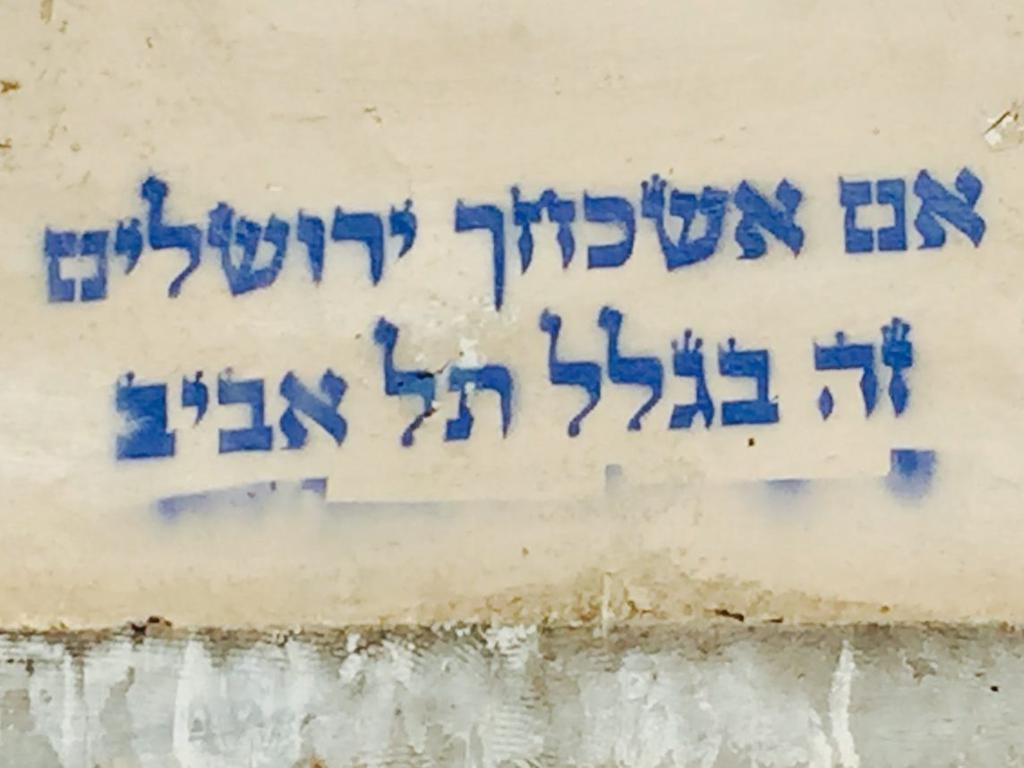
"If I forget you, Jerusalem, it's because of Tel Aviv," photographed in Tel Aviv, 2017
A systemic approach to Jewish memory must tolerate a multiplicity of fore-narratives, such that both secularism and religiosity can be anchored as Jewish choices with historical continuity, as well as all the permutations in between. It must also figure out a way to make major episodes of Jewish history feature in the consciousness of people who are not the direct descendants of their protagonists. There must be a system through which the Holocaust becomes culturally defining for Middle Eastern Jews, and through which the memory of a midnight flight from Tunis features into the collective memory of Ashkenazim. At the same time, this system cannot reduce these experiences in such a way that mocks the personal complexity of individual experience . . . memory has to be an elastic and selective system that still operates with intellectual honesty and integrity, a system that makes the past serviceable in search of a redemptive future. The system has to be both plausible with respect to the past that it is hoping to use and malleable to the modern realities and ethics that govern our lives. What's more, we have to consider the role of collective consciousness, and what it will look like to recreate hte productive instability of inhabiting both past and present.
why some people be mad at me sometimes
they ask me to remember
but they want me to remember
their memories
and i keep on remembering
mine.
"My heart is in the East" by Yehuda HaLevi, 12th c.

My heart is in the East --
and I am at the edge of the West.
How can I possibly taste what I eat?
How could it please me?
How can I keep my promise
or ever fulfill my vow,
when Zion is held by Edom
and I am bound by Arabia's chains?
I'd gladly leave behind me
all the pleasures of Spain --
if only I might see
the dust and ruins of your Shrine.