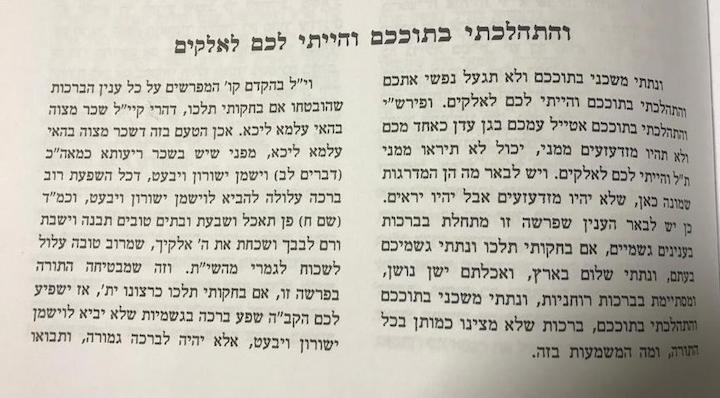
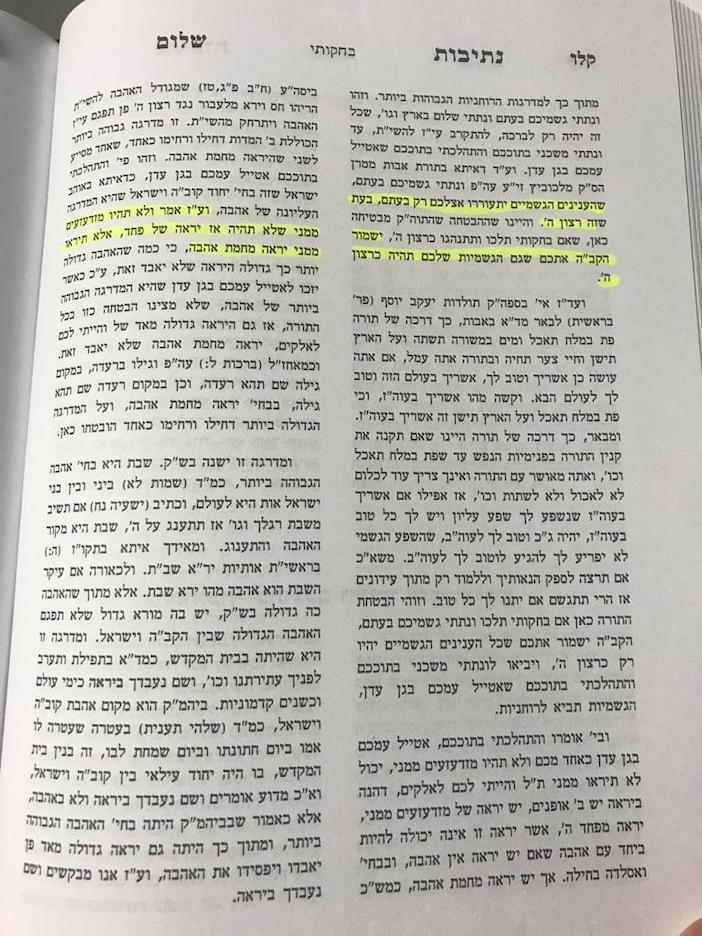
(ג) אִם־בְּחֻקֹּתַ֖י תֵּלֵ֑כוּ וְאֶת־מִצְוֺתַ֣י תִּשְׁמְר֔וּ וַעֲשִׂיתֶ֖ם אֹתָֽם׃ (ד) וְנָתַתִּ֥י גִשְׁמֵיכֶ֖ם בְּעִתָּ֑ם וְנָתְנָ֤ה הָאָ֙רֶץ֙ יְבוּלָ֔הּ וְעֵ֥ץ הַשָּׂדֶ֖ה יִתֵּ֥ן פִּרְיֽוֹ׃ (ה) וְהִשִּׂ֨יג לָכֶ֥ם דַּ֙יִשׁ֙ אֶת־בָּצִ֔יר וּבָצִ֖יר יַשִּׂ֣יג אֶת־זָ֑רַע וַאֲכַלְתֶּ֤ם לַחְמְכֶם֙ לָשֹׂ֔בַע וִֽישַׁבְתֶּ֥ם לָבֶ֖טַח בְּאַרְצְכֶֽם׃ (ו) וְנָתַתִּ֤י שָׁלוֹם֙ בָּאָ֔רֶץ וּשְׁכַבְתֶּ֖ם וְאֵ֣ין מַחֲרִ֑יד וְהִשְׁבַּתִּ֞י חַיָּ֤ה רָעָה֙ מִן־הָאָ֔רֶץ וְחֶ֖רֶב לֹא־תַעֲבֹ֥ר בְּאַרְצְכֶֽם׃ (ז) וּרְדַפְתֶּ֖ם אֶת־אֹיְבֵיכֶ֑ם וְנָפְל֥וּ לִפְנֵיכֶ֖ם לֶחָֽרֶב׃ (ח) וְרָדְפ֨וּ מִכֶּ֤ם חֲמִשָּׁה֙ מֵאָ֔ה וּמֵאָ֥ה מִכֶּ֖ם רְבָבָ֣ה יִרְדֹּ֑פוּ וְנָפְל֧וּ אֹיְבֵיכֶ֛ם לִפְנֵיכֶ֖ם לֶחָֽרֶב׃ (ט) וּפָנִ֣יתִי אֲלֵיכֶ֔ם וְהִפְרֵיתִ֣י אֶתְכֶ֔ם וְהִרְבֵּיתִ֖י אֶתְכֶ֑ם וַהֲקִימֹתִ֥י אֶת־בְּרִיתִ֖י אִתְּכֶֽם׃ (י) וַאֲכַלְתֶּ֥ם יָשָׁ֖ן נוֹשָׁ֑ן וְיָשָׁ֕ן מִפְּנֵ֥י חָדָ֖שׁ תּוֹצִֽיאוּ׃ (יא) וְנָתַתִּ֥י מִשְׁכָּנִ֖י בְּתוֹכְכֶ֑ם וְלֹֽא־תִגְעַ֥ל נַפְשִׁ֖י אֶתְכֶֽם׃ (יב) וְהִתְהַלַּכְתִּי֙ בְּת֣וֹכְכֶ֔ם וְהָיִ֥יתִי לָכֶ֖ם לֵֽאלֹקִ֑ים וְאַתֶּ֖ם תִּהְיוּ־לִ֥י לְעָֽם׃
(3) If you follow My laws and faithfully observe My commandments, (4) I will grant your rains in their season, so that the earth shall yield its produce and the trees of the field their fruit. (5) Your threshing shall overtake the vintage, and your vintage shall overtake the sowing; you shall eat your fill of bread and dwell securely in your land. (6) I will grant peace in the land, and you shall lie down untroubled by anyone; I will give the land respite from vicious beasts, and no sword shall cross your land. (7) [Your army] shall give chase to your enemies, and they shall fall before you by the sword. (8) Five of you shall give chase to a hundred, and a hundred of you shall give chase to ten thousand; your enemies shall fall before you by the sword. (9) I will look with favor upon you, and make you fertile and multiply you; and I will maintain My covenant with you. (10) You shall eat old grain long stored, and you shall have to clear out the old to make room for the new. (11) I will establish My abode in your midst, and I will not spurn you. (12) I will be ever present in your midst: I will be your God, and you shall be My people.
אם בחקתי תלכו. יָכוֹל זֶה קִיּוּם הַמִּצְווֹת, כְּשֶׁהוּא אוֹמֵר וְאֶת מִצְוֹתַי תִּשְׁמְרוּ וַעֲשִיתֶם אֹתָם הֲרֵי קִיּוּם הַמִּצְווֹת אָמוּר, הָא מָה אֲנִי מְקַיֵּם אִם בְּחֻקֹּתַי תֵּלֵכוּ? שֶׁתִּהְיוּ עֲמֵלִים בַּתּוֹרָה (ספרא):
אם בחקתי תלכו IF YE WALK IN MY ORDINANCES — One might think that this denotes the fulfilment of the commandments; but when Scripture states “and ye shall keep My commandments and do them”, it is plain that in this passage there is mentioned the “fulfilment of the commands”. How then must I explain אם בחקתי תלכו? As an admonition that you should study the Torah laboriously (Sifra, Bechukotai, Section 1 1-2)
ואת מצותי תשמרו הנה השמירה במצות היא ההשגחה באופן עשייתם ובמכוון מהם וזה בעיון נאות כאמרם ז''ל שמור זו משנה. אמר אם כן אם תתנהגו בדרכי האל יתברך הנכללים בחלק המעשי בתורתו ותעיינו במצות לדעת אופן עשייתן ותכליתן ובזה תשלימו כונתו להיותכם בצלמו כדמותו:
אם בחקותי תלכו, chukkot are like Royal decrees, something person has to be guided by if he expects his endeavours in life to prosper. The Hebrew expression describing the fact that one abides by them is called הליכה, “walking.” We have encountered this expression in connection with these חקים already in Leviticus 18,3, as well as in 18,4. We also find the term in the Books of Prophets, for instance in Ezekiel 33,15 בחקת החיים הלך, “he followed the laws of life.” ואת מצותי תשמורו; the term שמירה in connection with G’d’s commandments, [something intangible, so that the word “guarding” seems at first glance somewhat incongruous, Ed.] is the meticulous observance of them, i.e. performance in accordance with what they represent. It means that they cannot just be performed by rote but must be performed consciously as such. This has been spelled out by Sifri, Parshat Re-ay where the wording is: “שמור =study.” The thrust of our verse then is as follows: “if you will conduct yourselves in accordance with the practical part of My Torah, i.e. the performance of commandments requiring deeds, and you will study these laws in order to understand their purpose and in order to give meaning to your performance of these laws, you will accomplish that you will deserve the description of being a creature which reflects “His image.”
והתהלכתי בתוככם. אֲטַיֵּל עִמָּכֶם בְּגַן עֵדֶן כְּאֶחָד מִכֶּם, וְלֹא תִהְיוּ מִזְדַּעְזְעִים מִמֶּנִּי, יָכוֹל לֹא תִירְאוּ מִמֶּנִּי, תַּ"לֹ "וְהָיִיתִי לָכֶם לֵאלֹקִים" (ספרא):
והתהלכתי בתוככם AND I WILL WALK AMONG YOU — I will, as it were, walk with you in the Garden of Eden as though I were one of yourselves and you will not be frightened of Me. One might think that this implies: you will not fear (reverence) Me! Scripture however states, “but I will be your God” (Sifra, Bechukotai, Chapter 3 3-4).
(כח) וַיְבָ֣רֶךְ אֹתָם֮ אֱלֹקִים֒ וַיֹּ֨אמֶר לָהֶ֜ם אֱלֹקִ֗ים פְּר֥וּ וּרְב֛וּ וּמִלְא֥וּ אֶת־הָאָ֖רֶץ וְכִבְשֻׁ֑הָ וּרְד֞וּ בִּדְגַ֤ת הַיָּם֙ וּבְע֣וֹף הַשָּׁמַ֔יִם וּבְכׇל־חַיָּ֖ה הָֽרֹמֶ֥שֶׂת עַל־הָאָֽרֶץ׃ (כט) וַיֹּ֣אמֶר אֱלֹקִ֗ים הִנֵּה֩ נָתַ֨תִּי לָכֶ֜ם אֶת־כׇּל־עֵ֣שֶׂב ׀ זֹרֵ֣עַ זֶ֗רַע אֲשֶׁר֙ עַל־פְּנֵ֣י כׇל־הָאָ֔רֶץ וְאֶת־כׇּל־הָעֵ֛ץ אֲשֶׁר־בּ֥וֹ פְרִי־עֵ֖ץ זֹרֵ֣עַ זָ֑רַע לָכֶ֥ם יִֽהְיֶ֖ה לְאׇכְלָֽה׃
(28) God blessed them and God said to them, “Be fertile and increase, fill the earth and master it; and rule the fish of the sea, the birds of the sky, and all the living things that creep on earth.” (29) God said, “See, I give you every seed-bearing plant that is upon all the earth, and every tree that has seed-bearing fruit; they shall be yours for food.
(ב) וַיְכַ֤ל אֱלֹקִים֙ בַּיּ֣וֹם הַשְּׁבִיעִ֔י מְלַאכְתּ֖וֹ אֲשֶׁ֣ר עָשָׂ֑ה וַיִּשְׁבֹּת֙ בַּיּ֣וֹם הַשְּׁבִיעִ֔י מִכׇּל־מְלַאכְתּ֖וֹ אֲשֶׁ֥ר עָשָֽׂה׃
(2) On the seventh day God finished the work that had been undertaken: [God] ceased on the seventh day from doing any of the work.
(מג) וְהָאָ֩רֶץ֩ תֵּעָזֵ֨ב מֵהֶ֜ם וְתִ֣רֶץ אֶת־שַׁבְּתֹתֶ֗יהָ בׇּהְשַׁמָּהֿ֙ מֵהֶ֔ם וְהֵ֖ם יִרְצ֣וּ אֶת־עֲוֺנָ֑ם יַ֣עַן וּבְיַ֔עַן בְּמִשְׁפָּטַ֣י מָאָ֔סוּ וְאֶת־חֻקֹּתַ֖י גָּעֲלָ֥ה נַפְשָֽׁם׃ (מד) וְאַף־גַּם־זֹ֠את בִּֽהְיוֹתָ֞ם בְּאֶ֣רֶץ אֹֽיְבֵיהֶ֗ם לֹֽא־מְאַסְתִּ֤ים וְלֹֽא־גְעַלְתִּים֙ לְכַלֹּתָ֔ם לְהָפֵ֥ר בְּרִיתִ֖י אִתָּ֑ם כִּ֛י אֲנִ֥י ה' אֱלֹהֵיהֶֽם׃
(43) For the land shall be forsaken of them, making up for its sabbath years by being desolate of them, while they atone for their iniquity; for the abundant reason that they rejected My rules and spurned My laws. (44) Yet, even then, when they are in the land of their enemies, I will not reject them or spurn them so as to destroy them, annulling My covenant with them: for I ה' am their God.
Rabbi Sacks z'tl: Behukkotai: The Politics of Responsibility (Covenant and Conversation Leviticus p. 420)
"I brought your from slavery to freedom - says G-d - and I empower you to be free. But I cannot and will not abandon you. I will not intervene in your choices, but I will instruct you on what choices you out to make. I will teach you the constitution of liberty".
"I brought your from slavery to freedom - says G-d - and I empower you to be free. But I cannot and will not abandon you. I will not intervene in your choices, but I will instruct you on what choices you out to make. I will teach you the constitution of liberty".
אֲזַל הוּא וּבְרֵיהּ, טְשׁוֹ בֵּי מִדְרְשָׁא. כׇּל יוֹמָא הֲוָה מַתְיָא לְהוּ דְּבֵיתְהוּ רִיפְתָּא וְכוּזָא דְמַיָּא וְכָרְכִי. כִּי תְּקֵיף גְּזֵירְתָא אֲמַר לֵיהּ לִבְרֵיהּ: נָשִׁים דַּעְתָּן קַלָּה עֲלֵיהֶן, דִילְמָא מְצַעֲרִי לַהּ וּמְגַלְּיָא לַן. אֲזַלוּ טְשׁוֹ בִּמְעָרְתָּא. אִיתְרְחִישׁ נִיסָּא אִיבְּרִי לְהוּ חָרוּבָא וְעֵינָא דְמַיָּא, וַהֲווֹ מַשְׁלְחִי מָנַיְיהוּ וַהֲווֹ יָתְבִי עַד צַוְּארַיְיהוּ בְּחָלָא. כּוּלֵּי יוֹמָא גָּרְסִי. בְּעִידָּן צַלּוֹיֵי לָבְשִׁי מִיכַּסּוּ וּמְצַלּוּ, וַהֲדַר מַשְׁלְחִי מָנַיְיהוּ כִּי הֵיכִי דְּלָא לִיבְלוּ. אִיתִּיבוּ תְּרֵיסַר שְׁנֵי בִּמְעָרְתָּא. אֲתָא אֵלִיָּהוּ וְקָם אַפִּיתְחָא דִמְעָרְתָּא, אֲמַר: מַאן לוֹדְעֵיהּ לְבַר יוֹחַי דְּמִית קֵיסָר וּבְטִיל גְּזֵירְתֵיהּ. נְפַקוּ, חֲזוֹ אִינָשֵׁי דְּקָא כָּרְבִי וְזָרְעִי, אָמְרִין: מַנִּיחִין חַיֵּי עוֹלָם וְעוֹסְקִין בְּחַיֵּי שָׁעָה. כׇּל מָקוֹם שֶׁנּוֹתְנִין עֵינֵיהֶן מִיָּד נִשְׂרָף. יָצְתָה בַּת קוֹל וְאָמְרָה לָהֶם: לְהַחֲרִיב עוֹלָמִי יְצָאתֶם?! חִיזְרוּ לִמְעָרַתְכֶם! הֲדוּר אֲזוּל אִיתִּיבוּ תְּרֵיסַר יַרְחֵי שַׁתָּא. אָמְרִי: מִשְׁפַּט רְשָׁעִים בְּגֵיהִנָּם שְׁנֵים עָשָׂר חֹדֶשׁ. יָצְתָה בַּת קוֹל וְאָמְרָה: צְאוּ מִמְּעָרַתְכֶם! נְפַקוּ. כָּל הֵיכָא דַּהֲוָה מָחֵי רַבִּי אֶלְעָזָר, הֲוָה מַסֵּי רַבִּי שִׁמְעוֹן. אָמַר לוֹ: בְּנִי, דַּי לָעוֹלָם אֲנִי וְאַתָּה. בַּהֲדֵי פַּנְיָא דְּמַעֲלֵי שַׁבְּתָא חֲזוֹ הָהוּא סָבָא דַּהֲוָה נָקֵיט תְּרֵי מַדָּאנֵי אָסָא וְרָהֵיט בֵּין הַשְּׁמָשׁוֹת. אֲמַרוּ לֵיהּ: הָנֵי לְמָה לָךְ? אֲמַר לְהוּ: לִכְבוֹד שַׁבָּת. וְתִיסְגֵּי לָךְ בְּחַד! — חַד כְּנֶגֶד ״זָכוֹר״ וְחַד כְּנֶגֶד ״שָׁמוֹר״. אֲמַר לֵיהּ לִבְרֵיהּ: חֲזִי כַּמָּה חֲבִיבִין מִצְוֹת עַל יִשְׂרָאֵל. אִיְּתִיבָה דַּעְתַּיְיהוּ.
Rabbi Shimon bar Yoḥai and his son, Rabbi Elazar, went and hid in the study hall. Every day Rabbi Shimon’s wife would bring them bread and a jug of water and they would eat. When the decree intensified, Rabbi Shimon said to his son: Women are easily impressionable and, therefore, there is room for concern lest the authorities torture her and she reveal our whereabouts. They went and they hid in a cave. A miracle occurred and a carob tree was created for them as well as a spring of water. They would remove their clothes and sit covered in sand up to their necks. They would study Torah all day in that manner. At the time of prayer, they would dress, cover themselves, and pray, and they would again remove their clothes afterward so that they would not become tattered. They sat in the cave for twelve years. Elijah the Prophet came and stood at the entrance to the cave and said: Who will inform bar Yoḥai that the emperor died and his decree has been abrogated? They emerged from the cave, and saw people who were plowing and sowing. Rabbi Shimon bar Yoḥai said: These people abandon eternal life of Torah study and engage in temporal life for their own sustenance. The Gemara relates that every place that Rabbi Shimon and his son Rabbi Elazar directed their eyes was immediately burned. A Divine Voice emerged and said to them: Did you emerge from the cave in order to destroy My world? Return to your cave. They again went and sat there for twelve months. They said: The judgment of the wicked in Gehenna lasts for twelve months. Surely their sin was atoned in that time. A Divine Voice emerged and said to them: Emerge from your cave. They emerged. Everywhere that Rabbi Elazar would strike, Rabbi Shimon would heal. Rabbi Shimon said to Rabbi Elazar: My son, you and I suffice for the entire world, as the two of us are engaged in the proper study of Torah. As the sun was setting on Shabbat eve, they saw an elderly man who was holding two bundles of myrtle branches and running at twilight. They said to him: Why do you have these? He said to them: In honor of Shabbat. They said to him: And let one suffice. He answered them: One is corresponding to: “Remember the Shabbat day, to keep it holy” (Exodus 20:8), and one is corresponding to: “Observe the Shabbat day, to keep it holy” (Deuteronomy 5:12). Rabbi Shimon said to his son: See how beloved the mitzvot are to Israel. Their minds were put at ease and they were no longer as upset that people were not engaged in Torah study.
בֶּן זוֹמָא אוֹמֵר, אֵיזֶהוּ חָכָם, הַלּוֹמֵד מִכָּל אָדָם, שֶׁנֶּאֱמַר (תהלים קיט) מִכָּל מְלַמְּדַי הִשְׂכַּלְתִּי כִּי עֵדְוֹתֶיךָ שִׂיחָה לִּי. אֵיזֶהוּ גִבּוֹר, הַכּוֹבֵשׁ אֶת יִצְרוֹ, שֶׁנֶּאֱמַר (משלי טז) טוֹב אֶרֶךְ אַפַּיִם מִגִּבּוֹר וּמשֵׁל בְּרוּחוֹ מִלֹּכֵד עִיר. אֵיזֶהוּ עָשִׁיר, הַשָּׂמֵחַ בְּחֶלְקוֹ, שֶׁנֶּאֱמַר (תהלים קכח) יְגִיעַ כַּפֶּיךָ כִּי תֹאכֵל אַשְׁרֶיךָ וְטוֹב לָךְ. אַשְׁרֶיךָ, בָּעוֹלָם הַזֶּה. וְטוֹב לָךְ, לָעוֹלָם הַבָּא. אֵיזֶהוּ מְכֻבָּד, הַמְכַבֵּד אֶת הַבְּרִיּוֹת, שֶׁנֶּאֱמַר (שמואל א ב) כִּי מְכַבְּדַי אֲכַבֵּד וּבֹזַי יֵקָלּוּ:
Ben Zoma said:Who is wise? He who learns from every man, as it is said: “From all who taught me have I gained understanding” (Psalms 119:99). Who is mighty? He who subdues his [evil] inclination, as it is said: “He that is slow to anger is better than the mighty; and he that rules his spirit than he that takes a city” (Proverbs 16:32). Who is rich? He who rejoices in his lot, as it is said: “You shall enjoy the fruit of your labors, you shall be happy and you shall prosper” (Psalms 128:2) “You shall be happy” in this world, “and you shall prosper” in the world to come. Who is he that is honored? He who honors his fellow human beings as it is said: “For I honor those that honor Me, but those who spurn Me shall be dishonored” (I Samuel 2:30).
עמד רבי יהושע על רגליו ואמר (דברים ל, יב) לא בשמים היא מאי לא בשמים היא אמר רבי ירמיה שכבר נתנה תורה מהר סיני אין אנו משגיחין בבת קול שכבר כתבת בהר סיני בתורה (שמות כג, ב) אחרי רבים להטות אשכחיה רבי נתן לאליהו א"ל מאי עביד קוב"ה בההיא שעתא א"ל קא חייך ואמר נצחוני בני נצחוני בני
Rabbi Yehoshua stood on his feet and said: It is written: “It is not in heaven” (Deuteronomy 30:12). The Gemara asks: What is the relevance of the phrase “It is not in heaven” in this context? Rabbi Yirmeya says: Since the Torah was already given at Mount Sinai, we do not regard a Divine Voice, as You already wrote at Mount Sinai, in the Torah: “After a majority to incline” (Exodus 23:2). Since the majority of Rabbis disagreed with Rabbi Eliezer’s opinion, the halakha is not ruled in accordance with his opinion. The Gemara relates: Years after, Rabbi Natan encountered Elijah the prophet and said to him: What did the Holy One, Blessed be He, do at that time, when Rabbi Yehoshua issued his declaration? Elijah said to him: The Holy One, Blessed be He, smiled and said: My children have triumphed over Me; My children have triumphed over Me.