


(א) וַיְהִ֗י בִּימֵי֙ שְׁפֹ֣ט הַשֹּׁפְטִ֔ים וַיְהִ֥י רָעָ֖ב בָּאָ֑רֶץ וַיֵּ֨לֶךְ אִ֜ישׁ מִבֵּ֧ית לֶ֣חֶם יְהוּדָ֗ה לָגוּר֙ בִּשְׂדֵ֣י מוֹאָ֔ב ה֥וּא וְאִשְׁתּ֖וֹ וּשְׁנֵ֥י בָנָֽיו׃
(1) In the days of the Judging of the Judges, there was a famine in the land; and a man of Bethlehem in Judah, with his wife and two sons, went to reside in the country of Moab.
(ב) ויהי בימי שפוט השופטים. יש אומר כי השם שפט השופטים, כי על ידם בא רעב בארץ ישראל...
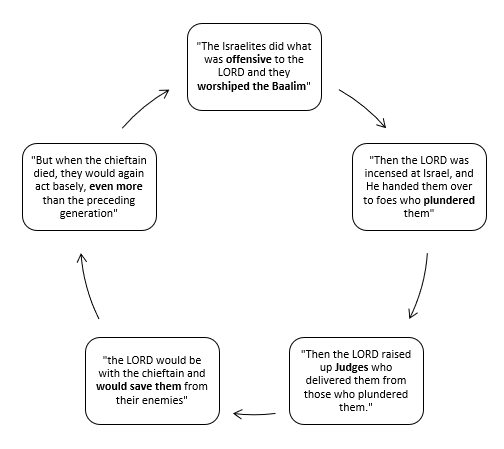
(כז) וְלֹֽא־הוֹרִ֣ישׁ מְנַשֶּׁ֗ה אֶת־בֵּית־שְׁאָ֣ן וְאֶת־בְּנוֹתֶ֘יהָ֮ וְאֶת־תַּעְנַ֣ךְ וְאֶת־בְּנֹתֶ֒יהָ֒....
(27) Manasseh did not dispossess [the inhabitants of] Beth-shean...
(29) Nor did Ephraim dispossess the Canaanites who inhabited Gezer; so the Canaanites dwelt in their midst at Gezer.
(30) Zebulun did not dispossess the inhabitants of Kitron...
(32)Asher did not dispossess the inhabitants of Acco...
(33) Naphtali did not dispossess the inhabitants of Beth-shemesh...
(ד) וַיִּקְבֹּ֤ץ יִפְתָּח֙ אֶת־כׇּל־אַנְשֵׁ֣י גִלְעָ֔ד וַיִּלָּ֖חֶם אֶת־אֶפְרָ֑יִם ... (ה) וַיִּפֹּ֞ל בָּעֵ֤ת הַהִיא֙ מֵֽאֶפְרַ֔יִם אַרְבָּעִ֥ים וּשְׁנַ֖יִם אָֽלֶף׃
(4) And Jephthah gathered all the men of Gilead and fought the Ephraimites...
...(6) Forty-two thousand Ephraimites fell at that time.
(ל) וַיִּדַּ֨ר יִפְתָּ֥ח נֶ֛דֶר לַיהֹוָ֖ה וַיֹּאמַ֑ר אִם־נָת֥וֹן תִּתֵּ֛ן אֶת־בְּנֵ֥י עַמּ֖וֹן בְּיָדִֽי׃ (לא) וְהָיָ֣ה הַיּוֹצֵ֗א אֲשֶׁ֨ר יֵצֵ֜א מִדַּלְתֵ֤י בֵיתִי֙ לִקְרָאתִ֔י בְּשׁוּבִ֥י בְשָׁל֖וֹם מִבְּנֵ֣י עַמּ֑וֹן וְהָיָה֙ לַיהֹוָ֔ה וְהַעֲלִיתִ֖יהוּ עֹלָֽה׃
(לד) וַיָּבֹ֨א יִפְתָּ֣ח הַמִּצְפָּה֮ אֶל־בֵּיתוֹ֒
(30) And Jephthah made the following vow to the LORD: “If you deliver the Ammonites into my hands, (31) then whatever comes out of the door of my house to meet me on my safe return from the Ammonites shall be the LORD’s and shall be offered by me as a burnt offering.”...
(34) When Jephthah arrived at his home in Mizpah, there was his daughter coming out to meet him
(כד) הִנֵּה֩ בִתִּ֨י הַבְּתוּלָ֜ה וּפִילַגְשֵׁ֗הוּ אֽוֹצִיאָה־נָּ֤א אוֹתָם֙ וְעַנּ֣וּ אוֹתָ֔ם וַעֲשׂ֣וּ לָהֶ֔ם הַטּ֖וֹב בְּעֵינֵיכֶ֑ם
(24) Look, here is my virgin daughter, and his concubine. Let me bring them out to you. Molest them, do what you like with them...
Nor the ruler’s staff from between his feet;
So that tribute shall come to him
And the homage of peoples be his.
(יד) כִּֽי־תָבֹ֣א אֶל־הָאָ֗רֶץ אֲשֶׁ֨ר יְהֹוָ֤ה אֱלֹהֶ֙יךָ֙ נֹתֵ֣ן לָ֔ךְ וִֽירִשְׁתָּ֖הּ וְיָשַׁ֣בְתָּה בָּ֑הּ... (טו) שׂ֣וֹם תָּשִׂ֤ים עָלֶ֙יךָ֙ מֶ֔לֶךְ אֲשֶׁ֥ר יִבְחַ֛ר יְהֹוָ֥ה אֱלֹהֶ֖יךָ...
(14) When you have entered the land that your God יהוה has assigned to you, and taken possession of it and settled in it... (15) you shall surely set a king over yourself, one chosen by your God יהוה...
(א) וַֽיְהִ֗י אַֽחֲרֵי֙ מ֣וֹת יְהוֹשֻׁ֔עַ וַֽיִּשְׁאֲלוּ֙ בְּנֵ֣י יִשְׂרָאֵ֔ל בַּיהֹוָ֖ה לֵאמֹ֑ר מִ֣י יַעֲלֶה־לָּ֧נוּ אֶל־הַֽכְּנַעֲנִ֛י בַּתְּחִלָּ֖ה לְהִלָּ֥חֶם בּֽוֹ׃ (ב) וַיֹּ֥אמֶר יְהֹוָ֖ה יְהוּדָ֣ה יַעֲלֶ֑ה הִנֵּ֛ה נָתַ֥תִּי אֶת־הָאָ֖רֶץ בְּיָדֽוֹ׃
(1) After the death of Joshua, the Israelites inquired of the LORD, “Which of us shall be the first to go up against the Canaanites and attack them?” (2) The LORD replied, “Let [the tribe of] Judah go up. I now deliver the land into their hands.”
(יח) וַיָּקֻ֜מוּ וַיַּעֲל֣וּ בֵֽית־אֵל֮ וַיִּשְׁאֲל֣וּ בֵאלֹהִים֒ וַיֹּֽאמְרוּ֙ בְּנֵ֣י יִשְׂרָאֵ֔ל מִ֚י יַעֲלֶה־לָּ֣נוּ בַתְּחִלָּ֔ה לַמִּלְחָמָ֖ה עִם־בְּנֵ֣י בִנְיָמִ֑ן וַיֹּ֥אמֶר יְהֹוָ֖ה יְהוּדָ֥ה בַתְּחִלָּֽה׃
(18) They proceeded to Bethel and inquired of God; the Israelites asked, “Who of us shall advance first to fight the Benjaminites?” And the LORD replied, “Judah first.”
(25) In those days there was no king in Israel; everyone did as he pleased.

The climax of both stories take place at night, after the respective men have been “eating, drinking” (וַיֹּאכְל֖וּ וַיִּשְׁתּֽוּ) with a “merry heart” (וַיִּיטַ֣ב לִבּ֔וֹ). This is where the stories sharply diverge:
In Shoftim, the husband and his Piligesh are lodging in a hostile Jewish town. In the middle of the night, the inhabitants bang down the door of the house demanding to molest the man. In response he throws out his Piligesh and instructs them to “do with her what you please”. The men of the city harass her throughout the night. When morning arrives (with the word בוקר repeated thrice in rapid succession), she collapses at the doorstep of the house and dies. The man orders her to arise and when she does not, he brutally dismembers her- immortalising her as a tragic, nameless, objectified, dehumanised woman, who lacks the protection and kindness of dominant members in society.
The night scene in Rut, however, involves Boaz requesting the identity and name of the woman at his feet. What could have been a sexually suggestive situation, of which he could have easily taken advantage, transforms into a gentle and protective moment where Boaz blesses Rut and takes charge of her future. In contrast to Shoftim, he offers her safe lodging for the night because in the morning (with the word בוקר repeated thrice in rapid succession), redemption will come. Boaz orders no one “to molest the woman” and provides her with food, and most importantly hope.
In Shoftim, the man summons ten men to witness his mutilation of his Piligesh. In Ruth, Boaz summons ten men to validate Rut’s redemption and salvation. The aftermath in Shoftim is a civil war that almost wipes out Binyamin. The aftermath of Ruth is continuity of the Davidic bloodline.
These stories present contrasting models of society. Shoftim is a society “with no king”, in which there is a total breakdown of social cohesion, protection of the minority and concern for the downcast, while Ruth describes a society based on Boaz’s strong leadership, benevolence and kindness which fosters an environment where all have names, and all have value.
שְׁמוּאֵל כָּתַב סִפְרוֹ וְשׁוֹפְטִים וְרוּת
The baraita now considers the authors of the biblical books: And who wrote the books of the Bible? ...Samuel wrote his own book, the book of Judges, and the book of Ruth...
(יא) וַיִּבְחַר־ל֣וֹ ל֗וֹט אֵ֚ת כׇּל־כִּכַּ֣ר הַיַּרְדֵּ֔ן וַיִּסַּ֥ע ל֖וֹט מִקֶּ֑דֶם וַיִּפָּ֣רְד֔וּ אִ֖ישׁ מֵעַ֥ל אָחִֽיו׃
(11) So Lot chose for himself the whole plain of the Jordan, and Lot journeyed eastward. Thus they parted from each other;
(טז) וַתֹּ֤אמֶר רוּת֙ אַל־תִּפְגְּעִי־בִ֔י לְעׇזְבֵ֖ךְ לָשׁ֣וּב מֵאַחֲרָ֑יִךְ כִּ֠י אֶל־אֲשֶׁ֨ר תֵּלְכִ֜י אֵלֵ֗ךְ וּבַאֲשֶׁ֤ר תָּלִ֙ינִי֙ אָלִ֔ין עַמֵּ֣ךְ עַמִּ֔י וֵאלֹהַ֖יִךְ אֱלֹהָֽי׃
(16) But Ruth replied, “Do not urge me to leave you, to turn back and not follow you. For wherever you go, I will go; wherever you lodge, I will lodge; your people shall be my people, and your God my God.
(יא) וַיַּ֤עַן בֹּ֙עַז֙ וַיֹּ֣אמֶר לָ֔הּ הֻגֵּ֨ד הֻגַּ֜ד לִ֗י כֹּ֤ל אֲשֶׁר־עָשִׂית֙ אֶת־חֲמוֹתֵ֔ךְ אַחֲרֵ֖י מ֣וֹת אִישֵׁ֑ךְ וַתַּֽעַזְבִ֞י אָבִ֣יךְ וְאִמֵּ֗ךְ וְאֶ֙רֶץ֙ מֽוֹלַדְתֵּ֔ךְ וַתֵּ֣לְכִ֔י אֶל־עַ֕ם אֲשֶׁ֥ר לֹא־יָדַ֖עַתְּ תְּמ֥וֹל שִׁלְשֽׁוֹם׃
(א) וַיֹּ֤אמֶר יְהֹוָה֙ אֶל־אַבְרָ֔ם לֶךְ־לְךָ֛ מֵאַרְצְךָ֥ וּמִמּֽוֹלַדְתְּךָ֖ וּמִבֵּ֣ית אָבִ֑יךָ אֶל־הָאָ֖רֶץ אֲשֶׁ֥ר אַרְאֶֽךָּ׃
(1) יהוה said to Abram, “Go forth from your native land and from your father’s house to the land that I will show you.
(ד) לֹֽא־יָבֹ֧א עַמּוֹנִ֛י וּמוֹאָבִ֖י בִּקְהַ֣ל יְהֹוָ֑ה גַּ֚ם דּ֣וֹר עֲשִׂירִ֔י לֹא־יָבֹ֥א לָהֶ֛ם בִּקְהַ֥ל יְהֹוָ֖ה עַד־עוֹלָֽם׃ (ה) עַל־דְּבַ֞ר אֲשֶׁ֨ר לֹא־קִדְּמ֤וּ אֶתְכֶם֙ בַּלֶּ֣חֶם וּבַמַּ֔יִם בַּדֶּ֖רֶךְ בְּצֵאתְכֶ֣ם מִמִּצְרָ֑יִם
No Ammonite or Moabite shall be admitted into the congregation of יהוה; no descendants of such, even in the tenth generation, shall ever be admitted into the congregation of יהוה, (5) because they did not meet you with food and water on your journey after you left Egypt
אָמַר רַבִּי זְעֵירָא, מְגִלָּה זוֹ אֵין בָּהּ לֹא טֻמְאָה, וְלֹא טָהֳרָה, וְלֹא אִסּוּר, וְלֹא הֶתֵּר, וְלָמָּה נִכְתְּבָה לְלַמֶּדְךָ כַּמָּה שָׂכָר טוֹב לְגוֹמְלֵי חֲסָדִים.
Rabbi Ze’eira said: This scroll [Megilat Ruth] does not contain [the laws of] purity or impurity, and not prohibitions or allowances. Why was it written? It is to teach you the extent of the good reward for those who perform kindness.
על גמ"ח כיצד הרי הוא אומר (הושע ו) כי חסד חפצתי ולא זבח. העולם מתחלה לא נברא אלא בחסד שנאמר (תהלים פט) כי אמרתי עולם חסד יבנה שמים תכין אמונתך בהם. פעם אחת היה רבן יוחנן בן זכאי יוצא מירושלים והיה רבי יהושע הולך אחריו וראה בית המקדש חרב [אר"י אוי לנו על זה שהוא חרב] מקום שמכפרים בו עונותיהם של ישראל. א"ל בני אל ירע לך יש לנו כפרה אחת שהיא כמותה ואיזה זה גמ"ח שנאמר כי חסד חפצתי ולא זבח.
Avot D'Rabbi Natan 4:7
How do we know the significance of acts of hesed? As the Prophet Hosea said: "For I desire hesed, and not sacrifice."
The world began only with hesed, as it says in Psalms: "All existence is built upon hesed; loving commitment is found even in the heavens."
One time it happened that Rabban Yohannan ben Zakkai was leaving Jeruslaem, and Rabbi Joshua was walking after him. He saw the ruins of Solomon's Temple.
Rabbi Joshua said: "Oy! What a devastation for us that the place where Israel atoned for our sins has been destroyed."
Rabbi Yohannan replied: "My son, do not fear. We have another form of atonement that is just as effective."
What is it? Acts of hesed.
This is what the verse from Hosea means when it says:
"For I desire hesed, and not sacrifice."
...Obed begot Jesse, and Jesse begot David.