


Save "Love Yourself as You Love Your Neighbor: Judaism & Self-Compassion"
Love Yourself as You Love Your Neighbor: Judaism & Self-Compassion
What is Compassion?
Etymology of “Compassion”: com "with, together" (see com-) + pati "to suffer" (see passio); to suffer together
Rachamim רחמים: Hebrew for "compassion" but also connected to the word for "womb."
דתניא זה אלי ואנוהו התנאה לפניו במצות עשה לפניו סוכה נאה ולולב נאה ושופר נאה ציצית נאה ספר תורה נאה וכתוב בו לשמו בדיו נאה בקולמוס נאה בלבלר אומן וכורכו בשיראין נאין אבא שאול אומר ואנוהו הוי דומה לו מה הוא חנון ורחום אף אתה היה חנון ורחום
What is the source for the requirement of: “This is my God and I will glorify Him*”?...Abba Shaul says: Ve’anveihu should be interpreted as if it were written in two words: Ani ve-Hu, me and Him [God]. Be similar, as it were, to Him, the Almighty: Just as God is compassionate and merciful, so too should you be compassionate and merciful.
*Gendered language is according to the original translation/Hebrew
Jewish Self-Compassion 101
Rabbi Jill Zimmerman, "Lovingkindness Practice for Self & Others"
In terms of self-compassion, many of us find it far easier to be loving and kind to others than to our own selves. We have a self-critical commentary running in the background of our thoughts throughout the day: “I shouldn’t have said that…I messed up…Will I ever learn….”
Having this kind of negative self-talk wears on own hearts and souls. Additionally, self-criticism “impacts our bodies by stimulating inflammatory mechanisms that lead to chronic illness and accelerate aging” says Dr. Richard Davidson in a recent New York Times article.
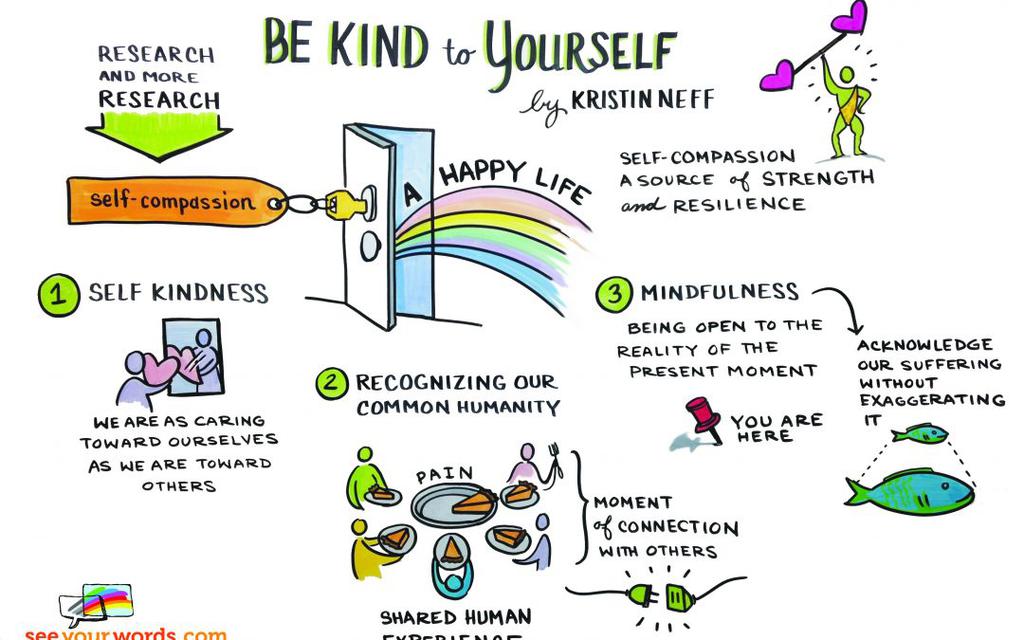
Al Shelosha Devarim: The World (of Self-Compassion) Stands on Three Things...
1. Self-Kindness (vs. Self-Judgement) // "Nedivut Atzmit" - Alleviating Negative Self-Talk
"...being warm and understanding toward ourselves when we suffer, fail, or feel inadequate, rather than ignoring our pain or flagellating ourselves with self-criticism...recognize that being imperfect, failing, and experiencing life difficulties is inevitable, so...be gentle when confronted with painful experiences rather than getting angry when life falls short of set ideals."
(ו) יְהוֹשֻׁעַ בֶּן פְּרַחְיָה וְנִתַּאי הָאַרְבֵּלִי קִבְּלוּ מֵהֶם. יְהוֹשֻׁעַ בֶּן פְּרַחְיָה אוֹמֵר, עֲשֵׂה לְךָ רַב, וּקְנֵה לְךָ חָבֵר, וֶהֱוֵי דָן אֶת כָּל הָאָדָם לְכַף זְכוּת:
(6) Yehoshua ben Perachiah and Nitai of Arbel received from them. Yehoshua ben Perachia says, "Make for yourself a mentor, acquire for yourself a friend and judge every person as meritorious."
  • How you interpret the idea of "judging every person as meritorious (alt. translation: favorably)?"

  • Some translate this not as “judge every person favorably,” but “just the whole person favorable.” How does this change your understanding of this advice?

  • When do you find yourself either ignoring your pain or beating yourself up with self-criticism (in other words, judging yourself less than favorably)?

  • If a dear friend (or child, family member, or colleague) was in your shoes instead, what would you say to them? Are there other things you might do to support them? Validate their situation? Affirm that you are there for them? Gentle, loving touch?

  • What would it look, sound, feel like to judge yourself with more kindness and generosity?

(ג) כִּי צָרִיךְ הָאָדָם לְחַפֵּשׂ וּלְבַקֵּשׁ לִמְצֹא בְּעַצְמוֹ אֵיזֶה מְעַט טוֹב, כְּדֵי לְהַחֲיוֹת אֶת עַצְמוֹ, וְלָבוֹא לִידֵי שִׂמְחָה כַּנַּ"ל
...A person has to judge themselves favorably and find in themselves some remaining good point, in order to give themselves the strength to avoid falling completely, God forbid. On the contrary, they will revive themselves and bring joy to their souls with the little bit of good they find in themselves.
  • Here, Rabbi Nachman suggests that “judging ourselves favorably” can actually lead to joy and save us from “falling completely.” How do you think one can balance seeking out the good points in oneself while also facing the facts when they’ve misstepped or seriously erred?
  • It can sometimes be too difficult to identify or emotionally connect to good points, especially when one is at “rock-bottom.” How do you think you could follow Rebbe Nachman’s advice even in the hardest times? What or who would you need in that moment, before, or after?
2. Common Humanity (vs. Isolation) // "Tzelem Elokim" & "Enoshiyut"
"...self-compassion involves recognizing that suffering and personal inadequacy is part of the shared human experience – something that we all go through rather than being something that happens to “me” alone."
לָא קַשְׁיָא: הָא בְּאוּר דִּידַן, הָא בְּאוּר דְּגֵיהִנָּם. אוּר דִּידַן — בְּמוֹצָאֵי שַׁבָּת, אוּר דְּגֵיהִנָּם — בְּעֶרֶב שַׁבָּת. וְאוּר דְּגֵיהִנָּם בְּעֶרֶב שַׁבָּת אִיבְּרִי? וְהָא תַּנְיָא: שִׁבְעָה דְּבָרִים נִבְרְאוּ קוֹדֶם שֶׁנִּבְרָא הָעוֹלָם, וְאֵלּוּ הֵן: תּוֹרָה, וּתְשׁוּבָה, וְגַן עֵדֶן, וְגֵיהִנָּם, וְכִסֵּא הַכָּבוֹד, וּבֵית הַמִּקְדָּשׁ, וּשְׁמוֹ שֶׁל מָשִׁיחַ.
The Gemara answers: This is not difficult. This baraita is referring to our fire, and that baraita is referring to the fire of Gehenna. The Gemara explains: Our fire was created at the conclusion of Shabbat, but the fire of Gehenna was created on Shabbat eve. The Gemara proceeds to ask: Was the fire of Gehenna created on Shabbat eve? Wasn’t it taught in a baraita: Seven phenomena were created before the world was created, and they are: Torah, and repentance, and the Garden of Eden, and Gehenna, and the Throne of Glory, and the Temple, and the name of Messiah.
  • What do you think it means that, literally, these seven things were created before the world was even created?

  • Why do you think repentance, or teshuvah, is on this list? What does it teach us about what we can expect of ourselves as human beings?

  • Does anything else in this list give you hope?

Quotes from Brene Brown, PhD, LMSW
Contemporary researcher and author on shame and vulnerability
“Because true belonging only happens when we present our authentic, imperfect selves to the world, our sense of belonging can never be greater than our level of self-acceptance.”

Esther Perel, “The Myth of Self-Love”
...Self-love [is] our ability to see ourselves as a flawed individual and still hold ourselves in high regard. Self-love is the ability to not fall into a puddle of contempt even when we mess up. It’s trying new things knowing that we could fail, without thinking of ourselves, therefore, as failures…

On my way to the airport recently, I realized I had left my passport, wallet, and computer at home. My multiple selves instantly began a cacophony in my head, how could you do this? You’re going to miss your flight. And then a new voice emerged: Perel, what a good thing this is happening to you in your sixties. This was the voice I tuned into. ‍

Had this scenario happened thirty years ago, I’d be mercilessly beating myself up. I would have said to myself what the hell is wrong with you? You’re so stupid. Go hide. But this new voice said you made a mistake. It happens. Now what? I picked up the phone and called my assistant, a travel agent, my husband, and a friend to see if she wanted to grab coffee with the new free time I found myself with. For me, this is self-love. And look how many people it involved.‍
  • Even after much practice, Esther Perel still experiences a cacophony of unhelpful voices in her head. If you can relate, do you prefer to embrace or quiet those voices down? Do you struggle to elevate the more sensitive one?
  • Perel highlights the potential for acknowledging our own imperfections to empower us to take risks, as well as connect with others. When has a fear of failure or insecurity held you back from making a decision, taking an action, or reaching out to others? Would seeing yourself (and others) as a flawed human have helped at all?
  • She acknowledges the progress she has made in forgiving herself as a human being who makes mistakes. Can you share a time where you successfully forgave yourself? If you can only think of times you were less forgiving, imagine you are years down the road - when would you want to be more forgiving?
״דְּאָגָה בְלֶב אִישׁ יַשְׁחֶנָּה״, רַבִּי אַמֵּי וְרַבִּי אַסִּי, חַד אָמַר: יַשִּׂחֶנָּה מִדַּעְתּוֹ, וְחַד אָמַר: יְשִׂיחֶנָּה לַאֲחֵרִים.
§ The Gemara explains another verse in Proverbs: “If there is care in a man’s heart, let him quash it [yashḥena]” (Proverbs 12:25). Rabbi Ami and Rabbi Asi dispute the verse’s meaning. One said: He should forcefully push it [yasḥena] out of his mind. One who worries should banish his concerns from his thoughts. And one said: It means he should tell [yesiḥena] others his concerns, which will lower his anxiety.
Self-Compassion Meditations
Lashon hara oif zich, tor men nisht zogen” - A Yiddish saying meaning that "one should not speak lashon hara (evil speech) about themselves
הרב קוק, עין אי״ה, מסכת מעשר שני פרק ז משנה י
‏…על כן, כשם שיש תועלת גדולה לתיקון הנפש בוידוי העוונות… גם כן בוידוי המצוות, למען ישמח בהם בלבבו, ויחזק ארחות חייו בדרך ה׳.
Rav Avraham Itzḥak Kook, Ayn Aya, Tractate Maaser Sheni, Chapter 7, Mishna 10
Therefore, just as there is great value to the confession of sins… there is also great value to the confession of mitzvot (our positive deeds), which gladdens the heart and strengthens the holy paths of life!
אָמַר לוֹ הַקָּדוֹשׁ בָּרוּךְ הוּא לְמֹשֶׁה: הַחְזֵיר לָהֶן תְּשׁוּבָה. אָמַר לְפָנָיו: רִבּוֹנוֹ שֶׁל עוֹלָם, מִתְיָירֵא אֲנִי שֶׁמָּא יִשְׂרְפוּנִי בַּהֶבֶל שֶׁבְּפִיהֶם. אָמַר לוֹ: אֱחוֹז בְּכִסֵּא כְבוֹדִי וַחֲזוֹר לָהֶן תְּשׁוּבָה. שֶׁנֶּאֱמַר: ״מְאַחֵז פְּנֵי כִּסֵּא פַּרְשֵׁז עָלָיו עֲנָנוֹ״, וְאָמַר רַבִּי נַחוּם: מְלַמֵּד שֶׁפֵּירַשׂ שַׁדַּי מִזִּיו שְׁכִינָתוֹ וַעֲנָנוֹ עָלָיו. אָמַר לְפָנָיו: רִבּוֹנוֹ שֶׁל עוֹלָם, תּוֹרָה שֶׁאַתָּה נוֹתֵן לִי מָה כְּתִיב בָּהּ? ״אָנֹכִי ה׳ אֱלֹהֶיךָ אֲשֶׁר הוֹצֵאתִיךָ מֵאֶרֶץ מִצְרַיִם״. אָמַר לָהֶן: לְמִצְרַיִם יְרַדְתֶּם? לְפַרְעֹה הִשְׁתַּעְבַּדְתֶּם? תּוֹרָה לָמָּה תְּהֵא לָכֶם! שׁוּב: מָה כְּתִיב בָּהּ? ״לֹא יִהְיֶה לְךָ אֱלֹהִים אֲחֵרִים״. בֵּין הַגּוֹיִם אַתֶּם שְׁרוּיִין, שֶׁעוֹבְדִין עֲבוֹדָה זָרָה? שׁוּב: מָה כְּתִיב בָּהּ? ״זָכוֹר אֶת יוֹם הַשַּׁבָּת לְקַדְּשׁוֹ״ — כְּלוּם אַתֶּם עוֹשִׂים מְלָאכָה, שֶׁאַתֶּם צְרִיכִין שְׁבוּת? שׁוּב: מָה כְּתִיב בָּהּ? ״לֹא תִשָּׂא״ — מַשָּׂא וּמַתָּן יֵשׁ בֵּינֵיכֶם? שׁוּב: מָה כְּתִיב בָּהּ? ״כַּבֵּד אֶת אָבִיךָ וְאֶת אִמֶּךָ״ — אָב וָאֵם יֵשׁ לָכֶם? שׁוּב: מָה כְּתִיב בָּהּ? ״לֹא תִּרְצָח״, ״לֹא תִּנְאָף״, ״לֹא תִּגְנֹב״. קִנְאָה יֵשׁ בֵּינֵיכֶם? יֵצֶר הָרָע יֵשׁ בֵּינֵיכֶם? מִיָּד הוֹדוּ לוֹ לְהַקָּדוֹשׁ בָּרוּךְ הוּא, שֶׁנֶּאֱמַר: ״ה׳ אֲדֹנֵינוּ מָה אַדִּיר שִׁמְךָ וְגוֹ׳״, וְאִילּוּ ״תְּנָה הוֹדְךָ עַל הַשָּׁמָיִם״ לָא כְּתִיב. מִיָּד כׇּל אֶחָד וְאֶחָד נַעֲשָׂה לוֹ אוֹהֵב וּמָסַר לוֹ דָּבָר, שֶׁנֶּאֱמַר: ״עָלִיתָ לַמָּרוֹם שָׁבִיתָ שֶּׁבִי לָקַחְתָּ מַתָּנוֹת בָּאָדָם״ — בִּשְׂכַר שֶׁקְּרָאוּךְ ״אָדָם״, לָקַחְתָּ מַתָּנוֹת. אַף מַלְאַךְ הַמָּוֶת מָסַר לוֹ דָּבָר, שֶׁנֶּאֱמַר: ״וַיִּתֵּן אֶת הַקְּטֹרֶת וַיְכַפֵּר עַל הָעָם״, וְאוֹמֵר: ״וַיַּעֲמֹד בֵּין הַמֵּתִים וּבֵין הַחַיִּים וְגוֹ׳״ — אִי לָאו דַּאֲמַר לֵיהּ מִי הֲוָה יָדַע?

The Holy One, Blessed be He, said to Moses: Provide them with an answer as to why the Torah should be given to the people...Moses said before Him: Master of the Universe, the Torah that You are giving me, what is written in it? God said to him: “I am the Lord your God Who brought you out of Egypt from the house of bondage” (Exodus 20:2). Moses said to the angels: Did you descend to Egypt? Were you enslaved to Pharaoh? Why should the Torah be yours? Again Moses asked: What else is written in it? God said to him: “You shall have no other gods before Me” (Exodus 20:3). Moses said to the angels: Do you dwell among the nations who worship idols that you require this special warning? Again Moses asked: What else is written in it? The Holy One, Blessed be He, said to him: “Remember the Shabbat day to sanctify it” (Exodus 20:8). Moses asked the angels: Do you perform labor that you require rest from it? Again Moses asked: What else is written in it? “Do not take the name of the Lord your God in vain” (Exodus 20:7), meaning that it is prohibited to swear falsely. Do you conduct business with one another that may lead you to swear falsely? Again Moses asked: What else is written in it? The Holy One, Blessed be He, said to him: “Honor your father and your mother” (Exodus 20:12). Do you have a father or a mother that would render the commandment to honor them relevant to you? Again Moses asked: What else is written in it? God said to him: “You shall not murder, you shall not commit adultery, you shall not steal” (Exodus 20:13). Is there jealousy among you, or is there an evil inclination within you that would render these commandments relevant? Immediately they agreed with the Holy One, Blessed be He, that He made the right decision to give the Torah to the people, and as it is stated: “God our Lord, how glorious is Your name in all the earth” (Psalms 8:10), while “that Your majesty is placed above the heavens” is not written because the angels agreed with God that it is appropriate to give the Torah to the people on earth. Immediately, each and every one of the angels became an admirer of Moses and passed something to him...In reward for the fact that they called you man, you are not an angel and the Torah is applicable to you, you took gifts from the angels. And even the Angel of Death gave him something, as Moses told Aaron how to stop the plague...