


7. SHECHINAH (presence that dwells within)/ MALCHUT (sovereign) - acting with heart, the nature of love within all beings
body part- feet/ earth below our feet/ base of spine
biblical person- King David, Rachel, Moshiach (Messiah)
other symbols- Shabbes, the Sacred Orchard / Pardess, Blue, World Intelligence (Gaia), Monarch, Beloved
Shechinah/ Malchut is the final step when counting down the Tree of Life. On a personal level, it means integrating spiritual insights, bringing them down to earth, walking them into our lives. It's connected to the day of Shabbes and especially Friday night when kabbalisticaly we are said to enter the Orchard/ Pardess- eating and drinking in loving community. On a global level, it means a societal turning toward inter-connection and inter-being. The Kabbalists imagined the Shechinah as a compassionate fem presence that chooses to live in exile (galut) with us, to comfort and guide us as we stumble and suffer from not living with more wholeness, love and awareness.
Communal Healthcare in the Pale
"Some of this embrace of traditional ways (of healing) was due to the fact that in the Pale, with state resources often forbidden or unavailable to Jews, medical care was considered a matter of communal concern, and accordingly Ashkenazim had a longstanding, well-developed system of communal care. Where no hospitals existed, local Jews, out of charity, often hired physicians from the region to treat people who couldn't afford them. In almost ever town, arrangements were such that local pharmacies would supply free or discounted medicine to those who needed them. Serving as crucial links in this network were the bikur holim ("visiting the sick") societies that helped provide necessary treatment and medication."
- Deatra Cohen and Adam Siegel-Ashkenazi Herbalism, p 24
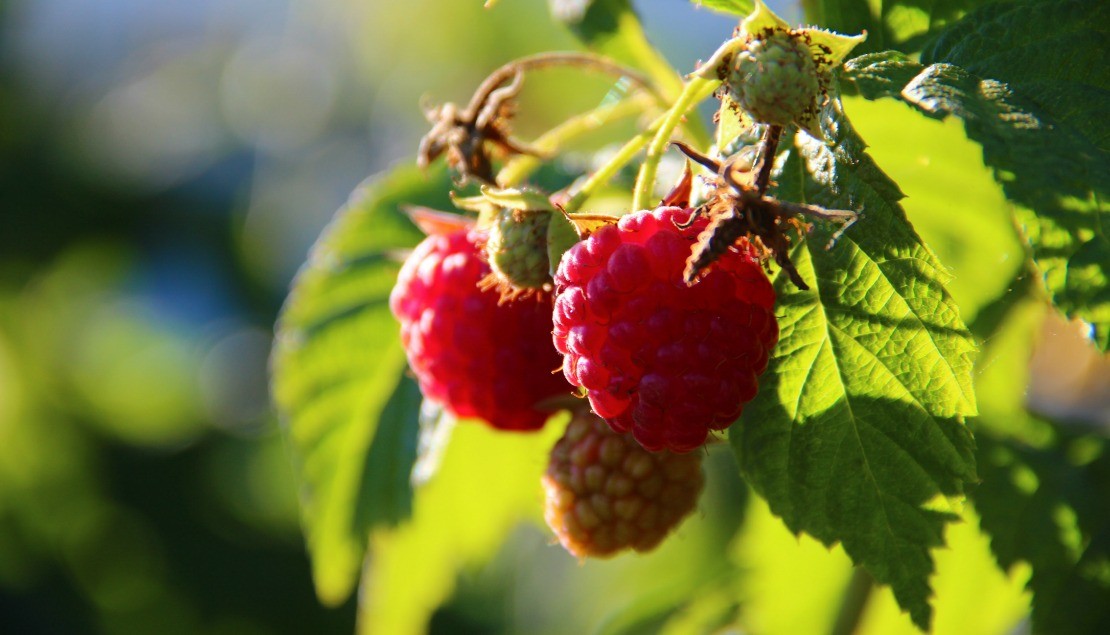
Red Raspberries in the Shtetl- the marvel drug
The authors of Life is with People sum up what must have been a very common occurrence: "a wealthy man, whose wife, in an effort to help her community, would supply the infirm with raspberry syrup, which was 'the marvel drug of the shtetl."
Aunt Gitl, a folk healer who took care of sick children in Tishevitz, was beloved by her young patients because "she always prescribed the same remedy: a teaspoon of berry juice and lots of tea."
- Deatra Cohen and Adam Siegel-Ashkenazi Herbalism
Red Raspberry in Modern Herbalism
Raspberry is a highly nourishing reproductive tonic, providing nutrients that tone and strengthen the entire genito-urinary system. One of the richest sources of iron, raspberry is used to replenish iron-poor blood and is often combined with nettle for anemia and related low energy levels. It is also a rich source of niacin and among the richest sources of manganese, a trace mineral used by the body to produce healthy connective tissue, such as bone matrix and cartilage, and an important factor in energy metabolism.
The leaf is quite tasty and is generally prepared as an infusion. Drink several cups of the tea daily to experience its toning effects. The berries, too, are medicinal and delicious.
- Rosemary Gladstar, Herbal Recipes for Vibrant Health
בָּרוּךְ אַתָּה יהוה, אֱלֹהֵינוּ מֶלֶךְ הָעוֹלָם, אֲשֶׁר קִדְּשָׁנוּ בְּמִצְוֹֹּתָיו וְצִוָּנוּ עַל סְפִירַת הָעֹמֶר.
Blessing for Netzach of Shechinah/ Malchut
So many blessings for You, Infinite One, whose loving-kindness fills the world, who makes us whole with your mitzvahs and connects with us through the counting of the omer.
Baruch Atah Adonai, Eloheinu Melech Ha'Olam
Asher kidshanu b'mitzvotav v'tzivanu all s'firat ha-omer
Asher kidshanu b'mitzvotav v'tzivanu all s'firat ha-omer
Hayom shishah u'arba-im yom, sheh-hem shishah shavuot v'arba'ah yamim la'omer.
Today is day 46, which is 6 weeks and 4 days of the omer.
Netzach sheh-b'Shechinah
Persistence of Compassionate Awareness
6. YESOD- passionate creativity and connection/ foundation
body part- genitals/ womb
biblical figures- Esther, Joseph, Tamar, Ruth
As we near the roots of our counting down the s'phirot of the Tree of Life, we come to Yesod, the seat of passion. There is no denying the force of the sexual drive, and as we know too well, when it comes from violence and control, that passion can be very destructive and damaging. How do we instead use that passion to connect us to the spiritual path? The center path through the Tree connects Tiferet, the heart center, with Shechinah- our mindful actions in the world. Between them is Yesod, the embodied passionate creativity that gives birth to the way we show up in our lives. When our passion(Yesod) is connected to the center of love and compassion (Tiferet), then our embodied passion for connection and creativity naturally flows into our actions (Shechinah or Malchut). Yesod means "foundation", for like the foundation of a building, the rest of the Tree of Life is supported by the compassionate passion of Yesod.
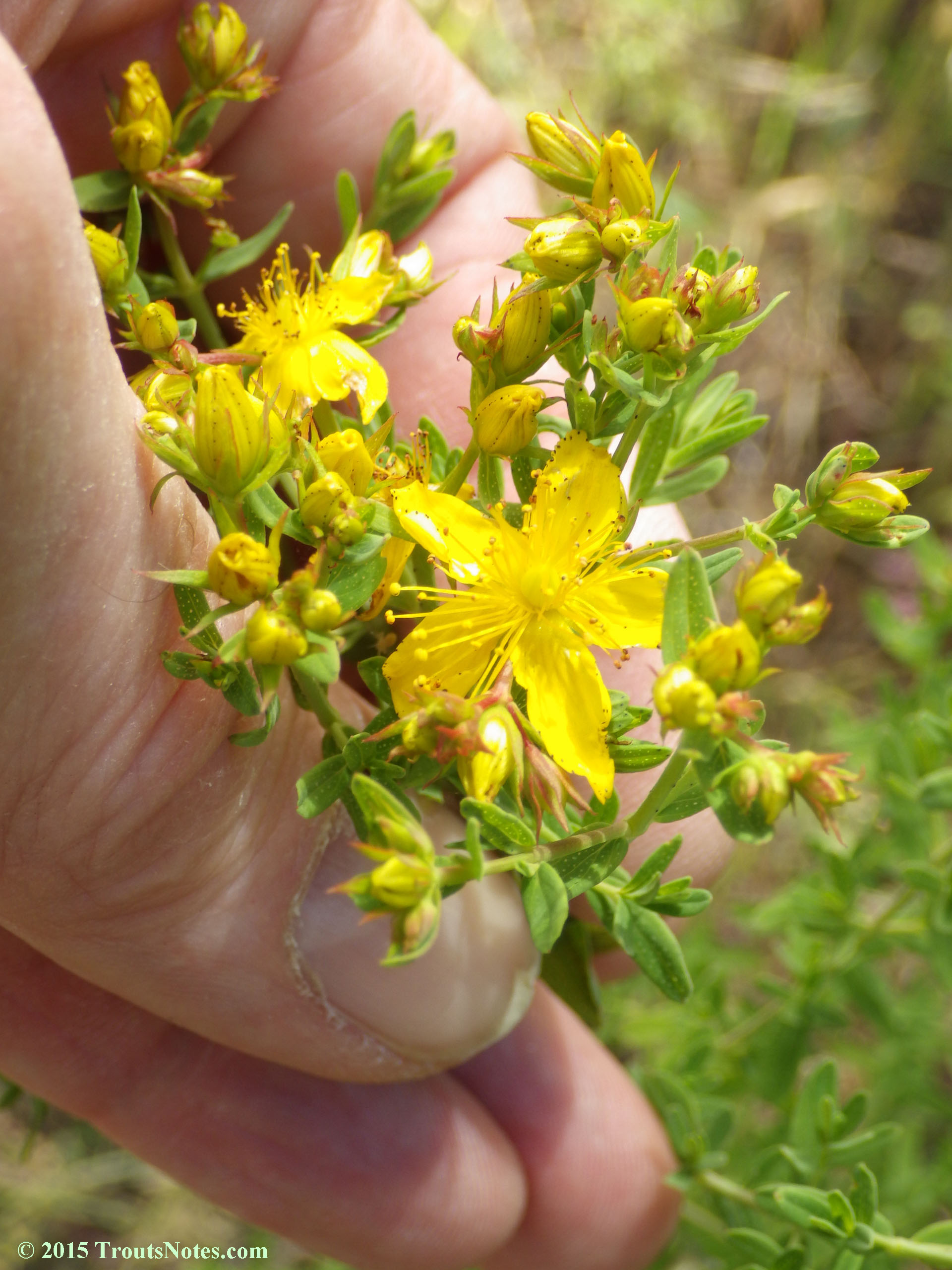
Current uses of St. John's Wort
There is good evidence that St. John's wort may reduce symptoms in people with mild-to-moderate, but not severe (or major) depression. In many studies it seems to work as well as SSRIs, a popular type of antidepressant often prescribed to treat depression...
St. John's wort has also shown promise in treating the following conditions, a few of which are related to depression.
- Premenstrual syndrome (PMS).
- Menopause.
- Seasonal affective disorder (SAD).
- Eczema, wounds, minor burns, hemorrhoids.
- Obsessive compulsive disorder (OCD), social phobia.
- Mt Sinai Medical Center
https://www.mountsinai.org/health-library/herb/st-johns-wort
Making St. John's Wort Oil
Collect St. John's wort blossoms just they are opening. Pinch a bud and a s1quirt of bloodlike oil will burst out. If ready, the buds will stain your fingers bright red.
1. Place the St. John's wort in a a widemouthed jar. Pour in enough olive oil so that it rises 2 to 3 inches over the herb. Cover tightly and place the jar in a warm, sunny location for 4 to 6 weeks.
2. Strain the oil through a fine-meshed strainer and rebottle. The oil should be a deep blood red, the redder the better. Apply topically to strains, bruises, wounds, swellings, and other areas of tissue trauma. I also add it to salad dressings and mix it with stir-fries.
- Rosemary Gladstar, Herbal Recipes for Vibrant Healthy
St. John's Wort in Ashkenazi Herbalism in the Pale
"It is as impossible to make bread without flour as it is to heal people without St. John's Wort."
- Russian Proverb
Many ancient superstitions are associated with St. John's Wort. It's name, Hypericum, originates with the Greeks and translates as "over an apparition," which is an allusion to the belief that the plant was so objectionable to evil spirits that even a whiff of it could cause them to flee. A Yiddish name for this plant, shudim shuts, literally "demon protection," succinctly reiterates this sentiment.
... in Broslev a decoction of the plant was given by folk healers (likely an opshprekherin- more about this below) as a remedy for nervous diseases, including as a massage "in case of paralysis" (caused by fear.)"
...in the Pale, Hypericum (St John's Wort) was also important to gynecological health." (during labor, to induce menstruation, "unspecified gynecological diseases."
Forgotten Traditional Women Healers
"The practice of the opshprekherin was rooted in the ancient belief in the evil eye. Mostly women, these healers were present in almost every town in the Pale... when someone became "paralyzed" with fear, or had fear paralysis, they sought out help from those who specialized in removing such maladies."
A person interviewed by the author recalls a folk healer in an Eastern European town, "an opshprekherin employed a method curiously close to the limpia ceremony practiced by the shamans of the Americas. Golda, the rabbi's wife, as learned as her husband, knew how to remove or cure an infection presumably caused by the evil eye. She would simultaneously whisper a charm to herself while gesturing around her patient's infection with an unbroken raw egg in each hand to remove the spell."
- Deatra Cohen and Adam Siegel-Ashkenazi Herbalism, pp 40-43
בָּרוּךְ אַתָּה יהוה, אֱלֹהֵינוּ מֶלֶךְ הָעוֹלָם, אֲשֶׁר קִדְּשָׁנוּ בְּמִצְוֹֹּתָיו וְצִוָּנוּ עַל סְפִירַת הָעֹמֶר.
Blessing for Netzach of Yesod
So many blessings for You, Infinite One, whose loving-kindness fills the world, who makes us whole with your mitzvahs and connects with us through the counting of the omer.
Baruch Atah Adonai, Eloheinu Melech Ha'Olam
Asher kidshanu b'mitzvotav v'tzivanu all s'firat ha-omer
Asher kidshanu b'mitzvotav v'tzivanu all s'firat ha-omer
Hayom tishah u'shiloshim yom, sheh-hem chamishah shavuot v'arba'ah yamim la'omer.
Today is day 39, which is 5 weeks and 4 days of the omer.
Netzach sheh-b'Yesod
Persistence of Cycles of Passionate Connection and Creativity
5. HOD- gratitude, empathy, learning
Parts of Body: Left hip, leg and kidney
Biblical Figures: Sarah (who receives angels when she is inside her tent- receives guidance from sitting quietly and going within), Aaron (the first High Priest who enters the Mishkan, the Holy of Holies, the inner most sanctum.)
Meaning: Hod, the left leg, is often seen as the counterpart of Netzach, the right leg. While Netzach teaches, Hod learns. Netzach pushes forward and Hod takes a step back. Netzach leads, Hod follows. They are both related to receiving guidance from meditation and dreams. As we get closer to Shavuot, the day of receiving new Torah, this year's guidance, we need both the persistence of Netzach and the humble receptivity of Hod.
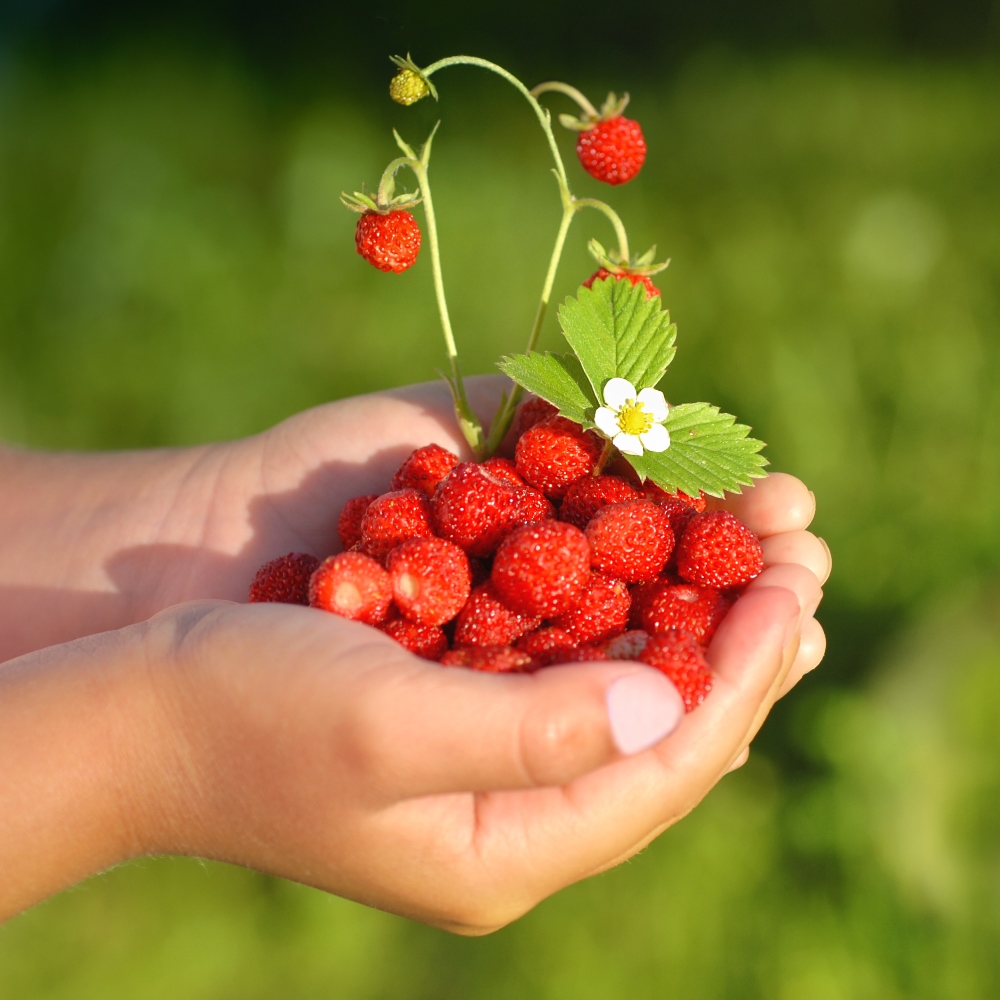
Wild Strawberry and Hod/ Gratitude Week
Go out to a patch of wild strawberries and you'll see the true meaning of gratitude. Hidden in the green leaves and white flowers are tiny berries, overflowing with juicy flavor. Picking wild strawberries is a meditative and humble task. It is all about being in the moment, not about amassing berry wealth. Small they may be, but wild strawberries are powerful healers from their roots to their berries, to the tips of their leaves. As a widely quoted Russian saying goes, "In the house where strawberries and blueberries are eaten, the doctor has nothing to do."
a shtikele kabbalah- Shavuot: receiving new Torah
Although commonly called “Shavuot” (Festival of Weeks) because it occurs seven weeks after Passover, the early rabbis called this festival “Atzeret” (Gathering or “Getting it together”). We “get ourselves together” through the process of consciously counting the 49 days between Passover and Shavuot. Reb Nosen teaches that this process is alluded to in the verse from Song of Songs 5:5, “I took my bitterness (literally myrrh) along with my spice.” In other words, to “get ourselves together,” which is the only way we can receive the Torah on Shavuot, we need to go through a seven week process of consciously witnessing both the positive and negative parts of ourselves. We have to become whole through recognizing and owning our “shadow” as well as our “spice.” Without this wholeness, we can’t receive new Torah, because the holy sparks of the potential for new Torah are buried in the very qelippot (shells) of the shadow. However if we are brave enough to bring the light of consciousness to the shadow, we can not only release the extremely contracted holy energy that sustains the qelippot, but also significantly expand that energy when it is released. So, this seven week experience of Sefirah (Counting the Omer), I took my bitterness along with my spice, is the very way we get to Shavuot.
Reb Miles Krassen https://planetaryjudaism.org/shavuot-5770/
Wild Strawberry in the Ashkenazi Herbalism
In the Pale at the turn of the twentieth century, wild strawberries were abundant, growing in forests and meadows and common in places where many Ashkenazi communities flourished. In folk medicine the berries, rootstock, and leaves were widely employed.
A decoction (tea which is simmered) of the above-ground portion of the plant with the berries was drunk as a remedy for kidney disease in Romen. an infusion of the dried leaves, at times with berries mixed in, ws drunk like a tea for pain in the chest or cough in several towns and villages including Berditchev, Bratzlav and Polona). In Kiev this mixture was taken to strengthen the heart.
-Ashkenazi Herbalism, Deatra Cohen and Adam Siegel
Wild Strawberries Today- a Tasty and Healing Tea
Like many rose family plants, strawberry leaves are astringent. They are helpful for ailments including diarrhea, burns, and upset stomach, as well as skin, mouth, or throat inflammation. Strawberry leaves are high in Vitamin C and make a tasty tea that is reminiscent of wild berries. They can be harvested from spring through summer. Simply pick the leaves and lay them in a basket or paper bags. Turn them over every day so they get good ventilation. When they are completely dry, place them in a glass jar or plastic bag. They will stay potent about one year.
- Elise Krohn, http://wildfoodsandmedicines.com/539/
בָּרוּךְ אַתָּה יהוה, אֱלֹהֵינוּ מֶלֶךְ הָעוֹלָם, אֲשֶׁר קִדְּשָׁנוּ בְּמִצְוֹֹּתָיו וְצִוָּנוּ עַל סְפִירַת הָעֹמֶר.
הַיּוֹם שְׁנַֽיִם וּשְׁלשִׁים יוֹם שֶׁהֵם אַרְבָּעָה שָׁבוּעוֹת וְאַרְבָּעָה יָמִים לעֹֽמֶר:
Blessing for Netzach of Hod
So many blessings for You, Infinite One, whose loving-kindness fills the world, who makes us whole with your mitzvahs and connects with us through the counting of the omer.
Baruch Atah Adonai, Eloheinu Melech Ha'Olam
Asher kidshanu b'mitzvotav v'tzivanu all s'firat ha-omer
Asher kidshanu b'mitzvotav v'tzivanu all s'firat ha-omer
Hayom sh'nayim v'shiloshim yom, sheh-hem arba'ah shavuot v'arba'ah yamim la'omer.
Today is day 32, which is 4 week and 4 days of the omer.
Netzach sheh-b'Hod
Persistence of Gratitude/ Learning/ Receptivity
4. NETZACH
Translation: Eternity, Endurance, Victory, Persistence.
Human Imagery: Right leg, hip, kidney/adrenal glands regulating cortisol and fight or flight responses
Biblical Figure: Rebecca, Moses.
Other Symbols and Images: The right pillar "Yachin" in the Temple (1 Kings 7:21)
Human Imagery: Right leg, hip, kidney/adrenal glands regulating cortisol and fight or flight responses
Biblical Figure: Rebecca, Moses.
Other Symbols and Images: The right pillar "Yachin" in the Temple (1 Kings 7:21)
Description: Netzach has the qualities of the teacher, the leader, the achiever, the giver. Diagonally across from Gevurah/ Strength/ Left Shoulder, Netzach uses this Gevurah energy to push through obstacles and make things happen. To get from Gevurah to Netzach, the path passes through Tiferet/Beauty & Compassion/Heart Center, and Netzach uses the Tiferet to guide its goals. Both Netzach on the right leg and Hod on the left are connected to "prophesy," the ability to receive guidance in the meditative realms. As we descend the Tree of Life, things get more practical. The ethereal experiences of Chesed/ Love and Gevurah/ Strength become a bit more grounded when we get to Netzach, and we may begin to get tastes of the revelation of this coming year's new practical torah/guidance that is revealed in all its glory on Shavuot.
a Shtikele Kabbalah- Climbing the Ladder of the Sephirot
Although prayer was the primary vehicle for spiritual ascent, the Hasidic masters often discussed the concept in more general terms. One could climb the spiritual ladder, from one chamber to the next, from one World to the one above it. One would thus go through the four worlds, Asiyah, Yetzirah, Beriyah and finally to Atzilut, the World of the Sefirot.
Rabbi Israel Baal Shem Tov said, "When you are attached to one of the Four Worlds with no extraneous thoughts, you can then receive a thought very much like prophecy... Sometimes you hear a voice speaking and it can reveal future events."
"If you wish to ascend on high, you must go from one step to the next. First, you should have in mind that you are ascending only to the first Firmament (Sephirah) which is a journey of 500 years...Once you stand there, you must strengthen your mind to go higher, adn then still higher. You must go step by step, however since you cannot ascend through all Seven Firmaments (Sephirot) at once. "
-R. Aryeh Kaplan, Meditation and Kabbalah, pg 294
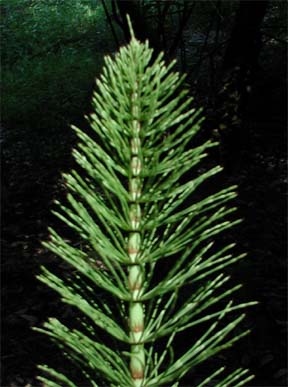
Horsetail in the Ashkenazi Herbalism
Healers in Shvaftz-Timeh, Uman and Zvenigorodka, gave those suffering from rheumatism and rheumatic pain a steam foot bath to treat feet and other affected parts of the body.
Midwives in Ulanov and Kolenivka gave women the plant decoction (a strong tea made by simmering for 20 to 45 minutes) to drink as a remedy to stop hemorrhaging during childbirth.
-Ashkenazi Herbalism, Deatra Cohen and Adam Siegel
Horsetail's Uses Today- strong bones for Netzach's persistence
Horsetail, an ancient herb that goes back to the time of the dinosaurs, often haunts gardeners plagued with boggy or shady areas. But this "weed," Equisetum arvense, contains potential health benefits. Horsetail tea's high silica content may help strengthen bones, hair and nails, fight fungal infections, relieve bloating and even cure black spot on your roses.
Use 1 to 3 tsps. of fresh or dried horsetail for every cup of water. Pour boiling water over the herb, steep 5 to 10 minutes and strain the herbs before drinking or applying topically.
Some sources caution to only drink one cup of horsetail tea per day. It's important to get to know your medicinal plants well and check with trusted sources before you take them regularly. What may be perfect for one person, is not helpful for another.
בָּרוּךְ אַתָּה יהוה, אֱלֹהֵינוּ מֶלֶךְ הָעוֹלָם, אֲשֶׁר קִדְּשָׁנוּ בְּמִצְוֹֹּתָיו וְצִוָּנוּ עַל סְפִירַת הָעֹמֶר.
Blessing for Netzach of Netzach
So many blessings for You, Infinite One, whose loving-kindness fills the world, who makes us whole with your mitzvahs and connects with us through the counting of the omer.
Baruch Atah Adonai, Eloheinu Melech Ha'Olam
Asher kidshanu b'mitzvotav v'tzivanu all s'firat ha-omer
Asher kidshanu b'mitzvotav v'tzivanu all s'firat ha-omer
Hayom chamishah v'esrim yom, sheh-hem sh'loshah shavuot v'arba'ah yamim la'omer.
Today is day 25, which is 3 week and 4 days of the omer.
Netzach sheh-b'Netzach
Persistence of Persistance/ Guidance of Guidance
3- TIFERET, (Rachamim)
Translation: Beauty, Compassion.
Description: Tiferet represents the ideal balance of Justice and Compassion needed for proper running of the universe. This Sefirah unites all the upper nine powers. Tif'eret is the offspring of Chokhmah (Wisdom) and Binah (Understanding.)
Human Imagery: Spine, Torso, Heart.
Biblical Figures: Eve, Hanah, Jacob/Israel. Moses. Adam.
Colors: Green. Purple.
Other Symbols and Images: Truth. Judgment (Mishpat, like the scales or balance of Justice). Humility. Heaven. The Sun, Day. Harmony. The Tree of Life. The Written Torah, Torah scroll. Milk and honey. The Menorah. The Golden Altar. Beloved who strives to be united with the Shekhinah. Their union produces the human soul. "Thou" (atah); "Anokhi" (a poetic form of "I").
Translation: Beauty, Compassion.
Description: Tiferet represents the ideal balance of Justice and Compassion needed for proper running of the universe. This Sefirah unites all the upper nine powers. Tif'eret is the offspring of Chokhmah (Wisdom) and Binah (Understanding.)
Human Imagery: Spine, Torso, Heart.
Biblical Figures: Eve, Hanah, Jacob/Israel. Moses. Adam.
Colors: Green. Purple.
Other Symbols and Images: Truth. Judgment (Mishpat, like the scales or balance of Justice). Humility. Heaven. The Sun, Day. Harmony. The Tree of Life. The Written Torah, Torah scroll. Milk and honey. The Menorah. The Golden Altar. Beloved who strives to be united with the Shekhinah. Their union produces the human soul. "Thou" (atah); "Anokhi" (a poetic form of "I").
-based on David Seidenberg- Neo-Hasid- http://www.neohasid.org/kabbalah/symbols/
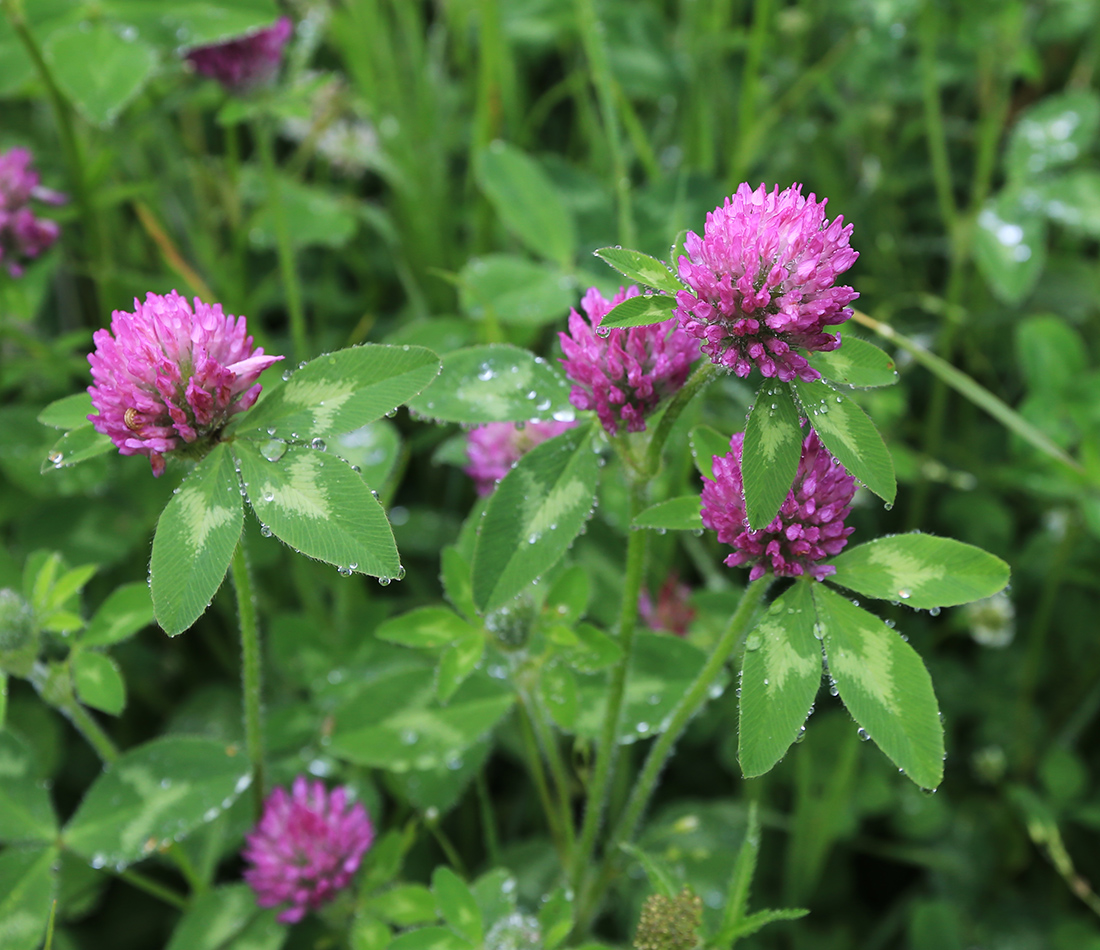
Red Clover in Ashkenazi Herbalism in the Pale
Red clover was one of ten clovers that were used in the folk medicine of the Pale between the world wars. Red clover was common in meadows and among shrubs of the regions inhabited by the Ashkenazim. In the early years of the twentieth century, its flowers and upper leaves were gathered and dried for commercial purposes, most likely by villagers. The red clover harvest were exported in large quantities mainly to Germany, for their production in medicines taken for respiratory disease.
-Deatra Cohen and Adam Siegel, Ashkenazi Herbalism
Red Clover
Parts used: Flowering tops and leaves
Benefits: One of the best detoxification herbs and respiratory tonics, red clover is especially useful for easing chronic chest complaints such as coughs, colds, and bronchitis. Red clover is rich in minerals, most notably calcium, nitrogen, and iron. It is used for all skin conditions, as it is an excellent detoxifier. It is commonly used in anti-tumor formulas.
Suggested uses: Red clover makes a delicious tea.
-Rosemary Gladstar, Herbal Recipes for Vibrant Health
Ashkenazi Professional Mourners- as if from a spring
Even though medicinal plants were not part of her protocol, the professional mourner also played a significant role in the healing of Ashkenazi Communities of the Pale...In the town of Zabludove (present-day Zabludow, Poland), Esther-Chaye, a professional mourner, is remembered in this way:
"Women stand waiting for her as if she were the greatest celebrity. Not only the people of Zabludove, but even strangers who come to visit their ancestors' graves know her already. Who doesn't know that with her "saying" she can move a stone from a pit? No one can remain indifferent to her "saying," not even menfolk..... the way to the graveyard is not far from town, and as Eshter-Chaye enters, she feels at home, among people she knows. "Good morning God," she begins in a tragic melody. "Your servant Esther-Chaye has come." And approaching the grave, she looks over at the woman on whose behalf she is supplicating, and words begin to pour out of her mouth as if from a spring."
-Deatra Cohen and Adam Siegel, Ashkenazi Herbalism
בָּרוּךְ אַתָּה יהוה, אֱלֹהֵינוּ מֶלֶךְ הָעוֹלָם, אֲשֶׁר קִדְּשָׁנוּ בְּמִצְוֹֹּתָיו וְצִוָּנוּ עַל סְפִירַת הָעֹמֶר.
Blessing for Netzach of Tiferet
So many blessings for You, Infinite One, whose loving-kindness fills the world, who makes us whole with your mitzvahs and connects with us through the counting of the omer.
Baruch Atah Adonai, Eloheinu Melech Ha'Olam
Asher kidshanu b'mitzvotav v'tzivanu all s'firat ha-omer
Asher kidshanu b'mitzvotav v'tzivanu all s'firat ha-omer
Hayom sh'monah asar yom, sheh-hem sh'nei shavuot v'arba'ah yamim la'omer.
Today is 11 days, which is 1 week and 4 days of the omer.
Netzach sheh-b'Tiferet
Persistence of Beauty
2- Gevurah
Translation: Strength, Judgment, Might, Power
Description: This Sefirah represents the strength and courage needed for hard times as well as the hard times themselves, structure, container, boundaries, internal discipline and schedule.
Human Imagery : Left arm and hand
Biblical Figures: Leah and Isaac.
Biblical Figures: Leah and Isaac.
Color: Red.
Other Symbols and Images: The Heavenly Court. North. Fear/Awe (of Isaac at the binding). Great fire, Consuming fire. The Severe Attribute of Justice. Gold. Bread, Salt, Wine, Meat. Serpent. Darkness, Night, Cloud, Mist. The Bronze Altar. Mars. Monday.
Other Symbols and Images: The Heavenly Court. North. Fear/Awe (of Isaac at the binding). Great fire, Consuming fire. The Severe Attribute of Justice. Gold. Bread, Salt, Wine, Meat. Serpent. Darkness, Night, Cloud, Mist. The Bronze Altar. Mars. Monday.
-based on David Seidenberg- Neo-Hasid- http://www.neohasid.org/kabbalah/symbols/
a Shtikele Kabbalah
Beit ב and Bereishit בראשית – the first letter and the first word in the Torah, begin the story of the physical creation and the whole Bible. A midrash says that the Torah begins with the letter Beit because it looks like a box open only towards the front, teaching us to not ask about what comes before, or beyond, or beneath this creation. But Beit is of course the second letter of the Alef-beit, which implies (to the midrashic mind) that something came first. That something, of course, is exactly what Kabbalah asks about. What happened before that first word that set the stage for creation is what matters to mystics: Tracing the process of creation back to its origins means tracing creation back to its essence within God, and so to encounter divinity.
From the Kabbalah's perspective, tracing this process means recognizing that this creation is made up of the broken pieces of a previous creation. This is also alluded to by the Beit, which can mean "two", as in, the second creation.
-David Seidenberg- Neo-Hasid- http://www.neohasid.org/kabbalah/sefirot/
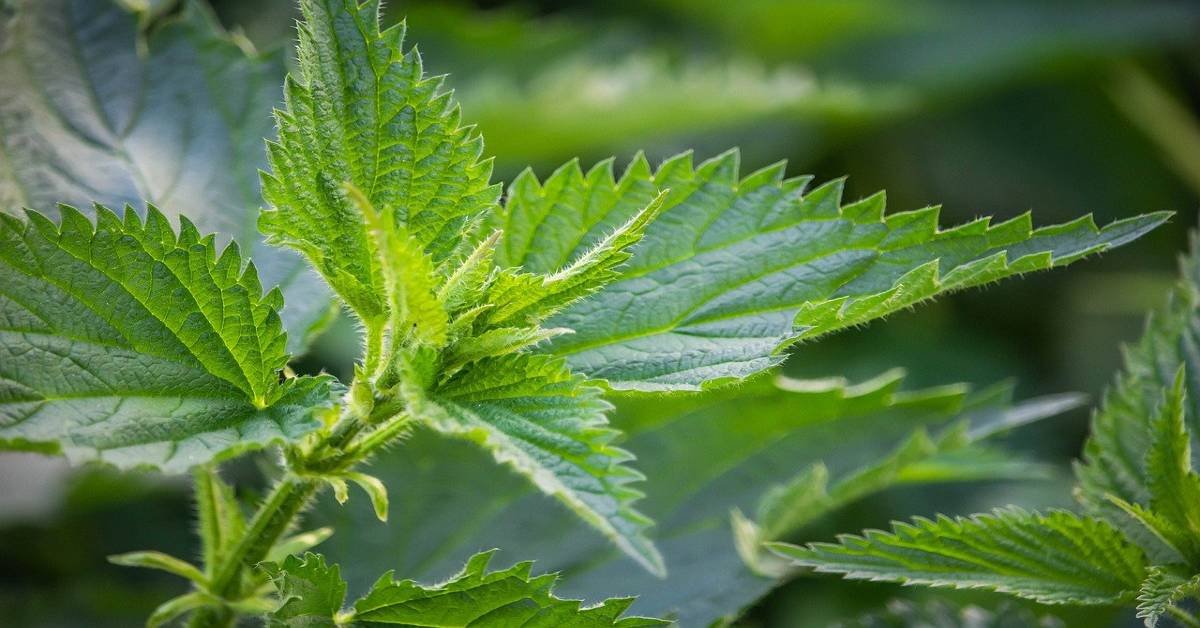
Nettles in Ashkenazi Herbalism
Nettle stalks, leaves, and seeds were used to sting, rub on, or apply to aching parts of the body for those with colds, rheumatism and anemia in the communities of Romen, Uman, Polona, Svenigorodka. It was common for those with arthritic pain to rub themselves with nettle. A plant or root decoction was given as a foot steam bath for swellings and edema in Maryupol. In the towns of Olt-Kosntin and Khmelnik, midwives gave women who were suffering form heavy menstrual flow a decoction of the whole plant, or of the flowers only, to drink.
-Ashkenazi Herbalims, Deatra Cohen and Adam Siegel, pp 244-5
Nettles Today
Nettles are often called a “super food” because they are so high in chlorophyll, vitamins, minerals, protein and amino acids. If you look at their mineral content compared to other healthy foods like spinach and kale, they are off the charts. For example, they are 29 times higher in Calcium and nine times higher in Iron than spinach.
Gather nettles to eat fresh when they are very young – usually about 4-8 inches tall. The whole above ground part can be eaten, stems and all. As they get older they become tough and the stalks develop strong fibers that are reminiscent of chewing on dental floss. Not recommended. Definitely do not harvest nettle for food after they flower as old leaves contain cystoliths that may irritate the kidneys. This compound is destroyed when the plant is dried, so gathering nettles after flowering is fine to prepare dried herb tea or powder.
Nettles can help bring our bodies back to a state of balance. If someone is feeling debilitated or generally worn down, nettles are a good remedy. They are tonic to the liver, blood, and kidneys. Herbalists consider nettles a reliable diuretic that balances blood pH and filters waste from the body including uric acid. This can be especially useful for arthritis, gout, eczema and skin rashes.
Nettles have a solid reputation as a haemostatic, or a remedy to stop bleeding. A strong decoction is traditionally used to treat wounds and hemorrhage. They can help build blood after menstruation, birth or other blood loss.
Many people say that nettles help to alleviate allergies. As a preventative for hay fever, drink 2 cups of nettle tea a day starting early in the spring and continuing into the allergy season. When nettles are fresh, tinctured or freeze-dried they have anti-histamine qualities that may be effective for acute allergic reactions. Nettles are both astringent and anti-inflammatory, which helps with the symptoms of allergies and many other complaints. Rosemary or horsetail with nettle are made into a tea and used as a hair rinse to make the hair glossy and stimulate growth.
Making Tea: Use 1 tablespoon of dried nettles per cup of boiled water. Cover with a lid. Steep 15 minutes to several hours. Drink 1-3 cups a day. You can make a large batch of tea and keep it in the refrigerator for up to 3 days. It is fine to drink the tea hot or cold. Nettle blends well with mint.
- Elise Krohn, educator, herbalist, author and native plants educator in PNW
for nettle recipes and great info about gathering, freezing and drying nettles
בָּרוּךְ אַתָּה יהוה, אֱלֹהֵינוּ מֶלֶךְ הָעוֹלָם, אֲשֶׁר קִדְּשָׁנוּ בְּמִצְוֹֹּתָיו וְצִוָּנוּ עַל סְפִירַת הָעֹמֶר.
Blessing for Netzach of Gevurah
So many blessings for You, Infinite One, whose loving-kindness fills the world, who makes us whole with your mitzvahs and connects with us through the counting of the omer.
Baruch Atah Adonai, Eloheinu Melech Ha'Olam
Asher kidshanu b'mitzvotav v'tzivanu all s'firat ha-omer.
Asher kidshanu b'mitzvotav v'tzivanu all s'firat ha-omer.
Hayom echad asar yom, sheh-hem shavuah echad v'arba'ah yamim la'omer.
Today is 11 days, which is 1 week and 4 days of the omer.
Netzach sheh-b'G'vurah
Persistence of Strength
1. Chesed
Translation: Love, Lovingkindness, Compassion, Greatness, Grace.
Description: Chesed represents being in the flow, in a time of ease, love and comfort
Human Imagery: Right arm,, shoulder, lung.
Biblical Person: Abraham, Miriam
Color: White.
Other Symbols and Images: Upper waters, Water. Lion. Silver. South.
-based on David Seidenberg- Neo-Hasid- http://www.neohasid.org/kabbalah/symbols/
בָּרוּךְ אַתָּה יהוה, אֱלֹהֵינוּ מֶלֶךְ הָעוֹלָם, אֲשֶׁר קִדְּשָׁנוּ בְּמִצְוֹֹּתָיו וְצִוָּנוּ עַל סְפִירַת הָעֹמֶר.
Blessing for Netzach of Chesed
So many blessings for You, Infinite One, whose loving-kindness fills the world, who makes us whole with your mitzvahs and connects with us through the counting of the omer.
Baruch Atah Adonai, Eloheinu Melech Ha'Olam
Asher kidshanu b'mitzvotav v'tzivanu all s'firat ha-omer
Asher kidshanu b'mitzvotav v'tzivanu all s'firat ha-omer
Hayom arba'ah yamim la'omer.
Today is four days of the omer.
Netzach sheh-b'Chesed
Advancing Loving Kindness
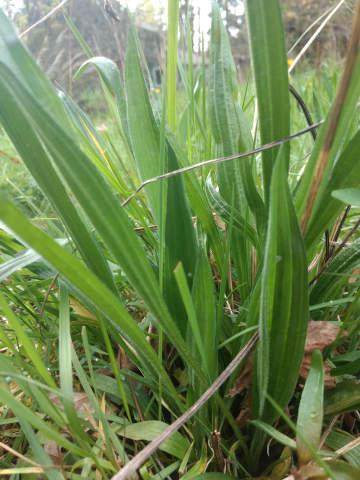
Plantain in Ahkenazi Herbalism in the Pale in the Early Twentieth Century
Plantain was a common weed found growing in meadows and glades, on heaps of refuse, and along the roadways of the Pale of Settlement. It could be found almost everywhere people lived or worked or traveled, and it was well-know and valued by the traditional medicine practitioners of Ashkenazi towns and villages for their treatment of wounds and abscesses.
-Deatra Cohen and Adam Siegel, Ashkenazi Herbalism
A Fractal System
for the Zohar, an essential aspect of this world is that the Sefirot are emanated in the form of a Mishkal or balance scale, with a center, right and left, which can be pictured as the form of a triangle or triad. This allowed each Sefirah to share the force of creation with those around it, so that none would shatter because of the influx of God's energy. Each of the Sefirot also contains within itself an element of all the others. This fractal structure is one way in which the Sefirot are infinite or divine in their essence.
-based on David Seidenberg- Neo-Hasid- http://www.neohasid.org/kabbalah/sefirot/
Plantain
Parts used: Seeds, Roots and leaves
Benefits: Plantain is a common weed across almost all of North America and is a highly nutritional food. It is one of the best poultice herbs and is often refereed to as the "green bandage." You can make a poultice with the fresh leaves to soothe irritation and infection. it's a favorite herb for treating blood poisoning. Plantain seeds are often used in laxative blends for their soothing bulk action. This herb is also very effective for treating liver sluggishness. Plantain is quite mild in flavor and makes a nice tea or infusion. The leaves can also be dried and powdered to add to food or used as an herbal first-aid powder for infections.
-Rosemary Gladstar, Herbal Recipes for Vibrant Health