


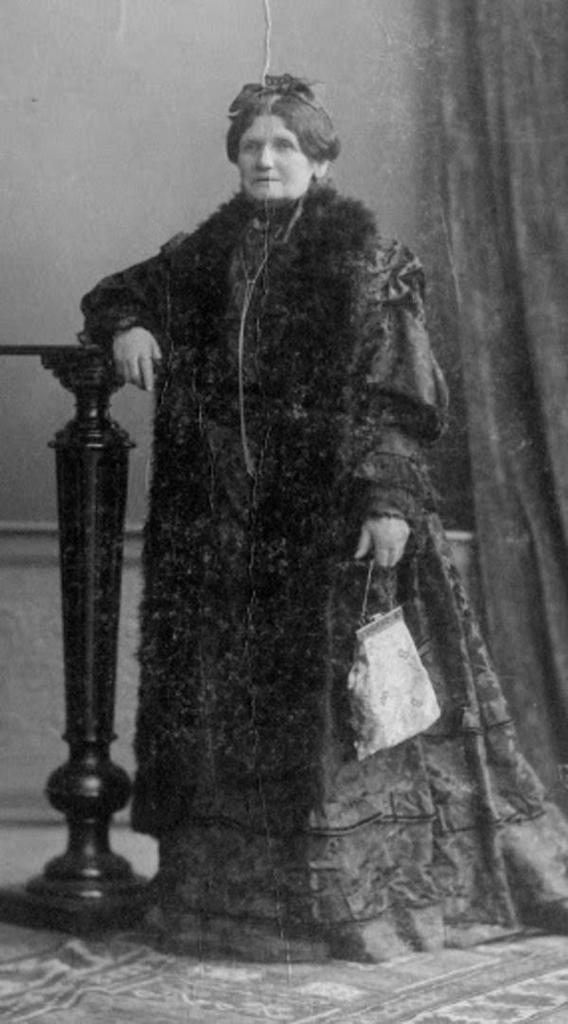
Pauline Epstein Wengeroff (1833-1916), c.1908.
Pauline Wengeroff, Memoirs of a Grandmother: Scenes from the Cultural History of the Jews of Russia in the Nineteenth Century. Translated by Shulamit Magnus.
Six days after the rosh khodesh (New Moon) of Sivan (around May) came the shevuaus (Pentecost) holiday, a beautiful, pleasant festival about which the Jews said that you could eat everything and everywhere, while on Passover you could not eat everything, and on Tabernacles you could not eat everywhere, that is, you could eat only in the booth. That is why shevuaus only lasted two days . . .
Of course, there was a lot of preparation, even for this festival. The meaning of this holiday was explained to us children in the kheder as a commemoration of the day on which Moses received the holy tablets of the law on Mount Sinai. Three days before Pentecost (a period called shelausho yemei hagbole), the mourning of the sifre time ended and joy returned. People wanted to be compensated for the six weeks of deprivation. The children stayed in the kheder only half a day and made an unbridled tumult outside in the open, as well as inside the house. And at home, there was again roasting and baking, namely, many butter cakes! On this holiday you especially ate all milk and butter dishes. The traditional cheese blintzes with sour cream, a kind of flinsen, were essential. On erev yom tov, the eve of the festival, there was again much hurried work at home. All the rooms were bedecked with greens and magnificently lit. We children were dressed up and the table covered for supper. The windows of the rooms, ablaze with candles, stood wide open, and the warm, fresh spring air streamed in, without moving the flames of the many candles even slightly. They burned serenely and festively.
The men came home from the synagogue, and we proceeded to the table. Right after the first course, a section out of the tiken shevuaus (liturgy for shevuaus night) was read by the men and after the second course, yet another part. After the meal, my brothers-in-law withdrew with their melamed to their study room to study the entire tiken shevuaus there until early morning. My elder brother-in-law undertook this prayer without a murmur. But the younger would probably have preferred a different pursuit. But that did not matter; the discipline and religious orientation of our house carried more weight than the personal wishes and inclinations, even then, when the spirit of Lilienthal already buzzed in the heads of the young people.
In early morning we went to synagogue, where a festival service was held and akdames, an Aramaic hymn in honor of the Torah, was recited alternately, verse by verse, by the prayer leader and the congregation. On the second day of shevuaus, the megile (Ruth) was read, which often lasts until midday. At home, a happy mood prevailed: we drank fine, aromatic coffee and ate butter cakes and blintshikes and went outside to walk in the open air.
Six days after the rosh khodesh (New Moon) of Sivan (around May) came the shevuaus (Pentecost) holiday, a beautiful, pleasant festival about which the Jews said that you could eat everything and everywhere, while on Passover you could not eat everything, and on Tabernacles you could not eat everywhere, that is, you could eat only in the booth. That is why shevuaus only lasted two days . . .
Of course, there was a lot of preparation, even for this festival. The meaning of this holiday was explained to us children in the kheder as a commemoration of the day on which Moses received the holy tablets of the law on Mount Sinai. Three days before Pentecost (a period called shelausho yemei hagbole), the mourning of the sifre time ended and joy returned. People wanted to be compensated for the six weeks of deprivation. The children stayed in the kheder only half a day and made an unbridled tumult outside in the open, as well as inside the house. And at home, there was again roasting and baking, namely, many butter cakes! On this holiday you especially ate all milk and butter dishes. The traditional cheese blintzes with sour cream, a kind of flinsen, were essential. On erev yom tov, the eve of the festival, there was again much hurried work at home. All the rooms were bedecked with greens and magnificently lit. We children were dressed up and the table covered for supper. The windows of the rooms, ablaze with candles, stood wide open, and the warm, fresh spring air streamed in, without moving the flames of the many candles even slightly. They burned serenely and festively.
The men came home from the synagogue, and we proceeded to the table. Right after the first course, a section out of the tiken shevuaus (liturgy for shevuaus night) was read by the men and after the second course, yet another part. After the meal, my brothers-in-law withdrew with their melamed to their study room to study the entire tiken shevuaus there until early morning. My elder brother-in-law undertook this prayer without a murmur. But the younger would probably have preferred a different pursuit. But that did not matter; the discipline and religious orientation of our house carried more weight than the personal wishes and inclinations, even then, when the spirit of Lilienthal already buzzed in the heads of the young people.
In early morning we went to synagogue, where a festival service was held and akdames, an Aramaic hymn in honor of the Torah, was recited alternately, verse by verse, by the prayer leader and the congregation. On the second day of shevuaus, the megile (Ruth) was read, which often lasts until midday. At home, a happy mood prevailed: we drank fine, aromatic coffee and ate butter cakes and blintshikes and went outside to walk in the open air.
Shulamit Magnus, "Introduction," Pauline Wengeroff, Memoirs of a Grandmother: Scenes from the Cultural History of the Jews of Russia in the Nineteenth Century.
Wengeroff's perspective is fundamentally different [than Glikl's]. Her memoirs not only record women's experience (or to be sure, her representation of this). They make it central to the tale of emerging Jewish modernity and to grasping what Wengeroff portrays as the fundamental tragedy of modern Jewish history: the loss of traditional Jewish culture. This catastrophe, she asserts, illustrating with the tragedies of her life, was a consequence of women's loss of power in the Jewish family, and thereby, in Jewish culture, a loss brought about by the arrogance and shortsightedness of modernizing Jewish men. Her narrative then, is both woman-centered and gendered, telling us about culturally based relations between men and women in traditional and modernizing Jewish societies, giving a particularly stark reading of the role of gender in shaping a different experience of Jewish modernity for women and men.
Wengeroff's perspective is fundamentally different [than Glikl's]. Her memoirs not only record women's experience (or to be sure, her representation of this). They make it central to the tale of emerging Jewish modernity and to grasping what Wengeroff portrays as the fundamental tragedy of modern Jewish history: the loss of traditional Jewish culture. This catastrophe, she asserts, illustrating with the tragedies of her life, was a consequence of women's loss of power in the Jewish family, and thereby, in Jewish culture, a loss brought about by the arrogance and shortsightedness of modernizing Jewish men. Her narrative then, is both woman-centered and gendered, telling us about culturally based relations between men and women in traditional and modernizing Jewish societies, giving a particularly stark reading of the role of gender in shaping a different experience of Jewish modernity for women and men.
Haviva Ner-David, Chanah’s Voice: A rabbi wrestles with gender, commandment, and the women’s rituals of baking, bathing, and brightening. (2012)
Our goal was true egalitarianism. We were exploring an area of Jewish ritual that had been disparaged and undervalued by the patriarchy and therefore also neglected by feminists like us. But our intention was not to prioritize the traditionally female rituals over the traditionally male rituals. We sought to integrate them all, de-gender them, and open them to every human being alike. As women who felt comfortable in the traditionally male religious sphere, we wanted to become equally comfortable in the traditionally female religious sphere, and we were hoping our male counterparts would follow suit. The dominance of the male approach had brought us only so far. It was time to integrate a fresh perspective into the picture. We had no intention of replacing a patriarchy with a matriarchy, but rather replacing a hierarchy with a true democracy, in which all voices are heard.
Our goal was true egalitarianism. We were exploring an area of Jewish ritual that had been disparaged and undervalued by the patriarchy and therefore also neglected by feminists like us. But our intention was not to prioritize the traditionally female rituals over the traditionally male rituals. We sought to integrate them all, de-gender them, and open them to every human being alike. As women who felt comfortable in the traditionally male religious sphere, we wanted to become equally comfortable in the traditionally female religious sphere, and we were hoping our male counterparts would follow suit. The dominance of the male approach had brought us only so far. It was time to integrate a fresh perspective into the picture. We had no intention of replacing a patriarchy with a matriarchy, but rather replacing a hierarchy with a true democracy, in which all voices are heard.