(א) נָשִׁים וַעֲבָדִים וּקְטַנִּים פְּטוּרִים מִתַּלְמוּד תּוֹרָה. אֲבָל קָטָן אָבִיו חַיָּב לְלַמְּדוֹ תּוֹרָה שֶׁנֶּאֱמַר (דברים יא-יט) "וְלִמַּדְתֶּם אֹתָם אֶת בְּנֵיכֶם לְדַבֵּר בָּם". וְאֵין הָאִשָּׁה חַיֶּבֶת לְלַמֵּד אֶת בְּנָהּ. שֶׁכָּל הַחַיָּב לִלְמֹד חַיָּב לְלַמֵּד:
(יג) אִשָּׁה שֶׁלָּמְדָה תּוֹרָה יֵשׁ לָהּ שָׂכָר אֲבָל אֵינוֹ כִּשְׂכַר הָאִישׁ. מִפְּנֵי שֶׁלֹּא נִצְטַוֵּית. וְכָל הָעוֹשֶׂה דָּבָר שֶׁאֵינוֹ מְצֻוֶּה עָלָיו לַעֲשׂוֹתוֹ אֵין שְׂכָרוֹ כִּשְׂכַר הַמְצֻוֶּה שֶׁעָשָׂה אֶלָּא פָּחוֹת מִמֶּנּוּ. וְאַף עַל פִּי שֶׁיֵּשׁ לָהּ שָׂכָר צִוּוּ חֲכָמִים שֶׁלֹּא יְלַמֵּד אָדָם אֶת בִּתּוֹ תּוֹרָה. מִפְּנֵי שֶׁרֹב הַנָּשִׁים אֵין דַּעְתָּם מְכֻוֶּנֶת לְהִתְלַמֵּד אֶלָּא הֵן מוֹצִיאוֹת דִּבְרֵי תּוֹרָה לְדִבְרֵי הֲבַאי לְפִי עֲנִיּוּת דַּעְתָּן. אָמְרוּ חֲכָמִים כָּל הַמְלַמֵּד אֶת בִּתּוֹ תּוֹרָה כְּאִלּוּ לִמְּדָהּ תִּפְלוּת. בַּמֶּה דְּבָרִים אֲמוּרִים בְּתוֹרָה שֶׁבְּעַל פֶּה אֲבָל תּוֹרָה שֶׁבִּכְתָב לֹא יְלַמֵּד אוֹתָהּ לְכַתְּחִלָּה וְאִם לִמְּדָהּ אֵינוֹ כִּמְלַמְּדָהּ תִּפְלוּת:
(1) Women and slaves are exempt from studying Torah. But a male minor - his father is obligated to teach him Torah, as it says, "And you shall teach them to your children, to speak in them" (Deut 11:19). Women are not obligated to teach their sons, for [only] all who are obligated to study are obligated to teach.
(13) A woman who learns Torah is rewarded but her reward is not the same as that of a man because she is not commanded. And anyone who does something for which he is not commanded the reward is not the same as for one who is commanded but less. And even though she is rewarded, the Rabbi have commanded that a man should not teach his daughter Torah for most women's thoughts are not focused on being taught rather they will extract from the Torah words lacking meaning, based on their limited interest. The Rabbis have said "whomever teaches his daughter Torah, it is as if he is teaching her Tiflut" - This only applies to the Oral law, however regarding the Written Law one should preferably not teach it , but if one did, it would not be as if he taught her Tiflut.
Are women obligated to be taught/teach תורה? Why or why not?
איהי מנלן דלא מיחייבא דכתיב ולימדתם ולמדתם כל שמצווה ללמוד מצווה ללמד וכל שאינו מצווה ללמוד אינו מצווה ללמד ואיהי מנלן דלא מיחייבה למילף נפשה דכתיב ולימדתם ולמדתם כל שאחרים מצווין ללמדו מצווה ללמד את עצמו וכל שאין אחרים מצווין ללמדו אין מצווה ללמד את עצמו ומנין שאין אחרים מצווין ללמדה דאמר קרא ולמדתם אותם את בניכם ולא בנותיכם
How do I know the mother is not obligated to teach Torah?... Since the word “you shall teach” can also be written “you shall learn”: those who are required to learn Torah are required to teach Torah; those who are not required to learn are not required to teach. How do I know that she doesn't have an obligation to teach Torah to herself? Since the word “you shall teach” can also be written “you shall learn”: those whom others are required to teach are required to teach themselves; those whom others are not required to teach are not required to teach themselves. A woman does not have to learn Torah because no one has to teach her. And where do we know this? Because it says in the Pasuk your sons, and not your daughters.
אשה שלמדה תורה יש לה שכר אבל לא כשכר האיש מפני שאינה מצווה ועושה...הגה ומ"מ חייבת האשה ללמוד דינים השייכים לאשה (אגור בשם סמ"ג) ואשה אינה חייבת ללמד את בנה תורה ומ"מ אם עוזרת לבנה או לבעלה שיעסקו בתורה חולקת שכר בהדייהו (הגהות מיי' פ"א דת"ת וסמ"ג):
A woman who studied Torah receives a reward, but not like that of a man, because she is not obligated yet performs the commandment... Rama: Nonetheless, a woman is obligated to study laws that are relevant to her. And a woman is not obligated to teach her son Torah. Nonetheless, if she assists her son or husband to study Torah, she receives reward along with them.
Is it a good thing to teach women תורה, even if they aren't obligated to be taught?
§ The mishna states: From here ben Azzai states: A person is obligated to teach his daughter Torah, so that if she drinks and does not die immediately, she will know that some merit of hers has delayed her punishment. Rabbi Eliezer says: Anyone who teaches his daughter Torah is teaching her tiflus. The Gemara asks: Could it enter your mind to say that teaching one’s daughter Torah is actually teaching her tiflus? Rather, say: It is considered as if he taught her tiflus. Rabbi Abbahu says: What is the reason for Rabbi Eliezer’s statement? It is as it is written: “I, wisdom, dwell with cunning” (Proverbs 8:12), which indicates that once wisdom enters into a person, cunning enters with it. Rabbi Eliezer fears that the woman will use the cunning she achieves by learning the wisdom of the Torah to engage in promiscuous behavior.
אבל אם למדה לעצמה אנו רואות שיצאו מהרוב... אבל האב אינו רשאי ללמדה דדילמא תוציא דבריה לדברי הבאי כי הוא אינו יודע מה שבלבה וק"ל:
But if she teaches herself, it proves to us that she has removed herself from the category of "most women"...But a father should not teach his daughter, because [by forcing her] she might turn her words [of torah] into words of emptiness, because [the father] cannot know what it is in her heart.
Do historical changes affect the application of this halacha?
לקוטי הלכות חפץ חיים סוטה כא
המלמד את בתו תורה…נראה דכל זה דוקא בזמנים שלפנינו שקבלת האבות היתה חזקה מאוד אצל כל אחד ואחד להתנהג בדרך שדרכו בו אבותיו וכמאמר הכתוב, “שאל אביך ויגדך” (דברים לב:ז). בזה היינו יכולים לומר שלא תלמוד הבת תורה ותסמוך בהנהגה על אבותיה הישרים. כעת בעוונותינו הרבים קבלת האבות נתרופפה מאוד מאוד וגם מצוי שאינו במקום אבות כלל. בפרט אותן שמרגילין עצמן ללמוד כתב ולשון העמים בוודאי מצוה רבה ללמד אותן חומש וגם נביאים וכתובים ומוסרי חז”ל כגון מסכת אבות וספר מנורת המאור כדי שתאומת אצלן ענין אמונתינו הקדושה. אם לא עלול שיסורו לגמרי מדרך ה’ ויעברו על כל יסודי הדת ח”ו.
Likutei Halachos Chafetz Chayim Sota 21a
"One who teaches his daughter Torah [it is as if he taught here tiflus…]"It seems that all this applies specifically to earlier times, when the received mesora was very strong for each and every person to act in the way of his parents, according to the verse: ‘Ask your father and he will tell you’ (Devarim 32:7). Thus we were able to say that a daughter should not learn Torah and she should rely in her conduct on her righteous parents. Now, due to our aveiros, the received mesorah has become very, very weakened and it is also common that one does not live in the place of his ancestors at all. Especially those [women] who accustom themselves to study writing and language of the nations [i.e. secular learning], certainly it is a great mitzva to teach them Chumash and also Prophets and Writings and the ethics of our sages of blessed memory such as [Mishna] tractate Avot and the book Menorat Ha-maor, in order that the matter of our holy faith be authenticated for them. If not, they are liable to deviate completely from the path of God, and to transgress all the fundamentals of the religion, God forbid.
The Rebbe's perspective:
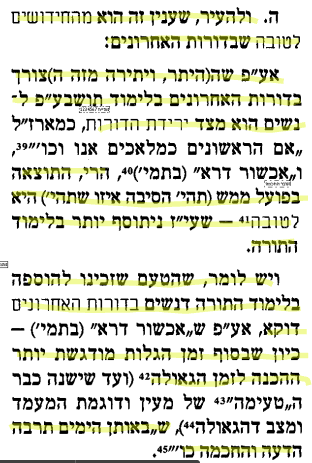
A) What is included in the category of מצוות הצריכות להן? [Spoiler: a lot]
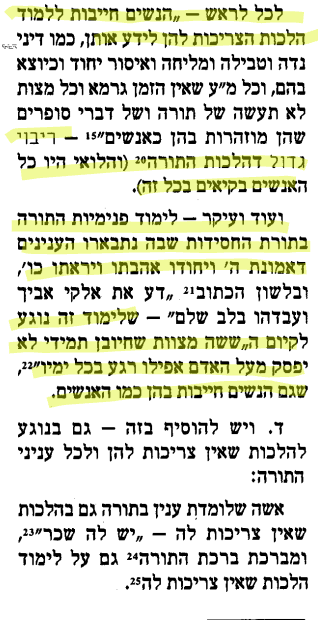
B) Are women today allowed to learn תורה beyond what is "necessary"? What would be the basis for it?

C) Women's Torah study: a concession to golus, or a taste of moshiach?