


(יח) וַיֹּאמַ֑ר הַרְאֵ֥נִי נָ֖א אֶת־כְּבֹדֶֽךָ׃ (יט) וַיֹּ֗אמֶר אֲנִ֨י אַעֲבִ֤יר כׇּל־טוּבִי֙ עַל־פָּנֶ֔יךָ וְקָרָ֧אתִֽי בְשֵׁ֛ם יְהֹוָ֖ה לְפָנֶ֑יךָ וְחַנֹּתִי֙ אֶת־אֲשֶׁ֣ר אָחֹ֔ן וְרִחַמְתִּ֖י אֶת־אֲשֶׁ֥ר אֲרַחֵֽם׃ (כ) וַיֹּ֕אמֶר לֹ֥א תוּכַ֖ל לִרְאֹ֣ת אֶת־פָּנָ֑י כִּ֛י לֹֽא־יִרְאַ֥נִי הָאָדָ֖ם וָחָֽי׃ (כא) וַיֹּ֣אמֶר יְהֹוָ֔ה הִנֵּ֥ה מָק֖וֹם אִתִּ֑י וְנִצַּבְתָּ֖ עַל־הַצּֽוּר׃ (כב) וְהָיָה֙ בַּעֲבֹ֣ר כְּבֹדִ֔י וְשַׂמְתִּ֖יךָ בְּנִקְרַ֣ת הַצּ֑וּר וְשַׂכֹּתִ֥י כַפִּ֛י עָלֶ֖יךָ עַד־עׇבְרִֽי׃ (כג) וַהֲסִרֹתִי֙ אֶת־כַּפִּ֔י וְרָאִ֖יתָ אֶת־אֲחֹרָ֑י וּפָנַ֖י לֹ֥א יֵרָאֽוּ׃ {פ}
(18) He said, “Oh, let me behold Your Presence!” (19) And [God] answered, “I will make all My goodness pass before you, and I will proclaim before you the name יהוה, and the grace that I grant and the compassion that I show,” (20) continuing, “But you cannot see My face, for a human being may not see Me and live.” (21) And יהוה said, “See, there is a place near Me. Station yourself on the rock (22) and, as My Presence passes by, I will put you in a cleft of the rock and shield you with My hand until I have passed by. (23) Then I will take My hand away and you will see My back; but My face must not be seen.”
וַיֵּ֤רֶד יְהֹוָה֙ בֶּֽעָנָ֔ן וַיִּתְיַצֵּ֥ב עִמּ֖וֹ שָׁ֑ם וַיִּקְרָ֥א בְשֵׁ֖ם יְהֹוָֽה׃
יהוה came down in a cloud—and stood with him there, proclaiming the name יהוה.
וראית את אחורי תראה איך תהיה פעולת כל מה שלמטה ממני:
וראית את אחורי, where you will be able to glimpse how all the celestial forces below Me carry out their activities;
ופני לא יראו אבל לא יהיה נראה אצל זולתי איך ממציאותי ישפע מציאות כל נמצא, כמו ששאלת:
ופני לא יראו, but you won't be able to see how My execution of My thoughts translates into something concrete, like you asked.
(ב) וראית את אחרי. הֶרְאָהוּ קֶשֶׁר שֶׁל תְּפִלִּין (ברכות ז'):
(2) וראית את אחרי THEN THOU SHALT SEE WHAT IS BEHIND ME — God showed him the Tefillin-knot (which is placed behind the head).
Rav Kook
There are two levels of knowledge. The first is an accurate knowledge of an object’s true nature. The second is a limited knowledge, restricted by our intellectual or physical limitations. Regarding tangible objects, there may not be a significant difference between the two levels of knowledge. But when dealing with abstract concepts, especially with regard to the nature of God, the difference will be great — perhaps infinitely so.
The Torah is based on the second type of knowledge. It presents us with a perception of God according to our limited grasp, since only this type of knowledge can provide ethical guidance. Knowledge of God’s true nature, on the other hand, is not a form of comprehension at all. As God informed Moses: “Man cannot have a vision of Me and live.”
Now we may begin to understand the metaphor of God’s tefillin. Contained inside tefillin are scrolls with verses declaring God’s unity and Divine nature. These verses signify a comprehension of God’s true reality. This truth, however, is beyond human understanding. How can we relate to this infinite truth? What brings it down to the level of our intellectual capabilities, enabling this knowledge to enlighten us and provide moral direction?
The function of the knot is to bind the tefillah shel rosh to the head — and intellect. The knot symbolizes a level of comprehension that takes into account the abilities of those contemplating, so that they may grasp and utilize this knowledge.
The imagery of God’s ‘face’ and ‘back’ corresponds to these two levels of knowledge. ‘Face’ in Hebrew is panim, similar to the word p'nim, meaning inner essence. True knowledge of God’s infinite reality is God’s ‘face.’
Knowledge of God’s reality according to our limited understanding, on the other hand, is referred to as God’s ‘back.’ Moses was granted this partial, indirect knowledge — a grasp of the Divine that we are able to appreciate and apply in our finite world.
(Sapphire from the Land of Israel. Adapted from Ein Eyah vol. I, p.33)
There are two levels of knowledge. The first is an accurate knowledge of an object’s true nature. The second is a limited knowledge, restricted by our intellectual or physical limitations. Regarding tangible objects, there may not be a significant difference between the two levels of knowledge. But when dealing with abstract concepts, especially with regard to the nature of God, the difference will be great — perhaps infinitely so.
The Torah is based on the second type of knowledge. It presents us with a perception of God according to our limited grasp, since only this type of knowledge can provide ethical guidance. Knowledge of God’s true nature, on the other hand, is not a form of comprehension at all. As God informed Moses: “Man cannot have a vision of Me and live.”
Now we may begin to understand the metaphor of God’s tefillin. Contained inside tefillin are scrolls with verses declaring God’s unity and Divine nature. These verses signify a comprehension of God’s true reality. This truth, however, is beyond human understanding. How can we relate to this infinite truth? What brings it down to the level of our intellectual capabilities, enabling this knowledge to enlighten us and provide moral direction?
The function of the knot is to bind the tefillah shel rosh to the head — and intellect. The knot symbolizes a level of comprehension that takes into account the abilities of those contemplating, so that they may grasp and utilize this knowledge.
The imagery of God’s ‘face’ and ‘back’ corresponds to these two levels of knowledge. ‘Face’ in Hebrew is panim, similar to the word p'nim, meaning inner essence. True knowledge of God’s infinite reality is God’s ‘face.’
Knowledge of God’s reality according to our limited understanding, on the other hand, is referred to as God’s ‘back.’ Moses was granted this partial, indirect knowledge — a grasp of the Divine that we are able to appreciate and apply in our finite world.
(Sapphire from the Land of Israel. Adapted from Ein Eyah vol. I, p.33)
From The Five Books of Miriam by Ellen Frankel
(י) וְלֹא־קָ֨ם נָבִ֥יא ע֛וֹד בְּיִשְׂרָאֵ֖ל כְּמֹשֶׁ֑ה אֲשֶׁר֙ יְדָע֣וֹ יְהֹוָ֔ה פָּנִ֖ים אֶל־פָּנִֽים׃
(10) Never again did there arise in Israel a prophet like Moses—whom יהוה knew face to face.
Rabbi David Wolpe
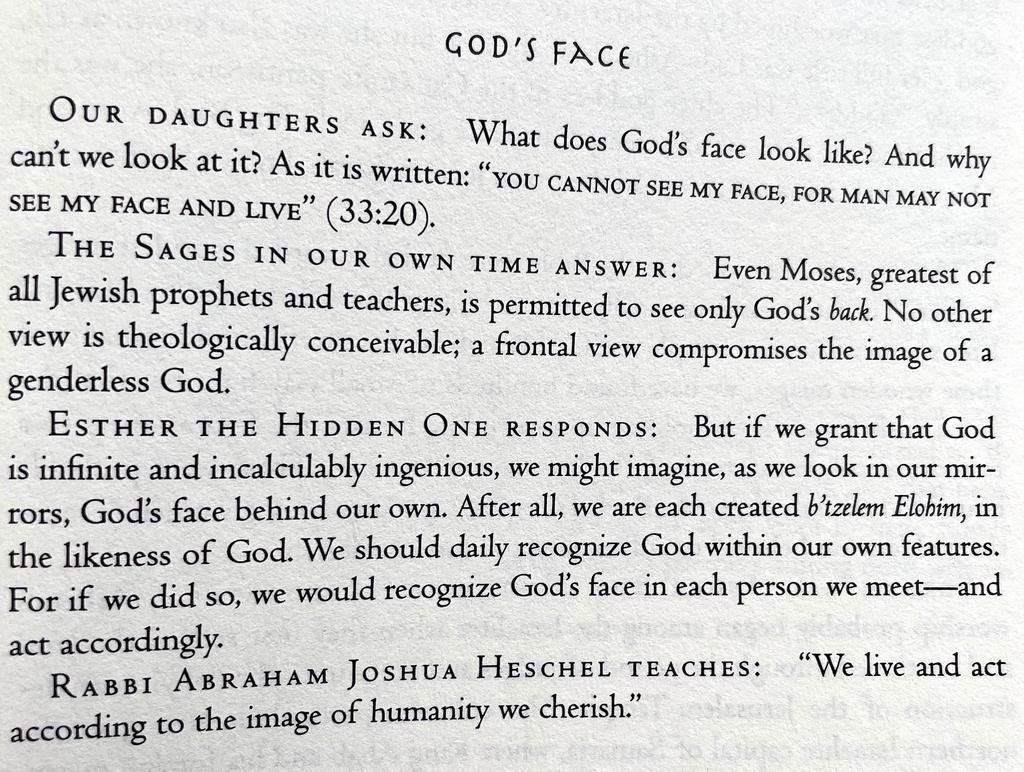
God says to Moses: “You cannot see My face, for man may not see Me and live” (Ex. 33:20). There is danger in God’s exaltedness; to presume to look upon the Divine is to court destruction.
Yet at the end of the Bible, we are told that Moses saw God “panim el panim” face to face. How can such an encounter be both possible and impossible?
Perhaps the message is that we grow gradually more intimate with God’s face as we get older. When we glimpse as much as it is given to us as individuals to glimpse, we are through with our earthly mission. Moses died when he had at last seen God face to face. That is in some sense our task in life — to see God truly according to our capacity. When we have fulfilled that task, we are through.
To see God truly means to see the possibilities of this world, to work for its betterment, to grow our own souls. Could our life be a quest to see the face of God? At times we see it in the magnificence of the world, at other times, in truly seeing another human face. Surely that is a noble definition of the human quest, achieved by Moshe Rabbenu, Moses our teacher.
God says to Moses: “You cannot see My face, for man may not see Me and live” (Ex. 33:20). There is danger in God’s exaltedness; to presume to look upon the Divine is to court destruction.
Yet at the end of the Bible, we are told that Moses saw God “panim el panim” face to face. How can such an encounter be both possible and impossible?
Perhaps the message is that we grow gradually more intimate with God’s face as we get older. When we glimpse as much as it is given to us as individuals to glimpse, we are through with our earthly mission. Moses died when he had at last seen God face to face. That is in some sense our task in life — to see God truly according to our capacity. When we have fulfilled that task, we are through.
To see God truly means to see the possibilities of this world, to work for its betterment, to grow our own souls. Could our life be a quest to see the face of God? At times we see it in the magnificence of the world, at other times, in truly seeing another human face. Surely that is a noble definition of the human quest, achieved by Moshe Rabbenu, Moses our teacher.
(ה) וַיֹּ֖אמֶר אַל־תִּקְרַ֣ב הֲלֹ֑ם שַׁל־נְעָלֶ֙יךָ֙ מֵעַ֣ל רַגְלֶ֔יךָ כִּ֣י הַמָּק֗וֹם אֲשֶׁ֤ר אַתָּה֙ עוֹמֵ֣ד עָלָ֔יו אַדְמַת־קֹ֖דֶשׁ הֽוּא׃ (ו) וַיֹּ֗אמֶר אָנֹכִי֙ אֱלֹהֵ֣י אָבִ֔יךָ אֱלֹהֵ֧י אַבְרָהָ֛ם אֱלֹהֵ֥י יִצְחָ֖ק וֵאלֹהֵ֣י יַעֲקֹ֑ב וַיַּסְתֵּ֤ר מֹשֶׁה֙ פָּנָ֔יו כִּ֣י יָרֵ֔א מֵהַבִּ֖יט אֶל־הָאֱלֹהִֽים׃
(5) And [God] said, “Do not come closer! Remove your sandals from your feet, for the place on which you stand is holy ground!” (6) and continued, “I am the God of your father’s [house]—the God of Abraham, the God of Isaac, and the God of Jacob.” And Moses hid his face, for he was afraid to look at God.
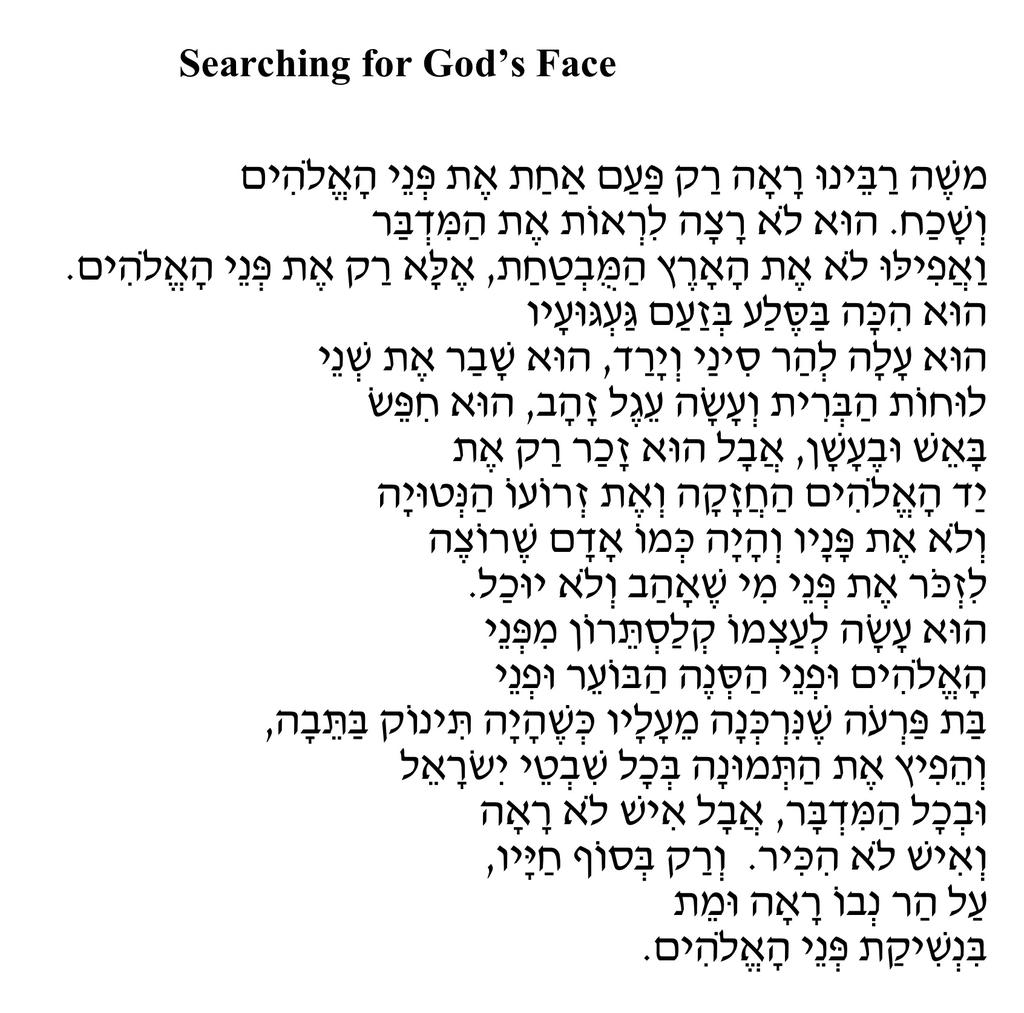
Moses, our teacher, only once saw the face of God
and forgot. He did not want to see the wilderness
not even the promised land, but only the face of God.
He struck the rock in the fury of his longings
he went up and down Mt. Sinai, he shattered the two
tablets of the covenant and made a golden calf, he searched
in fire and cloud. But he remembered only
the strong hand of God and his outstretched arm
not his face and he was like someone who wants
to remember the face of a loved one but cannot.
He made himself a police sketch from the face
of God and from the burning bush and from the face
of Pharaoh’s daughter who leaned over him when he was an infant in the basket,
and he distributed the picture to all the tribes of Israel
and throughout the wilderness. But no one had seen
and no one recognized. And only at the end of his life,
on Mt. Nebo did he see and die
with a kiss from God’s face.
Yehuda Amichai Translated by Rabbi Steven Sager
and forgot. He did not want to see the wilderness
not even the promised land, but only the face of God.
He struck the rock in the fury of his longings
he went up and down Mt. Sinai, he shattered the two
tablets of the covenant and made a golden calf, he searched
in fire and cloud. But he remembered only
the strong hand of God and his outstretched arm
not his face and he was like someone who wants
to remember the face of a loved one but cannot.
He made himself a police sketch from the face
of God and from the burning bush and from the face
of Pharaoh’s daughter who leaned over him when he was an infant in the basket,
and he distributed the picture to all the tribes of Israel
and throughout the wilderness. But no one had seen
and no one recognized. And only at the end of his life,
on Mt. Nebo did he see and die
with a kiss from God’s face.
Yehuda Amichai Translated by Rabbi Steven Sager