(יז) וַיֵּצֵ֣א מֶֽלֶךְ־סְדֹם֮ לִקְרָאתוֹ֒ אַחֲרֵ֣י שׁוּב֗וֹ מֵֽהַכּוֹת֙ אֶת־כְּדׇרְלָעֹ֔מֶר וְאֶת־הַמְּלָכִ֖ים אֲשֶׁ֣ר אִתּ֑וֹ אֶל־עֵ֣מֶק שָׁוֵ֔ה ה֖וּא עֵ֥מֶק הַמֶּֽלֶךְ׃ (יח) וּמַלְכִּי־צֶ֙דֶק֙ מֶ֣לֶךְ שָׁלֵ֔ם הוֹצִ֖יא לֶ֣חֶם וָיָ֑יִן וְה֥וּא כֹהֵ֖ן לְאֵ֥ל עֶלְיֽוֹן׃ (יט) וַֽיְבָרְכֵ֖הוּ וַיֹּאמַ֑ר בָּר֤וּךְ אַבְרָם֙ לְאֵ֣ל עֶלְי֔וֹן קֹנֵ֖ה שָׁמַ֥יִם וָאָֽרֶץ׃ (כ) וּבָרוּךְ֙ אֵ֣ל עֶלְי֔וֹן אֲשֶׁר־מִגֵּ֥ן צָרֶ֖יךָ בְּיָדֶ֑ךָ וַיִּתֶּן־ל֥וֹ מַעֲשֵׂ֖ר מִכֹּֽל׃ (כא) וַיֹּ֥אמֶר מֶֽלֶךְ־סְדֹ֖ם אֶל־אַבְרָ֑ם תֶּן־לִ֣י הַנֶּ֔פֶשׁ וְהָרְכֻ֖שׁ קַֽח־לָֽךְ׃ (כב) וַיֹּ֥אמֶר אַבְרָ֖ם אֶל־מֶ֣לֶךְ סְדֹ֑ם הֲרִמֹ֨תִי יָדִ֤י אֶל־יקוק אֵ֣ל עֶלְי֔וֹן קֹנֵ֖ה שָׁמַ֥יִם וָאָֽרֶץ׃ (כג) אִם־מִחוּט֙ וְעַ֣ד שְׂרֽוֹךְ־נַ֔עַל וְאִם־אֶקַּ֖ח מִכׇּל־אֲשֶׁר־לָ֑ךְ וְלֹ֣א תֹאמַ֔ר אֲנִ֖י הֶעֱשַׁ֥רְתִּי אֶת־אַבְרָֽם׃ (כד) בִּלְעָדַ֗י רַ֚ק אֲשֶׁ֣ר אָֽכְל֣וּ הַנְּעָרִ֔ים וְחֵ֙לֶק֙ הָֽאֲנָשִׁ֔ים אֲשֶׁ֥ר הָלְכ֖וּ אִתִּ֑י עָנֵר֙ אֶשְׁכֹּ֣ל וּמַמְרֵ֔א הֵ֖ם יִקְח֥וּ חֶלְקָֽם׃ {ס} (א) אַחַ֣ר ׀ הַדְּבָרִ֣ים הָאֵ֗לֶּה הָיָ֤ה דְבַר־יקוק אֶל־אַבְרָ֔ם בַּֽמַּחֲזֶ֖ה לֵאמֹ֑ר אַל־תִּירָ֣א אַבְרָ֗ם אָנֹכִי֙ מָגֵ֣ן לָ֔ךְ שְׂכָרְךָ֖ הַרְבֵּ֥ה מְאֹֽד׃ (ב) וַיֹּ֣אמֶר אַבְרָ֗ם אדושם יקוק מַה־תִּתֶּן־לִ֔י וְאָנֹכִ֖י הוֹלֵ֣ךְ עֲרִירִ֑י וּבֶן־מֶ֣שֶׁק בֵּיתִ֔י ה֖וּא דַּמֶּ֥שֶׂק אֱלִיעֶֽזֶר׃
(17) When he returned from defeating Chedorlaomer and the kings with him, the king of Sodom came out to meet him in the Valley of Shaveh, which is the Valley of the King. (18) And King Melchizedek of Salem brought out bread and wine; he was a priest of God Most High.* (19) He blessed him, saying, “Blessed be Abram of God Most High, Creator of heaven and earth. (20) And blessed be God Most High, Who has delivered your foes into your hand.”And [Abram] gave him a tenth of everything. (21) Then the king of Sodom said to Abram, “Give me the persons, and take the possessions for yourself.” (22) But Abram said to the king of Sodom, “I swear* to יהוה, God Most High, Creator of heaven and earth: (23) I will not take so much as a thread or a sandal strap of what is yours; you shall not say, ‘It is I who made Abram rich.’ (24) For me, nothing but what my servants have used up; as for the share of the parties who went with me—Aner, Eshkol, and Mamre—let them take their share.” (1) Some time later, the word of יהוה came to Abram in a vision: “Fear not, Abram, I am a shield to you; Your reward shall be very great.” (2) But Abram said, “O lord יהוה,° what can You give me, seeing that I shall die childless, and the one in charge of my household is Dammesek Eliezer!”*
(ג) בָּרוּךְ אַתָּה יקוק אֱלֹקֵֽינוּ וֵאלֹקֵי אֲבוֹתֵֽינוּ אֱלֹקֵי אַבְרָהָם אֱלֹקֵי יִצְחָק וֵאלֹקֵי יַעֲקֹב הָאֵל הַגָּדוֹל הַגִּבּוֹר וְהַנּוֹרָא אֵ-ל עֶלְיוֹן גּוֹמֵל חֲסָדִים טוֹבִים וְקוֹנֵה הַכֹּל וְזוֹכֵר חַסְדֵי אָבוֹת וּמֵבִיא גוֹאֵל לִבְנֵי בְנֵיהֶם לְמַֽעַן שְׁמוֹ בְּאַהֲבָה: מֶֽלֶךְ עוֹזֵר וּמוֹשִֽׁיעַ וּמָגֵן: בָּרוּךְ אַתָּה יקוק מָגֵן אַבְרָהָם:
(3) Blessed are You, Adonoy, our God, and God of our fathers, God of Abraham, God of Isaac, and God of Jacob, the Almighty, the Great, the Powerful, the Awesome, most high Almighty, Who bestows beneficent kindness, Who possesses everything, Who remembers the piety of the Patriarchs, and Who brings a redeemer to their children’s children, for the sake of His Name, with love. King, Helper, and Deliverer and Shield. Blessed are You, Adonoy, Shield of Abraham.
It was stated: Rabbi Yosei, son of Rabbi Ḥanina, said: prayers were instituted by the Patriarchs. However, Rabbi Yehoshua ben Levi said that the prayers were instituted based on the daily offerings.
אָמַר רַבִּי שִׁמְעוֹן בֶּן לָקִישׁ: ״וְאֶעֶשְׂךָ לְגוֹי גָּדוֹל״, זֶהוּ שֶׁאוֹמְרִים ״אֱלֹהֵי אַבְרָהָם״. ״וַאֲבָרֶכְךָ״, זֶהוּ שֶׁאוֹמְרִים ״אֱלֹהֵי יִצְחָק״. ״וַאֲגַדְּלָה שְׁמֶךָ״, זֶהוּ שֶׁאוֹמְרִים ״אֱלֹהֵי יַעֲקֹב״. יָכוֹל יְהוּ חוֹתְמִין בְּכוּלָּן? תַּלְמוּד לוֹמַר: ״וֶהְיֵה בְּרָכָה״. בְּךָ חוֹתְמִין, וְאֵין חוֹתְמִין בְּכוּלָּן.
Rabbi Shimon ben Lakish said “And I will make of you a great nation” (Genesis 12:2); this is fulfilled in the opening of the first blessing as Jews say: God of Abraham. “And I will bless you”; this is when they say: God of Isaac. “And I will make your name great”; this is fulfilled when they say: God of Jacob. One might have thought to conclude with the names of all them, but the verse states: “And you will be a blessing,” i.e., with you, Avraham, they will conclude the blessing, and they will not conclude with all of them.
(יז) כִּ֚י יקוק אֱלֹֽקֵיכֶ֔ם ה֚וּא אֱלֹקֵ֣י הָֽאֱלֹקִ֔ים וַאדושם הָאֲדֹנִ֑ים הָאֵ֨ל הַגָּדֹ֤ל הַגִּבֹּר֙ וְהַנּוֹרָ֔א אֲשֶׁר֙ לֹא־יִשָּׂ֣א פָנִ֔ים וְלֹ֥א יִקַּ֖ח שֹֽׁחַד׃
an individual lead the prayer in the presence of Rabbi Ḥanina and said: God, the great, the mighty, and the awesome, the powerful, and the strong, and the fearless. Rabbi Ḥanina said to him: Have you concluded all of the praises of your Master? Even these three praises, had Moses our teacher not written them in the Torah (Deut. 10:17), and had the members of the Great Assembly not come and incorporated them (see Neh. 9:32), we would not have dared to recite them. And you recited these others. It is like someone with thousands of gold dinars, who is praised for owning a thousand silver ones. Isn’t that an insult?
״יוֹצֵר אוֹר וּבוֹרֵא חֹשֶׁךְ״. לֵימָא: ״יוֹצֵר אוֹר וּבוֹרֵא נוֹגַהּ״! כְּדִכְתִיב קָאָמְרִינַן. אֶלָּא מֵעַתָּה ״עֹשֶׂה שָׁלוֹם וּבוֹרֵא רָע״, מִי קָא אָמְרִינַן כְּדִכְתִיב?! אֶלָּא כְּתִיב ״רַע״ וְקָרֵינַן ״הַכֹּל״ לִישָּׁנָא מְעַלְּיָא, הָכָא נָמֵי לֵימָא ״נוֹגַהּ״, לִישָּׁנָא מְעַלְּיָא! אֶלָּא אָמַר רָבָא: כְּדַי לְהַזְכִּיר מִדַּת יוֹם בַּלַּיְלָה וּמִדַּת לַיְלָה בַּיּוֹם. בִּשְׁלָמָא מִדַּת לַיְלָה בַּיּוֹם כִּדְאָמְרִינַן: ״יוֹצֵר אוֹר וּבוֹרֵא חֹשֶׁךְ״, אֶלָּא מִדַּת יוֹם בַּלַּיְלָה, הֵיכִי מַשְׁכַּחַתְּ לַהּ?
“Who forms light and creates darkness” (Isaiah 45:7). Let him say instead: Who forms light and creates brightness?: We say it as it is written. But if so, we should say: “Who makes peace and creates evil”? Rather, it is written evil and we euphemistically recite the blessing all things. Here, too, let us euphemistically say brightness. Rather, Rava said: in order to mention the attribute of day at night and of night during the day. Granted, the attribute of night is mentioned during the day, as we say: Who forms light and creates darkness, but where do you find the attribute of day mentioned at night?
אֲמַר לֵיהּ קוּם אֵימָא מִלְּתָא כְּנֶגֶד מְנַחֲמֵי אֲבֵלִים פָּתַח וְאָמַר אַחֵינוּ גּוֹמְלֵי חֲסָדִים בְּנֵי גּוֹמְלֵי חֲסָדִים הַמַּחְזִיקִים בִּבְרִיתוֹ שֶׁל אַבְרָהָם אָבִינוּ (שֶׁנֶּאֱמַר כִּי יְדַעְתִּיו לְמַעַן אֲשֶׁר יְצַוֶּה אֶת בָּנָיו וְגוֹ׳) אַחֵינוּ בַּעַל הַגְּמוּל יְשַׁלֵּם לָכֶם גְּמוּלְכֶם בָּרוּךְ אַתָּה מְשַׁלֵּם הַגְּמוּל
Reish Lakish said: Stand and say a statement with regard to those who comfort the mourners. He began and said: Our brothers, bestowers of loving-kindness, sons of bestowers of loving-kindness, who embrace the covenant of Abraham our Patriarch, as it is stated: “For I know him, that he will command his children…to do righteousness and justice” (Genesis 18:19). Our brothers, may the Master of reward pay you your just deserts. Blessed are You, Lord, Who pays the just deserts.
בָּרוּךְ אַתָּה יקוק אֱלקֵינוּ וֵאלקֵי אֲבותֵינוּ. אֱלקֵי אַבְרָהָם אֱלקֵי יִצְחָק וֵאלקֵי יַעֲקב. הָאֵל הַגָּדול הַגִּבּור וְהַנּורָא אֵל עֶלְיון. קונֵה שמַיִם וָאָרֶץ:
מָגֵן אָבות בִּדְבָרו. מְחַיֵּה מֵתִים בְּמַאֲמָרו הָאֵל בש"ת הַמֶּלֶךְ הַקָּדוש...
(1) Blessed are you, O LORD our god and the god of our fathers, god of Abraham, god of Isaac, and god of Jacob, the great, mighty, and wondrous god, the god Most High, creator of the heavens and the earth.
(2) Shield of the patriarchs with his Word, revivifier of the dead by his Speech, the holy god...
(א) נִשְׁמַת כָּל חַי תְּבָרֵךְ אֶת שִׁמְךָ יקוק אֱלקֵינוּ...
מִי יִדְמֶה לָּךְ. וּמִי יִשְׁוֶה לָּךְ. וּמִי יַעֲרָךְ לָךְ. הָאֵל הַגָּדול הַגִּבּור וְהַנּורָא אֵל עֶלְיון. קונֵה שָׁמַיִם וָאָרֶץ: נְהַלֶּלְךָ וּנְשַׁבֵּחֲךָ וּנְפָאֶרְךָ וּנְבָרֵךְ אֶת שֵׁם קָדְשֶׁךָ. כָּאָמוּר, לְדָוִד, בָּרְכִי נַפְשִׁי אֶת יקוק. וְכָל קְרָבַי אֶת שֵׁם קָדְשׁו:
מַאי ״בִּרְכַּת הַשִּׁיר״? רַב יְהוּדָה אָמַר: ״יְהַלְלוּךָ ה׳ אֱלֹהֵינוּ״. וְרַבִּי יוֹחָנָן אָמַר: ״נִשְׁמַת כָּל חַי״. תָּנוּ רַבָּנַן: רְבִיעִי גּוֹמֵר עָלָיו אֶת הַהַלֵּל, וְאוֹמֵר הַלֵּל הַגָּדוֹל, דִּבְרֵי רַבִּי טַרְפוֹן. וְיֵשׁ אוֹמְרִים: ״ה׳ רוֹעִי לֹא אֶחְסָר״.
What is the blessing of the song (said at the seder)? Rav Yehuda said: They shall praise You, Lord, our God. And Rabbi Yoḥanan said: The breath of all living. The Sages taught: one completes hallel over the 4th cup and recites the great hallel; this is the statement of Rabbi Tarfon. And some say: “The Lord is my shepherd, I shall not want” (Psalms 23:1).
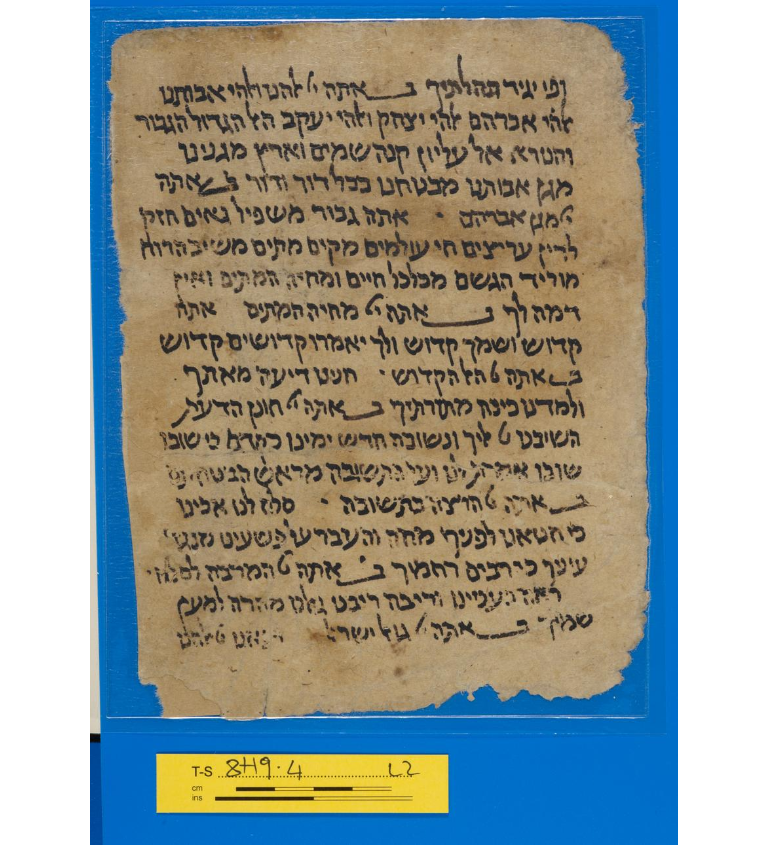
Geniza Manuscript of Portion of Amida, Nusach Eretz Yisrael (c. 1050-1250 CE), T-S 8 H 9.4,
cited in U. Erlich, Weekday Amida, Nusach of the Siddurim in the Cairo Geniza (Heb. 2013)