(כ) וְאַתָּ֞ה תְּצַוֶּ֣ה ׀ אֶת־בְּנֵ֣י יִשְׂרָאֵ֗ל וְיִקְח֨וּ אֵלֶ֜יךָ שֶׁ֣מֶן זַ֥יִת זָ֛ךְ כָּתִ֖ית לַמָּא֑וֹר לְהַעֲלֹ֥ת נֵ֖ר תָּמִֽיד׃
Du sollst aber auch den Kindern Israel befehlen, dass sie dir ausgepresstes Olivenöl bringen zum leuchten, um die Lampe ständig anzustecken.
(Die Heilige Schrift, trans. Dr. Simon Bernfeld, Berlin, 1902)
Du aber gebiete den Söhnen Jisaraels, dass sie dir bringen Olivenöl, reines gepresstes, zur Beleuchtung, um die Lampe beständig aufzusetzen.
(Die Tora, rev. Übersetzung vom Rabbiner Ludwig Philippson, 2015)
כתית. הַזֵּיתִים כּוֹתֵשׁ בַּמַּכְתֶּשֶׁת וְאֵינוֹ טוֹחֲנָן בָּרֵחַיִם, כְּדֵי שֶׁלֹּא יִהְיֶה בוֹ שְׁמָרִים, וְאַחַר שֶׁהוֹצִיא טִפָּה רִאשׁוֹנָה מַכְנִיסָן לָרֵחַיִם וְטוֹחֲנָן; וְהַשֶּׁמֶן הַשֵּׁנִי פָּסוּל לַמְּנוֹרָה וְכָשֵׁר לִמְנָחוֹת שֶׁנֶּאֱמַר כָּתִית לַמָּאוֹר – וְלֹא כָתִית לַמְּנָחוֹת (מנחות פ"ו):
כתית BEATEN — he pounds the olives in a mortar and must not grind them in a mill, so that there may be no lees; and after he has thus extracted the first drop of oil he may bring them into the mill and grind them. The second oil (that obtained by grinding) is unfitted for use in the candelabrum but is permissible for the meal-offerings (which had to be mingled with oil) since it is said here, “Beaten for the light”, and hence it is not essential that it should be beaten for the meal-offerings (Menachot 86a; cf. Rashi on Exodus 29:40).
Er stößt die Oliven in einem Mörser und darf sie nicht in einer Mühle mahlen, damit kein Trub entsteht; und nachdem er so den ersten Tropfen Öl gewonnen hat, darf er sie in die Mühle bringen und mahlen...
How is the first olive harvest processed? One picks the ripe olives at the top of the olive tree, as those are the first to ripen, and crushes them in a mortar and places them inside the bottom of a wicker basket that has many small holes in it. The oil will then drip from the olives through those holes into a vessel placed underneath the basket. Rabbi Yehuda says: One positions the olives on the walls, surrounding the basket. This produces more refined oil, as the dregs stick to the walls of the basket. This is the first grade of oil produced from the first harvest.
ES GIBT DREI OLIVENLESEN, UND JEDE LIEFERT DREI [QUALITÄTEN] ÖL.
DIE ERSTE LIEST MAN AM WIPFEL DES OLIVENBAUMES AB, DRÜCKT [DIE OLIVEN] UND TUT SIE IN DEN KORB, R. JEHUDA SAGT, UM DIE WANDUNG97Damit der Satz an der Wandung haften bleibe.DES KORBES; DIES98Das Öl, das aus den Oliven ganz ohne Druck fließt.IST DIE ERSTE [QUALITÄT].
HIERAUF PRESST MAN SIE MIT DEM BALKEN, R. JEHUDA SAGT, MIT STEINEN; DIES IST DIE ZWEITE.
SODANN MAHLT MAN SIE UND PRESST SIE WIEDER; DIES IST DIE DRITTE.
DIE ERSTE FÜR DEN LEUCHTER UND DIE ANDEREN FÜR SPEISOPFER.
(Talmud Bavli. German trans. by Lazarus Goldschmidt, 1929 [de])
https://de.wikipedia.org/wiki/Ner_Tamid
Das Ner Tamid (hebräisch נֵר תָּמִיד) ist ein in Synagogen vor dem Aron ha-Qodesch brennendes Ewiges Licht.
להעלות נר תמיד TO CAUSE THE LIGHT TO BURN (lit., to ascend) CONTINUALLY — he must enkindle it until the flame ascends by itself (Shabbat 21a).
DAS LICHT KONTINUIERLICH Brennen zu lassen (wörtlich: aufsteigen zu lassen) - er muss es anfachen, bis die Flamme von selbst aufsteigt
תמיד. כָּל לַיְלָה וְלַיְלָה קָרוּי תָּמִיד, כְּמוֹ שֶׁאַתָּה אוֹמֵר עֹלַת תָּמִיד וְאֵינָהּ אֶלָּא מִיּוֹם לְיוֹם;
תמיד CONTINUALLY — doing something every night, as is described here, may be termed תמיד, continually, just as you speak of (Numbers 27:6) “The continual (תמיד) burnt-offering”, although this was sacrificed only from day to day.
KONTINUIERLICH - etwas jede Nacht zu tun, wie es hier beschrieben wird, kann als תמיד, kontinuierlich, bezeichnet werden, so wie man von (Numeri 27:6) "dem kontinuierlichen (תמיד) Brandopfer" spricht, obwohl dieses nur von Tag zu Tag geopfert wurde.
להעלות נר תמיד כל לילה ולילה קרוי תמיד, כמו שאתה אומר עולת תמיד (במדבר כח ו), ואינה אלא מיום ליום, וכן במנחת חביתים נאמר תמיד (ויקרא ו יג), ואינה אלא מחציתה בבקר ומחציתה בערב. אבל תמיד האמור בלחם הפנים (שמות כ״ה:ל׳) הוא משבת לשבת. לשון רש''י. (רש"י על שמות כ״ז:כ׳) ומדרש רבותינו אינו כך, אלא כך שנו בספרי (ריש בהעלותך) יאירו שבעת הנרות (במדבר ח ב), שומע אני שיהיו דולקין לעולם, ת''ל מערב עד בקר (ויקרא כד ג). אי מערב עד בקר, יכול יהיו דולקים מערב עד בקר ויכבם, ת''ל יאירו שבעת הנרות. הא כיצד, יאירו שבעת הנרות מערב עד בקר. לפני ה' תמיד (שם), שיהא נר מערבי דולק תדיר, שממנו מדליקין את המנורה בין הערבים. ובתורת כהנים (שם כד ב) נמי אמרו כך להעלות נר תמיד, שיהא נר מערבי תדיר. וקתני התם, מצאו שכבה מדשנו ומדליקו ממזבח העולה, דאפילו ביום נמי מדליק נר מערבי לפי שהוא תמיד לעולם:
ובמסכת תמיד (ג ט) שנינו כך מי שזכה בדישון המנורה נכנס ומצא שתי נרות מזרחיים דולקין מדשן את השאר ומניח את אלו דולקין במקומן מצאן שכבו מדשנן ומדליקן מן הדולקין ואחר כך מדשן את השאר. וסתם משנה זו שנויה כדברי רבי (מנחות צח:) שאמר בנרות מזרח ומערב היו מונחין, ולדעתו נר מערבי הוא השני, ונקרא מערבי לפי שהוא מערבי לראשון, ולפי שהוא צריך להדליק נר מערבי לקיים בו לפני ה' תמיד צריך להדליק המזרחי, שאין השני נקרא מערבי עד שיהא זה מזרחי אצלו.
TO CAUSE A LAMP TO BURN ‘TAMID’ (CONTINUALLY). “Doing something each and every night is called tamid (continually), just as you say, olath tamid (a continual burnt-offering) and yet it was brought only from day to day. Similarly in the case of the meal-offering made on the griddle [brought every day by the High Priest] it is said tamid, and yet it was brought only half of it in the morning, and half thereof in the evening. However, the word tamid used in connection with the showbread signifies [the whole period without interruption] from Sabbath to Sabbath.” Thus is Rashi’s language.
But the Midrash [interpretation] of our Rabbis is not so. Instead they taught in the Sifre as follows: “The seven lamps shall give light... How is this to be understood? The seven lamps shall give light from evening to morning. Before the Eternal continually — this refers to the neir ma’aravi which is to burn perpetually, since the candelabrum was lit from it in the evening.” In the Torath Kohanim the Rabbis have likewise said: “To cause a lamp to burn continually — this means that ‘the western light’ should burn perpetually.” They have further taught there: “If [the priest who came into the Sanctuary in the morning to trim the candelabrum] found that it had gone out, he cleaned it out and kindled it from [the fire upon] the altar of the whole-offering.” Thus it is clear that even at daytime he kindled the neir ma’aravi, for that lamp always burnt regularly [and not as Rashi has it that the candelabrum was lit only in the evening]. And in Tractate Tamid we have been taught as follows: “[The priest] who was privileged to clean out the candelabrum [during the morning service] entered [the Sanctuary], and if he found the two easternmost lamps burning, he cleaned out the rest [leaving them to be lit during the evening service], but the two easternmost lamps he left burning as they were. If he found that [the two easternmost lamps] had gone out, he cleaned them out and kindled them from those that were still burning, and then cleaned out the rest” [leaving them to be kindled during the evening service].
Die sieben Lampen sollen Licht spenden vom Abend bis zum Morgen. Vor dem Ewigen fortwährend - das bezieht sich auf den neir ma'aravi, der fortwährend brennen soll, da der Leuchter am Abend von ihm entzündet wurde." In den Torath Kohanim haben die Rabbiner ebenfalls gesagt: "Eine Lampe fortwährend brennen zu lassen - das bedeutet, dass 'das westliche Licht' fortwährend brennen sollte." Sie haben dort weiter gelehrt: "Wenn [der Priester, der am Morgen in das Heiligtum kam, um den Leuchter zu schmücken] feststellte, dass er erloschen war, reinigte er ihn und zündete ihn am Altar des Ganzopfers an." Es ist also klar, dass er den neir ma'aravi auch am Tag anzündete, denn diese Lampe brannte immer regelmäßig [und nicht, wie Raschi meint, nur am Abend]. Und im Traktat Tamid werden wir wie folgt unterrichtet: "[Der Priester], der das Vorrecht hatte, den Leuchter [während des Morgengottesdienstes] zu reinigen, betrat [das Heiligtum], und wenn er die beiden östlichsten Lampen brennend vorfand, reinigte er den Rest aus [und ließ sie während des Abendgottesdienstes brennen], aber die beiden östlichsten Lampen ließ er brennen, wie sie waren. Fand er aber, dass die beiden östlichsten Lampen erloschen waren, so reinigte er sie aus und zündete sie mit den noch brennenden an; dann reinigte er die übrigen aus" [damit sie während des Abendgottesdienstes angezündet werden konnten].
Joshua Jacobson, Rekindling the Flame, Hebrew College
https://hebrewcollege.edu/blog/rekindling-the-flame/
The last three words in the Hebrew original, leha’alot ner tamid, mean “for kindling lamps regularly,” not “for kindling an eternal light,” as we commonly interpret the phrase today. In this context, the word tamid is not an adjective (“eternal”) but an adverb (“regularly”).
This is how the medieval scholars known as the Masoretes read this text. These sages created the system of cantillation we use to this very day—the symbolic marks in our Bible that indicate not only how to chant the words of the Torah, but also how to punctuate them. Without getting overly technical, if tamid had been an adjective modifying ner (“eternal light”) it would have been punctuated with merekha, thus grouping the two words together. But the word ner is actually punctuated with tippeha, indicating that it is separated from tamid. Thus, the Masoretic reading of leha’alot ner tamid is “for kindling lamps regularly.”
Die letzten drei Wörter im hebräischen Original, leha'alot ner tamid, bedeuten "für das regelmäßige Anzünden von Lampen", nicht "für das Anzünden eines ewigen Lichts", wie wir den Ausdruck heute üblicherweise interpretieren. In diesem Zusammenhang ist das Wort tamid kein Adjektiv ("ewig"), sondern ein Adverb ("regelmäßig").
So haben die als Masoreten bekannten mittelalterlichen Gelehrten diesen Text gelesen. Diese Weisen schufen das System der Kantillation, das wir bis heute verwenden - die symbolischen Zeichen in unserer Bibel, die nicht nur angeben, wie die Worte der Tora zu rezitieren sind, sondern auch, wie sie zu betonen sind. Ohne allzu technisch zu werden: Wäre tamid ein Adjektiv, das ner ("ewiges Licht") modifiziert, würde es mit merekha interpunktiert werden, wodurch die beiden Wörter zusammengefügt werden. Aber das Wort ner wird tatsächlich mit tippeha interpunktiert, was darauf hinweist, dass es von tamid getrennt ist. Die masoretische Lesart von leha'alot ner tamid ist also "zum regelmäßigen Anzünden von Lampen".
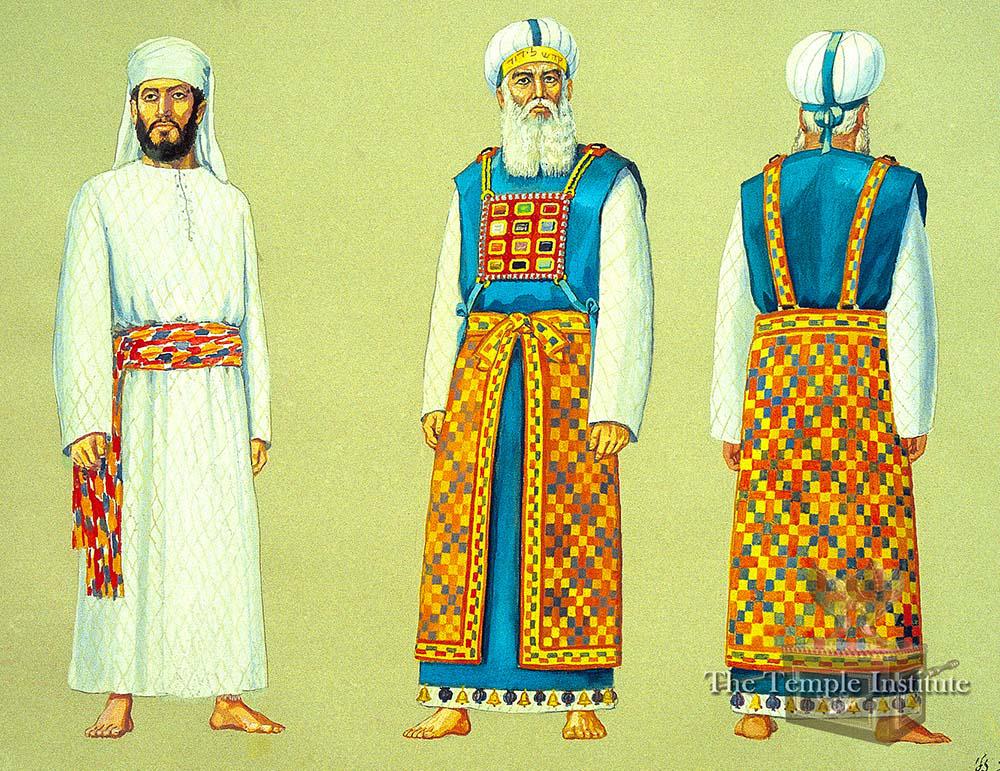
ואפוד. לֹא שָׁמַעְתִּי וְלֹא מָצָאתִי בַּבָּרַיְתָא פֵּרוּשׁ תַּבְנִיתוֹ, וְלִבִּי אוֹמֵר לִי שֶׁהוּא חֲגוֹרָה לוֹ מֵאֲחוֹרָיו, רָחְבּוֹ כְּרֹחַב גַּב אִישׁ, כְּמִין סִינָר שֶׁקּוֹרִין פורצי"נט בְּלַעַז, שֶׁחוֹגְרוֹת הַשָּׂרוֹת כְּשֶׁרוֹכְבוֹת עַל הַסּוּסִים,..
ואפוד AND AN EPHOD — I have heard no tradition nor have I found in the Boraitha any description of its shape, but my own mind tells me that it was tied on behind him; its breadth was the same as the breadth of a man’s back like a kind of apron which is called pourceint in old French which ladies of rank tie on when they ride on horse-back...
Ich habe weder eine Überlieferung gehört, noch habe ich in der Boraitha eine Beschreibung ihrer Form gefunden, aber mein eigener Verstand sagt mir, dass sie ihm hinten umgebunden war; ihre Breite entsprach der Breite eines Männerrückens, wie eine Art Schürze, die im alten Französisch pourceint genannt wird und die sich Damen von Rang umbinden, wenn sie auf dem Pferderücken reiten.
(ג) וְאַתָּ֗ה תְּדַבֵּר֙ אֶל־כׇּל־חַכְמֵי־לֵ֔ב אֲשֶׁ֥ר מִלֵּאתִ֖יו ר֣וּחַ חׇכְמָ֑ה וְעָשׂ֞וּ אֶת־בִּגְדֵ֧י אַהֲרֹ֛ן לְקַדְּשׁ֖וֹ לְכַהֲנוֹ־לִֽי׃
Und sprich du zu allen Weisen, deren Herz ich mit Geist der Weisheit erfüllt habe, dass sie Aharons Gewänder machen, ihn zu heiligen, dass er mir als Priester diene.