


There are a number of places to draw an environmental ethic from in our Jewish tradition, but one of the places I find most fascinating is in Deuteronomy 20:19-20 which introduces the mitzvah of bal tashchit.
(יט) כִּֽי־תָצ֣וּר אֶל־עִיר֩ יָמִ֨ים רַבִּ֜ים לְֽהִלָּחֵ֧ם עָלֶ֣יהָ לְתָפְשָׂ֗הּ לֹֽא־תַשְׁחִ֤ית אֶת־עֵצָהּ֙ לִנְדֹּ֤חַ עָלָיו֙ גַּרְזֶ֔ן כִּ֚י מִמֶּ֣נּוּ תֹאכֵ֔ל וְאֹת֖וֹ לֹ֣א תִכְרֹ֑ת כִּ֤י הָֽאָדָם֙ עֵ֣ץ הַשָּׂדֶ֔ה לָבֹ֥א מִפָּנֶ֖יךָ בַּמָּצֽוֹר׃ (כ) רַ֞ק עֵ֣ץ אֲשֶׁר־תֵּדַ֗ע כִּֽי־לֹא־עֵ֤ץ מַאֲכָל֙ ה֔וּא אֹת֥וֹ תַשְׁחִ֖ית וְכָרָ֑תָּ וּבָנִ֣יתָ מָצ֗וֹר עַל־הָעִיר֙ אֲשֶׁר־הִ֨וא עֹשָׂ֧ה עִמְּךָ֛ מִלְחָמָ֖ה עַ֥ד רִדְתָּֽהּ׃ (פ)
(19) When in your war against a city you have to besiege it a long time in order to capture it, you must not destroy its trees, wielding the ax against them. You may eat of them, but you must not cut them down. Are trees of the field human to withdraw before you into the besieged city? (20) Only trees that you know do not yield food may be destroyed; you may cut them down for constructing siegeworks against the city that is waging war on you, until it has been reduced.
(י) וְלֹא הָאִילָנוֹת בִּלְבַד. אֶלָּא כָּל הַמְשַׁבֵּר כֵּלִים. וְקוֹרֵעַ בְּגָדִים. וְהוֹרֵס בִּנְיָן. וְסוֹתֵם מַעְיָן. וּמְאַבֵּד מַאֲכָלוֹת דֶּרֶךְ הַשְׁחָתָה. עוֹבֵר בְּלֹא תַשְׁחִית.
(10) And not only regarding trees, but even one who destructively breaks vessels or rips up clothing or tears down a building or seals up a spring or wastes food violates the Negative Commandment of “Do not destroy”.
The first reason we might care about the environment will be explored through Ibn Ezra, a commentator who lived in Spain in the middle ages. As you read Ibn Ezra's comments, consider where he thinks the animus for the environmentalism of bal taschit comes from.
...פירושו כי ממנו תאכל ואותו לא תכרות כי האדם עץ השדה והטעם כי חיי בן אדם הוא עץ השדה וכמוהו כי נפש הוא חובל כי חיי נפש הוא חובל ואותו לא תכרות דבק עם לבא מפניך במצור הנה לא תשחית עץ פרי שהוא חיים לבן אדם רק מותר שתאכל ממנו ואסור לך להשחיתו כדי שתבא העיר מפניך במצור והעד על זה הפירוש שהוא נכון שאמר וכרת ובנית מצור
This is the explanation: "for you shall eat from it but not cut it down for a man is as a tree of the field" and similarly "for [in doing so] one seizes a soul in pawn" i.e. he is seizing things which preserve life. "and do not cut it down" [in our verse] is parsed along with "to go before you in a siege," that is to say "do not destroy a fruit tree, which provides life for people; it is only permitted for you to eat from it and not to cut it down to force the city into siege." Evidence that this is correct [comes from the phrase] "thou shalt cut it down and build a siege [tower]"
The is the other text Ibn Ezra refers to when he quotes "for he seizes a soul in pawn", which is surrounded by other commandments on how to create just economic conditions.
(ו) לֹא־יַחֲבֹ֥ל רֵחַ֖יִם וָרָ֑כֶב כִּי־נֶ֖פֶשׁ ה֥וּא חֹבֵֽל׃ (ס)
(6) A handmill or an upper millstone shall not be taken in pawn, for [in doing so] one seizes a soul in pawn.
Now read Rashi's commentary on the verse. How does this differ from what Ibn Ezra's take? What differences and what similarities do these the two present? How do they complement each other? Which vision for an environmental ethic do you find more compelling?
(ג) כי האדם עץ השדה. הֲרֵי כִּי מְשַׁמֵּשׁ בִּלְשׁוֹן דִּילְמָא, שֶׁמָּא הָאָדָם עֵץ הַשָּׂדֶה לְהִכָּנֵס בְּתוֹךְ הַמָּצוֹר מִפָּנֶיךָ לְהִתְיַסֵּר בְּיִסּוּרֵי רָעָב וְצָמָא כְּאַנְשֵׁי הָעִיר? לָמָּה תַּשְׁחִיתֶנּוּ?!:
(3) "Ki" (כי) has here the meaning of “possibly”, “perhaps” (cf. Rashi on Exodus 23:5) — is the tree of the field perhaps a man who is able to withdraw within the besieged city from before you, that it should be chastised by the suffering of famine and thirst like the inhabitants of the city? Why should you destroy it?
- The same degree of protection from environmental and health hazards, and
- Equal access to the decision-making process to have a healthy environment in which to live, learn, and work.
The following is the text of the Principles of Environmental Justice drafted and adopted in 1991 at the National People of Color Environmental Leadership Summit. While EJ was a framework before the summit, the declaration serves as a touchstone for many current movements grounded in environmental justice.
- Environmental justice affirms the sacredness of Mother Earth, ecological unity and the interdependence of all species, and the right to be free from ecological destruction.
- Environmental justice demands that public policy be based on mutual respect and justice for all peoples, free from any form of discrimination or bias.
- Environmental justice mandates the right to ethical, balanced and responsible uses of land and renewable resources in the interest of a sustainable planet for humans and other living things.
- Environmental justice calls for universal protection from nuclear testing, extraction, production and disposal of toxic/hazardous wastes and poisons and nuclear testing that threaten the fundamental right to clean air, land, water, and food.
- Environmental justice affirms the fundamental right to political, economic, cultural and environmental self-determination of all peoples.
- Environmental justice demands the cessation of the production of all toxins, hazardous wastes, and radioactive materials, and that all past and current producers be held strictly accountable to the people for detoxification and the containment at the point of production.
- Environmental justice demands the right to participate as equal partners at every level of decision-making including needs assessment, planning, implementation, enforcement and evaluation.
- Environmental justice affirms the right of all workers to a safe and healthy work environment, without being forced to choose between an unsafe livelihood and unemployment. It also affirms the right of those who work at home to be free from environmental hazards.
- Environmental justice protects the right of victims of environmental injustice to receive full compensation and reparations for damages as well as quality health care.
- Environmental justice considers governmental acts of environmental injustice a violation of international law, the Universal Declaration On Human Rights, and the United Nations Convention on Genocide.
- Environmental justice must recognize a special legal and natural relationship of Native Peoples to the U.S. government through treaties, agreements, compacts, and covenants affirming sovereignty and self-determination.
- Environmental justice affirms the need for urban and rural ecological policies to clean up and rebuild our cities and rural areas in balance with nature, honoring the cultural integrity of all our communities, and providing fair access for all to the full range of resources.
- Environmental justice calls for the strict enforcement of principles of informed consent, and a halt to the testing of experimental reproductive and medical procedures and vaccinations on people of color.
- Environmental justice opposes the destructive operations of multi-national corporations.
- Environmental justice opposes military occupation, repression and exploitation of lands, peoples and cultures, and other life forms.
- Environmental justice calls for the education of present and future generations which emphasizes social and environmental issues, based on our experience and an appreciation of our diverse cultural perspectives.
- Environmental justice requires that we, as individuals, make personal and consumer choices to consume as little of Mother Earth's resources and to produce as little waste as possible; and make the conscious decision to challenge and reprioritize our lifestyles to insure the health of the natural world for present and future generations.
How do these principles square with the visions of environmentalism presented by Rashi and Ibn Ezra? Where do they align and differ? How does reading each of the texts inform the others?
The UCC report was one of the first to think of EJ and environmental racism on a national scale instead of just on a community and site specific basis. It in many ways nationalized the EJ conversation and brought it to new heights. The below is an excerpt from the report's executive summary.
This report is intended to better enable the victims of this Insidious form of racism not only to become more aware of the problem, but also to participate in the. formulation of viable strategies. Too often African Americans and other racial and ethnic peoples are the victims of racism but are relegated to a defensive or reactive response. rather than a proactive position. We are releasing this report in the interests of the millions of people who live in potentially health-threatening situations. In particular, we call attention to the fact that race is a major factor related to the presence of hazardous wastes in residential communities throughout the United States.
...
Racial and ethnic communities have been and continue to be beset by poverty, unemployment and problems related to poor housing, education and health. These communities cannot afford the luxury of being primarily concerned about the quality of their environment when confronted by a plethora of pressing problems related to their day-to-day survival. Within this context, racial and ethnic communities become particularly vulnerable to those who advocate the siting of a hazardous waste facility as an avenue for employment and economic development. Thus, proposals that economic incentives be offered to mitigate local opposition to the establishment of new hazardous waste facilities raise disturbing social policy questions.
...
Race proved to be the most significant among variables tested in association with the location of commercial hazardous waste facilities. This represented, a consistent national pattern. Communities with the greatest number of commercial hazardous waste facilities had the highest composition of racial and ethnic residents. In communities with two or more facilities or one of the nation's five largest landfills, the average minority percentage of the population was more than three times that of communities without facilities (38 percent vs. 12 percent). In communities with one commercial hazardous waste facility, the average minority percentage of the population was twice the average minority percentage of the population in communities without such facilities (24 percent vs. 12 percent). Although socio-economic status appeared to play an important role in the location of commercial hazardous waste facilities, race still proved to be more significant. This remained true after the study controlled for urbanization and regional differ-vices. Incomes and home values were substantially lower when communities with commercial facilities were compared to communities in the surrounding counties without facilities
The following is a cut of excerpts from a speech Reverend William Barber gave at an event honoring the Sunrise Movement, the youth-led climate organization behind the Green New Deal, for winning the Henry Wallace award. Barber served as president of the North Carolina NAACP, was a winner of the MacArthur Foundation Genius Award, and is a leading organizer of the Christian religious left.
כׇּל מִי שֶׁאֶפְשָׁר לִמְחוֹת לְאַנְשֵׁי בֵיתוֹ וְלֹא מִיחָה — נִתְפָּס עַל אַנְשֵׁי בֵיתוֹ. בְּאַנְשֵׁי עִירוֹ — נִתְפָּס עַל אַנְשֵׁי עִירוֹ. בְּכָל הָעוֹלָם כּוּלּוֹ — נִתְפָּס עַל כָּל הָעוֹלָם כּוּלּוֹ.
In any event, they said: Anyone who had the capability to effectively protest the sinful conduct of the members of his household and did not protest, he himself is apprehended for the sins of the members of his household and punished. If he is in a position to protest the sinful conduct of the people of his town, and he fails to do so, he is apprehended for the sins of the people of his town. If he is in a position to protest the sinful conduct of the whole world, and he fails to do so, he is apprehended for the sins of the whole world.
How did you come in today thinking about environmentalism? How did these texts challenge you, make you reconsider, or reframe your thoughts? What should we be doing as a chavurah to combat racism, environmental destruction, and the convergence of other social justice issues? What does it mean to think intersectionaly about environmental justice? How do our various privileged identities impact what we should be doing in EJ fights, and how does our marginalized identity as Jews impact our role?
If you want a really interesting discussion, do the reemerging strains of ecofascism on the right impact your answers? See this report from the Center for American Progress (a left-leaning think tank and advocacy organization) and this Teen Vouge article for an ecofascism primer.
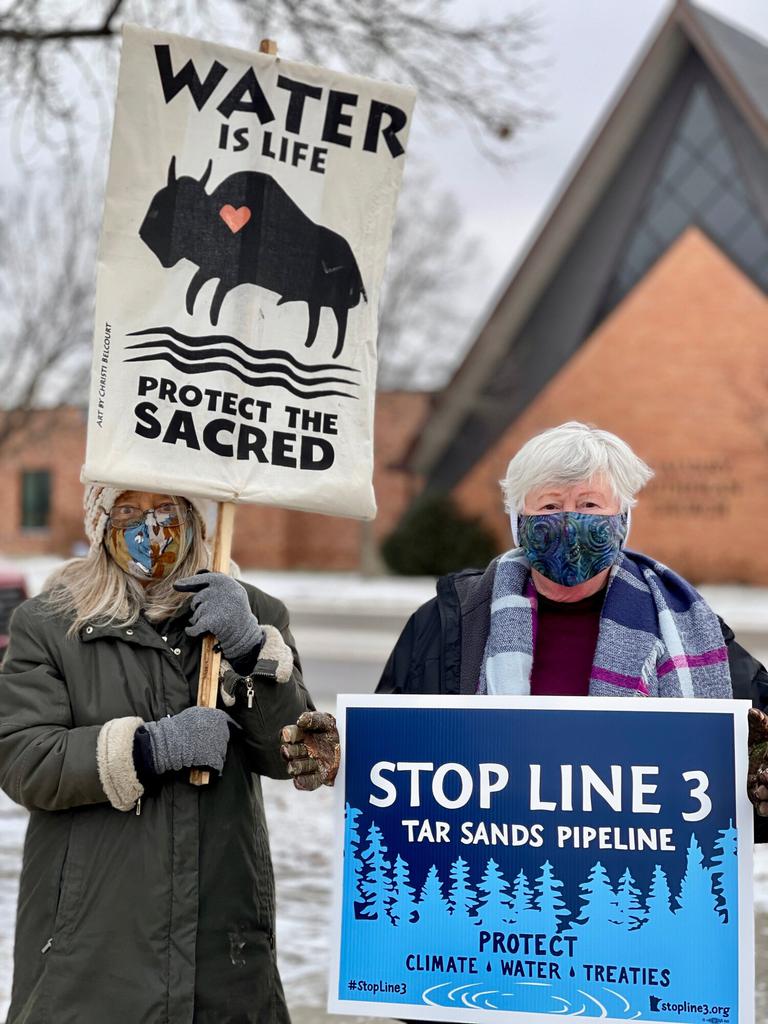
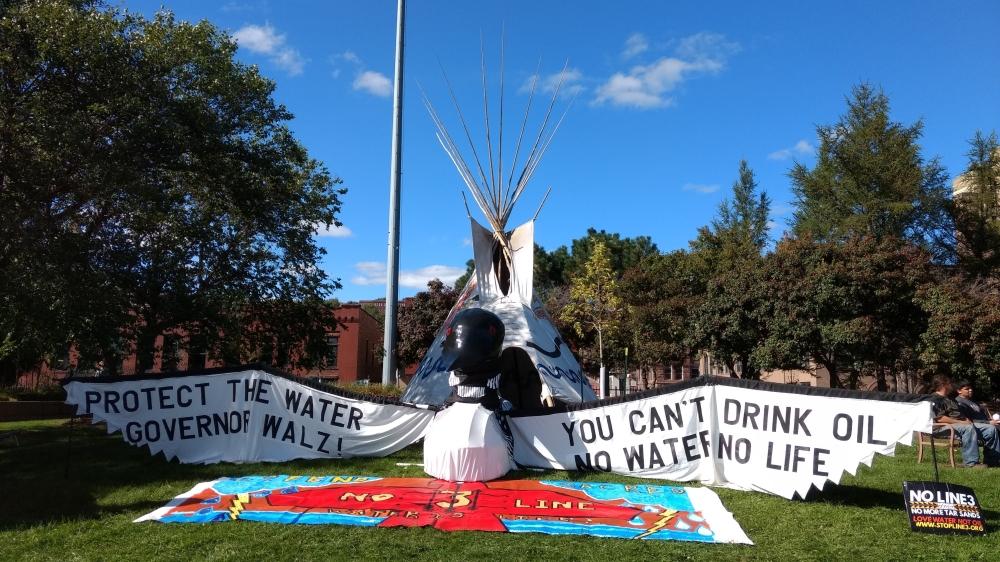
Water is life became a rallying cry at the Dakota Access Pipeline protests. Tribal leaders opposed the pipeline because it was planned to, and eventually constructed to run, under the Lake Oahe reservoir, one of the primary drinking water sources for the Standing Rock Sioux. Since then, the phrase, along with the title of "water protectors" have become part of the pipeline protest and riverkeeper lexicon.
Water is life - translation from Lakota
This song was written by Doreen Day, an Ojibwe water protector and activist, at the request of her grandson. It translates to:
Water, we love you.
We thank you.
We respect you.
We sang this song at the Line 3 protest action that Jonah, Eliot, and Hilary attended!

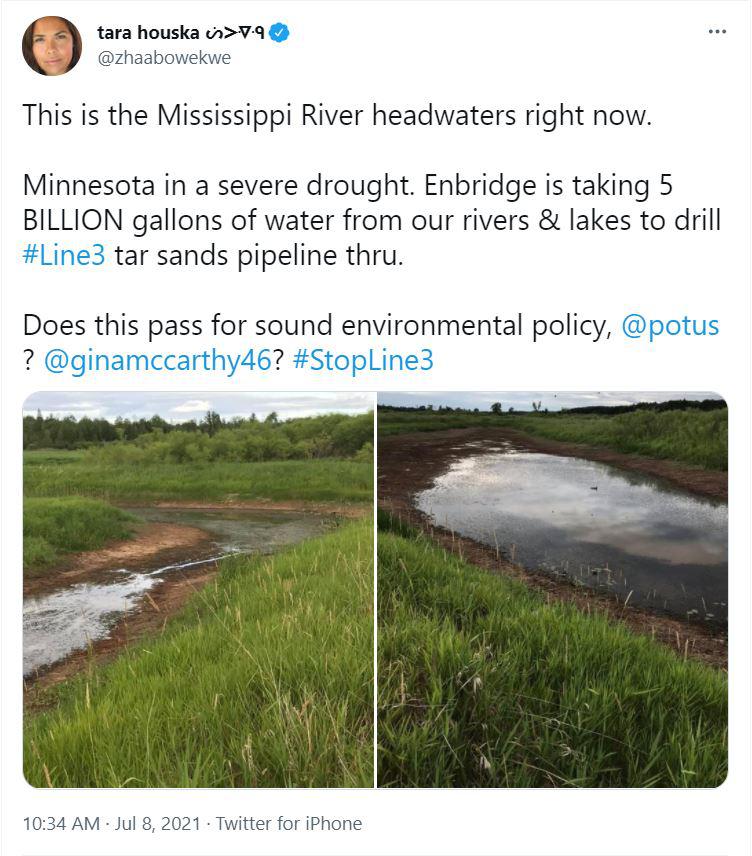
What does water mean to you? How, if at all, has your relationship with water changed when you came to Colorado or experienced increasingly frequent cycles of drought? What makes water a strong symbol for activists? How does our Jewish identity impact the way we hear "Water is Life?" How does our relationship with water change when we are on a hike or camping compared to when we have running water in our homes?
What does thinking about water through an EJ lens get us that thinking about it without a race and class analysis does not?
Does it make sense to think about climate change, a force of global change, and water protection, often an intensely local issue, as part of the same, or parallel movements? Why did Rev. Barber from the previous video talk about unleaded water at an event honoring a climate change organization?