


Introductory Questions:
1. What are the first words that come to mind when you hear/read the word "Secular"?
2. What are the first words that come to mind when you hear/read the word "Religious"? Do you find your definition at odds with your definition for "Secular"? If yes, why? If no, why?
3. What are the first words that come to mind when you hear/read the word "Liturgy"?
4. What are the first words that come to mind when you hear/read the word "Prayer"?
5. How much power and connection do you feel to the words you say when you pray?
Yehuda Amichai, "סִנַּנְתִּי - I Filtered" - 1977 (Translation: Multiple Sources)
סִנַּנְתִּי מִתּוֹךְ מְגִלַּת אֶסְתֵּר אֶת מִשְׁקָע
הַשִּׂמְחָה הַגַּסָּה, וּמִתּוֹךְ יִרְמְיָהוּ
אֶת יִלְלַת הַכְּאֵב בַּמֵּעַיִם. וּמִתּוֹךְ
שִׁיר הַשִּׁירִים אֶת חִפּוּשׂ הָאֵין סוֹפִי
אַחַר הָאַהֲבָה וּמִסְפַּר בְּרֵאשִׁית אֶת
הַחֲלוֹמוֹת וְאֶת קַיִן וּמִתּוֹךְ קֹהֶלֶת אֶת
הַיֵּאוּשׁ וּמִתּוֹךְ סֵפֶר אִיּוֹב אֶת אִיּוֹב.
וְהִדְבַּקְתִּי לִי מִן הַשְּׁאֵרִיּוֹת סֵפֶר תָּנָ"ךְ חָדָשׁ.
אֲנִי חַי מְצֻנְזָר וּמֻדְבָּק וּמֻגְבָּל וּבְשׁלוה.
אִשָּׁה אַחַת שָׁאֲלָה אוֹתִי אֶמֶשׁ בָּרְחוֹב
הֶחָשׁוּךְ עַל שָׁלוֹם אִשָּׁה אַחֶרֶת
שֶׁמֵּתָה לֹא בְּעָתָה וְלֹא בְּעִתּוֹ שֶׁל אַף אֶחָד.
מִתּוֹךְ עֲיֵפוּת גְּדוֹלָה עָנִיתִי לָהּ:
שְׁלוֹמָהּ טוֹב, שְׁלוֹמָהּ טוֹב.
From the Book of Esther I filtered the sediment of vulgar joy and out of the Book of Jeremiah the howl of pain in the guts. And from the
Song of Songs the endless search for love,
and out of the Book of Genesis the dreams
and Cain and out of Ecclesiastes
the despair and out of the Book of Job—Job.
And from what was left over I pasted for myself a new Bible. Now I live censored and pasted and limited and in peace.
A woman asked me last night in the darkened street
about the well-being of another woman
who had died before her time, and not in anyone else's time either.
Out of great weariness I answered her:
"She’s fine, she’s fine."
Questions for Consideration:
1. Amichai discusses central aspects to various books from our tradition in this poem. What does it mean to "filter out" (i.e. remove) the essential nature of religious texts? Is it an empowering or weakening act? What stance does Amichai seem to take? What stance do you take?
2. What does it mean to live "censored and pasted and limited and in peace"? What moments in your life have you felt "censored and pasted and limited and in peace"?
3. What do you make of this interaction in the second stanza of the poem? What does it have to say about living in community?
4. What's the power of a central liturgy -- or canon -- in bringing people together? How does it keep people apart?
Meir Ariel, "Modeh Ani" - "I Give Thanks" - 2000
מוֹדֶה אֲנִי
לְפָנֶיךָ וּלְךָ
עַל כָּל הַחֶסֶד וְהָאֱמֶת וְהַטּוֹבָה וְהָרָעָה וְהַטּוֹבָה
שֶׁעָשׂיתָ עִמָּדִי וְעִם בֵּיתִי
וְעִם קְרוֹבַי וִידִידַי
וְעִם בְּנֵי עַמִּי וְעִם אַרְצִי
וְעִם כָּל הָעוֹלָם וְהָאָדָם
אֲשֶׁר בָּרָאתָ.
בַּלָּאט, חֶרֶשׁ חֶרֶשׁ
אַט אַט, טוֹפְפוֹת
עֲתִידוֹת עֲתִידוֹת לִקְרָאתֵנוּ,
וְאַתְּ מְחַיֶּכת אֵלַי מִתּוֹךְ הַשֵּׁנָה.
יִהְיֶה לָנוּ טוֹב, טוֹב מִטּוֹב, טוֹב מְאֹד,
זֶה מַתְחִיל כְּבָר בַּבֹּקֶר בַּבֹּקֶר
אַתְּ צוֹחֶקֶת אֵלַי
מִתּוֹךְ, מִתּוֹךְ הַשֵּׁנָה.
I give thanks
before you and to you
for all of the loving-kindness and the truth and the good and the bad and the good
that you've done for me and for my household
and for those who are close to me and for my dear friends
and for my people and for my land
and for the world and humanity
that You created.
Silently, so quietly
falling so slowly, fates
overlap and fates appear before us,
and you smile at me while you sleep.
Things will be good for us, better than good, very good,
and it's already started this morning - this morning.
You laugh at me
while, while sleeping.
Questions for Consideration:
1. What are your associations with the prayer "Modeh Ani"?
2. Note that in the second verse, the word "You" changes from the masculine to the feminine. Why might this be? What could this say about Meir Ariel's relationship with God? Is he talking to God throughout the whole song?
3. If you could rewrite a prayer, using the form of an existing one, what would it be? Why? What would you change? What would you say? Who, or what, would you be speaking to?
Mary Karr, "Psalm for Riding a Plane" - 2016
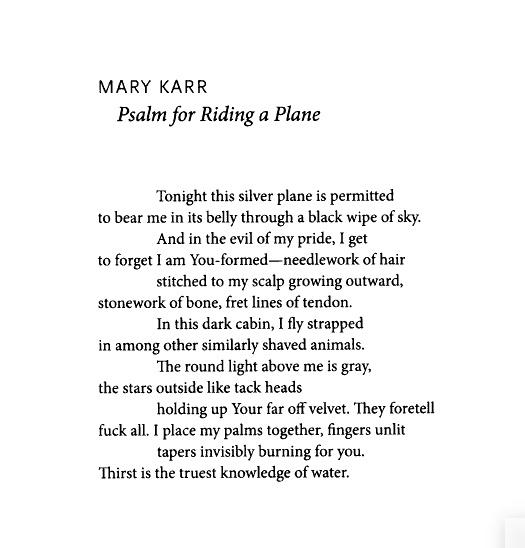
Questions for Consideration:
1. Who is Mary Karr praying to?
2. How would you describe this poem to a third party? Is it a prayer, a psalm, or something else entirely?
3. Consider Mary Karr alongside the Yehuda Amichai poem and the Meir Ariel song above. What's the difference between filtering out and creating something from remnants, writing a new prayer inspired by an existing one, and writing a new psalm that is completely your own? What are the merits of each approach? What is challenging about each approach?
Paul Robeson, "Hassidic Chant: Kaddish" - 1958
Levi Yitzchak of Berditchev, The Kedushas Levi c. 18th Century
גוט מאָרגן דיר, רִבּוֹנוֹ שֶׁל עוֹלָם!
איך, לֵוִי־יִצְחָק בֶּן־שָׂרָה מבערדיטשעװ
בין צו דיר געקומען מיט אַ דִין תּוֹרָה פֿאַר דיין פֿאָלק יִשְׂרָאֵל
און װאָס האָסטו צו דיין פֿאָלק יִשְׂרָאֵל?
און וואָס האָסטו אָנגעזעצט אויף דיין פֿאָלק יִשְׂרָאֵל?
אַז װאָס נאָר אַ זאַך, איז ”צַו אֶת בְּנֵי־יִשְׂרָאֵל,“
און װאָס נאָר אַ זאַך, איז ”אֱמֹר לִבְנֵי־יִשְׂרָאֵל,“
און װי נאָר אַ זאַך, איז ”דַּבֵּר לִבְנֵי־יִשְׂרָאֵל.“
טאַטעניו!
כַּמָּה אֻמּוֹת בָּעוֹלָם!
בַּבְלִיִּים, פָּרְסִיִּים, אֲדֹמִיִּים
און די רוסלענדער, װאָס זאָגן?
”אונזער קייזער איז אַ קייזער!“
די דייטשלענדער, װאָס זאָגן זײ?
”אונזער קעניג איז אַ קעניג!“
די ענגלענדער, װאָס זאָגן זײ?
”אונזער מלכות איז אַ מלכות!“
און איך, לֵוִי־יִצְחָק בֶּן־שָׂרָה מבערדיטשעװ זאָג׃
”יִתְגַּדַּל וְיִתְקַדַּשׁ שְׁמֵהּ רַבָּא!“
און איך, לֵוִי־יִצְחָק בֶּן־שָׂרָה מבערדיטשעװ, זאָג׃
”לֹא אָזוּז מִמְּקוֹמִי!
כ’װעל זיך פֿון אָרט ניט רירן!
אָן אַ סוֹף זאָל דאָס זיין!
אָן אַן עק זאָל דאָס נעמען!
יִתְגַּדַּל וְיִתְקַדַּשׁ שְׁמֵהּ רַבָּא!“
A good day to Thee, Lord, God Almighty,
I, Levi Yitzhak, son of Sarah from Berdichev,
Here am I before thee with a grave and earnest plea for this my people.
What hast Thou done to this Thine people?
Why hast Thou so oppressed this Thine people?
Wherever sorrow?
Surely the sons of the oppressed
Whoever suffers?
Ever the sons of the oppressed
There are those who fight against the sons of oppressed
God on high
On this Earth how many nations?
The Romans, The Persians, The Babylonians
The Germans, what do they say?
Our ruler is above all rulers
The Romans what do they say?
Our kingdom is above all kingdoms
And I, Levi Yitzhak, son of Sarah of Berdichev, say,
“Yisgadal v’yiskadash shmei raboh–
Magnified and sanctified is Thy Name.”
But I, Levi Yitzhak, son of Sarah of Berdichev, declare,
Yisgadal v’yiskadash shmei raboh–
And I, Levi Yitzhak, son of Sarah of Berdichev, declare,
“From my place I will not move,
I will not move from this place
Until there be an end to all this sorrow and suffering.
“Yisgadal v’yiskadash shmei raboh–
Magnified and sanctified is only Thy Name.”
- Dr. Jonathan Karp, Performing Black-Jewish Symbiosis: The “Hassidic Chant” of Paul Robeson
Questions for Consideration and Summary:
1. Consider these two performances by Paul Robeson and by Cantor Yitzchak Zelman. What do they evoke for you? What's different? What's the same?
2. What is, in the words of Paul Robeson, a "sermon-song-declaration-protest"? How does this song/prayer/poem fit into that description? What other songs/prayers/poems that you know of fit into that rubric?
3. How do the four examples above fit into the definitions of, "Religious," "Secular," "Liturgy," and "Prayer" that were discussed at the beginning of this session? How are the definitions discussed challenged or complicated or not?
4. How can this discussion of the different ways we interact with liturgy and prayer impact our lives as pray-ers and do-ers? How can we bring the lessons from this session into our daily lives?