


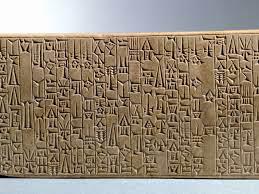
Engraved in cuneiform on stone stelae, its intent was to glorify the king, but it was apparently little used as a basis for judicial rulings. It comprises legal paragraphs sandwiched between a personal prologue and epilogue, is written in casuistic form, and touches on many recognizable matters of public and private law.
Most of the former deal with preserving public order; most of the latter concern economic transactions, marriage and family matters, and inheritance of property. The stated purposes are conventionally political and utilitarian: “to establish justice,” “to give good“government,” “to prosper the people, ''to abolish enmity and rebellion.”
(from Leon Kass' 'Founding God's Nation: Reading Exodus')

“Do not honor a slave girl in your house; she should not rule your bedroom like a wife, do not give yourself over to slave girls....Let this be said among your people: "The household which a slave girl rules, she disrupts."
§ Rava said: ..the obligation of a husband to provide his wife’s sustenance applies by Torah law, as it is taught with regard to the verse pertaining to a husband’s obligations toward his wife: “If he takes another wife for himself, her food [she’era], her clothing [kesuta], and her conjugal rights [onata], he shall not diminish” (Exodus 21:10)...
...הָעוֹנָה הָאֲמוּרָה בַּתּוֹרָה הַטַּיָּילִין בְּכׇל יוֹם הַפּוֹעֲלִים שְׁתַּיִם בְּשַׁבָּת הַחַמָּרִים אַחַת בְּשַׁבָּת הַגַּמָּלִים אַחַת לִשְׁלשִׁים יוֹם הַסַּפָּנִים אַחַת לְשִׁשָּׁה חֳדָשִׁים דִּבְרֵי רַבִּי אֱלִיעֶזֶר
The set interval defining the frequency of a husband’s conjugal obligation to his wife stated in the Torah (Ex. 21:10), unless the couple stipulated otherwise, varies according to the man’s occupation and proximity to his home: Men of leisure every day, laborers must do so twice a week, donkey drivers once a week, camel drivers once every 30 days, and sailors once every 6 months.