29 Sivan 5777 | June 23, 2017
Parshat Korach
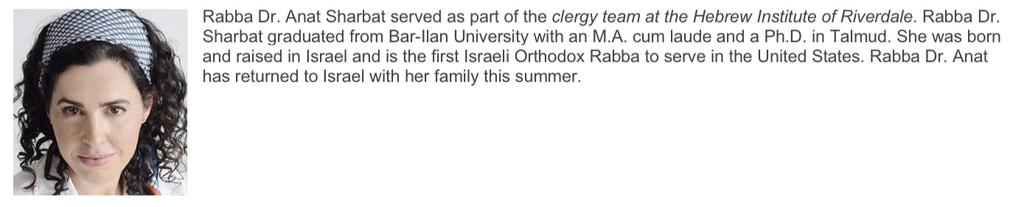
Rabba Dr. Anat Sharbat
Class of 2015
In his book "As A Man Thinketh" James Allen, an English writer who wrote more than 200 years ago analyzes the saying, "as a man thinketh in his heart so is he," Allen suggests that this saying not only embraces the whole of a person’s being, but expands to every condition and circumstance of our lives. We literally are what we think. Our character is, in a way, the complete sum of all our thoughts.
This idea echoes through millennia back to this week’s parasha. As we read in Parashat Korach:
And the earth opened and swallowed them up, and their houses, and all the people that belonged to Korah
Parashat Korach described how Korach, Datan and Aviram were swallowed by a pit that opened in order to consume them, along with their houses as a result of their sins.
The Ibn Ezra on the word "בתיהם " - their houses, says: "אלו הם נשיהם וטפיהם" - these are their wives and children.
Surprisingly enough, however, in three weeks in parshat Pinchas, when the same story is told again, the Torah emphasizes: "ובני-קרח לא-מתו, And the children of Korach did not die". Rashi brings the midrash and the Talmud in Sanhedrin and explains why the Children of Korach survived the fate of their parents. He says:
(א) ובני קרח לא מתו. הֵם הָיוּ בָעֵצָה תְּחִלָּה, וּבִשְׁעַת הַמַּחֲלֹקֶת הִרְהֲרוּ תְשׁוּבָה בְלִבָּם.
They were originally in the conspiracy, but, during the dispute, they had a quick thought of repentance.
What is the power of a thought?
A spontaneous thought of these children, or perhaps an inkling that deepened and deepened, refined their thinking and created a long lasting reflection in their hearts. These thoughts of the sons of Korach opened the opportunity for them to be saved from the pit of hell. Thoughts of teshuvah, of repentance, kindled and sparked a turnaround. A fleeting, short lived, positive thought affected and saved their lives.
The Talmud in Megila (יד ע"א) says that God even placed Korach’s children ברומו של עולם - in the lofty heights of God’s creation, close to God. The Talmud in Sanhedrin (קי ע"א), takes this one step further and talks about action. The Talmud says that בני קרח said שירה, they praised God through song.
And so, from Bnei Korach we learn the power of thinking that can transform one’s outlook and fate, all because of a simple הרהור, a passing thought.
Don't we all feel sometimes that though we want to say something out loud, or ask for something, we keep it to ourselves because we seem to already predict what the answer would be? Don't we all sometimes shut down our thoughts and desires because we feel confident that nothing can change?
Positive thinking in the case of Bnei Korach was the kernel which rescued them from the punishment of קרח ועדתו and led them to be poets and psalmists. Their composition of Psalms and the fact that amongst their progeny was the great prophet and leader שמואל - brings to light their pervasive and influential positive thinking.
As we know, there are multiple pirkei Tehilim that are attributed to Bnei Korach. It is no coincidence that on Rosh Hashana just before we blow the shofar, we recite the specific מזמור in Tehillim of למנצח לבני קרח מזמור. Bnei Korach represent in our liturgy the significance of thought. They are there as a good example of the change thoughts can provide in our lives. Thought as a seed that can cause transformative actions.
Let us attempt to enliven within ourselves positive thoughts, for then we are surely able to flourish. Endeavor to succeed; take the risk, think positively – that will lead us to take action.
I want to close with the beautiful words attributed to Rabbi Nachman that express this so simply, and so powerfully:
אתה נמצא במקום בו נמצאות מחשבותיך. ודא שמחשבותיך נמצאות במקום בו אתה רוצה להיות.
You are where your thoughts are. Make sure your thoughts are where you want to be.