Another vignette regarding a non-Jew who came before Shammai and said to him: "Convert me on condition that you'll teach me all of the Torah whilst I stand on one foot. Shammai pushed him aside (with a measuring device he had in his hand as he was a builder). He came before Hillel who converted him saying: "that what you hate do not do to your fellow - that is the whole of the Torah and the rest is just commentary. Go and learn!".
וַיֹּ֥אמֶר יי אֶל־מֹשֶׁ֥ה לֵּאמֹֽר׃ וְאַתָּ֞ה דַּבֵּ֨ר אֶל־בְּנֵ֤י יִשְׂרָאֵל֙ לֵאמֹ֔ר אַ֥ךְ אֶת־שַׁבְּתֹתַ֖י תִּשְׁמֹ֑רוּ כִּי֩ א֨וֹת הִ֜וא בֵּינִ֤י וּבֵֽינֵיכֶם֙ לְדֹרֹ֣תֵיכֶ֔ם לָדַ֕עַת כִּ֛י אֲנִ֥י יי מְקַדִּשְׁכֶֽם׃
And spoke God to Moses saying: speak to the Israelite people saying: you must keep my shabbat [in plural], for this is a sign between me and you for generations, to know that I am God who sanctifies you.
וְאָמַר רָבָא בַּר מַחְסֵיָא אָמַר רַב חָמָא בַּר גּוּרְיָא אָמַר רַב: הַנּוֹתֵן מַתָּנָה לַחֲבֵירוֹ, צָרִיךְ לְהוֹדִיעוֹ. שֶׁנֶּאֱמַר: ״לָדַעַת כִּי אֲנִי ה׳ מְקַדִּשְׁכֶם״. תַּנְיָא נָמֵי הָכִי: ״לָדַעַת כִּי אֲנִי ה׳ מְקַדִּשְׁכֶם״, אָמַר לוֹ הַקָּדוֹשׁ בָּרוּךְ הוּא לְמֹשֶׁה: מַתָּנָה טוֹבָה יֵשׁ לִי בְּבֵית גְּנָזַי וְשַׁבָּת שְׁמָהּ, וַאֲנִי מְבַקֵּשׁ לִיתְּנָהּ לְיִשְׂרָאֵל, לֵךְ וְהוֹדִיעָם.
...and said Rava bar Mach'sei'ya that Rav Chama bar Gurya said that Rav said: "He who gives a gift to his friend must inform him", as it says (Ex 31:13): to know that I am God who sanctifies you. It was also taught about to know that I am God who sanctifies you that the Holy One, Blessed be He, said to Moses: "I have a great gift in my treasure chamber - her name is Shabbat and I would like to give her to Israel, go and let them know".
וְאָ֣הַבְתָּ֔ אֵ֖ת יי אֱלֹקֶ֑יךָ בְּכׇל־לְבָבְךָ֥ וּבְכׇל־נַפְשְׁךָ֖ וּבְכׇל־מְאֹדֶֽךָ׃
And you shall love the God your Deity with all your heart and with all your soul and with all your might.
רַבִּי אֱלִיעֶזֶר אוֹמֵר: אִם נֶאֱמַר ״בְּכׇל נַפְשְׁךָ״, לָמָּה נֶאֱמַר ״בְּכׇל מְאֹדֶךָ״. וְאִם נֶאֱמַר ״בְּכׇל מְאֹדֶךָ״, לָמָּה נֶאֱמַר ״בְּכׇל נַפְשְׁךָ״? אֶלָּא לוֹמַר לָךְ: אִם יֵשׁ אָדָם שֶׁגּוּפוֹ חָבִיב עָלָיו מִמָּמוֹנוֹ — לְכָךְ נֶאֱמַר ״בְּכׇל נַפְשְׁךָ״. וְיֵשׁ אָדָם שֶׁמָּמוֹנוֹ חָבִיב עָלָיו מִגּוּפוֹ — לְכָךְ נֶאֱמַר ״בְּכׇל מְאֹדֶךָ״.
Rabbi Eliezer said: "If the verse (Deut 6:5) says with all your soul, why does it say with all your might? And when it says with all your might, why does it say with all your soul?" Rather, he [R' Eliezer] would say to you: "if there is a person whose body is more dear to him than his possessions, it says with all your soul and if there is a person whose possessions are more dear to him than his body, it says with all your might.
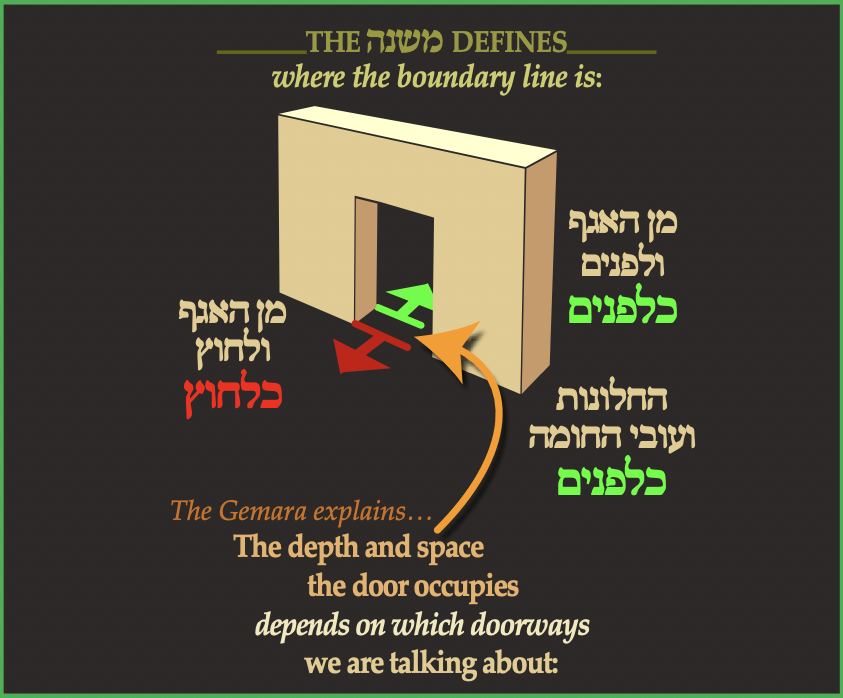
אַגָּף, אִגּוּף m. (גּוּף I) the eminence of the door frame against which the door shuts, door-stop (esp. of door-ways in thick city walls &c. with reference to sacred limits in sacrificial law). Pes. VII, 12 מן הא׳ ולפנים וכ׳ the space of the wall inside the door-stop is subject to the laws which apply to the space enclosed by the wall. (Doorjamb?)
תמונה למעלה מ: www.dafhachaim.org
Picture credit:
www.dafhachaim.org
מַתְנִי׳ ...מִן הָאֲגַף וְלִפְנִים — כְּלִפְנִים, מִן הָאֲגַף וּלְחוּץ — כְּלַחוּץ. הַחַלּוֹנוֹת וְעוֹבִי הַחוֹמָה — כְּלִפְנִים. גְּמָ׳ אָמַר רַב יְהוּדָה אָמַר רַב: וְכֵן לִתְפִלָּה. וּפְלִיגָא דְּרַבִּי יְהוֹשֻׁעַ בֶּן לֵוִי. דְּאָמַר רַבִּי יְהוֹשֻׁעַ בֶּן לֵוִי: אֲפִילּוּ מְחִיצָה שֶׁל בַּרְזֶל אֵינָהּ מַפְסֶקֶת בֵּין יִשְׂרָאֵל לַאֲבִיהֶם שֶׁבַּשָּׁמַיִם.
Mishna: ...from the door-stop and inside is like [being] inside, from the door-stop and outside is like [being] outside. The windows and the thickness of the wall is like [being] inside.
Gemara: Rav Yehuda said that Rav said: "This is also the case for t'fillah". And disagreed [Rav] with Rabbi Yehoshua ben Levi, as Rabbi Yehoshua ben Levi said: "Even a partition of iron cannot separate Israel from their Father in Heaven".
This is also the case for t'fillah - a person who stands between the door-stop and inside combines (counts) in the ten [minyan] and a person who stands outside of the door does not count [for the minyan].
אינה מפסקת - שאין הפסק לפני המקום שהכל גלוי וידוע לפניו...
Cannot separate - [to say] that there is no separation before God, for everything is revealed and known before him...
It is necessary for all ten to be in one place and the shliach tsibur with them. A person who stands in the door frame, from the door-stop and outside, if the door was to close, the the spot where the inside of the door's thickness is and beyond is [considered] outside.
וַעֲבַדְתֶּ֗ם אֵ֚ת יי אֱלֹֽקֵיכֶ֔ם וּבֵרַ֥ךְ אֶֽת־לַחְמְךָ֖ וְאֶת־מֵימֶ֑יךָ וַהֲסִרֹתִ֥י מַחֲלָ֖ה מִקִּרְבֶּֽךָ׃
And you shall serve your God, your Deity, who will bless your bread and your water. And I will remove disease from your midst.
וְהָיָ֗ה אִם־שָׁמֹ֤עַ תִּשְׁמְעוּ֙ אֶל־מִצְוֺתַ֔י אֲשֶׁ֧ר אָנֹכִ֛י מְצַוֶּ֥ה אֶתְכֶ֖ם הַיּ֑וֹם לְאַהֲבָ֞ה אֶת־יי אֱלֹֽהֵיכֶם֙ וּלְעׇבְד֔וֹ בְּכׇל־לְבַבְכֶ֖ם וּבְכׇל־נַפְשְׁכֶֽם׃
And if you listen and keep the commandments that I command you with today, to love your God, your Deity, and serving the Divine with all your heart and all your soul...
לָמָּה־לִּ֤י רֹב־זִבְחֵיכֶם֙ יֹאמַ֣ר יי שָׂבַ֛עְתִּי עֹל֥וֹת אֵילִ֖ים וְחֵ֣לֶב מְרִיאִ֑ים וְדַ֨ם פָּרִ֧ים וּכְבָשִׂ֛ים וְעַתּוּדִ֖ים לֹ֥א חָפָֽצְתִּי׃
"What need do I have for your numerous sacrifices?” says God. I am satiated with burnt offerings of rams, fats of sacrificial animals, blood of bulls and lambs; in he-goats I take no delight.
מצות עשה להתפלל בכל יום שנ׳ ועבדתם את ה׳ אלקיכם ונאמר ולעבדו בכל לבבכם ובכל נפשכם ותניא בספרי [עקב] ובירושלמי דפרק תפלת השחר איזוהי עבודה שבלב הוי אומר זו תפלה ובפרק אין עומדין (ברכות דף ל״ג) אמר רבי אליעזר גדולה תפלה מכל הקרבנות שנא׳ למה לי רוב זבחיכם...
It is a positive commandment to daven every day, as it is written (Ex. 23:25): "And you shall serve your God, your Deity". And it is also said (Deut. 11:13): "and serving the Divine with all your heart and all your soul". It was taught in Sifrei and in Yerushalmi (B'rachot, chapter 4): what was this service of the heart? They would say: "This is t'fillah"! In the fifth chapter of the tractate B'rachot (daf 33), Rabbi Eliezer said: "t'fillah is greater from all sacrificial offerings, as it says (Is. 1:11): "What need do I have for your numerous sacrifices"...
וְזֹ֖את הַתּוֹרָ֑ה אֲשֶׁר־שָׂ֣ם מֹשֶׁ֔ה לִפְנֵ֖י בְּנֵ֥י יִשְׂרָאֵֽל׃
And this is the Torah that Moses placed before the Israelites.
אָמַר רַבִּי יְהוֹשֻׁעַ בֶּן לֵוִי, מַאי דִּכְתִיב: ״וְזֹאת הַתּוֹרָה אֲשֶׁר שָׂם מֹשֶׁה״, זָכָה — נַעֲשֵׂית לוֹ סַם חַיִּים, לֹא זָכָה — נַעֲשֵׂית לוֹ סַם מִיתָה. וְהַיְינוּ דְּאָמַר רָבָא: דְּאוֹמֵן לַהּ — סַמָּא דְחַיָּיא, דְּלָא אוֹמֵן לַהּ — סַמָּא דְמוֹתָא.
Rabbi Yehoshua ben Levi said: "Why is it written (in Deut 4:44) And this is the Torah has Moses placed [sin mem]?" If one merits, it will be made for him as a elixir [samech mem] of life; if one doesn't merit, it will be for him like an elixir [samech mem] of death. And it was what Rava said: "If one is skilled, it is an elixir of life; if one is not skilled, it is an elixir of death".
זָכָה, נַעֲשֵׂית לוֹ סַם חַיִּים. לֹא זָכָה, נַעֲשֵׂית לוֹ סַם מִיתָה. נראה לי בס"ד התורה נקראת 'טוֹב' ויש בה ד' חלקים 'פשט רמז דרש סוד' שהם ד' פעמים טוֹב עולה מספר חַיִּים [טוֹב 17×4 = חַיִּים 68] לכך זָכָה, נַעֲשֵׂית לוֹ סַם חַיִּים...
If one merits, it will be made for him as a elixir of life; if one doesn't merit, it will be for him like an elixir of death - It seems to me, with the help of the Heavens, that the Torah is called "good" and that the Torah is composed of four elements, the simple reading (p'shat), hints (remez), this (d'rash) and the secret (sod). These four goods (in Gematria the word good equals 17, 17 times 4 equals 68 and 68 is the numerical value of Life) add up to Life, therefore if one merits, it will be for him like an elixir of life.
וַיֹּאמַ֗ר יי מִסִּינַ֥י בָּא֙ וְזָרַ֤ח מִשֵּׂעִיר֙ לָ֔מוֹ הוֹפִ֙יעַ֙ מֵהַ֣ר פָּארָ֔ן וְאָתָ֖ה מֵרִבְבֹ֣ת קֹ֑דֶשׁ מִימִינ֕וֹ (אשדת) [אֵ֥שׁ דָּ֖ת] לָֽמוֹ׃
He said: “God came from Sinai and shone from Seir onto them. He shone from Mount Paran and came from the Riv'vot Kodesh. At his right hand was a fiery law for them.
תָּנָא מִשְּׁמֵיהּ דְּרַבִּי מֵאִיר: מִפְּנֵי מָה נִתְּנָה תּוֹרָה לְיִשְׂרָאֵל — מִפְּנֵי שֶׁהֵן עַזִּין. תָּנָא דְּבֵי רַבִּי יִשְׁמָעֵאל: ״מִימִינוֹ אֵשׁ דָּת לָמוֹ״. אָמַר הַקָּדוֹשׁ בָּרוּךְ הוּא: רְאוּיִין הַלָּלוּ שֶׁתִּנָּתֵן לָהֶם דָּת אֵשׁ. אִיכָּא דְּאָמְרִי: דָּתֵיהֶם שֶׁל אֵלּוּ — אֵשׁ. שֶׁאִלְמָלֵא (לֹא) נִתְּנָה תּוֹרָה לְיִשְׂרָאֵל — אֵין כׇּל אוּמָּה וְלָשׁוֹן יְכוֹלִין לַעֲמוֹד בִּפְנֵיהֶם. וְהַיְינוּ דְּאָמַר רַבִּי שִׁמְעוֹן בֶּן לָקִישׁ, שְׁלֹשָׁה עַזִּין הֵן: יִשְׂרָאֵל בָּאוּמּוֹת, כֶּלֶב בַּחַיּוֹת, תַּרְנְגוֹל בָּעוֹפוֹת...
It was taught in the name of Rabbi Me'ir: "Why was the Torah given to the Israelites? Because they were impulsive". It was taught in the academy of Rabbi Yish'mael: At his right hand was a fiery law for them. Said the Holy One, Blessed be He: "It is fitting for these that they should be given the fiery law". There are some who say: "the ways of these [people] are fire". Had the Torah not been given to the Israelites, there would not be one people or tongue able to withstand them. And Rabbi Shimon ben Lakish used to say: "There are three impulsive ones: Israel among the people, dogs among the animals and the rooster among the birds"...
שהן עזים - ונתנה להם תורה שיעסקו בה והיא מתשת כחם ומכנעת לבם:
impulsive - and the Torah was given to them to occupy themselves with her and she [the Torah] weakens their might and humbles their hearts.
וַיַּעֲבֹ֨ר יי ׀ עַל־פָּנָיו֮ וַיִּקְרָא֒ יי ׀ יי אֵ֥ל רַח֖וּם וְחַנּ֑וּן אֶ֥רֶךְ אַפַּ֖יִם וְרַב־חֶ֥סֶד וֶאֱמֶֽת׃
And God passed before his [Moses's] face and [Moses] proclaimed: “God, God, a Deity compassionate and gracious, slow to anger, abounding in kindness and faithfulness..."
״וַיַּעֲבוֹר ה׳ עַל פָּנָיו וַיִּקְרָא״. אָמַר רַבִּי יוֹחָנָן: אִלְמָלֵא מִקְרָא כָּתוּב, אִי אֶפְשָׁר לְאוֹמְרוֹ. מְלַמֵּד שֶׁנִּתְעַטֵּף הַקָּדוֹשׁ בָּרוּךְ הוּא כִּשְׁלִיחַ צִבּוּר, וְהֶרְאָה לוֹ לְמֹשֶׁה סֵדֶר תְּפִלָּה. אָמַר לוֹ: כׇּל זְמַן שֶׁיִּשְׂרָאֵל חוֹטְאִין — יַעֲשׂוּ לְפָנַי כַּסֵּדֶר הַזֶּה וַאֲנִי מוֹחֵל לָהֶם. ״ה׳ ה׳״ — אֲנִי הוּא קוֹדֶם שֶׁיֶּחְטָא הָאָדָם, וַאֲנִי הוּא לְאַחַר שֶׁיֶּחְטָא הָאָדָם וְיַעֲשֶׂה תְּשׁוּבָה — ״אֵל רַחוּם וְחַנּוּן״. אָמַר רַב יְהוּדָה: בְּרִית כְּרוּתָה לִשְׁלֹשׁ עֶשְׂרֵה מִדּוֹת שֶׁאֵינָן חוֹזְרוֹת רֵיקָם, שֶׁנֶּאֱמַר: ״הִנֵּה אָנֹכִי כּוֹרֵת בְּרִית״. אָמַר רַבִּי יוֹחָנָן: גְּדוֹלָה תְּשׁוּבָה שֶׁמְּקָרַעַת גְּזַר דִּינוֹ שֶׁל אָדָם...
"And God passed before his [Moses's] face and [Moses] proclaimed" (Ex 34:6). Rabbi Yochanan said: Had it not been written in the Scripture, it would be impossible to make such statement. It teaches that the Holy One, Blessed be He, wrapped himself like a sh'liach tsibur and showed to Moses the order of the prayer. He said to him: "every time the Israelites sin, do before me a service like this and I will forgive them".
God, God - I am He before the sin and I am He after the person sins and does t'shuva.
A Deity compassionate and gracious - Rav Yehuda said: "A covenant was made with the 13 attributes that they will not be returned empty as it says: "Behold, I will cut (make) a covenant". Rabbi Yochanan said: "So great is the t'shuvah that it tears up a degree against a person"...
מלמד שנתעטף הקב״ה. פי׳ שנראה כן למשה במראה הנבואה (ומפרש) [ומפרשי] דבנן דלישנא דויעבור דרשי׳ כש״ץ העובר לפני התיבה:
It teaches that the Holy One, Blessed be He, wrapped himself - the explanation is that it appeared to Moses this way in a prophetic vision, explaining that by using the language of having passed before, that this is like a sh'liach tsibur before the Ark.
God, God (the repetition) - [first with] the attribute of Mercy I forgive before the sin and [secondly] I forgive after sinning with t'shuva.
Rabbi Yochanan said: "anyone who studies Torah but does not teach is akin to a myrtle in the dessert". There are those who say that anyone who studies Torah and teachers her [the Torah] in a place where there are no Torah scholars is akin to a myrtle in the desert, which is precious.
ואמר ר' יוחנן: כל הלומד תורה ואינו מלמדה לאחרים, דומה להדס במדבר. שהרי אף שהדס יש לו ריח ערב, אין מי שיכול להנות ממנו. איכא דאמרי שמועה זו באופן אחר, לחיוב: כל הלומד תורה ומלמדה במקום שאין תלמידי חכמים אחרים — דומה להדס במדבר שהוא חביב, שכאשר מוצאים הדס במדבר השמם בודאי נהנים מריחו.
Rabbi Yochanan said: "anyone who studies Torah but does not teach the others is akin to a myrtle in the dessert" that despite a myrtle having a pleasant smell, there is no one able to derive pleasure from it. There are those who say a different version that anyone who studies Torah and teachers her [the Torah] in a place where there are no Torah scholars to others is akin to a myrtle in the desert, which is precious, for those who do find a myrtle in the desert truly enjoy the pleasant smell.
והא דכינה התורה בשם הֲדַס היינו כי תורה שבעל פה דאיירי בה הכא היא בחינת שם אדנ"י שמספרו הם בסוד (חבקוק ב, כ) 'וַהֳ' בְּהֵיכַל קָדְשׁוֹ הַס מִפָּנָיו כָּל הָאָרֶץ' ויש בה ד' חלקים שהם פרד"ס [פשט, רמז, דרש, סוד] נמצא היא ד' הוא סוד וזהו צירוף 'הֲדַס' שהוא ד' הַס. אי נמי התורה נקראת טוֹב וד' פעמים טוֹב כנגד פרד"ס הוא מספר חַיִּים [17×4=68] ועם הכולל גימטריא 'הֲדַס' [1769].
וַיי בְּהֵיכַ֣ל קׇדְשׁ֑וֹ הַ֥ס מִפָּנָ֖יו כׇּל־הָאָֽרֶץ׃
But God in his holy abode all of the earth is in silence before him.
וְאוֹתִ֗י י֥וֹם יוֹם֙ יִדְרֹשׁ֔וּן וְדַ֥עַת דְּרָכַ֖י יֶחְפָּצ֑וּן כְּג֞וֹי אֲשֶׁר־צְדָקָ֣ה עָשָׂ֗ה וּמִשְׁפַּ֤ט אֱלֹקָיו֙ לֹ֣א עָזָ֔ב יִשְׁאָל֙וּנִי֙ מִשְׁפְּטֵי־צֶ֔דֶק קִרְבַ֥ת אֱלֹקִ֖ים יֶחְפָּצֽוּן׃
Yet every day they seek me, taking pleasure in my ways; like a righteous nation that does justice and did not abandon the judgement of their Deity; they ask me for righteous judgement, closeness to their Deity is a delight.
Rabbi Yochanan headed out to the Beit Midrash and darshaned (the verse Is. 58:2): "Yet every day they seek me, taking pleasure in my ways..." Is it [the case] that during the day they seek the Holy and in the evening they do not? Rather, the verse tells you [that]: anyone who engages with Torah even one single day in a year - the Scripture elevates him as someone who engages [with Torah] all year long.
הֲל֨וֹא כֹ֧ה דְבָרִ֛י כָּאֵ֖שׁ נְאֻם־יי וּכְפַטִּ֖ישׁ יְפֹ֥צֵֽץ סָֽלַע׃ {ס}
Behold, isn't my word is like fire, declares God, or like a hammer that shatters a rock?
כְּח֤וּט הַשָּׁנִי֙ שִׂפְתוֹתַ֔יִךְ וּמִדְבָּרֵ֖ךְ נָאוֶ֑ה כְּפֶ֤לַח הָֽרִמּוֹן֙ רַקָּתֵ֔ךְ מִבַּ֖עַד לְצַמָּתֵֽךְ׃
Like a scarlet thread are your lips, and your mouth is pleasant to look at, your temples like a slice of pomegranate, behind your veil.
אָמַר רַבִּי אֲבָהוּ אָמַר רַבִּי אֶלְעָזָר: תַּלְמִידֵי חֲכָמִים אֵין אוּר שֶׁל גֵּיהִנָּם שׁוֹלֶטֶת בָּהֶן, קַל וָחוֹמֶר מִסָּלָמַנְדְּרָא: וּמָה סָלָמַנְדְּרָא שֶׁתּוֹלֶדֶת אֵשׁ הִיא — הַסָּךְ מִדָּמָהּ אֵין אוּר שׁוֹלֶטֶת בּוֹ, תַּלְמִידֵי חֲכָמִים שֶׁכׇּל גּוּפָן אֵשׁ, דִּכְתִיב: ״הֲלוֹא כֹה דְבָרִי כָּאֵשׁ נְאֻם ה׳״ — עַל אַחַת כַּמָּה וְכַמָּה. אָמַר רֵישׁ לָקִישׁ: אֵין אוּר שֶׁל גֵּיהִנָּם שׁוֹלֶטֶת בְּפוֹשְׁעֵי יִשְׂרָאֵל, קַל וָחוֹמֶר מִמִּזְבַּח הַזָּהָב: מָה מִזְבַּח הַזָּהָב שֶׁאֵין עָלָיו אֶלָּא כְּעוֹבִי דִּינַר זָהָב — כַּמָּה שָׁנִים אֵין הָאוּר שׁוֹלֶטֶת בּוֹ, פּוֹשְׁעֵי יִשְׂרָאֵל שֶׁמְּלֵאִין מִצְוֹת כְּרִמּוֹן, דִּכְתִיב: ״כְּפֶלַח הָרִמּוֹן רַקָּתֵךְ״, אַל תִּקְרֵי ״רַקָּתֵךְ״, אֶלָּא: רֵקָנִין שֶׁבָּךְ — עַל אַחַת כַּמָּה וְכַמָּה.
Rabbi Avahu said in the name of Rabbi Elazar: "The Sages are not singed by the fire of Gehinom" which we learn from a kal v'chomer from a Salamander. Just as a Salamander, which is an offspring of fire, has blood which if one smears will not be singed by fire, then a Sage whose entire body is fire, as it is written (Jer. 23:29): "isn't my word is like fire?!", how much more so!
Reish Lakish said: "The fire of Gehinom does not singe the sinners of Israel" which we learn from a kal v'chomer from the Golden Altar. Just like the Golden Altar which only has a golden cover thick as a dinar (presumably not very thick) and for years the fire would not singe it, then the sinners of Israel, who are full of mitsvot like a pomegranate, as it is written (Song of Songs 4:3): "your temples like a slice of pomegranate", do not read "your temples" but "the empty ones among you", how much more so!
סלמנדרא - חיה הנבראת מן האור כשבוערין אש במקום אחד שבע שנים תמיד בלי הפסק:
Salamander - this was a creature created from a fire that burned in one place for seven years continuously without an interruption.
ועוד נראה לי בס"ד כיון שחטא אדם הראשון נעשה בגוף האדם זוהמת הנחש והיא חוצצת בין הגוף ובין אור התורה הקדוש כשיהיה מלביש את הגוף אך כנגד דם הסלמנדרא אינו חוצץ כי מין במינו אינו חוצץ ולכן תמצא שיש חכמים שגופם נטהר מן זוהמת הנחש גם בעודם בחיים ולכך היו בעודם בחיים נוגעים באש ואינם נכוים וכמו רבי זירא. ואל תתמה על רבי חנינא בן תרדיון שנשרף באש כי ענין עשרה הרוגי מלכות היה מפלאות תמים דעים ויש טעם כמוס בדבר.
"The Sages are not singed by the fire of Gehinom" which we learn from a kal v'chomer from a Salamander - this is problematic, because if we were to accept this, there would have been Sages walking on fire and not get burned, as per this kal v'chomer...