25 Tevet 5778 | January 12, 2018
Parshat Va’era
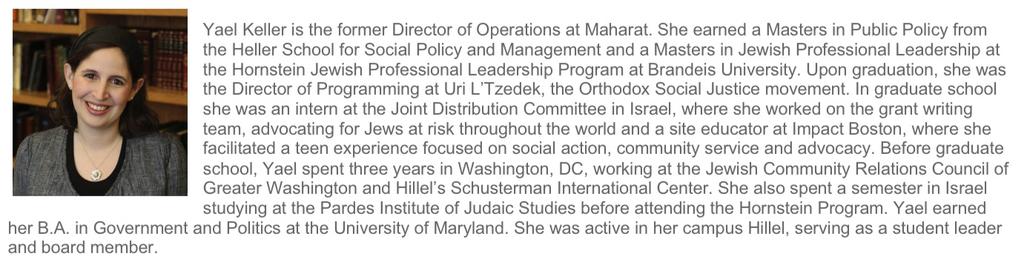
Rabbanit Yael Keller
Class of 2022
Parsha Va’era, is neither here nor there. We are no longer in Parshat Shemot where God first remembers B’nai Yisrael and promises to free them, but we are not yet in next week’s Parshat Bo where B’nai Yisrael is finally liberated. Last week’s parsha is the promise, next week’s the result. This week we experience the process.
Despite the power of the Ten Plagues, I felt antsy as I read through the parsha. What is the point of the lengthy and repetitive narrative? Is there a purpose to the immense amount of detail? Why did it have to take so long?
I am reminded of a story I heard as a child. A young boy finds a magical spool of thread and realizes that when he pulls the string loose, time elapses at a faster rate. He uses this magical device to evade punishment at school, being scolded by his parents, even boring lectures in college. While he is delighted at first, he realizes, as a young man with little to show in life, that although it easier to avoid uncomfortable situations, he loses the texture and pleasure of learning and growing. His gains feel false.
We encounter the value of the process in our parsha by seeing B’nai Yisrael’s growth and learning through the redemption process. Last week, we saw an enthusiastic and receptive B’nai Yisrael, imagining the long-dreamed of redemption. However, by this week’s parsha, B’nai Yisrael are crushed by a shortness of breath and hard work and are no longer able to listen to Moshe’s messages. The shine of God’s promise to liberate them has quickly worn off, without the result in sight. However, over the course of the Ten Plagues and redemption process, B’nai Yisrael slowly gain confidence in God through the repetitive shows of God’s strength. Process can build more meaningful relationships, both divine and human.
Rabbi Seth Farber suggests this process is not about building relationships, but purification and a necessary education. He notes a linguistic tie to a story earlier in our history. In the very last pasuk of last week’s parsha (Shemot 6:1) God promises:
עַתָּ֣ה תִרְאֶ֔ה אֲשֶׁ֥ר אֶֽעֱשֶׂ֖ה לְפַרְעֹ֑ה כִּ֣י בְיָ֤ד חֲזָקָה֙ יְשַׁלְּחֵ֔ם וּבְיָ֣ד חֲזָקָ֔ה יְגָרְשֵׁ֖ם מֵאַרְצֽוֹ׃ {ס}
Now you shall see what I will do to Pharaoh, for with a mighty hand will I send them out, and with a mighty hand will I thrust them from the land.
Rabbi Farber brings our attention to the only other place in Tanach where the words שלח and גרש are used as a pair when Sarah tells Avraham in Breishit 21:10:
גָּרֵ֛שׁ הָאָמָ֥ה הַזֹּ֖את וְאֶת־בְּנָ֑הּ
Cast out this servant and her child.
Although Avraham regrets having to exile Hagar, he does. The text tells us in 21:14 "וישלחה" he sends Hagar away.
In simplistic form, this is the narrative of Avraham enslaving an Egyptian woman, only to send her cruelly into the dessert at his wife’s behest. Generations later, Avraham’s descendants find the power structure reversed, as they are now enslaved by the Egyptians. Rabbi Farber suggests B’nai Yisrael needed to know how it feels to be “thrust out.” They needed to experience what Hagar’s endured to understand redemption is not an easy thing. Through this painful process, B’nai Yisrael realized the extent of Avraham’s choice to thrust out Hagar and by doing so gain empathy for others. This is perhaps the antecedent for the command to love and support the גר/stranger because we were once strangers in Egypt. We must endure the redemptive process, to transition from oppressor to ally.
If anyone could produce the magic string to quickly pass through uncomfortable situations, it would be God. However, it seems that this is a conscious, divine choice not to expedite the redemption. Rabbi Farber concludes that the process is meant to teach us that through our own painful experience we learn not to allow others to suffer, no matter who or where they are in life.
Rabbi Tzvi Grumet explores yet another benefit to process. He too asks about the purpose of such a lengthy and descriptive process. Why not give an abbreviated recounting of the experience? Rabbi Grumet notes two other biblical narratives that are lengthy and repetitive - The first is the מבול, the flood, and the next is the destruction of Sodom. Rabbi Grumet observes that each narrative describes a time where the moral corruption of society is so complete that God feels there is no choice but to have what Rabbi Grumet calls “God’s dramatic intervention into the world.” At this point, when society has become so corrupt, there is no space for subtlety. God must demonstrate, in a show of great power, that immoral behavior is completely unacceptable. The process, in all its lengthy detail, is important for imparting a lasting message.
Process can be painful. It can feel interminable and, at times, unnecessary. However, as we see through these three interpretations of process, it is essential for growth. B’nai Yisrael develop a stronger relationship with God - learning to trust a great and powerful God through the process of redemption. B’nai Yisrael also develop an empathy for the stranger that continues throughout our history. Lastly, the process allows both B’nai Yisrael then and contemporary readers today, to truly understand the uninhibited devastation that moral corruption can bring. May we all merit to gain strength and wisdom from our own processes, both nationally and personally, to continue to develop as a strong, faithful, empathic and moral community.