Pesach 2018/5778
Pesach
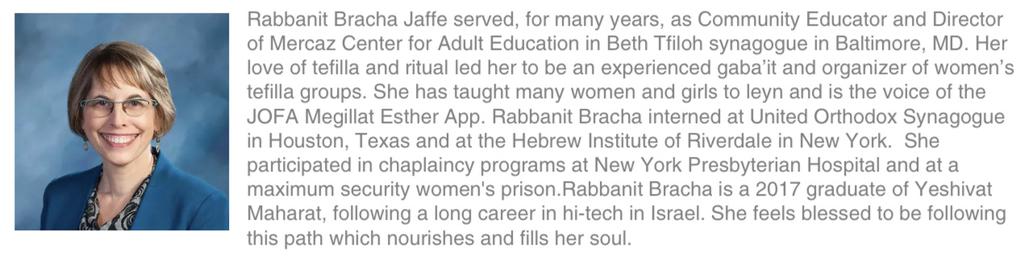
Rabbanit Bracha Jaffe
Class of 2017
It seems strange that the haggadah does not include the berakha of shehechiyanu on matza and maror. I would have expected to see this blessing, which is typically said whenever we perform a mitzva that is commanded for specific infrequent occasions. We say this blessing when we first take the lulav and etrog each year and the first night we light Chanukah candles. And surely we have been looking forward to the Seder night and our eating of the matza and maror. So why is there no shehechiyanu said on our performance of these mitzvot?
Perhaps the shehechiyanu said as part of kiddush at the beginning of the seder is intended to encompass all the unique elements of the seder, including the matza and maror. There are Halachic opinions who take this view. Still there is such a time lag between kiddush and the eating of the matza that this seems like a difficult read. Moreover, if the shehechiyanu of kiddush was intended to apply to the matza and maror wouldn’t we be instructed to keep those mitzvot in mind at the time of saying the berakha?
Alternatively, perhaps we don’t say shehechiyanu on matza and maror because we don’t say this berakha on negative things. Maror certainly feels negative as it reminds us of the bitter lives we led during the period of our slavery. And while matza is the bread of freedom, it is also the bread of affliction.
The Abudraham (14th century, Seville) has a wonderful explanation. He points to the berakha immediately preceding the washing of the hands before eating matza and maror. That berakha begins by blessing God:
אֲשֶׁר גְּאָלָנוּ וְגָאַל אֶת־אֲבוֹתֵינוּ מִמִּצְרַיִם, וְהִגִּיעָנוּ הַלַּיְלָה הַזֶּה לֶאֱכָל־בּוֹ מַצָּה וּמָרוֹר.
...who has redeemed us and redeemed our fathers from Egypt, and brought us to this night to eat matza and maror.
The language in this berakha is very similar to the language of shehechiyanu. One can even say it is an UBER-shehechiyanu as it includes a specific reference to matza and maror, while thanking God for bringing us to this night on which we eat them. What a beautiful way to express our joy in performing these once-a-year mitzvot!