Pesach 2018/5778
Pesach
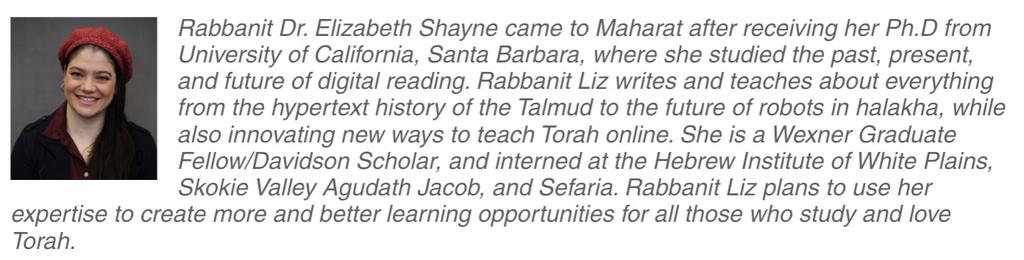
Rabbanit Dr. Liz Shayne
Class of 2021
The seder is book-ended by the opening of doors. At the beginning of Maggid, after sanctifying God’s name and going through the preliminaries, the retelling of the story of the Exodus truly begins with the invitation for “all who are hungry” to “come in and eat.” At the end of the Seder, after we have told our story and eaten our fill, but before we praise God with song and say one more blessing on the wine, we open the door again. This time, we invite in Eliyahu HaNavi, Elijah the Prophet, the herald of the redemption. Our Sedarim exist in the space between these two openings.
Rabbi Dr. Marc-Alain Ouaknin, a scholar of Talmudic philosophy who directs the Center for Jewish Research and Studies in Paris, asks two questions about this parallelism. He first asks why we open the door twice, a question that seems straight out of the Ma Nishtana. He then asks why it is Eliyahu, out of all the prophets, who is invited to join us at the Seder. The second question has an obvious answer: Eliyahu is the prophet associated with the redemption and we hope, every year, to see him at our door because the story of our contemporary exile is over and next year we will truly be in a rebuilt Jerusalem. Ouaknin complicates that picture by drawing on the verses in the third chapter of Malachi that describe the coming of Eliyahu:
(כג) הִנֵּ֤ה אָנֹכִי֙ שֹׁלֵ֣חַ לָכֶ֔ם אֵ֖ת אֵלִיָּ֣ה הַנָּבִ֑יא לִפְנֵ֗י בּ֚וֹא י֣וֹם יקוק הַגָּד֖וֹל וְהַנּוֹרָֽא׃ (כד) וְהֵשִׁ֤יב לֵב־אָבוֹת֙ עַל־בָּנִ֔ים וְלֵ֥ב בָּנִ֖ים עַל־אֲבוֹתָ֑ם פֶּן־אָב֕וֹא וְהִכֵּיתִ֥י אֶת־הָאָ֖רֶץ חֵֽרֶם׃
(23) Lo, I will send the prophet Elijah to you before the coming of the awesome, fearful day of the LORD. (24) He shall reconcile parents with children and children with their parents, so that, when I come, I do not strike the whole land with utter destruction.
For Ouaknin, the crucial part of Eliyahu’s coming is found in this reconciliation. The Seder is meant to be a time of transmission, of “mutual rediscovery between the generations” to use Ouaknin’s language. By the time the third cup has been drunk, we hope to have reached such a point of togetherness and understanding through the act of telling the story.
What is the understanding that we reach for after the Seder? Ouaknin directs us to another story about Eliyahu, this one found in Kings I, when God reveals himself to Eliyahu. God sends a fire, an earthquake, and a whirlwind, but does not appear in any of them. God waits until the grandeur and fanfare are over before manifesting as a "קול דממה דקה"which is often translated as either a “still, small voice” or a “soft murmuring sound”.
The Seder, especially in my house, can often feel like a fire, a whirlwind, or an earthquake. I am blessed to participate in conversations where the kol torah, the noise of learning, is so loud that I worry about waking my sleeping daughter. Those conversations are not merely valuable, but vital to the Seder itself. And yet, once the Seder draws to a close, it is time to put them away and return to ourselves. Just as we opened the door to invite in a multiplicity of voices along with all those in need, we open the door again at the end of the meal to allow the silence of Eliyahu to enter. Like Eliyahu, we often look for God in the miraculous and extravagant, and there is no event in our history that embodies the miraculous more than the Exodus. To find God after the Seder, we must put away the spectacle and the loud noise and listen for that barest whisper that is the voice of God. At the beginning of the meal, we open the door as we open ourselves up to other people to reach towards the reconciliation promised in Malachi. By the end of the Seder, we recognize that we have been changed by the ritual and take time to introspect and listen closely for the quiet murmuring of God. Eliyahu HaNavi embodies both these ideals as the prophet who reconciles families and who shows us how to listen. May we have a Seder that is filled with the voices of community and a post-Seder that is touched, even briefly, with the quiet voice of God.