Rosh Hashana 2018/5779
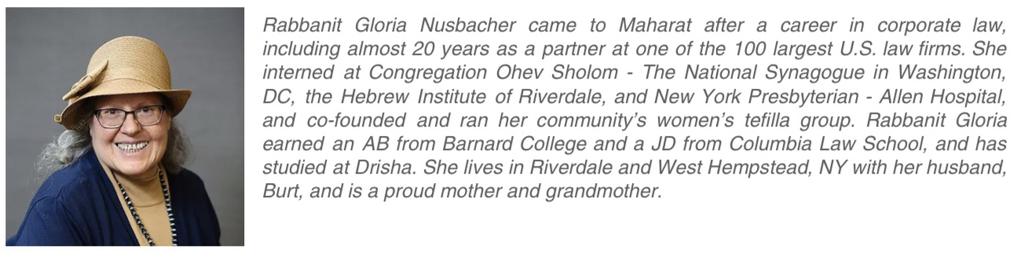
Rabbanit Gloria Nusbacher
Class of 2020
The (Ashkenazic) Modern Orthodox community goes out of its way to enable women to observe the mitzva of hearing the shofar. Shuls often hold multiple additional blowings over the course of the day (such as after musaf and before mincha) and arrange for men to blow shofar at the homes of women (and men) who are unable to come to shul. By contrast, while many women observe the mitzvot of sukka and lulav, communal practice does not seem to be similarly concerned with respect to women’s observance of these mitzvot. Is there something in the development of the halacha regarding women and shofar that might explain this differential treatment?
There is a general principle set out in Mishna Kiddushin 1:7 that women are exempt from all positive timebound mitzvot (מצוות עשה שהזמן גרמה). The Mishna goes on to say that women are obligated in positive mitzvot that are not timebound, as well as in all mitzvot that are prohibitions. There are many exceptions to this general principle -- both positive timebound mitzvot that women are obligated in (such as eating matza on Pesach and rejoicing (simcha) on the festivals), and positive mitzvot that are not timebound from which women are exempt (such as Torah study and redemption of the firstborn (pidyon ha‘ben)). Nevertheless, the Gemara (in Kiddushin 3 3b-34a) affirms the general principle that women are exempt from positive timebound mitzvot, and expressly identifies shofar, sukka, and lulav as among the positive timebound mitzvot from which women are exempt.
The Gemara in Rosh Hashana 33a elaborates on this point in the case of shofar. The Mishna states that we do not prevent children from blowing shofar. The Gemara then asks does this mean that we do prevent women from blowing? The response is that there are two conflicting tanaitic opinions. The Mishna in Rosh Hashana reflects the view of R’ Yehuda, who holds that women are not permitted to perform positive timebound mitzvot from which they are exempt. However, the Gemara cites a breita reflecting the view of R' Yosi and R' Shimon that women are permitted to perform such mitzvot.
Rashi’s comment on this Gemara takes the position of R’ Yehuda and explains that when a woman performs a mitzva from which she is exempt it is a violation of bal tosif (don't add to the mitzvot of the Torah). However, other rishonim, such as Tosfot (Rabbenu Tam) and Ran (both commenting on Rosh Hashana 33a) and Rambam (in Hilchot Tzitzit 3:9), follow R’ Yosi’s opinion that women are permitted to do positive timebound mitzvot from which they are exempt. Rambam differs from these other rishonim in holding that women are not permitted to make a bracha when performing mitzvot from which they are exempt, while Tosfot and Ran hold that women are permitted to make a bracha.
An issue related to the permissibility of making a bracha is exactly how we characterize a woman's performance of a mitzva from which she is exempt. The Gemara in Chagiga 16b discusses an incident in which a sacrificial animal was brought to the Ezrat Nashim so that women could perform the ritual act of laying hands (semikha) on it before it was slaughtered. This was done not because women were required to do semikha, but rather in order to give them nachat ruach (spiritual satisfaction). Under this approach, women who perform a mitzva from which they are exempt are not really doing a mitzva at all -- they are merely being given permission to do something that otherwise would be forbidden.
This reasoning would support the view that women should not say a bracha when performing such a mitzva. It would also support the position (reflected in Hagahot Maimoniot, Hilchot Shofar 2:1) that a man who has already fulfilled his own obligation in shofar should not blow shofar for a woman. The theory is that blowing a shofar other than in performance of a mitzva is a violation of yom tov. While the concept of nachat ruach would permit a woman to blow shofar for herself (assuming she had the necessary skill), it would not permit a man who had already performed the mitzva to violate yom tov with a blowing that was not a mitzva.
But there is another approach under which women’s performance of a mitzva from which they are exempt is treated as performance of a mitzva. This approach is based on the statement in the Gemara (Kiddushin 31a) that “greater is one who is commanded to perform a mitzva and does it than one who is not commanded to perform the mitzva and does it” (גדול מצווה ועושה ממי שאינו מצווה ועושה). The Gemara there relates the story of a non-Jew who observed the mitzva of honoring one's father by refusing to wake his father even though that resulted in a great financial loss, and who was subsequently rewarded by having an even more valuable red heifer (para adumah) born to him. As Rashi notes, this story demonstrates that God rewards a person who observes a mitzva - even a mitzva which he is not obligated to observe.
This is the approach taken by the Rashba (on Rosh Hashana 33a), who expressly says:
ואע"פ שאינה להם אלא רשות, דמכל מקום במצות קא עסקי, וחיובא הוא דלא חייבינהו רחמנא למעבד כאנשים אלא דאי בעו עבדו, וצונו קרינן בהו.
even though it is only optional for women, nevertheless they are engaging in a mitzva, and it is an obligation; although God did not obligate them to do like men, if they want to do it, we call it "וצונו") "and He commanded us").
Thus he believes that it is proper for women to recite the bracha that speaks of being “commanded” whenever they perform a mitzva from which they are exempt.
The Bach goes one step further. He states that since women have דעת (understanding), they can take the obligation upon themselves (Comment on Tur, Orach Chayyim 589).
The Rosh (in Rosh Hashana 4:7) agrees with Tosfot that we rule like R’ Yosi that women are permitted to perform mitzvot from which they are exempt and that they may make a bracha on such mitzvot -- even though they are patur (exempt) from the mitzva, it is not a bracha I'vatala (blessing made in vain). He cites the position of the Ba’al Ha'ltur that a man who has already fulfilled his obligation in shofar is not permitted to blow for a woman, as well as the practice reported by the Ba’al Ha'ltur that a man who had not yet fulfilled his obligation would go to the home of a woman who had just given birth and blow shofar for her, thereby fulfilling his own obligation. The Rosh also cites the contrary ruling of the Rav’ya that a man who had already fulfilled his obligation in shofar is permitted to blow for a woman. The Rosh concludes that women are no worse than minors (for whom shofar blowing is expressly permitted by the Mishna), and all the more so should be accommodated because they intend to perform a mitzva.
What is noteworthy about the debate described by the Rosh is that even at the time of the rishonim there is a sense that hearing shofar is important to women -- to the extent that communities devised procedures to enable women to hear shofar at home if they were unable to get to shul. (There is no serious discussion of the possibility of a woman blowing shofar for herself, presumably because of the assumption that this was not a practical alternative for most women.)
The Shulchan Aruch (Orach Chayyim 589:6) rules, like Rambam, that women may blow shofar, but without a bracha. But he also adopts the somewhat contradictory position of the Rav'ya that a man who has already fulfilled his obligation may blow for a woman to satisfy her obligation ( "להוציאן"), though again without a bracha. The Rema comments on this that since it is our minhag that women say a bracha on positive timebound mitzvot from which they are exempt, they should say a bracha here as well. But he agrees with the Shulchan Aruch that where a man has already fulfilled his own obligation in shofar, he should not say the bracha when blowing for women.
The Mishna Brura (1838-1933 Poland) , commenting on this provision in the Shulchan Aruch, notes that the reason we allow a man who has already fulfilled his obligation to blow for women (rather than treating it as a violation of yom tov) is because shofar is some sort of mitzva for women -- "קצת מצווה יש להן בתקיעתן" (Mishna Brurah 589 (9)).
The Maharil (1360-1427 Germany) seems to go somewhat further than the Shulchan Aruch. He states that even though women are exempt from the mitzva of shofar, they have taken this mitzva upon themselves as an obligation - אך שמכניסין את עצמן לחיוב.
He goes on to say that since women have obligated themselves in this mitzva, they are required to hurry to take care of their needs so that they are able to come to shul and hear the shofar, so that the congregation should not have to wait for them. (Sefer Maharil, Hilchot Shofar 1)
Similarly, Rabbi Akiva Eiger (1761-1838, Austria and Poland), dealing with the question of whether women who forgot to say the special additions for yom tov to bircat hamazon (the Grace after Meals) need to repeat bircat hamazon (as is the case for men), concluded that even though women are not otherwise obligated to include these inserts, they should repeat bircat hamazon. In reaching this conclusion, he stated that:
As evidenced by this Teshuva, it appears that there is no technical reason to treat women’s observance of shofar differently from their observance of sukka, lulav, and other positive timebound mitzvot from which they are exempt. However, communal practice appears to have evolved in a way that encourages women’s observance of shofar more so than is the case for sukka and lulav.
It is interesting to speculate on why this difference in practice may have developed. One possibility may be the different nature of these mitzvot. Shofar is different from sukka and lulav in that the activity required by the woman is essentially passive -- she can fulfill the mitzva by listening as opposed to actively doing something like shaking a lulav or eating (and sleeping) in a sukka. Perhaps this is a reason women may have felt more comfortable taking on this mitzva, and communities may have been more willing to support their observance. Alternatively, the difference in practice may have an economic basis. In less affluent times, communities may not have had enough sukkot or lulavim to accommodate all the men, so it would have been far less likely to even consider including women in performance of these mitzvot. By contrast, a single shofar would have been sufficient for the entire community who came to listen to the shofar blasts, and the inclusion of women would not have interfered with the observance by men.
Regardless of the historical reasons for women’s greater observance of shofar than of sukka and lulay, it is likely that our contemporary communal practice of encouraging and enabling women’s observation of shofar more than these other mitzvot is a reflection of the long-standing historical practice of women making a greater effort to observe the mitzva of shofar.