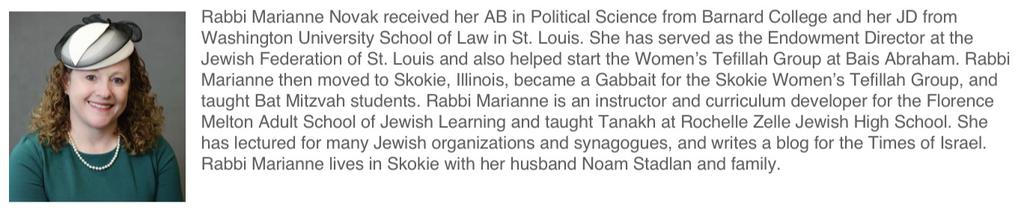
Rosh Hashana 2018/5779
Rabbi Marianne Novack
Class of 2019
A major theme of the Rosh HaShanah liturgy is our crowning God as King. The opening tefillah of the Rosh HaShanah Shacharit begins with a simple term of HaMelech – המלך (the King). But exactly how do we accomplish this, and maybe more important, from where do we get the ability to crown God as King? How do we Jews, the vast majority of us living in democratic societies, understand this key component of our tefillah?
To get a better understanding of this concept, let's look back at the Jewish calendar, specifically at the Haftarah cycle before and after Tisha B’av. The three Haftarot of Rebuke (Shalosh DePuranuta) are read during the three-week pre-mourning period beginning with the seventeenth of Tammuz. These readings from the books of Jeremiah and Isaiah describe God's disappointment with the Jewish people turning to idol worship and disregard of social justice, and the imminent and terrible punishments they will receive if they do not repent. The Haftarot describe in essence the complete break-down of the relationship between God and the Jewish people -- a relationship which had been described as tantamount to a union between a happy bride (the Jewish people) and groom (God) at the giving of the Torah at Mount Sinai, has devolved into a very nasty divorce, replete with threats and name calling.
In the first Haftarah of Rebuke (from Chapter 1 of the Book of Jeremiah) we read:
(14) And the LORD said to me: From the north shall disaster break loose Upon all the inhabitants of the land! (15) For I am summoning all the peoples Of the kingdoms of the north —declares the LORD. They shall come, and shall each set up a throne Before the gates of Jerusalem, Against its walls round about, And against all the towns of Judah. (16) And I will argue My case against them For all their wickedness: They have forsaken Me And sacrificed to other gods And worshiped the works of their hands.
The prophet begins with what will become a familiar refrain: The Jewish people have forsaken God, have broken their covenant, and if they do not repent God will punish them severely.
The second Haftarah (from Chapter 2 of Jeremiah) continues the theme of infidelity and characterizes B’nai Yisrael as not only unfaithful but as a woman who is a professional cheater, a prostitute:
(19) Let your misfortune reprove you, Let your afflictions rebuke you; Mark well how bad and bitter it is That you forsake the LORD your God, That awe for Me is not in you —declares the Lord GOD of Hosts. (20) For long ago you broke your yoke, Tore off your yoke-bands, And said, “I will not work!” On every high hill and under every verdant tree, You recline as a whore.
The last Haftarah (from Chapter 1 of Isaiah) strengthens the metaphor and echoes the very strong language of Megillat Eichah. Liturgically, sections of this Haftarah are cantillated in the tune of Eichah.
(21) Alas, she has become a harlot, The faithful city That was filled with justice, Where righteousness dwelt— But now murderers. (22) Your silver has turned to dross; Your wine is cut with water.-e (23) Your rulers are rogues And cronies of thieves, Every one avid for presents And greedy for gifts; They do not judge the case of the orphan, And the widow’s cause never reaches them. (24) Assuredly, this is the declaration Of the Sovereign, the LORD of Hosts, The Mighty One of Israel: “Ah, I will get satisfaction from My foes; I will wreak vengeance on My enemies! (25) I will turn My hand against you, And smelt out your dross as with lye, And remove all your slag:
The climax of the impending doom is read in all its gory details in Megillat Eichah. B’nai Yisrael has been unfaithful:
(ה) הָי֨וּ צָרֶ֤יהָ לְרֹאשׁ֙ אֹיְבֶ֣יהָ שָׁל֔וּ כִּֽי־יקוק הוֹגָ֖הּ עַ֣ל רֹב־פְּשָׁעֶ֑יהָ עוֹלָלֶ֛יהָ הָלְכ֥וּ שְׁבִ֖י לִפְנֵי־צָֽר׃ {ס} [...] (ח) חֵ֤טְא חָֽטְאָה֙ יְר֣וּשָׁלַ֔͏ִם עַל־כֵּ֖ן לְנִידָ֣ה הָיָ֑תָה כׇּֽל־מְכַבְּדֶ֤יהָ הִזִּיל֙וּהָ֙ כִּי־רָא֣וּ עֶרְוָתָ֔הּ גַּם־הִ֥יא נֶאֶנְחָ֖ה וַתָּ֥שׇׁב אָחֽוֹר׃ {ס}
(5) Her enemies are now the masters, Her foes are at ease, Because the LORD has afflicted her For her many transgressions; Her infants have gone into captivity Before the enemy. [...] (8) Jerusalem has greatly sinned, Therefore she is become a mockery. All who admired her despise her, For they have seen her disgraced; And she can only sigh And shrink back.
The destruction of Jerusalem is complete:
(ב) בִּלַּ֨ע אדושם (לא) [וְלֹ֣א] חָמַ֗ל אֵ֚ת כׇּל־נְא֣וֹת יַעֲקֹ֔ב הָרַ֧ס בְּעֶבְרָת֛וֹ מִבְצְרֵ֥י בַת־יְהוּדָ֖ה הִגִּ֣יעַ לָאָ֑רֶץ חִלֵּ֥ל מַמְלָכָ֖ה וְשָׂרֶֽיהָ׃ {ס} (ג) גָּדַ֣ע בׇּֽחֳרִי־אַ֗ף כֹּ֚ל קֶ֣רֶן יִשְׂרָאֵ֔ל הֵשִׁ֥יב אָח֛וֹר יְמִינ֖וֹ מִפְּנֵ֣י אוֹיֵ֑ב וַיִּבְעַ֤ר בְּיַעֲקֹב֙ כְּאֵ֣שׁ לֶֽהָבָ֔ה אָכְלָ֖ה סָבִֽיב׃ {ס}
(2) The Lord has laid waste without pity All the habitations of Jacob; He has razed in His anger Fair Judah’s strongholds. He has brought low in dishonor The kingdom and its leaders. (3) In blazing anger He has cut down All the might of Israel; He has withdrawn His right hand In the presence of the foe; He has ravaged Jacob like flaming fire, Consuming on all sides.
The bond between God and the Jewish people is severed:
(כב) כִּ֚י אִם־מָאֹ֣ס מְאַסְתָּ֔נוּ קָצַ֥פְתָּ עָלֵ֖ינוּ עַד־מְאֹֽד׃
(22) For truly, You have rejected us, Bitterly raged against us.
Liturgically and spiritually, the weeks before and including Tisha B'av paint a picture of a relationship that is ‘irretrievably broken’. There is no love, no trust, no union between God and the Jewish people. God is still all-knowing and powerful, but after the intense punishment reflected in Eichah, God is no longer a King with a vibrant relationship with human beings. He is the King of ashes and destruction.
At this point in the Jewish calendar, the Jewish people are bereft and God has no people. Repairing the relationship is no easy fix. While (liturgically) it took only three weeks to plunge this relationship into the abyss, it takes seven weeks – the Shivta D’Nechemta (Seven Haftarot of Consolation) -- to bring things back to the status quo. When reading these Haftarot, one sees that the process of making up is not a smooth one. B’nai Yisrael is not easily comforted and is understandably wary of God's promises and love after the destruction and abandonment it has experienced. God, in crucial time before Rosh HaShanah, has to woo the Jewish people back, has to work to regain the trust of B’nai Yisrael before the Jewish people accept His proposal to make their relationship great again.
The Abudarham (14th century Spain) noticed this process. In his commentary on the Siddur, Sefer Abudarham, he wrote:
And in the places where the Haftarah recited is ‘Unhappy, storm tossed one, uncomforted.’ (Isaiah 54:11), that is to say the prophets then respond and say before the Holy One Blessed be He ‘The congregation of Israel is not reconciled by our comforts.’ TO this the Holy One Blessed be He replies, ‘I, - I am He who comforts you!’ (Isaiah 51:12), and He continues, ‘Shout O barren one, You who bore no child’ (Isaiah 54:1) and he says further, ‘Arise, shine, for your light has dawned’ (Isaiah 60:1). TO this, the congregation of Israel responds, ‘I greatly rejoice in the LORD…’ (Isaiah 61:10), which is to say ‘now I have something to rejoice and be happy about’…
The Abudarham describes the process as follows. At first (in the first Haftarah of Consolation) God asks the Prophets to comfort the people. In the second Haftarah, B’nai Yisrael does not answer with an immediate yes. They are still traumatized by God's punishment and destruction of Jerusalem and feel completely abandoned. In the third Haftarah, God, through the Prophets, tries again to win back the Jewish people. Yet, in the fourth Haftarah, the Jewish people are still not ready to fully reconcile with God. This dynamic continues with the fifth and sixth Haftarot until the seventh Haftarah When B’nai Yisrael can finally declare, ‘I greatly rejoice in the Lord...’ (Isaiah 61:10).
It takes seven weeks to repair and renew the Covenant that binds the Jews to God and God to the Jewish people. This process is necessary not only for B’nai Yisrael to thrive and get closer to God but also for God, so that He can assume His great rule as the one and almighty King. Before this process, God was the king of only the heaps of destruction and despair. Now, He can be a true King, a king of the world of people. This reunification process built on mutual faith, respect, and love now allows the Jewish people to crown our God as King.
This idea is expressed beautifully by the Kad HaKemach, Rabbi Bachya been Asher (1255-1340 Spain. Commenting on the beginning of the Rosh HaShanah Shacharit davening with the simple word, HaMelech, The King, he writes:
Without the faithful Jewish people to crown God as King, God is not a real King, but only a King of a devastated world without anyone to follow Him or declare His greatness. After the process of God winning us back and our reciprocal repentance, our relationship with God has been repaired and we can finally exclaim:
Every year, the Jewish people has the great merit and responsibility to crown God as King. The idea of Kingship might make us uncomfortable given our modern sensibilities. However, this process is not one of asking us to blindly submit to God’s rule but rather one of rebuilding a mutual, dynamic relationship between us and God. Our crowning God as King reaffirms our loyalty and fidelity to God. After weeks of doing the hard work of relationship building, we begin the new year with a renewed covenant and love for God and with the knowledge of God’s renewed commitment to us.