


The Mishnah or the Mishna (/ˈmɪʃnə/; Hebrew: מִשְׁנָה, "study by repetition", from the verb shanah שנה, or "to study and review", also "secondary")[1] is the first major written collection of the Jewish oral traditions which is known as the Oral Torah. It is also the first major work of rabbinic literature.[2][3] The Mishnah was written by Judah ha-Nasi at the beginning of the 3rd century CE[4] in a time when the persecution of the Jews and the passage of time raised the possibility that the details of the oral traditions of from the Second Temple period (536 BCE – 70 CE) would be forgotten. Most of the Mishnah is written in Mishnaic Hebrew, but some parts are in Aramaic.
The Mishnah consists of six orders (sedarim, singular seder סדר), each containing 7–12 tractates (masechtot, singular masechet מסכת; lit. "web"), 63 in total, and further subdivided into chapters and paragraphs. The word Mishnah can also indicate a single paragraph of the work, i.e. the smallest unit of structure in the Mishnah. For this reason the whole work is sometimes referred to in the plural form, Mishnayot.
The Mishnah consists of six orders (sedarim, singular seder סדר), each containing 7–12 tractates (masechtot, singular masechet מסכת; lit. "web"), 63 in total, and further subdivided into chapters and paragraphs. The word Mishnah can also indicate a single paragraph of the work, i.e. the smallest unit of structure in the Mishnah. For this reason the whole work is sometimes referred to in the plural form, Mishnayot.
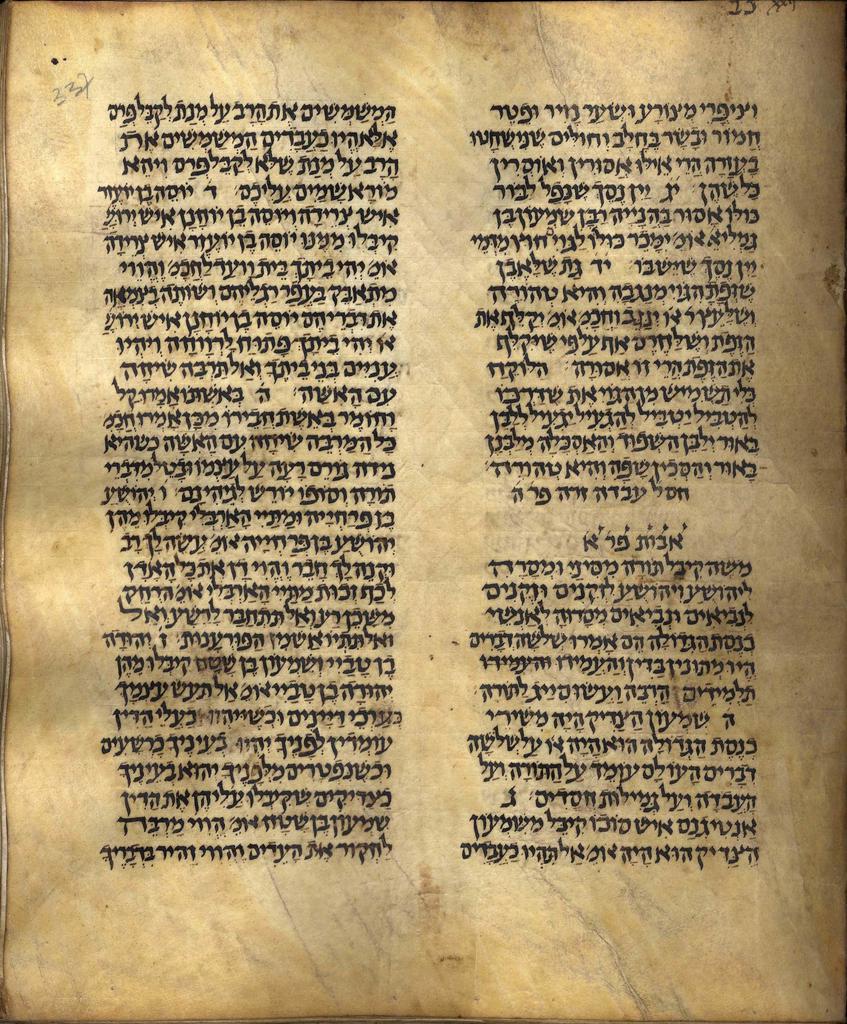
Kaufmann Manuscript (10th or 11th Century, CE)
משֶׁה קִבֵּל תּוֹרָה מִסִּינַי, וּמְסָרָהּ לִיהוֹשֻׁעַ, וִיהוֹשֻׁעַ לִזְקֵנִים, וּזְקֵנִים לִנְבִיאִים, וּנְבִיאִים מְסָרוּהָ לְאַנְשֵׁי כְנֶסֶת הַגְּדוֹלָה. הֵם אָמְרוּ שְׁלשָׁה דְבָרִים, הֱווּ מְתוּנִים בַּדִּין, וְהַעֲמִידוּ תַלְמִידִים הַרְבֵּה, וַעֲשׂוּ סְיָג לַתּוֹרָה:
Moses received the Torah at Sinai and transmitted it to Joshua, Joshua to the elders, and the elders to the prophets, and the prophets to the Men of the Great Assembly. They said three things: Be patient in [the administration of] justice, raise many disciples and make a fence round the Torah.
Moses ben Maimon[note 1] (1138–1204), commonly known as Maimonides (/maɪˈmɒnɪdiːz/ my-MON-i-deez)[note 2] and also referred to by the acronym Rambam (Hebrew: רמב״ם),[note 3] was a medieval Sephardic Jewish philosopher who became one of the most prolific and influential Torah scholars of the Middle Ages. In his time, he was also a preeminent astronomer and physician, serving as the personal physician of Saladin.[8][9][10][11][12] Born in Córdoba, Almoravid Empire (present-day Spain) on Passover eve, 1138 (or 1135),[13][14][15][16][17] he worked as a rabbi, physician and philosopher in Morocco and Egypt. He died in Egypt on 12 December 1204, whence his body was taken to the lower Galilee and buried in Tiberias.[18][19]
During his lifetime, most Jews greeted Maimonides' writings on Jewish law and ethics with acclaim and gratitude, even as far away as Iraq and Yemen. Yet, while Maimonides rose to become the revered head of the Jewish community in Egypt, his writings also had vociferous critics, particularly in Spain. Nonetheless, he was posthumously acknowledged as one of the foremost rabbinic decisors and philosophers in Jewish history, and his copious work comprises a cornerstone of Jewish scholarship. His fourteen-volume Mishneh Torah still carries significant canonical authority as a codification of Halacha. He is sometimes known as "ha'Nesher ha'Gadol" (The Great Eagle)[20] in recognition of his outstanding status as a bona fide exponent of the Oral Torah.
Aside from being revered by Jewish historians, Maimonides also figures very prominently in the history of Islamic and Arab sciences and he is mentioned extensively in studies. Influenced by Al-Farabi, Ibn Sina, and his contemporary Ibn Rushd, he became a prominent philosopher and polymath in both the Jewish and Islamic worlds. On his tomb is inscribed "From Moses to Moses there was none like Moses".[21]
During his lifetime, most Jews greeted Maimonides' writings on Jewish law and ethics with acclaim and gratitude, even as far away as Iraq and Yemen. Yet, while Maimonides rose to become the revered head of the Jewish community in Egypt, his writings also had vociferous critics, particularly in Spain. Nonetheless, he was posthumously acknowledged as one of the foremost rabbinic decisors and philosophers in Jewish history, and his copious work comprises a cornerstone of Jewish scholarship. His fourteen-volume Mishneh Torah still carries significant canonical authority as a codification of Halacha. He is sometimes known as "ha'Nesher ha'Gadol" (The Great Eagle)[20] in recognition of his outstanding status as a bona fide exponent of the Oral Torah.
Aside from being revered by Jewish historians, Maimonides also figures very prominently in the history of Islamic and Arab sciences and he is mentioned extensively in studies. Influenced by Al-Farabi, Ibn Sina, and his contemporary Ibn Rushd, he became a prominent philosopher and polymath in both the Jewish and Islamic worlds. On his tomb is inscribed "From Moses to Moses there was none like Moses".[21]
כבר בארנו בפתיחת מאמרינו בזה החבור תואר הקבלה איך היתה ואין הכונה הנה אלא לפרש דברי החסידים והמוסרים לבד לזרז לקנות קצת המדות מהם אותם שתועלתם גדולה וכאן נאריך להזהיר מקצת פחיתיות שנזקן גדול והשאר אפרש המלות לבד ומקצת העניינים מפני שענייניהם מבואר מלבד במעט מהם:
We have already explained the description of how the transmission happened in the introduction of our words in this essay. And [so] our intention here is only to explain the words of piety and ethics alone, to encourage the acquisition of certain virtues the benefit from which is great. And we will also elaborate to warn about certain vices that [bring] much damage. And [for] the rest, I will only explain the words and some of the concepts, because their concepts are [already] clear, except for a few of them.
הוו מתונים בדין. שיאחרו לחתוך הדין ולא יפסיקוהו מהרה עד שיבינוהו שאפשר שיתגלו להם עניינים שלא היו נגלים בתחלת המחשבה:
Be deliberate in judgment: That they should delay in reaching the verdict and not determine it quickly before they [fully] understand it. As it is possible that new matters will be revealed to their eyes that were not revealed at the beginning of [their] thought.
Ovadiah ben Abraham of Bertinoro (Hebrew: ר׳ עוֹבַדְיָה בֵּן אַבְרָהָם מִבַּרְטֵנוּרָא; c. 1445 – c. 1515), commonly known as "The Bartenura", was a 15th-century Italian rabbi best known for his popular commentary on the Mishnah. In his later years, he rejuvenated the Jewish community of Jerusalem and became recognised as the spiritual leader of the Jews of his generation.[1]
הֱווּ מְתוּנִים בַּדִּין. שֶׁאִם בָּא דִּין לְפָנֶיךָ פַּעַם וּשְׁתַּיִם וְשָׁלֹשׁ, לֹא תֹאמַר דִּין זֶה כְּבָר בָּא לְפָנַי וְשָׁנִיתִי וְשִׁלַּשְׁתִּי בּוֹ, אֶלָּא הֱווּ מְתוּנִים, כְּלוֹמַר מַמְתִּינִים קֹדֶם שֶׁתִּפְסְקוּ הַדִּין:
"Be discerning in judgment": Where if a case comes before you one, two or three (times), do not say "This case already came before me, and (I ruled) a second and a third time." Rather, "Be discerning," which is to say deliberate before you decide the case.
ועשו סייג לתורה. ר"ל הגזירות והתקנות אשר ירחיקו האדם מן העבירות כמו שאמר יתברך ושמרתם משמרתי ונאמר בפירושו עשו משמרת למשמרתי:
and make a fence for the Torah: they mean to say the decrees and ordinances that distance a man from sins. As He, may He be blessed stated (Leviticus 18:30), "And you shall guard My guarding." And it was said in its explanation (Moed Katan 5a), "Make a guarding [fence] for My guarding."
שִׁמְעוֹן הַצַּדִּיק הָיָה מִשְּׁיָרֵי כְנֶסֶת הַגְּדוֹלָה. הוּא הָיָה אוֹמֵר, עַל שְׁלשָׁה דְבָרִים הָעוֹלָם עוֹמֵד, עַל הַתּוֹרָה וְעַל הָעֲבוֹדָה וְעַל גְּמִילוּת חֲסָדִים:
Shimon the Righteous was one of the last of the men of the great assembly. He used to say: the world stands upon three things: the Torah, the Temple service, and the practice of acts of piety.
הָעוֹלָם עוֹמֵד. לֹא נִבְרָא הָעוֹלָם אֶלָּא בִּשְׁבִיל שְׁלֹשָׁה דְּבָרִים הַלָּלוּ:
"The world stands": The world was only created for the sake of these three things.
עַל הַתּוֹרָה. שֶׁאִלְמָלֵי לֹא קִבְּלוּ יִשְׂרָאֵל אֶת הַתּוֹרָה לֹא נִבְרְאוּ שָׁמַיִם וָאָרֶץ, דִּכְתִיב (ירמיה לג) אִם לֹא בְרִיתִי יוֹמָם וָלָיְלָה חֻקּוֹת שָׁמַיִם וָאָרֶץ לֹא שָׂמְתִּי (שבת פח.):
"on the Torah": Had Israel not received Torah, the heavens and the earth would not have been created, as is written (Jeremiah 33:25), "Were it not for my covenant day and night, also the laws of the heavens and the earth I would not have set." (Shabbat 88a)
וְעַל גְּמִילוּת חֲסָדִים. דִּכְתִיב (תהלים פט) עוֹלָם חֶסֶד יִבָּנֶה. וּגְמִילוּת חֲסָדִים, הוּא לְשַׂמֵּחַ חֲתָנִים, וּלְנַחֵם אֲבֵלִים, וּלְבַקֵּר חוֹלִים, וְלִקְבֹּר מֵתִים, וְכַיּוֹצֵא בָזֶה:
"and on acts of lovingkindness": As it is written (Ps. 89:3), “The world is built up by your kindness." And lovingkindness is to regale grooms and to comfort mourners, to visit the sick and inter the dead, and the like.
יאמר שבחכמה והיא התורה ובמעלות המדות והם גמילות חסדים ובשמירת מצות התורה הם הקרבנות תהיה התמדת תקון העולם וסידור מציאותו על הדרך השלם:
He is saying that with wisdom, and that is the Torah; and with enhancement of [good] traits, and that is acts of lovingkindness; and with the fulfillment of commandments, and that is the sacrifices [referred to in the mishnah as service] - there will be a continuous refinement of the world and ordering of its existence in the most complete way.
אַנְטִיגְנוֹס אִישׁ סוֹכוֹ קִבֵּל מִשִּׁמְעוֹן הַצַּדִּיק. הוּא הָיָה אוֹמֵר, אַל תִּהְיוּ כַעֲבָדִים הַמְשַׁמְּשִׁין אֶת הָרַב עַל מְנָת לְקַבֵּל פְּרָס, אֶלָּא הֱווּ כַעֲבָדִים הַמְשַׁמְּשִׁין אֶת הָרַב שֶׁלֹּא עַל מְנָת לְקַבֵּל פְּרָס, וִיהִי מוֹרָא שָׁמַיִם עֲלֵיכֶם:
Antigonus a man of Socho received [the oral tradition] from Shimon the Righteous. He used to say: do not be like servants who serve the master in the expectation of receiving a reward, but be like servants who serve the master without the expectation of receiving a reward, and let the fear of Heaven be upon you.
וִיהִי מוֹרָא שָׁמַיִם עֲלֵיכֶם. אַף עַל פִּי שֶׁאַתָּה עוֹבֵד מֵאַהֲבָה עֲבֹד גַּם כֵּן מִיִּרְאָה. שֶׁהָעוֹבֵד מֵאַהֲבָה זָרִיז בְּמִצְוֹת עֲשֵׂה, וְהָעוֹבֵד מִיִּרְאָה נִזְהָר מִמִּצְוֹת לֹא תַעֲשֶׂה, וְנִמְצֵאת דַּעֲבוֹדָתוֹ שְׁלֵמָה. וְכֵן אָמְרוּ חֲזַ"ל, עֲבֹד מֵאַהֲבָה עֲבֹד מִיִּרְאָה. עֲבֹד מֵאַהֲבָה, שֶׁאִם בָּאתָ לִשְׂנֹא דַּע שֶׁאַתָּה אוֹהֵב וְאֵין אוֹהֵב שׂוֹנֵא. עֲבֹד מִיִּרְאָה, שֶׁאִם בָּאתָ לִבְעֹט דַּע שֶׁאַתָּה יָרֵא וְאֵין יָרֵא בּוֹעֵט:
"and may the fear of Heaven be upon you": Even though you serve out of love, also serve out of fear. For the one who serves out of love is quick concerning positive commandment, and the one who serves out of fear is careful concerning negative commandments, resulting in his service being complete. So said our sages, may their memory be blessed, (Jerusalem Talmud Sotah 25a:3), "Serve out of love, serve out of fear: Serve out of love, so if you verge on hating, know that you are a person who loves, for one that loves does not hate. Serve out of fear, for if you verge on rejecting, know that you fearful, for one who is fearful does not reject."
יוֹסֵי בֶן יוֹעֶזֶר אִישׁ צְרֵדָה וְיוֹסֵי בֶן יוֹחָנָן אִישׁ יְרוּשָׁלַיִם קִבְּלוּ מֵהֶם. יוֹסֵי בֶן יוֹעֶזֶר אִישׁ צְרֵדָה אוֹמֵר, יְהִי בֵיתְךָ בֵית וַעַד לַחֲכָמִים, וֶהֱוֵי מִתְאַבֵּק בַּעֲפַר רַגְלֵיהֶם, וֶהֱוֵי שׁוֹתֶה בְצָמָא אֶת דִּבְרֵיהֶם:
Yose ben Yoezer (a man) of Zeredah and Yose ben Yohanan [a man] of Jerusalem received [the oral tradition] from them [i.e. Shimon the Righteous and Antigonus]. Yose ben Yoezer used to say: let thy house be a house of meeting for the Sages and sit in the very dust of their feet, and drink in their words with thirst.
יְהִי בֵיתְךָ בֵית וַעַד לַחֲכָמִים. כְּשֶׁיִּרְצוּ הַחֲכָמִים לְהִתְקַבֵּץ וּלְהִוָּעֵד, יִהְיֶה בֵּיתְךָ מוּכָן לְדָבָר זֶה, שֶׁיִּהְיוּ רְגִילִים לוֹמַר נִתְקַבֵּץ בַּבַּיִת שֶׁל פְּלוֹנִי. שֶׁאִי אֶפְשָׁר שֶׁלֹּא תִּלְמֹד מֵהֶם אֵיזֶה דְּבַר חָכְמָה. מָשְׁלוּ מָשָׁל לְמַה הַדָּבָר דּוֹמֶה, לְנִכְנָס לַחֲנוּתוֹ שֶׁל בַּשָּׂם, אַף עַל פִּי שֶׁלֹּא לָקַח כְּלוּם, מִכָּל מָקוֹם רֵיחַ טוֹב קָלַט וְהוֹצִיא עִמּוֹ:
"May your house be a meeting place for the sages": When the sages wish to gather together or to meet, let your house be ready for this purpose, so that they will become accustomed to saying "Let us gather at so and so’s house." For it is not possible that you will not learn some bit of wisdom from them. They stated allegorically," To what can this be compared? To one who entered a perfumer’s shop; though he did not purchase anything, in any case he soaked up a good scent and brought it out with him. "
בית ועד. בית מועד ר"ל שתשים ביתך מוכן להתקבץ החכמים תמיד בבתי כנסיות ובבתי מדרשות עד שכשיאמר אדם לחבירו אנה אתחבר עמך אנה אועד עמך יאמר לו בבית פלוני:
"A meeting house": A house of meeting, meaning to say that you should make your house always available for the gathering of sages, like in synagogues and houses of study (batei midrash); such that if a man says to his fellow, "Where can I meet with you, where can I confer with you," he will [answer] him, "In the house of x."