(כד) וַיִּסֹּ֥ב מֵֽעֲלֵיהֶ֖ם וַיֵּ֑בְךְּ וַיָּ֤שׇׁב אֲלֵהֶם֙ וַיְדַבֵּ֣ר אֲלֵהֶ֔ם וַיִּקַּ֤ח מֵֽאִתָּם֙ אֶת־שִׁמְע֔וֹן וַיֶּאֱסֹ֥ר אֹת֖וֹ לְעֵינֵיהֶֽם׃
(24) He turned away from them and wept. But he came back to them and spoke to them; and he took Simeon from among them and had him bound before their eyes.
(ל) וַיְמַהֵ֣ר יוֹסֵ֗ף כִּֽי־נִכְמְר֤וּ רַחֲמָיו֙ אֶל־אָחִ֔יו וַיְבַקֵּ֖שׁ לִבְכּ֑וֹת וַיָּבֹ֥א הַחַ֖דְרָה וַיֵּ֥בְךְּ שָֽׁמָּה׃
(30) With that, Joseph hurried out, for he was overcome with feeling toward his brother and was on the verge of tears; he went into a room and wept there.
(א) וְלֹֽא־יָכֹ֨ל יוֹסֵ֜ף לְהִתְאַפֵּ֗ק לְכֹ֤ל הַנִּצָּבִים֙ עָלָ֔יו וַיִּקְרָ֕א הוֹצִ֥יאוּ כׇל־אִ֖ישׁ מֵעָלָ֑י וְלֹא־עָ֤מַד אִישׁ֙ אִתּ֔וֹ בְּהִתְוַדַּ֥ע יוֹסֵ֖ף אֶל־אֶחָֽיו׃ (ב) וַיִּתֵּ֥ן אֶת־קֹל֖וֹ בִּבְכִ֑י וַיִּשְׁמְע֣וּ מִצְרַ֔יִם וַיִּשְׁמַ֖ע בֵּ֥ית פַּרְעֹֽה׃
(1) Joseph could no longer control himself before all his attendants, and he cried out, “Have everyone withdraw from me!” So there was no one else about when Joseph made himself known to his brothers. (2) His sobs were so loud that the Egyptians could hear, and so the news reached Pharaoh’s palace.
(טו) וַיְנַשֵּׁ֥ק לְכׇל־אֶחָ֖יו וַיֵּ֣בְךְּ עֲלֵהֶ֑ם וְאַ֣חֲרֵי כֵ֔ן דִּבְּר֥וּ אֶחָ֖יו אִתּֽוֹ׃
(15) He kissed all his brothers and wept upon them; only then were his brothers able to talk to him.
(כט) וַיֶּאְסֹ֤ר יוֹסֵף֙ מֶרְכַּבְתּ֔וֹ וַיַּ֛עַל לִקְרַֽאת־יִשְׂרָאֵ֥ל אָבִ֖יו גֹּ֑שְׁנָה וַיֵּרָ֣א אֵלָ֗יו וַיִּפֹּל֙ עַל־צַוָּארָ֔יו וַיֵּ֥בְךְּ עַל־צַוָּארָ֖יו עֽוֹד׃
(29) Joseph ordered his chariot and went to Goshen to meet his father Israel; he presented himself to him and, embracing him around the neck, he wept on his neck a good while.
וְאָמַר רַבִּי אֶלְעָזָר: מִיּוֹם שֶׁחָרַב בֵּית הַמִּקְדָּשׁ נִנְעֲלוּ שַׁעֲרֵי תְּפִלָּה, שֶׁנֶּאֱמַר: ״גַּם כִּי אֶזְעַק וַאֲשַׁוֵּעַ שָׂתַם תְּפִלָּתִי״. וְאַף עַל פִּי שֶׁשַּׁעֲרֵי תְפִילָּה נִנְעֲלוּ, שַׁעֲרֵי דִמְעָה לֹא נִנְעֲלוּ, שֶׁנֶּאֱמַר: ״שִׁמְעָה תְפִלָּתִי ה׳ וְשַׁוְעָתִי הַאֲזִינָה אֶל דִּמְעָתִי אַל תֶּחֱרַשׁ״.
On the subject of prayer, Rabbi Elazar also said: Since the day the Temple was destroyed the gates of prayer were locked and prayer is not accepted as it once was, as it is said in lamentation of the Temple’s destruction: “Though I plead and call out, He shuts out my prayer” (Lamentations 3:8). Yet, despite the fact that the gates of prayer were locked with the destruction of the Temple, the gates of tears were not locked, and one who cries before God may rest assured that his prayers will be answered, as it is stated: “Hear my prayer, Lord, and give ear to my pleading, keep not silence at my tears” (Psalms 39:13). Since this prayer is a request that God should pay heed to the tears of one who is praying, he is certain that at least the gates of tears are not locked.
Shuly Schwartz
Joseph’s tears are a necessary element in his transition to adulthood and to true leadership. Only when he has found a way to reconcile his childhood grief with the possibility of a new relationship with his brothers, his public persona with his private life, and his invincible power with his vulnerability, only then does he emerge as the biblical hero that fully ignites the empathy and admiration of both men and women.
Rabbi Erin Polansky
Joseph does not cry when he is thrown into a pit with snakes and scorpions; when he is sold to a caravan of Ishmaelites who carries him away from his family and everything he had known; when he becomes an indentured servant to Potiphar, and is subsequently framed by his wife, thrown into prison, and left there to rot when the butler forgets his promise to remember him.
Joseph does not cry when he is afraid, angry or uncertain of his fate, as he must have been in these instances. In times of stress, he remains calm, focused and resolute. Though he might be a victim in these circumstances, he does not “play the victim.” Instead, he meets his reality head-on with the psychological wherewithal to deal with it. Some people call this resilience.
Notably, it is not Joseph’s own situation that moves him to tears. He cries in encounters that are not dangerous, but that are of greater personal significance to him: the renewed contact with his brothers.
Joseph’s tears are a necessary element in his transition to adulthood and to true leadership. Only when he has found a way to reconcile his childhood grief with the possibility of a new relationship with his brothers, his public persona with his private life, and his invincible power with his vulnerability, only then does he emerge as the biblical hero that fully ignites the empathy and admiration of both men and women.
Rabbi Erin Polansky
Joseph does not cry when he is thrown into a pit with snakes and scorpions; when he is sold to a caravan of Ishmaelites who carries him away from his family and everything he had known; when he becomes an indentured servant to Potiphar, and is subsequently framed by his wife, thrown into prison, and left there to rot when the butler forgets his promise to remember him.
Joseph does not cry when he is afraid, angry or uncertain of his fate, as he must have been in these instances. In times of stress, he remains calm, focused and resolute. Though he might be a victim in these circumstances, he does not “play the victim.” Instead, he meets his reality head-on with the psychological wherewithal to deal with it. Some people call this resilience.
Notably, it is not Joseph’s own situation that moves him to tears. He cries in encounters that are not dangerous, but that are of greater personal significance to him: the renewed contact with his brothers.
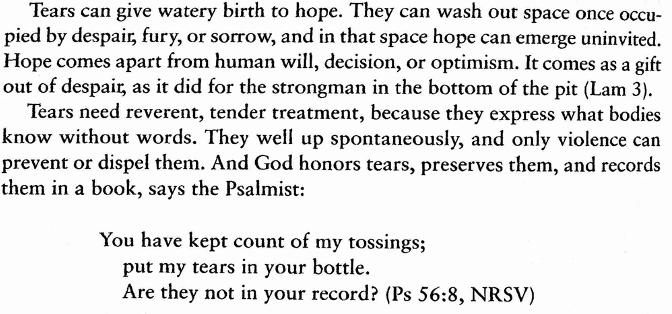
Kathleen M. O'Connnor, Lamentations and the Tears of the World, “The Power of Tears”