


. . . . חֶסֶד / loving-kindness says we have to do more than feeling sad for just a minute when a friend is hurt or share with a grudge. חֶסֶד means understanding and sharing in what someone else is feeling. It means we feel hurt because our friend is hurt. It means we can't imagine not helping our friend. THAT is חֶסֶד.

(ו) יְהוֹשֻׁעַ בֶּן פְּרַחְיָה וְנִתַּאי הָאַרְבֵּלִי קִבְּלוּ מֵהֶם. יְהוֹשֻׁעַ בֶּן פְּרַחְיָה אוֹמֵר, עֲשֵׂה לְךָ רַב, וּקְנֵה לְךָ חָבֵר, וֶהֱוֵי דָן אֶת כָּל הָאָדָם לְכַף זְכוּת:
(interpreted)
(6) . . . Yehoshua ben Perachia says, "Make for yourself a teacher, get for yourself a friend, and judge every person in a good way."
Alex and Piper have known each other since swim class at the JCC when they were toddlers. When Alex is thinking of people to spend time with, Piper is always on the list. When Piper’s parents say a friend can come along, Piper often invites Alex. Both Alex and Piper have other friends, too.
What are some ways we know Alex and Piper probably have a healthy friendship?
What questions could you ask to be more sure that Alex and Piper have a healthy friendship?
Alana and Max have been friends for a few years and when it’s just them they tease each other and laugh together all the time. They both started a new school this year, and when they were meeting people in their new class Alanna teased Max in front of their new classmates and he was really embarrassed and hurt and angry.
-
What went wrong?
-
What went right?
-
What went right?
Avot d'Rabbi Nassan: (interpreted)
"How does one get a friend? A person should get a friend by having meals together, learning Jewish stuff and stuff about life together, having sleepovers, and sharing things we don't share with just anyone about how we think and feel. And our friend should be someone who responds to those things we think and feel in supportive ways, and they should be someone who shares things with us, too."
(טז) כָּל אַהֲבָה שֶׁהִיא תְלוּיָה בְדָבָר, בָּטֵל דָּבָר, בְּטֵלָה אַהֲבָה. וְשֶׁאֵינָהּ תְּלוּיָה בְדָבָר, אֵינָהּ בְּטֵלָה לְעוֹלָם. אֵיזוֹ הִיא אַהֲבָה הַתְּלוּיָה בְדָבָר, זוֹ אַהֲבַת אַמְנוֹן וְתָמָר. וְשֶׁאֵינָהּ תְּלוּיָה בְדָבָר, זוֹ אַהֲבַת דָּוִד וִיהוֹנָתָן:
(interpreted) (16) If friendship love depends on the activity we do together, when we aren't doing that thing together anymore, we won't be friends anymore. But friendship love that doesn't depend on something like that, won't end just because the thing we used to do together is over. A great example of friendship love that is not dependent on something? That's the love of David and Jonathan.


(interpreted) (24) Don't be friends with someone who does hurtful things when they get angry. (25) Otherwise, you might get hurt, or you might start doing hurtful things when you get angry.
- What is dangerous about becoming friends with someone who does hurtful things?
- What is the problem with staying friends with someone who hurts you or who hurts other people?
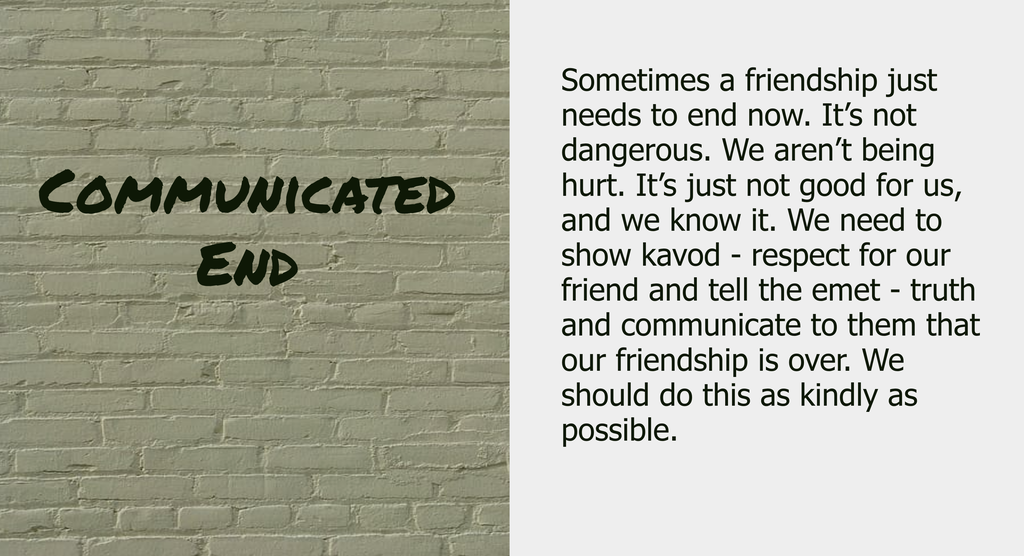
- How can you choose not to be friends with someone in a way that is still respectful?
- Are there other things besides anger that might make it unhealthy to be friends with someone?



Accept
To move on after a friendship breakup, we first need to accept that it wasn't a healthy friendship. Maybe it never was. Maybe it just isn't anymore.
Remember
Then we can remember that we are our own person and we have our own life. We will be okay.
Be
We also need to BE our own person! We need to do things that we like to do, and spend time by ourselves and with other friends.
Gabriel and Penina had been friends since pretty much forever because their parents had been friends since pretty much forever. Penina had always teased Gabriel about the way he talked. He would get upset, Penina's mom would tell her to apologize - and she would. And then it would happen again. And again. And again. Gabriel hated it. Lately the teasing has gotten even more mean, and now Gabriel is 10 and allowed to stay home by himself. He doesn't want to be friends with Penina anymore. What could he do?
At school one day after Gabriel had made his decision and communicated with Penina some of his friends asked him at recess why he wasn't friends with Penina anymore. He thought about saying, "Because she's mean and teases me." He thought about making something even worse up. He thought about telling a story about her that would make her feel as bad as he'd felt so many times because of the way she treated him.
If Gabriel wants to keep this friendship breakup healthy and sacred, what Jewish values should he keep in mind?
What could he tell his other friends?
Jayce and Yona used to spend a lot of time together. They used to be in the same community theater. They also used to go to the same summer camp. They do still go to the same school, but they are in different classes now. They have recess at the same time, and sometimes they hang out and play together then. Thing is, when they do, all they do is argue. They argue about everything. Yona is tired of arguing all the time with Jayce. Jayce is frustrated that they don't ever have fun together anymore. Neither of them really wants to spend time together anymore, they just do because spending time together is a habit.
Thinking about the Jewish values we've learned about friendship, what could these friends do?
How could these friends have a sacred friendship breakup?
