


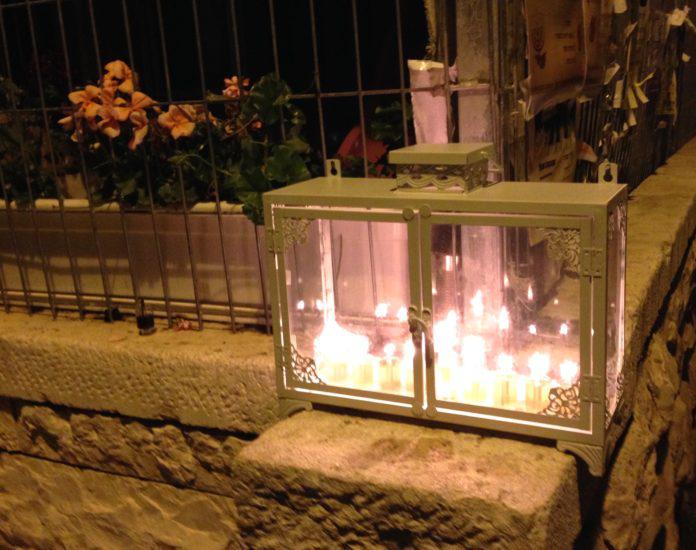
(יג) ... וכן היה רבי יהודה אומר בנר חנוכה פטור מפני שהניח ברשות וחכמים אומרים בין זה ובין זה חייב כגון אלו מסככין על פתחי חניותיהן ברשות הרבים בחג אע"פ שיש להן רשות ובא אחר והוזק בהן ה"ז חייב.
R. Yehuda also says that regarding a Chanukah light the storeowner is exempt because he placed it with "permission." The Sages say that in all situations the storeowner is responsible, similar to those who place a sukkah on Sukkot in public at the door of their store. Even though they have permission to place it there, if someone trips on it, they are responsible.
Rabbi Yehuda says that if it was a Hanukkah light, he is exempt because it was with permission. This means that he was authorized to place it there because he was performing a mitzvah. However, not everyone who places something in public under the authority of performance of a mitzvah is exempt, for if he built a sukkah on the outside of his home [in public] and someone tripped on it, he would be responsible as it states in the Talmud Yerushalmi "similar to those who place a sukkah on Sukkot [in public] at the door of their store. Even though they have permission and the mitzvot make him place it there, if someone trips on it, they are responsible." Rather Rabbi Yehudah only exempts someone who lights Hanukkah lights in public because there is a mitzvah to leave the lights on the outside of one's door in order to fulfill another mitzvah of "pirsumei d'nissa" - of publicizing the miracle.
... ור' יהודה אומר בנר חנכה פטור מפני שברשות בית דין עשה ולא עוד אלא שהוא רשות של מצוה ואינו בכלל אותם שאמרו פותקין ביבותיהם וכו' בימות הגשמים אע"פ שיש להם רשות אם הזיקו חייבים לשלם ולדעת חכמים אף ברשות מצוה אומרים כן והלכה כדבריהם וזהו שאמרו בתלמוד המערב אלו שעושים סוכתם בפתחי חנויותיהם מבחוץ הוזק בה אדם חייבים:
(יג) גָּמָל שֶׁהוּא טָעוּן פִּשְׁתָּן וְעוֹבֵר בִּרְשׁוּת הָרַבִּים וְנִכְנַס פִּשְׁתָּנוֹ לְתוֹךְ הַחֲנוּת וְדָלְקָה בְּנֵרוֹ שֶׁל חֶנְוָנִי וְהִדְלִיק אֶת כָּל הַבִּירָה בַּעַל הַגָּמָל חַיָּב מִפְּנֵי שֶׁהִרְבָּה בְּמַשּׂאוֹי בֵּין שֶׁעָמְדָה הַבְּהֵמָה בֵּין שֶׁלֹּא עָמְדָה. הִנִּיחַ הַחֶנְוָנִי נֵרוֹ מִבַּחוּץ הַחֶנְוָנִי חַיָּב אַף בִּדְמֵי פִּשְׁתָּן מִפְּנֵי שֶׁהִנִּיחַ נֵרוֹ מִבַּחוּץ. וַאֲפִלּוּ נֵר חֲנֻכָּה הָיָה לוֹ לֵישֵׁב וְלִשְׁמֹר:
If a camel was carrying flax and passed through the public thoroughfare and his flax extended into a store and caught fire from the candle of the storeowner and subsequently burned the building, the owner of the camel is responsible for the damage.... If the storeowner left the candle outside, the storeowner is responsible. Even if it was a Chanukah light - he should sit and guard it.
