


Adam B Seligman, Robert P. Weller, Michael J. Puett, and Bennett Simon, Ritual and it’s Consequences (p.11 & 25)
We argue that such traditions understand the world as fundamentally fractured and discontinuous, with ritual allowing us to live in it by creating temporary order through the construction of a performative, subjunctive world. Each ritual rebuilds the world “as if “ it were so, as one of many possible worlds.
While we explore its secular ritual only in secondary way, we can see a minor example of such things in U.S. presidential elections in our home state of Massachusetts. Many decades have gone by since a vote for president in the state changed anything. The results are such a foregone conclusion that candidates do not even campaign here. More broadly, a recent column by an economists puzzled about why anyone votes, since more utility is lost then gained: the odds of actually determining the result are tiny, and the loss in time and energy is real. Nevertheless, we and millions of our neighbors in the state vote anyway. Voting in such cases is a ritual with no practical value, but one of great significance because it allows us to re-create a social imaginary, a world where the people control the government. In such cases we vote less to choose a president then to re-create our democracy every four years. In such circumstances, at least part of the reason we vote for president is akin to the same reason we follows the rules and codes of etiquette and civility in our daily lives - these are rituals without which our social subjunctive would collapse back into a world of coercion and self-interest alone.
The creation of “as if” worlds is a central aspect of ritual action, which we see as necessary for human life. This subjunctive aspect of ritual is crucial to many forms of civil social behavior (though, as we pointed out, the codes of civility may be very different in different places). Thus, it is not enough for kings to be kings, they must act as if they were kings. Justice must not just be meted out, it must be seen to be meted out. There are any number of everyday examples that show the sometimes counterintuitive importance of this “as if”. Imagine a family of five, two parents and three children – all love and care for one another, and any major event (when one falls and gets hurt, or when one wins a prize) will mobilize all of them to help or support or praise (as appropriate) the member in question. But, in daily life there is often much pushing, screaming, grabbing of hairbrushes, not helping with the dinner or feeding the dog, and so on. The parents then decide that everyone has to treat each other with a bit more respect, more civility, more use of please and thank you. Many of us have experienced this and know that it works – at least for a time, until the please and thank you begin to get lost. Ratcheting up the amount of love everyone feels, on the other hand, is not the way to make life more pleasant in the household. There is no need, and it is not even possible. Everyone loves the others. That is not the point. Instead, the problem is to get everyone to act as if they love one another. More real love(whatever that may be) is not needed, nor even reinstituting a feeling that has been lost. Not at all. What was missing was the behavior that would create a shared subjunctive – ritual. Erich Segal was wrong – love does not mean never having to say you’re sorry. That is precisely what love does mean – at least if you want to share a life with the person you love.
We argue that such traditions understand the world as fundamentally fractured and discontinuous, with ritual allowing us to live in it by creating temporary order through the construction of a performative, subjunctive world. Each ritual rebuilds the world “as if “ it were so, as one of many possible worlds.
While we explore its secular ritual only in secondary way, we can see a minor example of such things in U.S. presidential elections in our home state of Massachusetts. Many decades have gone by since a vote for president in the state changed anything. The results are such a foregone conclusion that candidates do not even campaign here. More broadly, a recent column by an economists puzzled about why anyone votes, since more utility is lost then gained: the odds of actually determining the result are tiny, and the loss in time and energy is real. Nevertheless, we and millions of our neighbors in the state vote anyway. Voting in such cases is a ritual with no practical value, but one of great significance because it allows us to re-create a social imaginary, a world where the people control the government. In such cases we vote less to choose a president then to re-create our democracy every four years. In such circumstances, at least part of the reason we vote for president is akin to the same reason we follows the rules and codes of etiquette and civility in our daily lives - these are rituals without which our social subjunctive would collapse back into a world of coercion and self-interest alone.
The creation of “as if” worlds is a central aspect of ritual action, which we see as necessary for human life. This subjunctive aspect of ritual is crucial to many forms of civil social behavior (though, as we pointed out, the codes of civility may be very different in different places). Thus, it is not enough for kings to be kings, they must act as if they were kings. Justice must not just be meted out, it must be seen to be meted out. There are any number of everyday examples that show the sometimes counterintuitive importance of this “as if”. Imagine a family of five, two parents and three children – all love and care for one another, and any major event (when one falls and gets hurt, or when one wins a prize) will mobilize all of them to help or support or praise (as appropriate) the member in question. But, in daily life there is often much pushing, screaming, grabbing of hairbrushes, not helping with the dinner or feeding the dog, and so on. The parents then decide that everyone has to treat each other with a bit more respect, more civility, more use of please and thank you. Many of us have experienced this and know that it works – at least for a time, until the please and thank you begin to get lost. Ratcheting up the amount of love everyone feels, on the other hand, is not the way to make life more pleasant in the household. There is no need, and it is not even possible. Everyone loves the others. That is not the point. Instead, the problem is to get everyone to act as if they love one another. More real love(whatever that may be) is not needed, nor even reinstituting a feeling that has been lost. Not at all. What was missing was the behavior that would create a shared subjunctive – ritual. Erich Segal was wrong – love does not mean never having to say you’re sorry. That is precisely what love does mean – at least if you want to share a life with the person you love.


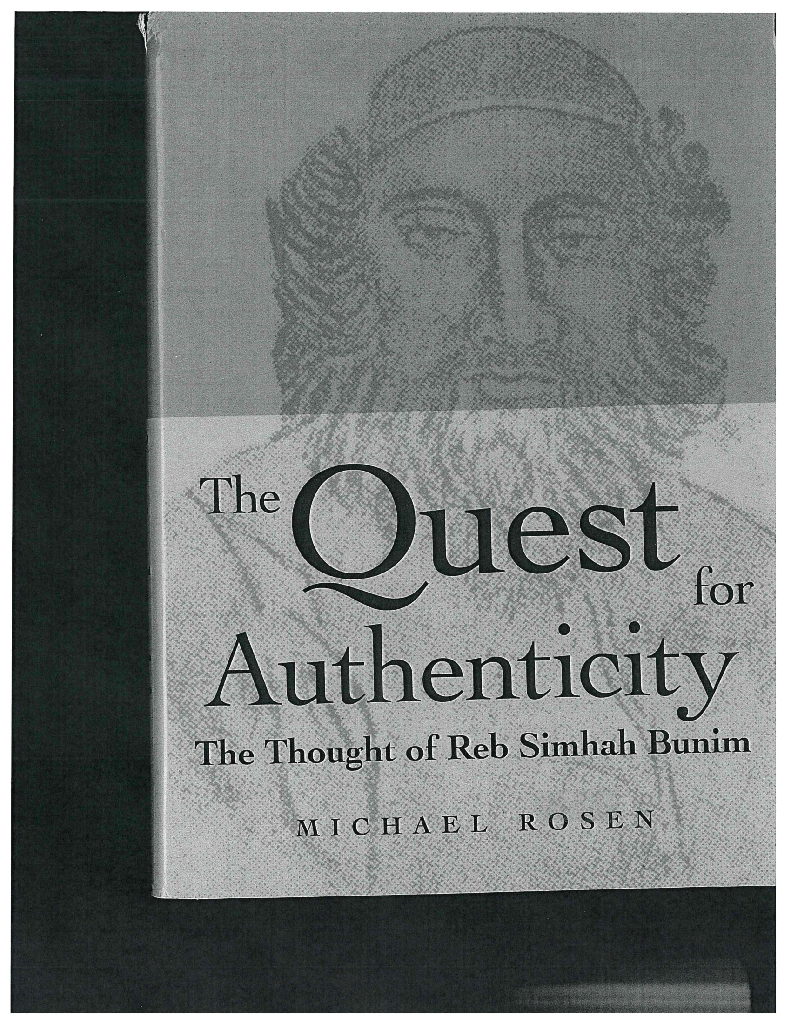


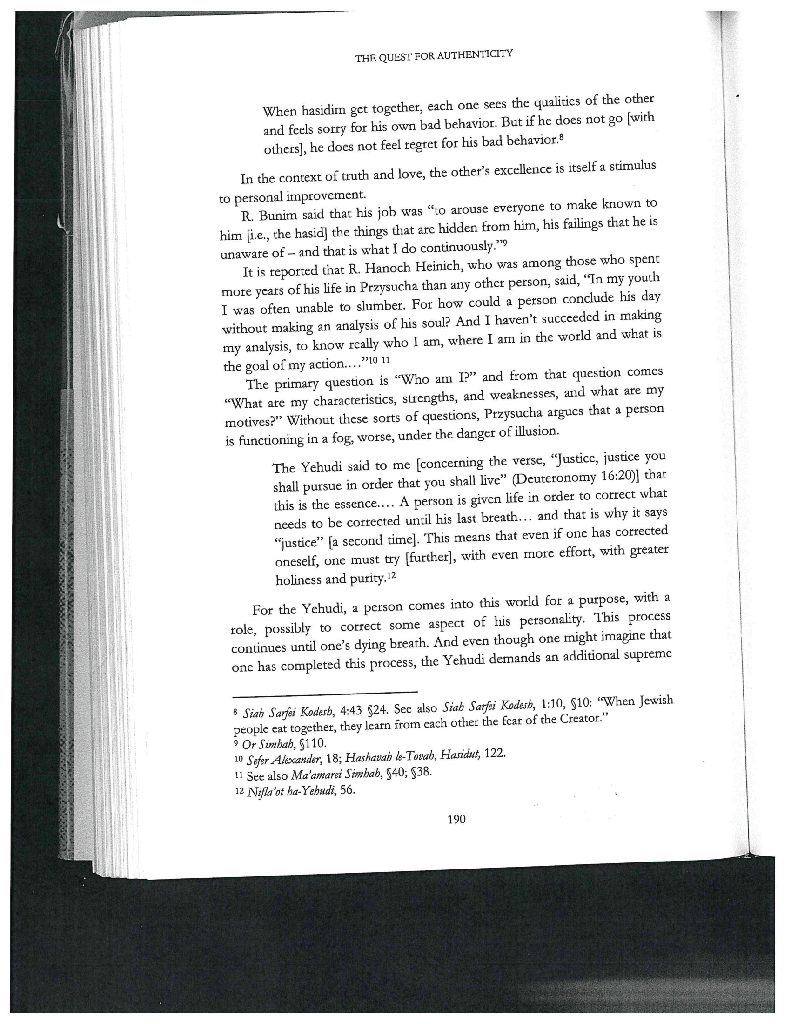

Itturei Torah
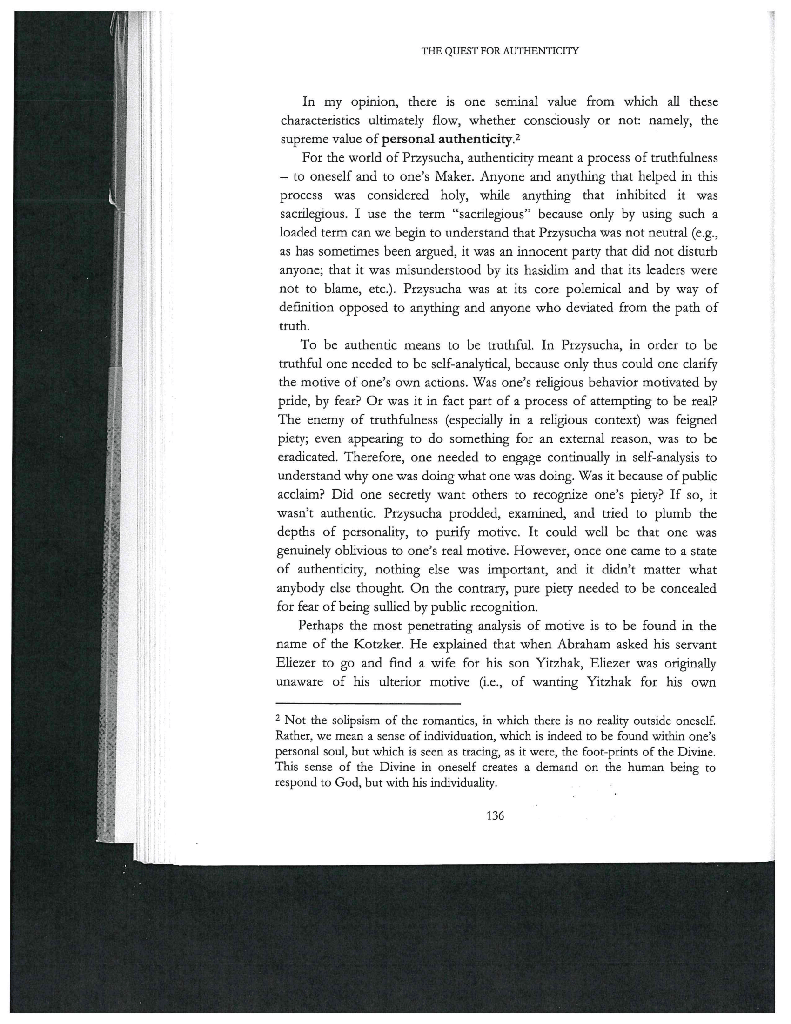
When R..Shemayah the elder lay on his deathbed, his Kotzk disciples asked him: “Shemayah, what about your yezer hara’ (the evil inclination)? Does it still trouble a man even now?”
“What a question,” muttered R. Shemayah with his eyes half closed. “ Don’t you all see how the yezer hara’ is standing here at the head of the bed whispering in my ear; ‘ R. Shemayah, say “Shema’ Yisrael’ in a loud voice and draw out the word “ehad’?’
R..Shemayah continued; “I recognized him, the thief – I know his intention. He is trying to seduce me to say ‘Shema’ Yisrael’ in order that after my death you will see that R..Shemayah left this world in a pure state, on the world ‘ehad.’”
When R..Shemayah the elder lay on his deathbed, his Kotzk disciples asked him: “Shemayah, what about your yezer hara’ (the evil inclination)? Does it still trouble a man even now?”
“What a question,” muttered R. Shemayah with his eyes half closed. “ Don’t you all see how the yezer hara’ is standing here at the head of the bed whispering in my ear; ‘ R. Shemayah, say “Shema’ Yisrael’ in a loud voice and draw out the word “ehad’?’
R..Shemayah continued; “I recognized him, the thief – I know his intention. He is trying to seduce me to say ‘Shema’ Yisrael’ in order that after my death you will see that R..Shemayah left this world in a pure state, on the world ‘ehad.’”
אֵין עוֹמְדִין לְהִתְפַּלֵּל אֶלָּא מִתּוֹךְ כֹּבֶד רֹאשׁ. חֲסִידִים הָרִאשׁוֹנִים הָיוּ שׁוֹהִים שָׁעָה אַחַת וּמִתְפַּלְּלִים, כְּדֵי שֶׁיְּכַוְּנוּ אֶת לִבָּם לַמָּקוֹם. אֲפִלּוּ הַמֶּלֶךְ שׁוֹאֵל בִּשְׁלוֹמוֹ, לֹא יְשִׁיבֶנּוּ. וַאֲפִלּוּ נָחָשׁ כָּרוּךְ עַל עֲקֵבוֹ, לֹא יַפְסִיק:
One may only stand and begin to pray from an approach of gravity and submission. There is a tradition that the early generations of pious men would wait one hour, in order to reach the solemn frame of mind appropriate for prayer, and then pray, so that they would focus their hearts toward their Father in Heaven. Standing in prayer is standing before God and, as such, even if the king greets him, he should not respond to him; and even if a snake is wrapped on his heel, he should not interrupt his prayer.
מִמַּאי? דִּילְמָא חָנָה שָׁאנֵי, דַּהֲוָת מְרִירָא לִבָּא טוּבָא.
The Gemara rejects this proof: From what does that conclusion ensue? Perhaps Hannah is different, as her heart was extremely embittered, her prayer was embittered as well. This does not prove that everyone must pray in that frame of mind.
אֶלָּא אָמַר רַבִּי יוֹסֵי בְּרַבִּי חֲנִינָא, מֵהָכָא: ״וַאֲנִי בְּרֹב חַסְדְּךָ אָבוֹא בֵיתֶךָ אֶשְׁתַּחֲוֶה אֶל הֵיכַל קׇדְשְׁךָ בְּיִרְאָתֶךָ״.
Rather, Rabbi Yosei, son of Rabbi Ḥanina, said, it can be proved from here, as David said: “But as for me, by Your abundant loving-kindness I will enter Your house, at Your Holy Temple I will bow in reverence for You” (Psalms 5:8). Entering into prayer like entering the Holy Temple must be performed reverentially.
מִמַּאי? דִּילְמָא דָּוִד שָׁאנֵי, דַּהֲוָה מְצַעַר נַפְשֵׁיהּ בְּרַחֲמֵי טוּבָא. אֶלָּא אָמַר רַבִּי יְהוֹשֻׁעַ בֶּן לֵוִי, מֵהָכָא: ״הִשְׁתַּחֲווּ לַה׳ בְּהַדְרַת קֹדֶשׁ״: אַל תִּקְרֵי ״בְּהַדְרַת״ אֶלָּא ״בְּחֶרְדַּת״.
The Gemara rejects this proof as well: From what does that conclusion ensue? Perhaps David is different, as he would excessively afflict himself in prayer in order to atone for his transgression with Bathsheba. Consequently, his cannot serve as a paradigm for proper conduct in prayer. Rather, Rabbi Yehoshua ben Levi said, it can be derived from here, from this verse that David said, not about his own worship, but about worship of God in general: “Give, unto the Lord, the honor of His name, bow to the Lord in the beauty of holiness [behadrat kodesh]” (Psalms 29:2). Do not read: In the beauty of [behadrat] holiness. Rather read: In trembling of [beḥerdat] holiness; one must enter into prayer from an atmosphere of gravity engendered by sanctity.
מִמַּאי? דִּילְמָא לְעוֹלָם אֵימָא לְךָ, ״הַדְרַת״ מַמָּשׁ. כִּי הָא דְּרַב יְהוּדָה הֲוָה מְצַיֵּין נַפְשֵׁיהּ, וַהֲדַר מְצַלֵּי. אֶלָּא אָמַר רַב נַחְמָן בַּר יִצְחָק מֵהָכָא: ״עִבְדוּ אֶת ה׳ בְּיִרְאָה וְגִילוּ בִּרְעָדָה״.
The Gemara rejects this too: From what does that conclusion ensue? Perhaps, actually I would say to you that it should be read as it is written: Specifically, “in the beauty,” and it means that one should pray in beautiful clothing, as in the case of Rav Yehuda who would adorn himself and then pray. Rav Yehuda believed that one who comes before the King must wear his most beautiful clothing. The Gemara has yet to find a source for the halakha that one must approach prayer from an atmosphere of gravity. Rather, Rav Naḥman bar Yitzḥak said it can be derived from here, from this verse: “Serve the Lord in fear and rejoice with trembling” (Psalms 2:11).
מַאי ״וְגִילוּ בִּרְעָדָה״? אָמַר רַב אַדָּא בַּר מַתְנָא אָמַר רַבָּה: בִּמְקוֹם גִּילָה שָׁם תְּהֵא רְעָדָה.
Having cited this verse from Psalms, the Gemara asks: What is the meaning of rejoice with trembling? Rav Adda bar Mattana said that Rabba said: One may not experience unbridled joy; even where there is rejoicing, there should be trembling.
מָר בְּרֵיהּ דְּרָבִינָא עֲבַד הִילּוּלָא לִבְרֵיהּ, חֲזַנְהוּ לְרַבָּנַן דַּהֲווֹ קָבָדְחִי טוּבָא.
On a similar note, the Gemara relates: Mar, son of Ravina, made a wedding feast for his son and he saw the Sages, who were excessively joyous.
אַיְּיתִי כָּסָא דְמוֹקְרָא בַּת אַרְבַּע מְאָה זוּזִי, וְתַבַּר קַמַּיְהוּ, וְאִעֲצִיבוּ.
He brought a valuable cup worth four hundred zuz and broke it before them and they became sad.
רַב אָשֵׁי עֲבַד הִילּוּלָא לִבְרֵיהּ, חֲזַנְהוּ לְרַבָּנַן דַּהֲווֹ קָא בָדְחִי טוּבָא. אַיְּיתִי כָּסָא דְּזוּגִּיתָא חִיוָּרְתָּא, וְתַבַּר קַמַּיְהוּ, וְאִעֲצִיבוּ.
The Gemara also relates: Rav Ashi made a wedding feast for his son and he saw the Sages, who were excessively joyous. He brought a cup of extremely valuable white glass and broke it before them, and they became sad.
אֲמַרוּ לֵיהּ רַבָּנַן לְרַב הַמְנוּנָא זוּטֵי בְּהִלּוּלָא דְּמָר בְּרֵיהּ דְּרָבִינָא: לִישְׁרֵי לַן מָר. אֲמַר לְהוּ: וַי לַן, דְּמִיתְנַן. וַי לַן, דְּמִיתְנַן. אָמְרִי לֵיהּ: אֲנַן מָה נַעֲנֵי בָּתְרָךְ? אֲמַר לְהוּ: הֵי תּוֹרָה, וְהֵי מִצְוָה דְּמַגְּנוּ עֲלַן.
Similarly, the Gemara relates: The Sages said to Rav Hamnuna Zuti at the wedding feast of Mar, son of Ravina: Let the Master sing for us. Since he believed that the merriment had become excessive, he said to them, singing: Woe unto us, for we shall die, woe unto us, for we shall die. They said to him: What shall we respond after you? What is the chorus of the song? He said to them, you should respond: Where is Torah and where is mitzva that protect us?
צריך שיהיה לו כוונה בתפלתו. ובו ה סעיפים:
המתפלל צריך שיכוין בלבו פי' המלות שמוציא בשפתיו ויחשוב כאלו שכינה כנגדו ויסיר כל המחשבות הטורדות אותו עד שתשאר מחשבתו וכוונתו זכה בתפלתו ויחשוב כאלו היה מדבר לפני מלך בשר ודם היה מסדר דבריו ומכוין בהם יפה לבל יכשל ק"ו לפני ממ"ה הקב"ה שהוא חוקר כל המחשבות וכך היו עושים חסידים ואנשי מעשה שהיו מתבודדים ומכוונין בתפלתם עד שהיו מגיעים להתפשטות הגשמיות ולהתגברות כח השכלי עד שהיו מגיעים קרוב למעלת הנבואה ואם תבא לו מחשבה אחרת בתוך התפלה ישתוק עד שיתבטל המחשב' וצריך שיחשוב בדברי' המכניעים הלב ומכוונים אותו לאביו שבשמי' ולא יחשוב בדברי' שיש בהם קלות ראש: הגה ויחשוב קודם התפלה מרוממות האל יתעלה ובשפלו' האדם ויסיר כל תענוגי האדם מלבו [הר"י ריש פ' אין עומדין] ואסור לאדם לנשק בניו הקטנים בב"ה כדי לקבוע בלבו שאין אהבה כאהבת המקום ברוך הוא [בנימין זאב סימן קס"ג ואגודה פרק כיצד מברכין]:
המתפלל צריך שיכוין בלבו פי' המלות שמוציא בשפתיו ויחשוב כאלו שכינה כנגדו ויסיר כל המחשבות הטורדות אותו עד שתשאר מחשבתו וכוונתו זכה בתפלתו ויחשוב כאלו היה מדבר לפני מלך בשר ודם היה מסדר דבריו ומכוין בהם יפה לבל יכשל ק"ו לפני ממ"ה הקב"ה שהוא חוקר כל המחשבות וכך היו עושים חסידים ואנשי מעשה שהיו מתבודדים ומכוונין בתפלתם עד שהיו מגיעים להתפשטות הגשמיות ולהתגברות כח השכלי עד שהיו מגיעים קרוב למעלת הנבואה ואם תבא לו מחשבה אחרת בתוך התפלה ישתוק עד שיתבטל המחשב' וצריך שיחשוב בדברי' המכניעים הלב ומכוונים אותו לאביו שבשמי' ולא יחשוב בדברי' שיש בהם קלות ראש: הגה ויחשוב קודם התפלה מרוממות האל יתעלה ובשפלו' האדם ויסיר כל תענוגי האדם מלבו [הר"י ריש פ' אין עומדין] ואסור לאדם לנשק בניו הקטנים בב"ה כדי לקבוע בלבו שאין אהבה כאהבת המקום ברוך הוא [בנימין זאב סימן קס"ג ואגודה פרק כיצד מברכין]:
One Needs to Have Concentration While Praying, containing 5 s'ifim:
One who prays needs to concentrate on the meaning of the words which one brings forth from one's mouth. One should consider [it] as if the Divine Presence is opposite one, and remove all distracting thoughts from one, until one's thought and intention remain purely about one's prayer. And one should consider [it] as if one were speaking to before a king of flesh and blood, and one were organizing one's words beautifully and concentrating on them so as not to stumble, all the more [one should do so] before the King of kings of kings, the Holy One, who is Blessed, who examines all thoughts. And so did the pious ones and the men of action, who would seclude themselves and concentrate on their prayers until they would transcend [their] corporeality and strengthen [their] mental power, until nearly arriving at the level of prophecy. And if another thought comes to one in the midst of the prayer, one should be silent until the thought is eliminated. And one should think about things that humble the heart and concentrate it on one's Father in Heaven, and not think about things that contain levity ("light-headedness"). Gloss: Before prayer, one should think about the loftiness of God who is raised up and the lowliness of humanity, and remove all human pleasures from one's heart (Ri, beginning of chapter "Ein Om'din" [Berachot Chapter 5] ). And it is forbidden for a person to kiss one's small children in synagogue, in order to fix in one's heart that there is no love like the love of the Omnipresent Who is Blessed (Binyomin Ze'ev siman 163 and Agudah Chapter "Keitzad Mevarchin" [Berachot Chapter 6]).
One who prays needs to concentrate on the meaning of the words which one brings forth from one's mouth. One should consider [it] as if the Divine Presence is opposite one, and remove all distracting thoughts from one, until one's thought and intention remain purely about one's prayer. And one should consider [it] as if one were speaking to before a king of flesh and blood, and one were organizing one's words beautifully and concentrating on them so as not to stumble, all the more [one should do so] before the King of kings of kings, the Holy One, who is Blessed, who examines all thoughts. And so did the pious ones and the men of action, who would seclude themselves and concentrate on their prayers until they would transcend [their] corporeality and strengthen [their] mental power, until nearly arriving at the level of prophecy. And if another thought comes to one in the midst of the prayer, one should be silent until the thought is eliminated. And one should think about things that humble the heart and concentrate it on one's Father in Heaven, and not think about things that contain levity ("light-headedness"). Gloss: Before prayer, one should think about the loftiness of God who is raised up and the lowliness of humanity, and remove all human pleasures from one's heart (Ri, beginning of chapter "Ein Om'din" [Berachot Chapter 5] ). And it is forbidden for a person to kiss one's small children in synagogue, in order to fix in one's heart that there is no love like the love of the Omnipresent Who is Blessed (Binyomin Ze'ev siman 163 and Agudah Chapter "Keitzad Mevarchin" [Berachot Chapter 6]).
לא יתפלל במקום שיש דבר שמבטל כוונתו ולא בשעה המבטלת כוונתו [טור בשם ר"מ מרוטנבורג הגה"מ פ"ד מהלכו' תפלה] ועכשיו אין אנו נזהרין בכל זה מפני שאין אנו מכוונים כ"כ בתפלה:
One should not pray in a place where there is something that negates one's concentration, and not at a time that negates one's concentration [Tur in the name of R. Meir of Rothenburg, Hagahot Maimoni on Chapter 4 from the Laws of Prayer]. And nowadays we are not careful with all of this since we are not able to concentrate so much during prayer.
טו) שם, מפני שאין אנחנו מכוונים וכו' ומ"מ יזהר אדם בכל מה שאפשר כדי לעורר כוונתו לבוש, א"ר או' ג' פרמ"ג שם, וע"כ מי שנאנס ובא לו מחשבה באיזה ברכה מברכות י"ח לא יסיח דעתו מן השאר מפני שלא כיון באחת כי זה דומה למי שאבד מרגלית אחת התיסק אדעתין שיאבד כל המרגליות שיש לו מפני האחת שנאבדה אלא אדרבה הוא נזהר בתכלית הזהירות בכל מה שאפשר לו ליזהר כדי שלא יאבד עוד וכ"ש אם אבד פעם אחת ושתים שיזהר הרבה שלא יאבד עוד שום דבר, ולא בתפילת י"ח לבד צריך ליזהר בכך אלא בכל לימודו ובקשתו ותחנתו לפני המקום ב"ה. ויחשוב תמיד שהוא עומד ומדבר לפני מלך חי וקיים יודע מחשבות ואיך ידבר אתו ולבו כל עמו, ועיין ברו"ח מ"ש תוכחת מגולה למי שממהר בפסד"ז ואין אומרם בכוונה יעו"ש:
(ז) אין אנו וכו' - ובפמ"ג כתב בשם הלבוש אע"ג שאין אנו מכוונין מ"מ מה דאפשר לעשות עושין ע"כ אין להתפלל בבית שיש שם שכר חדש או מי דבש וכ"ש ריח רע מעופש קצת:
דְּמוּת צוּרוֹת לְבָנוֹת הָיוּ לוֹ לְרַבָּן גַּמְלִיאֵל בַּטַּבְלָא וּבַכֹּתֶל בַּעֲלִיָּתוֹ, שֶׁבָּהֶן מַרְאֶה אֶת הַהֶדְיוֹטוֹת וְאוֹמֵר, הֲכָזֶה רָאִיתָ אוֹ כָזֶה. מַעֲשֶׂה שֶׁבָּאוּ שְׁנַיִם וְאָמְרוּ, רְאִינוּהוּ שַׁחֲרִית בַּמִּזְרָח וְעַרְבִית בַּמַּעֲרָב. אָמַר רַבִּי יוֹחָנָן בֶּן נוּרִי, עֵדֵי שֶׁקֶר הֵם. כְּשֶׁבָּאוּ לְיַבְנֶה קִבְּלָן רַבָּן גַּמְלִיאֵל. וְעוֹד בָּאוּ שְׁנַיִם וְאָמְרוּ, רְאִינוּהוּ בִזְמַנּוֹ, וּבְלֵיל עִבּוּרוֹ לֹא נִרְאָה, וְקִבְּלָן רַבָּן גַּמְלִיאֵל. אָמַר רַבִּי דוֹסָא בֶּן הַרְכִּינָס, עֵדֵי שֶׁקֶר הֵן, הֵיאָךְ מְעִידִין עַל הָאִשָּׁה שֶׁיָּלְדָה, וּלְמָחָר כְּרֵסָהּ בֵּין שִׁנֶּיהָ. אָמַר לוֹ רַבִּי יְהוֹשֻׁעַ, רוֹאֶה אֲנִי אֶת דְּבָרֶיךָ:
Rabban Gamliel had a diagram of the different forms of the moon drawn on a tablet that hung on the wall of his attic, which he would show to the laymen who came to testify about the new moon but were unable to describe adequately what they had seen. And he would say to them: Did you see a form like this or like this? There was an incident in which two witnesses came to testify about the new moon, and they said: We saw the waning moon in the morning in the east, and that same day we saw the new moon in the evening in the west. Rabbi Yoḥanan ben Nuri said: They are false witnesses, as it is impossible to see the new moon so soon after the last sighting of the waning moon. However, when they arrived in Yavne, Rabban Gamliel accepted them as witnesses without concern. And there was another incident in which two witnesses came and said: We saw the new moon at its anticipated time, i.e., on the night of the thirtieth day of the previous month; however, on the following night, i.e., the start of the thirty-first, which is often the determinant of a full, thirty-day month, it was not seen. And nevertheless Rabban Gamliel accepted their testimony and established the New Moon on the thirtieth day. Rabbi Dosa ben Horkinas disagreed and said: They are false witnesses; how can witnesses testify that a woman gave birth and the next day her belly is between her teeth, i.e., she is obviously still pregnant? If the new moon was already visible at its anticipated time, how could it not be seen a day later? Rabbi Yehoshua said to him: I see the logic of your statement; the New Moon must be established a day later.
שָׁלַח לוֹ רַבָּן גַּמְלִיאֵל, גּוֹזְרַנִי עָלֶיךָ שֶׁתָּבֹא אֶצְלִי בְּמַקֶּלְךָ וּבִמְעוֹתֶיךָ בְּיוֹם הַכִּפּוּרִים שֶׁחָל לִהְיוֹת בְּחֶשְׁבּוֹנְךָ. הָלַךְ וּמְצָאוֹ רַבִּי עֲקִיבָא מֵצֵר, אָמַר לוֹ, יֶשׁ לִי לִלְמוֹד שֶׁכָּל מַה שֶּׁעָשָׂה רַבָּן גַּמְלִיאֵל עָשׂוּי, שֶׁנֶּאֱמַר (ויקרא כג), אֵלֶּה מוֹעֲדֵי יְיָ מִקְרָאֵי קֹדֶשׁ, אֲשֶׁר תִּקְרְאוּ אֹתָם, בֵּין בִּזְמַנָּן בֵּין שֶׁלֹּא בִזְמַנָּן, אֵין לִי מוֹעֲדוֹת אֶלָּא אֵלּוּ. בָּא לוֹ אֵצֶל רַבִּי דוֹסָא בֶּן הַרְכִּינָס, אָמַר לוֹ, אִם בָּאִין אָנוּ לָדוּן אַחַר בֵּית דִּינוֹ שֶׁל רַבָּן גַּמְלִיאֵל, צְרִיכִין אָנוּ לָדוּן אַחַר כָּל בֵּית דִּין וּבֵית דִּין שֶׁעָמַד מִימוֹת משֶׁה וְעַד עַכְשָׁיו, שֶׁנֶּאֱמַר (שמות כד), וַיַּעַל משֶׁה וְאַהֲרֹן נָדָב וַאֲבִיהוּא וְשִׁבְעִים מִזִּקְנֵי יִשְׂרָאֵל. וְלָמָּה לֹא נִתְפָּרְשׁוּ שְׁמוֹתָן שֶׁל זְקֵנִים, אֶלָּא לְלַמֵּד, שֶׁכָּל שְׁלשָׁה וּשְׁלשָׁה שֶׁעָמְדוּ בֵית דִּין עַל יִשְׂרָאֵל, הֲרֵי הוּא כְבֵית דִּינוֹ שֶׁל משֶׁה. נָטַל מַקְלוֹ וּמְעוֹתָיו בְּיָדוֹ, וְהָלַךְ לְיַבְנֶה אֵצֶל רַבָּן גַּמְלִיאֵל בְּיוֹם שֶׁחָל יוֹם הַכִּפּוּרִים לִהְיוֹת בְּחֶשְׁבּוֹנוֹ. עָמַד רַבָּן גַּמְלִיאֵל וּנְשָׁקוֹ עַל רֹאשׁוֹ, אָמַר לוֹ, בֹּא בְשָׁלוֹם, רַבִּי וְתַלְמִידִי, רַבִּי בְחָכְמָה, וְתַלְמִידִי שֶׁקִּבַּלְתָּ דְּבָרָי:
Upon hearing that Rabbi Yehoshua had challenged his ruling, Rabban Gamliel sent a message to him: I decree against you that you must appear before me with your staff and with your money on the day on which Yom Kippur occurs according to your calculation; according to my calculation, that day is the eleventh of Tishrei, the day after Yom Kippur. Rabbi Akiva went and found Rabbi Yehoshua distressed that the head of the Great Sanhedrin was forcing him to desecrate the day that he maintained was Yom Kippur. In an attempt to console him, Rabbi Akiva said to Rabbi Yehoshua: I can learn from a verse that everything that Rabban Gamliel did in sanctifying the month is done, i.e., it is valid. As it is stated: “These are the appointed seasons of the Lord, sacred convocations, which you shall proclaim in their season” (Leviticus 23:4). This verse indicates that whether you have proclaimed them at their proper time or whether you have declared them not at their proper time, I have only these Festivals as established by the representatives of the Jewish people. Rabbi Yehoshua then came to Rabbi Dosa ben Horkinas, who said to him: If we come to debate and question the rulings of the court of Rabban Gamliel, we must debate and question the rulings of every court that has stood from the days of Moses until now. As it is stated: “Then Moses went up, and Aaron, Nadav and Avihu, and seventy of the Elders of Israel” (Exodus 24:9). But why were the names of these seventy Elders not specified? Rather, this comes to teach that every set of three judges that stands as a court over the Jewish people has the same status as the court of Moses. Since it is not revealed who sat on that court, apparently it is enough that they were official judges in a Jewish court. When Rabbi Yehoshua heard that even Rabbi Dosa ben Horkinas maintained that they must submit to Rabban Gamliel’s decision, he took his staff and his money in his hand, and went to Yavne to Rabban Gamliel on the day on which Yom Kippur occurred according to his own calculation. Upon seeing him, Rabban Gamliel stood up and kissed him on his head. He said to him: Come in peace, my teacher and my student. You are my teacher in wisdom, as Rabbi Yehoshua was wiser than anyone else in his generation, and you are my student, as you accepted my statement, despite your disagreement.
Harry Frankfurt, On Bullshit (Princeton, 2005), 53-56, 61, 64-66
What bullshit essentially misrepresents is neither the state of affairs to which it refers nor the beliefs of the speaker concerning that state of affairs. Those are what lies misrepresent, by virtue of being false. Since bullshit need not be false, it differs from lies in its misrepresentational intent. The bullshitter may not deceive us, or even intend to do so, either about the facts or about what he takes the facts to be. What he does necessarily attempt to deceive us about is his enterprise. His only indispensably distinctive characteristic is that in a certain way he misrepresents what he is up to.
This is the crux of the distinction between him and the liar. Both he and the liar represent themselves falsely as endeavoring to communicate the truth. The success of each depends upon deceiving us about that. But the fact about himself that the liar hides is that he is attempting to lead us away from a correct apprehension of reality; we are not to know that he wants us to believe something he supposes to be false. The fact about himself that the bullshitter hides, on the other hand, is that the truth-values of his statements are of no central interest to him; what we are not to understand is that his intention is neither to report the truth nor to conceal it. This does not mean that his speech is anarchically impulsive, but that the motive guiding and controlling it is unconcerned with how the things about which he speaks truly are.
It is impossible for someone to lie unless he thinks he knows the truth. Producing bullshit requires no such conviction. A person who lies is thereby responding to the truth, and he is to that extent respectful of it. When an honest man speaks, he says only what he believes to be true; and for the liar, it is correspondingly indispensable that he considers his statements to be false. For the bullshitter, however, all these bets are off: he is neither on the side of the true nor on the side of the false. His eye is not on the facts at all, as the eyes of the honest man and and of the liar are, except insofar as they may be pertinent to his interest in getting away with what he says.
By virtue of this, bullshit is a greater enemy of the truth than lies are.
The contemporary proliferation of bullshit also has deeper sources, in various forms of skepticism which deny that we can have any reliable access to an objective reality, and which therefore reject the possibility of knowing how things truly are. These “antirealist” doctrines undermine confidence in the value of disinterested efforts to determine what is true and what is false, and even in the intelligibility of the notion of objective inquiry. One response to this loss of confidence has been a retreat from the discipline required by dedication to the ideal of correctness to a quite different sort of discipline, which is imposed by pursuit of an alternative ideal of sincerity. Rather than seeking primarily to arrive at an accurate representation of a common world, the individual turns toward trying to provide honest representations of himself. Convinced that reality has no inherent nature, which he might hope to identify as the truth about things, he devotes himself to being true to his own nature. It is as though he decides that since it makes no sense to try to be true to the facts, he must therefore try instead to be true to himself.
What bullshit essentially misrepresents is neither the state of affairs to which it refers nor the beliefs of the speaker concerning that state of affairs. Those are what lies misrepresent, by virtue of being false. Since bullshit need not be false, it differs from lies in its misrepresentational intent. The bullshitter may not deceive us, or even intend to do so, either about the facts or about what he takes the facts to be. What he does necessarily attempt to deceive us about is his enterprise. His only indispensably distinctive characteristic is that in a certain way he misrepresents what he is up to.
This is the crux of the distinction between him and the liar. Both he and the liar represent themselves falsely as endeavoring to communicate the truth. The success of each depends upon deceiving us about that. But the fact about himself that the liar hides is that he is attempting to lead us away from a correct apprehension of reality; we are not to know that he wants us to believe something he supposes to be false. The fact about himself that the bullshitter hides, on the other hand, is that the truth-values of his statements are of no central interest to him; what we are not to understand is that his intention is neither to report the truth nor to conceal it. This does not mean that his speech is anarchically impulsive, but that the motive guiding and controlling it is unconcerned with how the things about which he speaks truly are.
It is impossible for someone to lie unless he thinks he knows the truth. Producing bullshit requires no such conviction. A person who lies is thereby responding to the truth, and he is to that extent respectful of it. When an honest man speaks, he says only what he believes to be true; and for the liar, it is correspondingly indispensable that he considers his statements to be false. For the bullshitter, however, all these bets are off: he is neither on the side of the true nor on the side of the false. His eye is not on the facts at all, as the eyes of the honest man and and of the liar are, except insofar as they may be pertinent to his interest in getting away with what he says.
By virtue of this, bullshit is a greater enemy of the truth than lies are.
The contemporary proliferation of bullshit also has deeper sources, in various forms of skepticism which deny that we can have any reliable access to an objective reality, and which therefore reject the possibility of knowing how things truly are. These “antirealist” doctrines undermine confidence in the value of disinterested efforts to determine what is true and what is false, and even in the intelligibility of the notion of objective inquiry. One response to this loss of confidence has been a retreat from the discipline required by dedication to the ideal of correctness to a quite different sort of discipline, which is imposed by pursuit of an alternative ideal of sincerity. Rather than seeking primarily to arrive at an accurate representation of a common world, the individual turns toward trying to provide honest representations of himself. Convinced that reality has no inherent nature, which he might hope to identify as the truth about things, he devotes himself to being true to his own nature. It is as though he decides that since it makes no sense to try to be true to the facts, he must therefore try instead to be true to himself.