


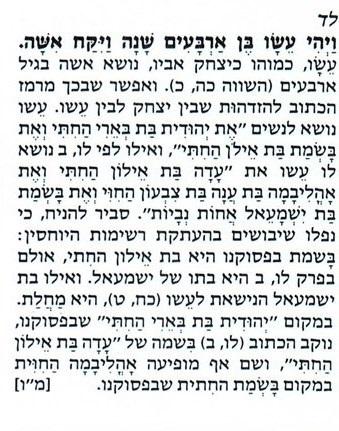
(לד) וַיְהִ֤י עֵשָׂו֙ בֶּן־אַרְבָּעִ֣ים שָׁנָ֔ה וַיִּקַּ֤ח אִשָּׁה֙ אֶת־יְהוּדִ֔ית בַּת־בְּאֵרִ֖י הַֽחִתִּ֑י וְאֶת־בָּ֣שְׂמַ֔ת בַּת־אֵילֹ֖ן הַֽחִתִּֽי׃(לה) וַתִּהְיֶ֖יןָ מֹ֣רַת ר֑וּחַ לְיִצְחָ֖ק וּלְרִבְקָֽה׃ {ס}
(34) When Esau was forty years old, he took to wife Judith daughter of Beeri the Hittite, and Basemath daughter of Elon the Hittite;(35) and they were a source of bitterness to Isaac and Rebekah.
וַיַּ֣רְא עֵשָׂ֔ו כִּ֥י רָע֖וֹת בְּנ֣וֹת כְּנָ֑עַן בְּעֵינֵ֖י יִצְחָ֥ק אָבִֽיו׃ וַיֵּ֥לֶךְ עֵשָׂ֖ו אֶל־יִשְׁמָעֵ֑אל וַיִּקַּ֡ח אֶֽת־מָחֲלַ֣ת ׀ בַּת־יִשְׁמָעֵ֨אל בֶּן־אַבְרָהָ֜ם אֲח֧וֹת נְבָי֛וֹת עַל־נָשָׁ֖יו ל֥וֹ לְאִשָּֽׁה׃ {ס}
Esau realized that the Canaanite women displeased his father Isaac. So Esau went to Ishmael and took to wife, in addition to the wives he had, Mahalath the daughter of Ishmael son of Abraham, sister of Nebaioth.
עֵשָׂ֛ו לָקַ֥ח אֶת־נָשָׁ֖יו מִבְּנ֣וֹת כְּנָ֑עַן אֶת־עָדָ֗ה בַּת־אֵילוֹן֙ הַֽחִתִּ֔י וְאֶת־אׇהֳלִֽיבָמָה֙ בַּת־עֲנָ֔ה בַּת־צִבְע֖וֹן הַֽחִוִּֽי׃
Esau took his wives from among the Canaanite women—Adah daughter of Elon the Hittite, and Oholibamah daughter of Anah daughter of Zibeon the Hivite—
וְאֶת־בָּשְׂמַ֥ת בַּת־יִשְׁמָעֵ֖אל אֲח֥וֹת נְבָיֽוֹת׃
and also Basemath daughter of Ishmael and sister of Nebaioth.
ליצחק ולרבקה. שֶׁהָיוּ עוֹבְדוֹת עֲ"זָ (בראשית רבה):
ליצחק ולרבקה TO ISAAC AND REBEKAH, because they worshipped idols (Genesis Rabbah 65:4).
"...יהודית בת בארי החתי". דווקא יהודית היא אשת עשו! האם יש משמע לדבר זה? (פ' תולדות תשמ"ח) להלן (לו, ב) כתב רש"י בד"ה אהליבמה: היא יהודית, והוא כינה שמה 'יהודית' לומר שהיא כופרת בעבודה־זרה, כדי להטעות את אביו. (פ' ויצא תשמ"ח) וראה מה שכתבתי להלן (מט, ח) על הופעתו הראשונה של הכינוי יהודים. (פ' וישלח תשס"ד)
(א)עדה בת אילון. הִיא בָּשְׂמַת בַּת אֵילוֹן, וְנִקְרֵאת בָּשְׂמַת עַל שֵׁם שֶׁהָיְתָה מְקַטֶּרֶת בְּשָׂמִים לַעֲ"זָ:(ב)אהליבמה. הִיא יְהוּדִית, וְהוּא כִנָּה שְׁמָהּ יְהוּדִית לוֹמַר שֶׁהִיא כּוֹפֶרֶת בַּעֲ"זָ כְּדֵי לְהַטְעוֹת אֶת אָבִיו:(ג)בת ענה בת צבעון. אִם בַּת עֲנָה לֹא בַּת צִבְעוֹן? עֲנָה בְּנוֹ שֶׁל צִבְעוֹן, שֶׁנֶּאֱמַר וְאֵלֶּה בְנֵי צִבְעוֹן וְאַיָּה וַעֲנָה? מְלַמֵּד שֶׁבָּא צִבְעוֹן עַל כַּלָּתוֹ אֵשֶׁת עֲנָה, וְיָצְאָה אָהֳלִיבָמָה מִבֵּין שְׁנֵיהֶם, וְהוֹדִיעֲךָ הַכָּתוּב שֶׁכֻּלָּן בְּנֵי מַמְזֵרוּת הָיוּ:(א)בשמת בת ישמעאל. וּלְהַלָּן קוֹרֵא לָהּ מָחֲלַת? מָצִינוּ בְּאַגָּדַת מִדְרַשׁ סֵפֶר שְׁמוּאֵל ג' מוֹחֲלִים לָהֶן עֲוֹנוֹתֵיהֶן, גֵּר שֶׁנִּתְגַּיֵּר, וְהָעוֹלֶה לִגְדֻלָּה, וְהַנּוֹשֵׂא אִשָּׁה. וְלָמַד הַטַּעַם מִכָּאן – לְכָךְ נִקְרֵאת מָחֲלַת, שֶׁנִּמְחֲלוּ עֲוֹנוֹתָיו:
(1) עדה בת אילון ADAH THE DAUGHTER OF ELON — She is identical with Basemath daughter of Elon (cf. 26:34) and she was called Basemath because she offered spices (בשמים) as incense to idols.(2) אהליבמה OHOLIBAMAH is identical with Judith. He (Esau) changed her name to Judith (Jewess), suggesting that she had abandoned idol-worship, so that he might deceive his father.(3) בת ענה בת צבעון THE DAUGHTER OF ANAH THE DAUGHTER OF ZIBEON — If she was the daughter of Anah she could not have been the daughter of Zibeon, for Anah was the son of Zibeon as it is said (v. 24) “And these are the sons of Zibeon: Aiah and Anah”! Scripture thus tells us that Zibeon took his daughter-in-law, Anah’s wife, and of them twain Oholibamah was born (so that being a daughter of Anah’s wife she is called also his daughter). This text informs you that these were all of illegitimate birth (Midrash Tanchuma, Vayeshev 1).(1) בשמת בת ישמעאל BASE-MATH ISHMAEL’S DAUGHTER — But elsewhere (28:9) she is called Mahalath! We find in the Agadic Midrash on the Book of Samuel (Ch. 17) that there are three classes whose sins are pardoned: a proselyte, one who is exalted to a high position and a man on his marriage. It derives the proof for the latter case from here; viz., the reason why she was also calleth Mahalath (pardon) was because his (Esau’s) sins were pardoned on his marriage to her (Megillah 17a; cf. also Genesis Rabbah 63).(2) אחות נביות SISTER OF NEBAIOTH — because he gave her in marriage after Ishmael’s death she is called after his name (Nebaioth’s sister).
רש"י ד"ה אהליבמה, היא יהודית, והוא כינה שמה יהודית לומר שהיא כופרת בע"א, כדי להטעות את אביו. ע"כ. וקשה לי, והרי לשם יהודית עדיין לא היתה כל משמעות לאומית ואידאולוגית. ובשם אהליבמה השתמש ריה"ל בפיוט הגאולה: "ואהלי במה / לאהליבמה. ואהליבה מה / תייחל וכמה". פירוש: בית מקדשי (אהלי) היה מקדש ובמה למלכות אדום המיוצגת על־ידי אשת עשו אהליבמה. ומנגד - אהליבה (היא ירושלם, יחזקאל כג, ד) מה עוד תוכל לייחל וכמה עוד תוכל לייחל לתשועתה. (פ' וישלח תשמ"ב)
"יהודה אתה יודוך אחיך". ראה דברי ר' שמעון בר יוחאי בבראשית רבה ע"א שלא יאמר איש ראובני אלא... אבל יאמר יהודאי אני וכו', והם לכאורה יסודו של תרגום אונקלוס לתרגם עברי בס' בראשית במלה עבראי, אך החל בס' שמות - יהודאי. (פ' ויחי תשס"ה)
(א)יהודית. שם ולא הוליד ממנה:(ב)ובשמת. היא עדה ויש לה ב' שמות ובמקרא נמצאין למאות כן: (Meaning that Oholibamah was a 4th wife, not the same as Judith.)
(1) JUDITH. Judith is a proper name. She did not bear Esau any children.(2) BASEMATH. Basemath is to be identified with Adah. She had two names. There are hundreds of similar instances in Scripture.
(א)בשמת בת ישמעאל ולהלן הוא קורא לה מחלת (בראשית כ״ח:ט׳) מצאתי בהגדת מדרש ספר שמואל (פרק יז) שלשה מוחלין להם על כל עונותיהם גר שנתגייר והעולה לגדולה והנושא אשה ולמד הטעם מכאן לכך נקראת מחלת שנמחלו לו עונותיו
כל זה לשון רש"י (רש"י על בראשית ל״ו:ג׳) והנה לא נתן טעם באבי אהליבמה שנקרא שם בארי וכאן ענה ובשמת בת ישמעאל יהיה שם העצם והוא שם תואר לקטור הבשמים ובבראשית רבה (בראשית רבה ס״ז:י״ג) אמרו נתן עשו דעתו להתגייר מחלת שמחל לו הקב"ה על עונותיו....
ויתכן לומר כי השתים נשים ההם מתו בלא בנים אולי נענשו בעבור שהיו מורת רוח ליצחק ולרבקה ונשא אחות אשתו בת אלון ואחרת אהליבמה בת ענה אבל בת ישמעאל אחות נביות בעבור שהיה לה שם כעור בלשון הקדש מחלת קרא את שמה בשם הנכבד אשר היה לאשתו הראשונה מלשון בשמים כי היתה חביבה עליו בעבור שהיתה ממשפחתו ואיננה רעה בעיני יצחק אביו: (Meaning that Oholibamah and Machalat were wives 4 and 5, not the same as Judith and Bosmat.)
(1) BASMATH ISHMAEL’s DAUGHTER. But elsewhere Scripture calls her Mahalath! I have found in the Agadic Midrash on the Book of Samuel: There are three persons all of whose sins are pardoned: a proselyte on conversion, one who is exalted to a high position, and a man on his marriage. It derives the proof for the latter case from here. The reason she was called Mahalath, [from the word mechilah (pardon)], is that Esau’s sins were pardoned when he married her. All this, [including the comment on Verse 2 above], is the language of Rashi.
But Rashi has not explained the reason why the father of Oholibamah, who, according to Rashi, is identical with Judith, is there called Be’eri and here called Anah. And Basmath Ishmael’s daughter is here a proper name while there, according to Rashi, is an adjectival noun on account of her burning the incense! And in Bereshith Rabbah, the Sages have said: “Esau set his mind to repent. Mahalath means that the Holy One, blessed be He, did pardon him for his sins. Basmath means that he was content [with his well-born wives and his decision to repent].” Thus according to the Midrash, both names (Mahalath and Basmath) are descriptive, and their proper names are unknown. For this reason Rabbi Abraham ibn Ezra has said that she had two names, Adah and Basmath. Also in the case of Abijah, [king of Judah, we find that his mother had two names, Micaiah — II Chronicles 13:2 - and Maacah - ibid., 11:20].
It is possible to say that those two women [mentioned above, 26:34, i.e., Judith and Basmath], died childless perhaps as a punishment because they were a bitterness of spirit unto Isaac and to Rebekah. Esau then married his wife’s sister Adah, the daughter of Elon, and another woman by the name of Oholibamah, the daughter of Anah. But as regards Ishmael’s daughter, sister of Nebaioth, [who was originally called Mahalath] , because of the repugnance of her name, [which suggests choli, (sickness)] in the Sacred Language, Esau called her by the honorable name of his first wife Basmath, derived from the word besamim (spices). This was because she was beloved by him since she was of his family and was not evil in the eyes of Isaac his father.
But Rashi has not explained the reason why the father of Oholibamah, who, according to Rashi, is identical with Judith, is there called Be’eri and here called Anah. And Basmath Ishmael’s daughter is here a proper name while there, according to Rashi, is an adjectival noun on account of her burning the incense! And in Bereshith Rabbah, the Sages have said: “Esau set his mind to repent. Mahalath means that the Holy One, blessed be He, did pardon him for his sins. Basmath means that he was content [with his well-born wives and his decision to repent].” Thus according to the Midrash, both names (Mahalath and Basmath) are descriptive, and their proper names are unknown. For this reason Rabbi Abraham ibn Ezra has said that she had two names, Adah and Basmath. Also in the case of Abijah, [king of Judah, we find that his mother had two names, Micaiah — II Chronicles 13:2 - and Maacah - ibid., 11:20].
It is possible to say that those two women [mentioned above, 26:34, i.e., Judith and Basmath], died childless perhaps as a punishment because they were a bitterness of spirit unto Isaac and to Rebekah. Esau then married his wife’s sister Adah, the daughter of Elon, and another woman by the name of Oholibamah, the daughter of Anah. But as regards Ishmael’s daughter, sister of Nebaioth, [who was originally called Mahalath] , because of the repugnance of her name, [which suggests choli, (sickness)] in the Sacred Language, Esau called her by the honorable name of his first wife Basmath, derived from the word besamim (spices). This was because she was beloved by him since she was of his family and was not evil in the eyes of Isaac his father.
Jed H. Abraham, A Literary Solution to the Name Variations of Esau's Wives - Torah U'Madda Journal 1997 (Excerpts and Summary)
Problem: The [meforshim's] interpretations rely upon conjectural events that do not emerge from the plain sense of the biblical text.
Rashi explains that Esau nicknamed Oholibamah "Judith" to cover up her idolatry but Mahalath "Basemath" to highlight her idolatry.
Ibn Ezra/Rashbam: Esau married Oholibamah, yet another Canaanite woman, after he married Mahalath=Basemath, daughter of Ishmael. But they also say that Esau married Mahalath=Basemath specifically to repent of his previous marriages to Canaanite women.
Ramban: Esau's first two Canaanite wives died as punishment for the bitterness they caused his parents, but then he married two more Canaanite women (including a sister of one of the deceased!), and only then, to mollify his parents, he married Mahalath, daughter of Ishmael; but he renamed her Basemath after one of the deceased Canaanite wives!
עורך/כים: משה ויינפלד
שם הספר: עולם התנ"ך - בראשית
שנת ההוצאה: 1993-1996
עמוד:169
שם הספר: עולם התנ"ך - בראשית
שנת ההוצאה: 1993-1996
עמוד:169
Jed H. Abraham, A Literary Solution to the Name Variations of Esau's Wives (Excerpts and Summary)
Conclusion: [The following literary interpretation gives us] a thoroughly harmonious rendering of the biblical text. Far from being stark inconsistencies, the name variations of Esau's wives emerge as subtle supports for a unifying theme of the narrative: the superiority of the "tent" of Jacob over the "field" of Esau, and the ultimate repentance of Esau after his traumatic loss of the birthright blessing to Jacob.
Esau decided to take a third wife because his first and second wives, who were Canaanite, displeased his parents. He chose his cousin, the daughter of Ishmael his uncle. Although her pedigree was acceptable to his parents, her name happened to be identical to that of his second wife-Basemath. Therefore, he renamed her Mahalath... also implying, as Rashi suggested, a new meaning: mahal (="to [bring] forgive[ness])." Esau hoped that his third marriage would mark a new beginning for him and that his earlier choices of wives from unacceptable backgrounds would be forgiven. He did not rest content, therefore, with renaming only his third wife.
Lest this name change appear to have been opportunistic-to ameliorate the untenable coincidence of his being married to two women bearing the same name, Basemath-he also renamed his other wives. The change of their names, from Judith and Basemath to Oholibamah and Adah, further signaled to his parents that his change of heart was sincere. Oholibamah may be rendered "my tent (oholi) is a shrine (bamah=high place, altar, shrine)." Adah may be derived from 'adah, "to cross over, pass on, advance"; however, the significance of this name does not lie solely in its meaning but also in its history. Adah was the name of Lamech's first wife who bore him Jabal, "the ancestor of those who dwell in tents. . . ." (Gen. 4:19,20). ..Esau now renamed his first wives so as to associate them with the theme of "tents." Esau, "the man of the field," the hunter, thus gave notice to his parents that he was forsaking the wildness of the field and would join his brother Jacob as a humble "dweller of tents."
ניצלתי מידי הנאצים בזכות... פירוש הרשב"ם על פרשת מקץ
דרמשטט, גרמניה – בין שתי מלחמות העולם. מאחר ולא היה קיים במקום מוסד יהודי, למדו גם ילדי היהודים במסגרת בית הספר העממי המקומי (וכמה טראגית העובדה הבאה: רק בשנת תרצ"ד, כאשר השלטון הנאצי הורה על הפרדה מוחלטת בין התלמידים הגרמנים ליהודים, נפתח בית ספר יהודי במקום).
אולם, גם בבית הספר הכללי הוקדשו שעות אחדות בכל יום ללימודי 'דת', כאשר הגאון רבי אליעזר ורהפטיג זצ"ל – לימים מייסד ישיבת 'חיי עולם' בלונדון – משמש כמורה דת לתלמידים היהודים שלמדו באותו בית ספר. בין התלמידים נמנה הילד אשר וסרטייל – לימים עורך 'שמירת שבת כהלכתה' ומתרגם ביאור רד"צ הופמן על התורה.
בפרשת 'מקץ' למדו את הפסוק: "ויגשו אל האיש אשר על בית יוסף וידברו אליו פתח הבית" (מג, יט) עם פירוש הרשב"ם: "פתח הבית – קודם שנכנסו".
"מה מבקש הרשב"ם להדגיש ב'קודם שנכנסו'?", שאל המלמד, ותיאר בדרמטיות לתלמידיו כיצד סירבו האחים הקדושים להיכנס פנימה, משום שבמקרה של איום וסכנה יקשה עליהם להתמודד בתוך הבית – לכן ביכרו להתעכב "פתח הבית" וזו הדגשת הרשב"ם "קודם שנכנסו".
ט"ו חשוון, תרצ"ט.
הנאצים החריבו את בית הכנסת של דרמשטאט – מה שיוודע בהמשך כ'ליל הבדולח'. היהודים, מזועזעים, פנו לבתיהם. גם הבחור אשר – שהזוועה פגשה אותו בגיל שבע עשרה בסך הכל – צעד הביתה.
וכך הוא מספר בחיבורו 'ברכת אשר': "משהתקרבתי למאפייה שבפינת הרחוב, בא אלי אדם מבוגר והזמין אותי באדיבות רבה להיכנס למאפייה, ומכיוון שדיבר באדיבות, הלכתי אחריו".
"הוא עלה לפני את שלוש המדרגות שהובילו למאפייה, ואז שמתי לב שבפנים הדלפק פנוי לגמרי, ומאחוריו עומדים שלושה שוליות בבגדי אופים וממתינים, ורק אז הבזיקה המחשבה שהם מתכוונים להרע לי – נזכרתי בתיאורו הדרמטי של רבי אליעזר ורהפטיג ז"ל, מורי בבית הספר, שהסביר יפה למה לא נכנסו בני יעקב לבית יוסף.
"שאלתי את האיש באדיבות, 'ובכן, מה אתה רוצה שאעשה כאן?' ואז תפס אותי הגוי ורצה להכניס אותי בכוח. דחפתי אותו בכל כוחי וידיו החליקו ממעיל הגשם החלק שלי והוא נפל אחורנית, ובכך חסם את הדלת בפני הצעירים. ואני רצתי – הייתי אצן טוב – ונעלמתי בביתה של משפחת 'קצובר' היהודיה שגרה בסמוך.
"קשה לדעת מה היה קורה, אם לא הייתי נזכר באותה השנייה בביאורו החי של רבי אליעזר ורהפטיג ז"ל... גם כיום, אחרי שנים כה רבות, אינני יכול להשתחרר מן המחשבה שקטע זה, בפירושו של הרשב"ם, הציל אותי מידיהם של הנאצים ימ"ש".
(א) וַיְהִי בִּשְׁנַת שְׁתֵּים עֶשְׂרֵה לַמֶּלֶךְ נְבוּכַדְנֶצַּר אֲשֶׁר יָשַׁב בְּנִינְוֵה עִיר הַגְּדוֹלָה לֵאלֹהִים וְיִמְלֹךְ אַרְפַּכְשַׁד מֶלֶךְ מָדַי בְּאַחְמְתָא הַבִּירָה הִיא אֶקְבַּתָּנָה:
(1) And it came to pass in the twelfth year of King Nebuchadnezzar who dwelt in Nineveh the Great City of God, that Arpachshad King of Media reigned in Achmata the Capital City, which is also called Ekbatana.
(ג) ותישאר יהודית לבדה באוהל עם הלופרנש והוא שכור מיין וייפול על מיטתו ויירדם:
(3) And Judith was left alone in the tent with Holofernes lying by himself on his bed, for he was filled with wine.
(ט) ותיגש אל העמוד אשר בראש המיטה ותיקח את חרב הלופרנש מעליו:
(י) ותשלח את ידה ותיקחהו בציצית ראשו ותאמר יהוה אלוהים חזקני נא ואמצני אך הפעם:
(יא) ותך בחוזקה פעמים על צווארו ותכרות את ראשו ותגל נבלתו מעל המיטה ותיקח היריעה מעל העמוד ותצא:
(9) Then she went to the pillar of the bed, which was at Holofernes' head, and took down his broadsword from there.
(10) And she approached his bed, and took hold of the hair of his head, and said, "Strengthen me, O Lord God of Israel, this day."
(11) And she twice struck his neck with all her might, and she took his head away from him. And she tumbled his body down from the bed, and pulled down the canopy from the pillars; and, soon after, she went out
אשה ודאי מדליקה דא"ר יהושע בן לוי נשים חייבות בנר חנוכה שאף הן היו באותו הנס:
However, a woman certainly may light, as Rabbi Yehoshua ben Levi said: Women are obligated in lighting the Hanukkah light, as they too were included in that miracle of being saved from the decree of persecution.
היו באותו הנס - שגזרו יוונים על כל בתולות הנשואות להיבעל לטפסר תחלה ועל יד אשה נעשה הנס:
13th - 14th Century Halakhic work. ונשים חייבות בנר חנוכה שאף הן היו באותו הנס. פי׳ שהאויבים באו לאבד הכל אנשים ונשים וטף. ויש מפרשים שעל ידי אשה אירע להם הנס הגדול ההוא ושמה יהודית כמו שמפורש בהגדה בת היתה ליוחנן כהן גדול והיתה יפת תואר מאד ואמר המלך יון שתשכב עמו והאכילתו תבשיל של גבינה כדי שיצמא וישתה לרוב וישתכר וישכב וירדם ויהי לה כן וישכב וירדם ותקח חרבו וחתכה ראשו ותביאהו לירושלם וכראות החיל כי מת גבורם וינוסו. ועל כן נהגו לעשות תבשיל של גבנה בחנוכה.
Women are obligated to light Hanukkah candles, for they too were included in the miracle. This means that the enemies came to destroy everyone, men, women, and children, and there are those who say that the great miracle occurred through a woman. Her name was Judith, as the story goes, and she was the daughter of Yochanan, the high priest. She was extremely beautiful, and the Greek king wanted her to lay with him. She fed him a dish of cheese to make him thirsty, so that he would drink a great deal and became drunk, and recline and fall asleep. And it happened just that way, and once he was asleep, she took his sword and cut off his head. She brought his head to Jerusalem, and when the armies saw that their leader had been killed, they fled. For this reason, we have the custom of eating a cheese dish on Hanukkah.
הָאִשָּׁה נִקְנֵית בְּשָׁלֹשׁ דְּרָכִים וְקוֹנֶה אֶת עַצְמָהּ בִּשְׁתֵּי דְרָכִים נִקְנֵית בְּכֶסֶף בִּשְׁטָר וּבְבִיאָה בְּכֶסֶף בֵּית שַׁמַּאי אוֹמְרִים בְּדִינָר וּבְשָׁוֶה דִּינָר וּבֵית הִלֵּל אוֹמְרִים בִּפְרוּטָה וּבְשָׁוֶה פְּרוּטָה וְכַמָּה הִיא פְּרוּטָה אֶחָד מִשְּׁמֹנָה בָּאִיסָּר הָאִיטַלְקִי
MISHNA:A woman is acquired by, i.e., becomes betrothed to, a man to be his wife in three ways, and she acquires herself, i.e., she terminates her marriage, in two ways. The mishna elaborates: She is acquired through money, through a document, and through sexual intercourse. With regard to a betrothal through money, there is a dispute between tanna’im: Beit Shammai say that she can be acquired with one dinar or with anything that is worth one dinar. And Beit Hillel say: She can be acquired with one peruta, a small copper coin, or with anything that is worth one peruta. The mishna further clarifies: And how much is the value of one peruta, by the fixed value of silver? The mishna explains that it is one-eighth of the Italian issar, which is a small silver coin.