


SECTIONS:
1. 'VAYESHEV YAAKOV' - SETTLING FOR ORDER RECIEVING CHAOS
2. A COAT OF DECEPTION
3. DREAM A DREAM
4. WHO SOLD YOSEF AND WHY DOES IT MATTER?
4. WHO SOLD YOSEF AND WHY DOES IT MATTER?
a. Rashi and Radak: Yaakov was sold by the brothers
(א) וְיוֹסֵ֖ף הוּרַ֣ד מִצְרָ֑יְמָה וַיִּקְנֵ֡הוּ פּוֹטִיפַר֩ סְרִ֨יס פַּרְעֹ֜ה שַׂ֤ר הַטַּבָּחִים֙ אִ֣ישׁ מִצְרִ֔י מִיַּד֙ הַיִּשְׁמְעֵאלִ֔ים אֲשֶׁ֥ר הוֹרִדֻ֖הוּ שָֽׁמָּה׃
(א) והנה ארחת ישמעאלים באה מגלעד כאשר נשאו עיניהם וראו מרחוק אנשים באים מדרך גלעד הכירו כי ארחת ישמעאלים היא בגמלים וידעו כי למצרים ילכו כי מגלעד יובא הצרי והנכאת ולמצרים היה דרכם להוליך אותו ולכן אמר להם יהודה הנה האנשים האלה מארץ מרחק והולכים אל ארץ רחוקה נמכרנו להם כי לא יודע הדבר וכאשר קרבו להם מצאו כי היו בעלי סחורה אשר להם הנכאת והצרי אנשים מדינים סוחרים ששכרו הגמלים מהישמעאלים וימכרו את יוסף למדינים שקנו אותו לסחור בו לסחורה כי ארחת הישמעאלים משכירי הגמלים לא יקנו הם סחורה לעצמם ואמר (בפסוק כח) וימכרו את יוסף לישמעאלים כי להם מסרו אותו שהם מוליכים הסחורה למצרים וזה טעם מיד הישמעאלים אשר הורידוהו שמה (להלן לט א) כי היה בידם אבל המדינים היו בעליו והם סחרו בו והוא שאמר והמדנים מכרו אותו אל מצרים וכל מעשה בכתוב פעם יספר אותו במושל המצוה בו ופעם בשליח שיעשנו בידו
(1) ..When they raised their eyes and saw from afar men coming from the road from Gilad, they recognized that they were an Ishmealite caravan on the camels and they knew that they were going to Egypt, since from Gilad comes <name of="" road="" #1=""> and <name of="" road="" #2="">, and this was the way people went to Egypt. <loose translation=""> Therefore, Yehuda said to them, 'These men are from a far land and going to a far land. We will sell him to them and the matter will not become known.' When they came closer, they found that they were merchants who travel those roads, Midianite merchants who leased the camels from the Ishmealites and they sold Yosef to the Midianites, who bought him in order to trade him, for the Ishmealites, the lessors of the camels, did not purchase merchandise for themselves. It says in 37:28, "They sold Yosef to the Ishmealites" because they gave him to them while they were carrying the merchandise to Egypt , and that is the meaning of the phrase "from the Ishmealites who brought him down there," because he had been in their hands (=in their custody) even though the Midianites were his owners and they traded him, like it says in 37:36, "The Midianites sold him to Egypt," for any action in the Chumash will once be told with [the name of] the one who commanded it and once will be told with [the name of] the one who carried it out.
b. Rashbam and Chizkuni: The Brothers did NOT sell Yosef
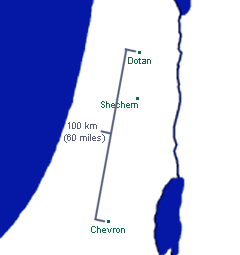
Recall that Yosef met his brothers while they were grazing their sheep in the hilly area of Dotan (see 37:17). Recall that during their meal, the brothers 'lifted up their eyes' (see 37:25) and noticed a caravan of Yishmaelim travelling down from the Gilad (today, the northern mountain range in Jordan), on its way to Egypt.
Now, when we read this story in Chumash, almost everyone assumes that this convoy will soon pass nearby the spot where the brothers are eating. However, they don't know their geography! The caravan of Yishmaelim (camels et al) travels along the ancient trade route (better known as the Via Maris) which crosses through Emek Yizrael (the Jezreel Valley) on its way toward the Mediterranean coast. Therefore, this convoy, now descending from the Gilad would pass the cities of Bet She'an, Afula and Megiddo in Emek Yizrael, but would not pass the hilly area of Dotan.
Dotan, today the area of Jennin [z"l], is situated about 20 kilometers (13 miles) north of Shechem, and about 10 kilometers (6 miles) south of this main highway (the Via Maris) crossing Emek Yizrael. In altitude, Dotan sits about 200 meters (660 feet) above Emek Yizrael. From Dotan, one has a nice view of the Gilad and parts of the Jezreel Valley.
Hence, from their vantage point in Dotan, the brothers are able to see a Yishmaelite convoy turning down into the Jezreel Valley from the Gilad, even though it is still far away. This convoy will not be passing below their feet; rather, in a few hours it will be passing about 10 kilometers to the north. In order to meet that caravan, the brothers would have to first fetch Yosef from the pit, then take a short trip from Emek Dotan to Emek Yizrael. They have ample time to first finish their meal, go fetch Yosef from the pit in the "midbar" (on their way to the Emek), and then meet the convoy at the pass to sell Yosef for the 'best price.'
"Terof Terof Yosef": The 'dismembering' of meaning structures:
וְיוֹסֵף הוּרַד מִצְרָיְמָה. זֶה שֶׁאָמַר הַכָּתוּב: לְכוּ חֲזוּ מִפְעֲלוֹת אֱלֹקִים נוֹרָא עֲלִילָה עַל בְּנֵי אָדָם (תהלים סו, ה). אָמַר רַבִּי יְהוֹשֻׁעַ בֶּן קָרְחָה, אַף הַנּוֹרָאוֹת שֶׁאַתָּה מֵבִיא עָלֵינוּ, בַּעֲלִילָה אַתְּ מְבִיאָן. בֹּא וּרְאֵה כְּשֶׁבָּרָא הַקָּדוֹשׁ בָּרוּךְ הוּא אֶת הָעוֹלָם, מִיּוֹם הָרִאשׁוֹן בָּרָא מַלְאַךְ הַמָּוֶת. מִנַּיִן, אָמַר רַבִּי בֶרֶכְיָה, מִשּׁוּם שֶׁנֶּאֱמַר: וְחֹשֶׁךְ עַל פְּנֵי תְהוֹם (בראשית א, ב), זֶה מַלְאַךְ הַמָּוֶת הַמַּחֲשִׁיךְ פְּנֵיהֶם שֶׁל בְּרִיּוֹת.
This striking characteristic of the midrash is its conscious bitterness about God’s relationship to human autonomy. Centering on the concept of alilah, “plot”, the midrash evokes complex responses. For the word works on multiple levels of meaning: the plot of a story, a malicious stratagem to entrap the victim- as well as simply the causality through which one plans the future….The midrash presents human beings as participants in a drama of God’s devising….
“It is possible to be in a plot and not understand it” writes Thomas Mann pf the “God story”. More than possible, one might add: it is of the very nature of life, inside an alilah, inside a plot, that one does not understand its whole structure….
The strangely used word aval – “but”- (42:21) suggests the vertigo of plot transformation. The brothers become dizzyingly aware of another narrative than the one they have been telling themselves all along. The uncanny, even savage irrationality of Joseph’s charge has forced them out of the “peace” of their narrative constructions, so that another, perhaps truer story can emerge….
Similarly the rogez of Joseph’s disappearance comes to Jacob as an agitating realisation of many premonitions: it reminds him conclusively of the nonsense of his narrative, of his attempts at constructing a coherent reality….A wholeness has been fractured , as Jacb is bereft of the plot of his life…..
The sense of not being able to understand their own story also constitutes the radical anxiety that Joseph inflicts on his brothers. His technique is a series of enigmatic questions whose drift is opaque to his victims. To be interrogated in such a way that one cannot construe the significance of the interrogators “plot” is to experience the authentic terror of one caught in an alilah….
Josephs brothers suffer a similar vertigo, as they loose control of their own “simple story” under Joseph’s questioning.
"Therapeutic Narratives" and "Paradigm Shifts":
Donald Spence, among the leading proponents of the theory perceiving the narrative as a factor in a therapeutic process, disputes the basic assumption that we can speak of objective, neutral knowledge in a psychoanalytical therapeutic process. As opposed to Freud, who maintains that psychoanalytical treatment can precisely reconstruct the historical truth in the patient’s life, and who, “thinking of himself as a kind of archeologist, believing in the process of psychoanalysis … was always uncovering pieces of the past,”9 Spence contends that the truth which surfaces during treatment does not necessarily constitute historical truth. It should rather be perceived as narrative truth, in light of which the patient’s life is drawn anew in a more consistent, satisfying, and effective fashion than it had been in the original, agonizing story. Although we cannot view the new story as truer than the previous one, in the end it succeeds in filling the place of the original in a more beneficial manner.....
As part of the literary development of a character undergoing a certain process in the narrative, the narrator will place words in that character’s mouth so that his or her narrative will gradually take shape. While initially that narrative might sound incoherent, each time that character is compelled to tell his or her life story the narrative is refined and reflects further insights that do not negate the earlier narratives but build upon them.
Joseph - theological reckoning
Brothers - pragmatic reasoning (42:7-11)
Brothers - theological reckoning (42:21) through Divine retribution prism
(כא) וַיֹּאמְר֞וּ אִ֣ישׁ אֶל־אָחִ֗יו אֲבָל֮ אֲשֵׁמִ֣ים ׀ אֲנַ֘חְנוּ֮ עַל־אָחִ֒ינוּ֒ אֲשֶׁ֨ר רָאִ֜ינוּ צָרַ֥ת נַפְשׁ֛וֹ בְּהִתְחַֽנְנ֥וֹ אֵלֵ֖ינוּ וְלֹ֣א שָׁמָ֑עְנוּ עַל־כֵּן֙ בָּ֣אָה אֵלֵ֔ינוּ הַצָּרָ֖ה הַזֹּֽאת׃
(טו) כִּֽי־גֻנֹּ֣ב גֻּנַּ֔בְתִּי מֵאֶ֖רֶץ הָעִבְרִ֑ים וְגַם־פֹּה֙ לֹא־עָשִׂ֣יתִֽי מְא֔וּמָה כִּֽי־שָׂמ֥וּ אֹתִ֖י בַּבּֽוֹר׃
(יד) וַיִּשְׁלַ֤ח פַּרְעֹה֙ וַיִּקְרָ֣א אֶת־יוֹסֵ֔ף וַיְרִיצֻ֖הוּ מִן־הַבּ֑וֹר וַיְגַלַּח֙ וַיְחַלֵּ֣ף שִׂמְלֹתָ֔יו וַיָּבֹ֖א אֶל־פַּרְעֹֽה׃
(כב) וַיַּ֩עַן֩ רְאוּבֵ֨ן אֹתָ֜ם לֵאמֹ֗ר הֲלוֹא֩ אָמַ֨רְתִּי אֲלֵיכֶ֧ם ׀ לֵאמֹ֛ר אַל־תֶּחֶטְא֥וּ בַיֶּ֖לֶד וְלֹ֣א שְׁמַעְתֶּ֑ם וְגַם־דָּמ֖וֹ הִנֵּ֥ה נִדְרָֽשׁ׃
Therapeutic narrative: Moving from 'i' to 'it'/object to subject: Yehuda and the Brothers
(כו) וַיֹּ֥אמֶר יְהוּדָ֖ה אֶל־אֶחָ֑יו מַה־בֶּ֗צַע כִּ֤י נַהֲרֹג֙ אֶת־אָחִ֔ינוּ וְכִסִּ֖ינוּ אֶת־דָּמֽוֹ׃ (כז) לְכ֞וּ וְנִמְכְּרֶ֣נּוּ לַיִּשְׁמְעֵאלִ֗ים וְיָדֵ֙נוּ֙ אַל־תְּהִי־ב֔וֹ כִּֽי־אָחִ֥ינוּ בְשָׂרֵ֖נוּ ה֑וּא וַֽיִּשְׁמְע֖וּ אֶחָֽיו׃
The face resists possession, resists my powers. In its epiphany, in expression, the sensible, still graspable, turns into total resistance to the grasp.
The face in its nakedness as a face presents to me the destitution of the poor one and the stranger; but this poverty and exile which appeal to my own powers, address me, do not deliver themselves over to these powers as givens, remain the expression of the face. The poor one, the stranger presents himself as an equal....He comes to join me. But he joins me to himself for service; he commands me as a Master....Meaning is the face of the Other, and all recourse to words takes place already within the primordial face to face of language.
Ethics and Infinity p85-86
Access to the face is straightaway ethical. . . . There is first the very uprightness of the face, its upright exposure, without defense. The skin of the face is that which stays most naked, most destitute. It is the most naked, though with a decent nudity. It is the most destitute also: there is an essential poverty in the face; the proof of this is that one tries to mask this poverty by putting on poses, by taking on a countenance. The face is exposed, menaced, as if inviting us to an act of violence. At the same time, the face is what forbids us to kill.
The first word of the face is the “Thou shalt not kill.” It is an order. There is a commandment in the appearance of the face, as if a master spoke to me. However, at the same time, the face of the Other is destitute; it is the poor for whom I can do all and to whom I owe all.
I contemplate a tree. […] I can accept it as a picture: a rigid pillar in a flood of flight, or splashes of green traversed by the gentleness of the blue silver ground. […] I can feel it as movement: the flowing veins around the sturdy, striving core, the sucking of the roots, the breathing of the leaves, the infinite commerce with earth and air […] I can assign it to a species and observe it as an instance, with an eye to its construction and its way of life. […] Throughout all of this the tree remains my object and has its place and its time span, its kind and condition. But it can also happen, if will and grace are joined, that as I contemplate the tree I am drawn into a relation, and the tree ceases to be an It. The power of exclusiveness has seized me. […] This does not require me to forego any of the modes of contemplation. There is nothing that I must not see in order to see, and there is no knowledge that I must forget. (pp. 57-58)
When I confront a human being as my thou and speak the basic word I-thou to him, then he is no thing among things nor does he consist of things. […] He is no longer He or She, limited by other Hes and Shes, a dot in the world grid of space and time, nor a condition that can be experienced and described, a loose bundle of named qualities. Neighborless and seamless, he is thou and fills the firmament. Not as if there were nothing but he; but everything else lives in his light. […] Even as a melody is not composed of tones, nor a verse of words, nor a statue of lines – one must pull and tear to turn a unity into a multiplicity—so it is with the human being to whom I say thou. I can abstract from him the color of his hair or the color of his speech or the color of his graciousness; I have to do this again and again; but immediately he is no longer thou. […] (p. 59
(כט) וַיָּ֤שׇׁב רְאוּבֵן֙ אֶל־הַבּ֔וֹר וְהִנֵּ֥ה אֵין־יוֹסֵ֖ף בַּבּ֑וֹר וַיִּקְרַ֖ע אֶת־בְּגָדָֽיו׃ (ל) וַיָּ֥שׇׁב אֶל־אֶחָ֖יו וַיֹּאמַ֑ר הַיֶּ֣לֶד אֵינֶ֔נּוּ וַאֲנִ֖י אָ֥נָה אֲנִי־בָֽא׃ (לא) וַיִּקְח֖וּ אֶת־כְּתֹ֣נֶת יוֹסֵ֑ף וַֽיִּשְׁחֲטוּ֙ שְׂעִ֣יר עִזִּ֔ים וַיִּטְבְּל֥וּ אֶת־הַכֻּתֹּ֖נֶת בַּדָּֽם׃ (לב) וַֽיְשַׁלְּח֞וּ אֶת־כְּתֹ֣נֶת הַפַּסִּ֗ים וַיָּבִ֙יאוּ֙ אֶל־אֲבִיהֶ֔ם וַיֹּאמְר֖וּ זֹ֣את מָצָ֑אנוּ הַכֶּר־נָ֗א הַכְּתֹ֧נֶת בִּנְךָ֛ הִ֖וא אִם־לֹֽא׃ (לג) וַיַּכִּירָ֤הּ וַיֹּ֙אמֶר֙ כְּתֹ֣נֶת בְּנִ֔י חַיָּ֥ה רָעָ֖ה אֲכָלָ֑תְהוּ טָרֹ֥ף טֹרַ֖ף יוֹסֵֽף׃
Reuben's noble effort seems to work, but he is far from the hero of the story. For sure he is planning to secretly return joseph back home, but is that for joseph's own good or his own? Is he hoping that Joseph will report yo his father that Reuben is, indeed, deserving of the leadership because he saved Joseph? A second look reveals a deeper problem with Reuben's solution; it is based on deception- he will deceive his brothers, just as they plan to deceive Jacob. Even if Jacob appoints him as leader of the clan, his leadership will be based on deceit and treachery, the antithesis of Jacob's trajectory.
No doubt sweeping away the old orders has immensely widened the scope of instrumental reason. Once society no longer has a sacred structure, once social arrangements and modes of action are no longer grounded in the order of things or the will of God, they are in a sense up for grabs. They can be redesigned with their consequences for the happiness and wellbeing of individuals as our goal. The yardstick that henceforth applies is that of instrumental reason. Similarly, once the creatures that surround us lose the significance that accrued to their place in the chain of being, they are open to being treated as raw materials or instruments for our projects.
There are lots of things one can point to that give substance to this worry: for instance, the ways the demands of economic growth are used to justify very unequal distributions of wealth and income, or the way these same demands make us insensitive to the needs of the environment, even to the point of potential disaster. Or else, we can think of the way much of our social planning, in crucial areas like risk assessment, is dominated by forms of cost-benefit analysis that involve grotesque calculations, putting dollar assessments on human lives.
“The late David Daube made a suggestion that I find convincing. The words the sons say to Jacob – haker na, literally “identify please” – have a quasi-legal connotation. Daube relates this passage to another, with which it has close linguistic parallels:
If a man gives a donkey, an ox, a sheep or any other animal to his neighbour for safekeeping and it dies or is injured or is taken away while no one is looking, the issue between them will be settled by the taking of an oath before the Lord that the neighbour did not lay hands on the other person’s property…If it [the animal] was torn to pieces by a wild animal, he shall bring the remains as evidence and he will not be required to pay for the torn animal. (Exodus 22:10–13)
The issue at stake is the extent of responsibility borne by a guardian (shomer). If the animal is lost through negligence, the guardian is at fault and must make good the loss. If there is no negligence, merely force majeure, an unavoidable, unforeseeable accident, the guardian is exempt from blame. One such case is where the loss has been caused by a wild animal. The wording in the law – tarof yitaref, “torn to pieces” – exactly parallels Jacob’s judgment in the case of Joseph: tarof toraf Yosef, “Joseph has been torn to pieces.”
We know that some such law existed prior to the giving of the Torah. Jacob himself says to Laban, whose flocks and herds had been placed in his charge, “I did not bring you animals torn by wild beasts; I bore the loss myself ” (Gen. 31:39). This implies that guardians even then were exempt from responsibility for the damage caused by wild animals. We also know that an elder brother carried a similar responsibility for the fate of a younger brother placed in his charge, as, for example, when the two were alone together. That is the significance of Cain’s denial when confronted by God as to the fate of Abel: “Am I my brother’s guardian [shomer]?” (Gen. 4:9).
We now understand a series of nuances in the encounter between Jacob and his sons upon their return without Joseph. Normally they would be held responsible for their younger brother’s disappearance. To avoid this, as in the case of later biblical law, they “bring the remains as evidence.” If those remains show signs of an attack by a wild animal, they must – by virtue of the law then operative – be held innocent. Their request to Jacob, haker na, must be construed as a legal request, meaning, “Examine the evidence.” Jacob has no alternative but to do so, and by virtue of what he has seen, to acquit them. A judge, however, may be forced to acquit someone accused of a crime because the evidence is insufficient to justify a conviction, while still retaining lingering private doubts. So Jacob was forced to find his sons innocent, without necessarily trusting what they said. In fact Jacob did not believe it, and his refusal to be comforted shows that he was unconvinced. He continued to hope that Joseph was still alive. That hope was eventually justified: Joseph was still alive, and father and son were ultimately reunited.”
When all the dust clears, no single participant in the story really knows what happened to Joseph. After the sale, Jacob, the brothers, and Joseph are all condemned to move forward in life with an incomplete understanding of what happened in this disastrous episode. They must go forward, working against not only their own fears and guilt concerning the fate of Joseph, but also their own ignorance....
The story of Joseph's sale when you step back and think about it, really is eerily similar to the story of Cain and Abel. Cain strikes his brother and kills him. Afterward, God comes to him and asks where Abel is. Cain response with the famous words: "I don't know. Am I my brothers keeper?". At first blush, it would seem that Cain is lying. He knows where his brother is; he just killed him! But maybe it's not a lie. He's living at the very dawn of humanity; no one has ever died before. Cain doesn't know exactly what's become of his brother.....All these elements find their echoes in the Joseph story. Cain's lack of knowledge mirrors almost precisely the lack of knowledge of Joseph's brothers: they don't really know where their brother is either....Moreover, just as there was a grain of truth in what the brothers told their father, there was also a grain of truth in what Cain told his Father in Heaven. Both claim that the outer vessel of their brother is right there but they don't know where the essence went....
That Cain's response, in this moment, was not shock or dismay , but apathy- that is what condemns him in our eyes. It appears that the Torah is nudging the reader of the Joseph story to relate in a similar way to the brothers apathetic response to Joseph's disappearance. Like Cain, Joseph's brothers are not really guilty of murder. Sure, the thought of killing Joseph had crossed their minds-but they didn't actually do it. So they are not culpable for murder, per se, nor even for selling Joseph outright....What should their response have been?.....Even if you don't know how to make things right, even if the only thing you can do is let out an anguished cry of you're own, in empathetic solidarity with your vanished brother, that's what you should do.
(לב) וַֽיְשַׁלְּח֞וּ אֶת־כְּתֹ֣נֶת הַפַּסִּ֗ים וַיָּבִ֙יאוּ֙ אֶל־אֲבִיהֶ֔ם וַיֹּאמְר֖וּ זֹ֣את מָצָ֑אנוּ הַכֶּר־נָ֗א הַכְּתֹ֧נֶת בִּנְךָ֛ הִ֖וא אִם־לֹֽא׃ (לג) וַיַּכִּירָ֤הּ וַיֹּ֙אמֶר֙ כְּתֹ֣נֶת בְּנִ֔י חַיָּ֥ה רָעָ֖ה אֲכָלָ֑תְהוּ טָרֹ֥ף טֹרַ֖ף יוֹסֵֽף׃ (לד) וַיִּקְרַ֤ע יַעֲקֹב֙ שִׂמְלֹתָ֔יו וַיָּ֥שֶׂם שַׂ֖ק בְּמׇתְנָ֑יו וַיִּתְאַבֵּ֥ל עַל־בְּנ֖וֹ יָמִ֥ים רַבִּֽים׃ (לה) וַיָּקֻ֩מוּ֩ כׇל־בָּנָ֨יו וְכׇל־בְּנֹתָ֜יו לְנַחֲמ֗וֹ וַיְמָאֵן֙ לְהִתְנַחֵ֔ם וַיֹּ֕אמֶר כִּֽי־אֵרֵ֧ד אֶל־בְּנִ֛י אָבֵ֖ל שְׁאֹ֑לָה וַיֵּ֥בְךְּ אֹת֖וֹ אָבִֽיו׃ (לו) וְהַ֨מְּדָנִ֔ים מָכְר֥וּ אֹת֖וֹ אֶל־מִצְרָ֑יִם לְפֽוֹטִיפַר֙ סְרִ֣יס פַּרְעֹ֔ה שַׂ֖ר הַטַּבָּחִֽים׃ {פ}
מה זאת עשה אלקים לנו. לַהֲבִיאֵנוּ לִידֵי עֲלִילָה זוֹ, שֶׁלֹּא הוּשַׁב אֶלָּא לְהִתְעוֹלֵל עָלֵינוּ:
The "therapeutic narrative" offered by Joseph to the Brothers:
(א) וְהָרָעָ֖ב כָּבֵ֥ד בָּאָֽרֶץ׃ (ב) וַיְהִ֗י כַּאֲשֶׁ֤ר כִּלּוּ֙ לֶאֱכֹ֣ל אֶת־הַשֶּׁ֔בֶר אֲשֶׁ֥ר הֵבִ֖יאוּ מִמִּצְרָ֑יִם וַיֹּ֤אמֶר אֲלֵיהֶם֙ אֲבִיהֶ֔ם שֻׁ֖בוּ שִׁבְרוּ־לָ֥נוּ מְעַט־אֹֽכֶל׃ (ג) וַיֹּ֧אמֶר אֵלָ֛יו יְהוּדָ֖ה לֵאמֹ֑ר הָעֵ֣ד הֵעִד֩ בָּ֨נוּ הָאִ֤ישׁ לֵאמֹר֙ לֹֽא־תִרְא֣וּ פָנַ֔י בִּלְתִּ֖י אֲחִיכֶ֥ם אִתְּכֶֽם׃ (ד) אִם־יֶשְׁךָ֛ מְשַׁלֵּ֥חַ אֶת־אָחִ֖ינוּ אִתָּ֑נוּ נֵרְדָ֕ה וְנִשְׁבְּרָ֥ה לְךָ֖ אֹֽכֶל׃ (ה) וְאִם־אֵינְךָ֥ מְשַׁלֵּ֖חַ לֹ֣א נֵרֵ֑ד כִּֽי־הָאִ֞ישׁ אָמַ֤ר אֵלֵ֙ינוּ֙ לֹֽא־תִרְא֣וּ פָנַ֔י בִּלְתִּ֖י אֲחִיכֶ֥ם אִתְּכֶֽם׃ (טז) וַיַּ֨רְא יוֹסֵ֣ף אִתָּם֮ אֶת־בִּנְיָמִין֒ וַיֹּ֙אמֶר֙ לַֽאֲשֶׁ֣ר עַל־בֵּית֔וֹ הָבֵ֥א אֶת־הָאֲנָשִׁ֖ים הַבָּ֑יְתָה וּטְבֹ֤חַ טֶ֙בַח֙ וְהָכֵ֔ן כִּ֥י אִתִּ֛י יֹאכְל֥וּ הָאֲנָשִׁ֖ים בַּֽצׇּהֳרָֽיִם׃ (יז) וַיַּ֣עַשׂ הָאִ֔ישׁ כַּֽאֲשֶׁ֖ר אָמַ֣ר יוֹסֵ֑ף וַיָּבֵ֥א הָאִ֛ישׁ אֶת־הָאֲנָשִׁ֖ים בֵּ֥יתָה יוֹסֵֽף׃ (יח) וַיִּֽירְא֣וּ הָֽאֲנָשִׁ֗ים כִּ֣י הֽוּבְאוּ֮ בֵּ֣ית יוֹסֵף֒ וַיֹּאמְר֗וּ עַל־דְּבַ֤ר הַכֶּ֙סֶף֙ הַשָּׁ֤ב בְּאַמְתְּחֹתֵ֙ינוּ֙ בַּתְּחִלָּ֔ה אֲנַ֖חְנוּ מֽוּבָאִ֑ים לְהִתְגֹּלֵ֤ל עָלֵ֙ינוּ֙ וּלְהִתְנַפֵּ֣ל עָלֵ֔ינוּ וְלָקַ֧חַת אֹתָ֛נוּ לַעֲבָדִ֖ים וְאֶת־חֲמֹרֵֽינוּ׃
(יט) וַֽיִּגְּשׁוּ֙ אֶל־הָאִ֔ישׁ אֲשֶׁ֖ר עַל־בֵּ֣ית יוֹסֵ֑ף וַיְדַבְּר֥וּ אֵלָ֖יו פֶּ֥תַח הַבָּֽיִת׃ (כ) וַיֹּאמְר֖וּ בִּ֣י אֲדֹנִ֑י יָרֹ֥ד יָרַ֛דְנוּ בַּתְּחִלָּ֖ה לִשְׁבׇּר־אֹֽכֶל׃ (כא) וַֽיְהִ֞י כִּי־בָ֣אנוּ אֶל־הַמָּל֗וֹן וַֽנִּפְתְּחָה֙ אֶת־אַמְתְּחֹתֵ֔ינוּ וְהִנֵּ֤ה כֶֽסֶף־אִישׁ֙ בְּפִ֣י אַמְתַּחְתּ֔וֹ כַּסְפֵּ֖נוּ בְּמִשְׁקָל֑וֹ וַנָּ֥שֶׁב אֹת֖וֹ בְּיָדֵֽנוּ׃ (כב) וְכֶ֧סֶף אַחֵ֛ר הוֹרַ֥דְנוּ בְיָדֵ֖נוּ לִשְׁבׇּר־אֹ֑כֶל לֹ֣א יָדַ֔עְנוּ מִי־שָׂ֥ם כַּסְפֵּ֖נוּ בְּאַמְתְּחֹתֵֽינוּ׃ (כג) וַיֹּ֩אמֶר֩ שָׁל֨וֹם לָכֶ֜ם אַל־תִּירָ֗אוּ אֱלֹ֨קֵיכֶ֜ם וֵֽאלֹקֵ֤י אֲבִיכֶם֙ נָתַ֨ן לָכֶ֤ם מַטְמוֹן֙ בְּאַמְתְּחֹ֣תֵיכֶ֔ם כַּסְפְּכֶ֖ם בָּ֣א אֵלָ֑י וַיּוֹצֵ֥א אֲלֵהֶ֖ם אֶת־שִׁמְעֽוֹן׃
(1) But the famine in the land was severe. (2) And when they had eaten up the rations which they had brought from Egypt, their father said to them, “Go again and procure some food for us.” (3) But Judah said to him, “The man warned us, ‘Do not let me see your faces-a unless your brother is with you.’ (4) If you will let our brother go with us, we will go down and procure food for you; (5) but if you will not let him go, we will not go down, for the man said to us, ‘Do not let me see your faces-a unless your brother is with you.’” (19) So they went up to Joseph’s house steward and spoke to him at the entrance of the house. (20) “If you please, my lord,” they said, “we came down once before to procure food. (21) But when we arrived at the night encampment and opened our bags, there was each one’s money in the mouth of his bag, our money in full. So we have brought it back with us. (22) And we have brought down with us other money to procure food. We do not know who put the money in our bags.” (23) He replied, “All is well with you; do not be afraid. Your God, the God of your father, must have put treasure in your bags for you. I got your payment.” And he brought out Simeon to them.
We must acknowledge that at a certain level, the modifications introduced in Judah’s presentation are closer to the truth than the objective narrative. Absurdly enough, it is specifically the objective narrative that is characterized by masked personas. Judah is the one who, unconsciously, tells a truer story, in that the question of the brothers’ family truly interested the Egyptian vizier more than anything else....At the same time, Judah’s narrative reflects the deep emotional process he has undergone as he now tells of Jacob’s favoritism toward Rachel’s younger son. Not only does Benjamin’s favored status not bring Judah to anger and resentment, but he is even prepared to sacrifice his life on the favored son’s behalf
(ד) וַיֹּ֨אמֶר יוֹסֵ֧ף אֶל־אֶחָ֛יו גְּשׁוּ־נָ֥א אֵלַ֖י וַיִּגָּ֑שׁוּ וַיֹּ֗אמֶר אֲנִי֙ יוֹסֵ֣ף אֲחִיכֶ֔ם אֲשֶׁר־מְכַרְתֶּ֥ם אֹתִ֖י מִצְרָֽיְמָה׃ (ה) וְעַתָּ֣ה ׀ אַל־תֵּעָ֣צְב֗וּ וְאַל־יִ֙חַר֙ בְּעֵ֣ינֵיכֶ֔ם כִּֽי־מְכַרְתֶּ֥ם אֹתִ֖י הֵ֑נָּה כִּ֣י לְמִֽחְיָ֔ה שְׁלָחַ֥נִי אֱלֹקִ֖ים לִפְנֵיכֶֽם׃ (ו) כִּי־זֶ֛ה שְׁנָתַ֥יִם הָרָעָ֖ב בְּקֶ֣רֶב הָאָ֑רֶץ וְעוֹד֙ חָמֵ֣שׁ שָׁנִ֔ים אֲשֶׁ֥ר אֵין־חָרִ֖ישׁ וְקָצִֽיר׃ (ז) וַיִּשְׁלָחֵ֤נִי אֱלֹקִים֙ לִפְנֵיכֶ֔ם לָשׂ֥וּם לָכֶ֛ם שְׁאֵרִ֖ית בָּאָ֑רֶץ וּלְהַחֲי֣וֹת לָכֶ֔ם לִפְלֵיטָ֖ה גְּדֹלָֽה׃ (ח) וְעַתָּ֗ה לֹֽא־אַתֶּ֞ם שְׁלַחְתֶּ֤ם אֹתִי֙ הֵ֔נָּה כִּ֖י הָאֱלֹקִ֑ים וַיְשִׂימֵ֨נִֽי לְאָ֜ב לְפַרְעֹ֗ה וּלְאָדוֹן֙ לְכׇל־בֵּית֔וֹ וּמֹשֵׁ֖ל בְּכׇל־אֶ֥רֶץ מִצְרָֽיִם׃
There is considerable discrepancy between the story of his sale as related by the narrator and the story told by Joseph, to the point where it becomes clear that this is precisely Joseph’s objective: to offer a new, unexpected interpretation to the most painful event in his life. The most evident distinction, which leads to a different casting of responsibility than what we would have expected, is, of course, the interpretation of the story as the product of the divine will.....” As opposed to the act of selling, sending is characterized by the purpose and end result it is intended to achieve. “Sending” relates entirely to the end result of the mission, the place to where the individual is sent. Thus, Joseph presents here a new narrative of his sale: He was not “sold” but rather “sent,” meaning it was God who brought about this event, and Joseph thereby manages to avoid blaming the brothers and lowers their level of culpability for the incident. Using the semantics of the “therapeutic narrative” theory, we might say that Joseph tells the brothers their story as an “empathetic narrative” that seeks to find some rationale in what appears on the surface to be an entirely irrational story.
Not only are Providence and Divine retribution consistent with each other; in some mysterious way, they are actually fused together: Providence guides the protagonists to their destiny while giving them their just deserts; the terrible suffering endured by Jacob’s sons not only purges them of their sins, but in fact helps them to change and become worthy of that destiny