


(ז) וַיֵּ֡לֶךְ וַיִּשְׁלַח֩ אֶל־יְהוֹשָׁפָ֨ט מֶלֶךְ־יְהוּדָ֜ה לֵאמֹ֗ר מֶ֤לֶךְ מוֹאָב֙ פָּשַׁ֣ע בִּ֔י הֲתֵלֵ֥ךְ אִתִּ֛י אֶל־מוֹאָ֖ב לַמִּלְחָמָ֑ה וַיֹּ֣אמֶר אֶֽעֱלֶ֔ה כָּמ֧וֹנִי כָמ֛וֹךָ כְּעַמִּ֥י כְעַמֶּ֖ךָ כְּסוּסַ֥י כְּסוּסֶֽיךָ׃
(ד) וַיֹּ֙אמֶר֙ אֶל־יְה֣וֹשָׁפָ֔ט הֲתֵלֵ֥ךְ אִתִּ֛י לַמִּלְחָמָ֖ה רָמֹ֣ת גִּלְעָ֑ד וַיֹּ֤אמֶר יְהֽוֹשָׁפָט֙ אֶל־מֶ֣לֶךְ יִשְׂרָאֵ֔ל כָּמ֧וֹנִי כָמ֛וֹךָ כְּעַמִּ֥י כְעַמֶּ֖ךָ כְּסוּסַ֥י כְּסוּסֶֽיךָ׃
(י) וַיֹּ֖אמֶר מֶ֣לֶךְ יִשְׂרָאֵ֑ל אֲהָ֕הּ כִּי־קָרָ֣א יְהֹוָ֗ה לִשְׁלֹ֙שֶׁת֙ הַמְּלָכִ֣ים הָאֵ֔לֶּה לָתֵ֥ת אוֹתָ֖ם בְּיַד־מוֹאָֽב׃ {ס} (יא) וַיֹּ֣אמֶר יְהוֹשָׁפָ֗ט הַאֵ֨ין פֹּ֤ה נָבִיא֙ לַיהֹוָ֔ה וְנִדְרְשָׁ֥ה אֶת־יְהֹוָ֖ה מֵאוֹת֑וֹ וַ֠יַּ֠עַן אֶחָ֞ד מֵעַבְדֵ֤י מֶֽלֶךְ־יִשְׂרָאֵל֙ וַיֹּ֔אמֶר פֹּ֚ה אֱלִישָׁ֣ע בֶּן־שָׁפָ֔ט אֲשֶׁר־יָ֥צַק מַ֖יִם עַל־יְדֵ֥י אֵלִיָּֽהוּ׃
Was Yehoram an idolater?
וַיֹּ֨אמֶר אֱלִישָׁ֜ע אֶל־מֶ֤לֶךְ יִשְׂרָאֵל֙ מַה־לִּ֣י וָלָ֔ךְ לֵ֚ךְ אֶל־נְבִיאֵ֣י אָבִ֔יךָ וְאֶל־נְבִיאֵ֖י אִמֶּ֑ךָ וַיֹּ֤אמֶר לוֹ֙ מֶ֣לֶךְ יִשְׂרָאֵ֔ל אַ֗ל כִּֽי־קָרָ֤א יְהֹוָה֙ לִשְׁלֹ֙שֶׁת֙ הַמְּלָכִ֣ים הָאֵ֔לֶּה לָתֵ֥ת אוֹתָ֖ם בְּיַד־מוֹאָֽב׃
The path to war

Music and prophesy
As the musician played, the hand of the LORD came upon him,
(ה) אַ֣חַר כֵּ֗ן תָּבוֹא֙ גִּבְעַ֣ת הָאֱלֹהִ֔ים אֲשֶׁר־שָׁ֖ם נְצִבֵ֣י פְלִשְׁתִּ֑ים וִיהִי֩ כְבֹאֲךָ֨ שָׁ֜ם הָעִ֗יר וּפָגַעְתָּ֞ חֶ֤בֶל נְבִאִים֙ יֹרְדִ֣ים מֵהַבָּמָ֔ה וְלִפְנֵיהֶ֞ם נֵ֤בֶל וְתֹף֙ וְחָלִ֣יל וְכִנּ֔וֹר וְהֵ֖מָּה מִֽתְנַבְּאִֽים׃
(ד) כָּל הַנְּבִיאִים אֵין מִתְנַבְּאִין בְּכָל עֵת שֶׁיִּרְצוּ אֶלָּא מְכַוְּנִים דַּעְתָּם וְיוֹשְׁבִים שְׂמֵחִים וְטוֹבֵי לֵב וּמִתְבּוֹדְדִים. שֶׁאֵין הַנְּבוּאָה שׁוֹרָה לֹא מִתּוֹךְ עַצְבוּת וְלֹא מִתּוֹךְ עַצְלוּת אֶלָּא מִתּוֹךְ שִׂמְחָה. לְפִיכָךְ בְּנֵי הַנְּבִיאִים לִפְנֵיהֶם נֵבֶל וְתֹף וְחָלִיל וְכִנּוֹר וְהֵם מְבַקְּשִׁים הַנְּבוּאָה. וְזֶהוּ שֶׁנֶּאֱמַר (שמואל א י ה) "וְהֵמָּה מִתְנַבְּאִים" כְּלוֹמַר מְהַלְּכִין בְּדֶרֶךְ הַנְּבוּאָה עַד שֶׁיִּנָּבְאוּ כְּמוֹ שֶׁאַתָּה אוֹמֵר פְּלוֹנִי מִתְגַּדֵּל:
(4) All the prophets do not prophesy every time they may desire, but they must prepare their minds, rest in a state of exultation and hearty contentment, and in undisturbed solitude; for, prophecy does not rest upon any prophet either when he is in a state of melancholy or in a state of indolence, but when he is in a state of delightfulness. Therefore, the disciples of the prophets had before them the harp, the timbrel, the flute and the violin when they were seeking the spirit of prophecy, whereof it is said: "And they strove to prophecy" (I Sam. 10.5), meaning, they followed the path of prophecy until they did prophesy, as one says: "Yonder is one aspiring to become great."
Water
Waging war
History
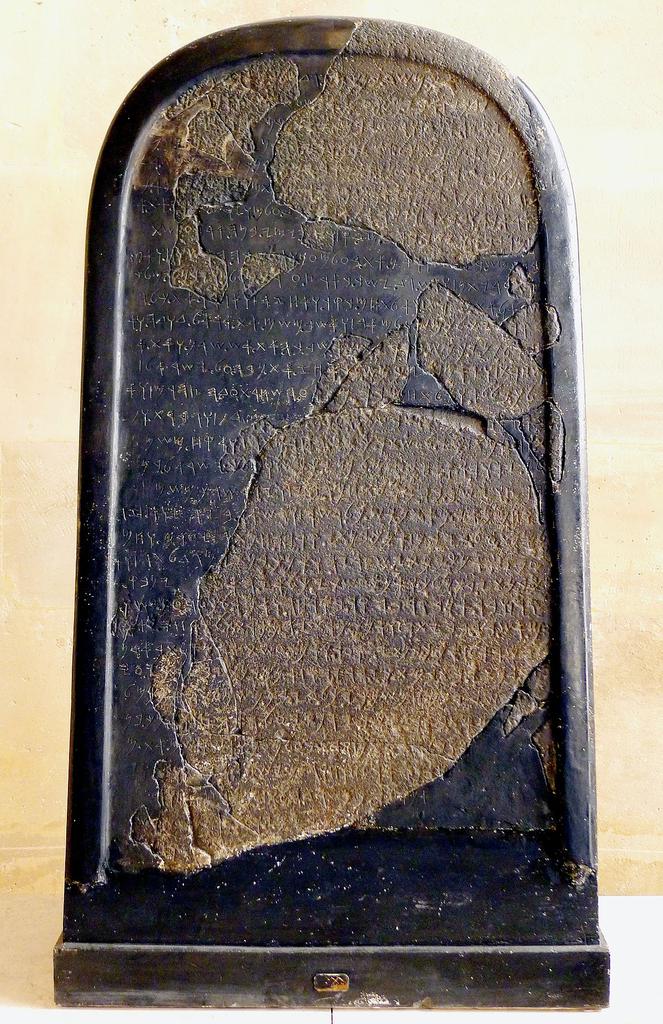
The stone was discovered intact by Frederick Augustus Klein, an Anglican missionary, at the site of ancient Dibon (now Dhiban, Jordan), in August 1868. Klein was led to it by Emir Sattam Al-Fayez, son of the Bani Sakhr King Fendi Al-Fayez,[4] although neither of them could read the text.[5] At that time, amateur explorers and archaeologists were scouring the Levant for evidence proving the historicity of the Bible. News of the finding set off a race between France, Britain, and Germany to acquire the piece. A "squeeze" (a papier-mâché impression) had been obtained by a local Arab on behalf of Charles Simon Clermont-Ganneau, an archaeologist based in the French consulate in Jerusalem. The next year, the stele was smashed into several fragments by the Bani Hamida tribe, seen as an act of defiance against the Ottoman authorities who had pressured the Bedouins to hand over the stele so that it could be given to Germany. Clermont-Ganneau later managed to acquire the fragments and piece them together thanks to the impression made before the stele's destruction.[6]
The Mesha Stele, the first major epigraphic Canaanite inscription found in the region of Palestine,[7] the longest Iron Age inscription ever found in the region, constitutes the major evidence for the Moabite language, and is a "corner-stone of Semitic epigraphy",[8] and history.[9] The stele, whose story parallels, with some differences, an episode in the Bible's Books of Kings (2 Kings 3:4–28), provides invaluable information on the Moabite language and the political relationship between Moab and Israel at one moment in the 9th century BCE.[10] It is the most extensive inscription ever recovered that refers to the kingdom of Israel (the "House of Omri");[11] it bears the earliest certain extrabiblical reference to the Israelite god Yahweh.[5][11] It is also one of four known contemporary inscriptions containing the name of Israel, the others being the Merneptah Stele, the Tel Dan Stele, and the Kurkh Monolith.[12][13][14] Its authenticity has been disputed over the years, and some biblical minimalists suggest the text was not historical, but a biblical allegory. The stele itself is regarded as genuine and historical by the vast majority of biblical archaeologists today.[15]
The stele has been part of the collection of the Louvre Museum in Paris, France, since 1873
The inscription seems to parallel an episode in 2 Kings 3: Jehoram of Israel makes an alliance with Jehoshaphat king of Judah and an unnamed king of Edom (south of Judah) to put down his rebellious vassal Mesha; the three kings have the best of the campaign until Mesha, in desperation, sacrifices to his god Chemosh either his eldest son or the eldest son of the king of Edom; the sacrifice turns the tide, "there came great wrath against Israel", and Mesha apparently achieves victory. This apparent correspondence is the basis of the usual dating of the inscription to about 840 BCE, but André Lemaire has cautioned that the identification is not certain and the stele may be as late as 810 BCE.
How did it end?