


The Eternal saw how great was man’s wickedness on earth, and how every plan devised by his mind was nothing but evil all the time. And the Eternal regretted making humanity on earth, and Their heart was saddened.
"And God regretted that he made man on earth" (Bereishit 6:6). Rabbi Yehuda and Rabbi Neḥemia [each interpreted this].
Rabbi Yehuda says, "[God said] that I regret that I created man below [on earth] since if I had created him above [in heaven] he would not have rebelled against Me."
Rabbi Neḥemia says, "[God said] that I am consoled that I created man below [on earth] since if I had created him above [in heaven], then just as he incited the lower worlds against Me, so too he would incite the upper worlds against Me."
Rabbi Aivu says "[God said] that I regret that I created the evil inclination, since if I had not created it, he would not have rebelled against Me."
Rabbi Levi says "[God said] that I am consoled that I made man and placed him on the earth [where he eventually dies]." "And He was sad to His heart".
Rabbi Berekhia says "There is an allegory to a prince who built a palace by way of an architect. He saw the palace and it was not pleasing to him. At whom should he be angry? Not at the architect?! So too, 'and He was sad to His heart.'"
אלה תולדת נח נח איש צדיק THESE ARE THE PROGENY OF NOAH: NOAH WAS A RIGHTEOUS MAN — Since the text mentions him it sings his praise, in accordance with what is said, (Proverbs 10:7) “The mention of the righteous shall be for a blessing.” Another explanation is: since after stating “These are the progeny of Noah”, it does not at once mention the names of his children but declares that he “was a righteous man”, Scripture thereby teaches you that the real progeny of righteous people are their good deeds (Genesis Rabbah 30:6).
בדורותיו
IN HIS GENERATIONS — Some of our Rabbis explain it (this word) to his credit: he was righteous even in his generation; it follows that had he lived in a generation of righteous people he would have been even more righteous owing to the force of good example. Others, however, explain it to his discredit: in comparison with his own generation he was accounted righteous, but had he lived in the generation of Abraham he would have been accounted as of no importance (cf. Sanhedrin 108a). את האלהים התהלך נח NOAH WALKED WITH GOD — In the case of Abraham Scripture says, (Genesis 24:40) ‘‘[God] before whom I walked”; Noah needed God’s support to uphold him in righteousness, Abraham drew his moral strength from himself and walked in his righteousness by his own effort (Genesis Rabbah 30:10).
We cannot help but wonder if Noah’s horror as a witness to human indifference and hate caused him to turn a blind eye, an indifferent spirit. Remember, he is not only described as tamim — wholehearted, but also as tzaddik b’dorotav — righteous in his generation. The qualifier (in his generation) is key, as Midrash Rabbah posits: “…and some say this is to his discredit, for if he lived in a generation of the truly righteous, he would have been thought of as nothing” (B’reishit Rabbah, 30:9).
Relatively righteous at best, Rabbi Morris Adler senses Noah’s detachment:
“Nowhere did Noah show a feeling of sadness that an entire generation was to be lost…. At no time did a word of concern escape his lips.… It was as if he stood apart from the rest of the world” (Morris Adler, The Voice Still Speaks [NY: Bloch Pub. Co., 1969], pps. 19-21).
Noah was an ish tamim when the only compassionate reaction was to be broken.
How could he be wholehearted with the Eternal when his world was falling apart?
How can we?
(16) "Make an opening for daylight in the ark, and terminate it within a cubit of the top.-c Put the entrance to the ark in its side; make it with bottom, second, and third decks. (17) “For My part, I am about to bring the Flood—waters upon the earth—to destroy all flesh under the sky in which there is breath of life; everything on earth shall perish.
(18) "But I will establish My covenant with you, and you shall enter the ark, with your sons, your wife, and your sons’ wives. (19) And of all that lives, of all flesh, you shall take two of each into the ark to keep alive with you; they shall be male and female. (20) From birds of every kind, cattle of every kind, every kind of creeping thing on earth, two of each shall come to you to stay alive. (21) For your part, take of everything that is eaten and store it away, to serve as food for you and for them.” (22) Noah did so; just as God commanded him, so he did.
The word tevah literally means a box. It appears again only in Exodus 2:3-5, when Moses' mother makes one for her newborn. In both cases, the ark carries the future, as it were. - WRJ Women's Commentary
(1) Then the Eternal said to Noah, “Go into the ark, with all your household, for you alone have I found righteous before Me in this generation. (2) Of every clean animal you shall take seven pairs, males and their mates, and of every animal that is not clean, two, a male and its mate; (3) of the birds of the sky also, seven pairs, male and female, to keep seed alive upon all the earth. (4) For in seven days’ time I will make it rain upon the earth, forty days and forty nights, and I will blot out from the earth all existence that I created.” (5) And Noah did just as the Eternal commanded him.
(6) Noah was six hundred years old when the Flood came, waters upon the earth. (7) Noah, with his sons, his wife, and his sons’ wives, went into the ark because of the waters of the Flood. (8) Of the clean animals, of the animals that are not clean, of the birds, and of everything that creeps on the ground, (9) two of each, male and female, came to Noah into the ark, as God had commanded Noah. (10) And on the seventh day the waters of the Flood came upon the earth. (11) In the six hundredth year of Noah’s life, in the second month, on the seventeenth day of the month, on that day
All the fountains of the great deep burst apart, and the floodgates of the sky broke open.
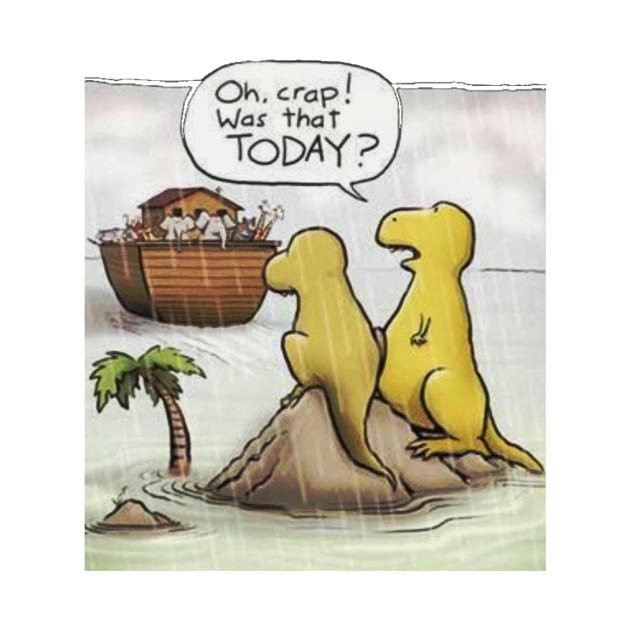
Does the scene reflect what you may have learned growing up, in Religious School or other places? Why or why not?
Does the "beloved" and child-friendly aspects feel at odds here with the motivation behind the flood? Why or why not?
Women's Commentary: Noah's righteousness merits the saving of his entire household, the basic unit of ancient Near East society. Whereas the hero of the Babylonian flood story tries to warn his neighbors and persuade them to join him in the ark, Noah does not attempt to include or reform others.
See a full list of parallels here: https://www.livius.org/articles/misc/great-flood/flood6-parallels/#11
How does this comment inform your reading of Noah as righteous? Could this at all be related to God's regret at the beginning of the story?