29 Adar I 5779 | March 6, 2019
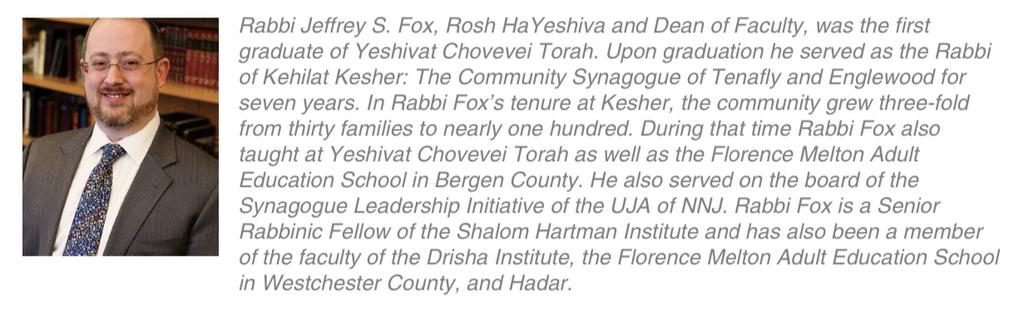
Rabbi Jeffrey Fox
Rosh Yeshiva and Dean of Faculty
The text that serves as the grounding for my understanding of tefilah is a Gemara in Masechet Yoma about the four words at the center of the first beracha of the עמידה (Amida). In chapter ten of Devarim, Moshe Rabbeinu outlines what he thinks God asks of each of us. Moshe then presents some basic ideas about how God interacts with our world. The first beracha of the Amida quotes a small portion of this section and refers to God with the following four words:
(יז) כִּ֚י יקוק אֱלֹֽקֵיכֶ֔ם ה֚וּא אֱלֹקֵ֣י הָֽאֱלֹקִ֔ים וַאדושם הָאֲדֹנִ֑ים הָאֵ֨ל הַגָּדֹ֤ל הַגִּבֹּר֙ וְהַנּוֹרָ֔א אֲשֶׁר֙ לֹא־יִשָּׂ֣א פָנִ֔ים וְלֹ֥א יִקַּ֖ח שֹֽׁחַד׃
(17) For the Lord your God is God supreme and Lord supreme, The Lord who is great, mighty and awesome, who shows no favor and takes no bribe,
The rabbis attend to this phrase and note that a similar version appears in other places in Tanakh. Jeremiah and Daniel each use three of these four words, which leads to a fascinating debate.
דְּאָמַר רַבִּי יְהוֹשֻׁעַ בֶּן לֵוִי: לָמָּה נִקְרָא שְׁמָן אַנְשֵׁי כְּנֶסֶת הַגְּדוֹלָה — שֶׁהֶחְזִירוּ עֲטָרָה לְיוֹשְׁנָהּ. אֲתָא מֹשֶׁה, אָמַר: ״הָאֵל הַגָּדוֹל הַגִּבּוֹר וְהַנּוֹרָא״. אֲתָא יִרְמְיָה וַאֲמַר: גּוֹיִם מְקַרְקְרִין בְּהֵיכָלוֹ, אַיֵּה נוֹרְאוֹתָיו? לָא אֲמַר ״נוֹרָא״. אֲתָא דָּנִיאֵל אֲמַר: גּוֹיִם מִשְׁתַּעְבְּדִים בְּבָנָיו, אַיֵּה גְּבוּרוֹתָיו? לָא אֲמַר ״גִּבּוֹר״.
Rebbi Yehoshua ben Levi said, “Why were they called the Men of the great assembly? Because they restored The Crown to its original greatness. Moshe came and said, the Lord who is great, mighty, and awesome… (Devarim 10:17)
Jerimiah came and said, ‘Non-Jews are dancing in the Temple, where is God’s awe?’ He did not say awesome. (Jeremiah 32:18).
Daniel came and said, ‘Non-Jews are persecuting His children, where is God’s might?’ He did not say mighty. (Daniel 9:4)
Before we continue to the insight of the Men of the Great Assembly, let us dwell on Jeremiah and Daniel for a moment. They lived in a world fundamentally different from that of Moshe. Their theological reality did not align with the theology that Moshe articulated. For Jeremiah and Daniel words matter and their meaning is meant to reflect reality. This is an important reminder for each of us on our journey to prayer. The words of the siddur are meant to be studied carefully and analyzed with integrity.
The Talmud continues, demonstrating what it is that makes the Men of the Great Assembly “great”:
אתו אינהו ואמרו: אדרבה, זו היא גבורת גבורתו שכובש את יצרו, שנותן ארך אפים לרשעים. ואלו הן נוראותיו – שאלמלא מוראו ?של הקדוש ברוך הוא היאך אומה אחת יכולה להתקיים בין האומות.
They (The men of the great assembly) came and said, ‘You should view it from the opposite direction. This is the might-of-God’s-might, for He conquers his desire by granting forgiveness to the evil-ones. And this is the source of God’s awe, were it not for the awesome nature of the Holy Blessed One how could the one tiny nation survive among all the nations?”
The Men of the Great Assembly take Moshe’s phrase so seriously that they feel compelled to re-read his words, displaying a deep fealty to Moshe’s formulation. However, it is important to note that this way of reading Moshe counter-intuitive. These Rabbis felt that they could not change the words themselves and so, instead, offer a creative re-reading of the phrase. Jeremiah and Daniel, when confronted with sufficient dissonance, felt that they had to tweak Moshe’s phrase. The Men of the Great Assembly instead chose a creative rabbinic reading to force the words to fit.
The debate between the Men and the Great of Assembly on one side and Jeremiah and Daniel on the other reflects two competing approaches to Jewish life and Jewish thought. Are we meant to change or edit the words of the masters who came before us – as Jeremiah and Daniel so brazenly did – or are we simply meant to reinterpret the words of those who came before us? To be clear, in most instances, the liturgy of the Siddur is quite beautiful. It may require work to understand its depth – but that can be done. I am talking about the instances in which the meaning of the text appears to no longer reflect our experience of God.
When we first sit down with the Siddur, we must aim to approximate the brilliance and creativity of the Men of the Great Assembly. This means doing our best to understand the content, form, structure, meaning, theology and Kabbalah that may be hiding behind the words of the liturgy. At some point, in some rare cases, we will do our best and still bump up against a wall. Then we are blessed to have a different model that allows, and even sometimes demands, that we change the text – Jeremiah and Daniel.
The sugya concludes with a healthy dose of Rabbinic skepticism and a deep commitment to honesty:
ורבנן היכי עבדי הכי ועקרי תקנתא דתקין משה? אמר רבי אלעזר, מתוך שיודעין בהקדוש ברוך הוא שאמתי הוא, לפיכך לא כיזבו בו.
And these Rabbis (Jeremiah and Daniel) how could they have done this and uprooted an enactment of Moshe? Rebbi Elazar said, “Because they know that the Holy Blessed One is a God of truth, they could not falsely flatter Him.”
Indeed, the same can be said for the entire Halakhik system. Halakha is a positivist system of precedent that must be carefully charted and studied to be applied in our circumstances. That discipline takes time, resources, rigor, humility, commitment and yirat shammayim. When we first sit down with a Halakhik question, we must do our best to approximate the brilliance of the Men of the Great Assembly. Then, after we have drained all our resources, in some rare instances we may be forced to fall back on Jeremiah and Daniel.
My approach to prayer demands standing before God as your true self with honesty and integrity. Just as the Rabbis present Jeremiah and Daniel in an ongoing debate with the Men of the Great Assembly as to what four simple words might mean, it is our task to approach the siddur in its entirety, and the Halkhik system more broadly, with that same commitment. This demands that we analyze the parts of our mesorah that might challenge us. We can not afford to simply gloss over those aspects that make us feel uncomfortable. In fact, it is through careful analysis that we can reinvigorate commitment to Torah and Mitzvot.
This is not a simple task. Being honest with God requires being honest with our selves. It is only from a posture of radical honesty and integrity that we can stand before the Master of the World. May we all be blessed to know who we are and before whom we stand.
דע את עצמך ולפני מי אתה עומד