11 Sivan 5779 | June 14, 2019
Parshat Bamidbar
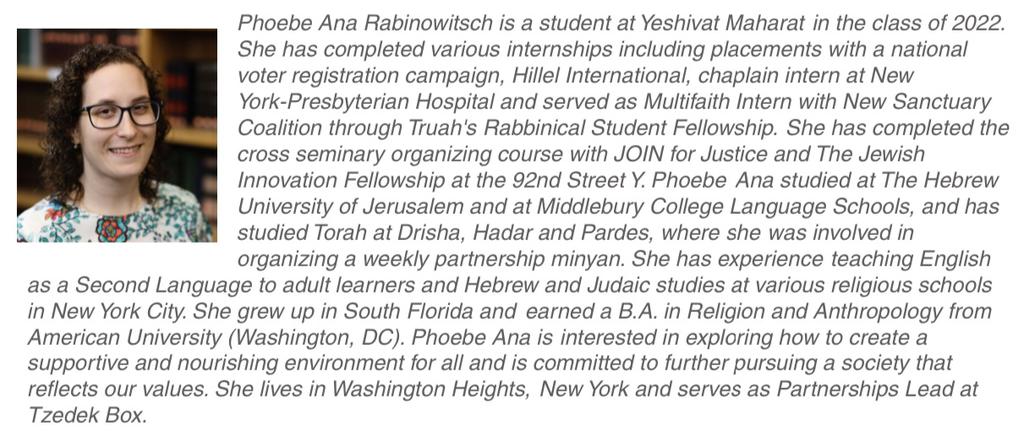
Phoebe Ana Rabinowitsch
Class of 2022
We begin Bamidbar with a Divine command to count the Israelites. This census will give us us information about the community as a whole by taking a careful accounting of its individual members. As such, the census can serve as a basis for exploring the balance between individual and communal needs. Often when we imagine a community, we picture able-bodied adults. Yet, according to the Center for Disease Control, sixty-one million adults in the United States live with some type of disability. When we consider about our communities, how can we be sure to think about everyone in our community?
God tells Moshe to count all the men ages twenty and older, grouped by tribe. Although the parsha contains many numbers, and is narrated in the collective, many of the men are then listed by name, emphasizing the importance of each individual. Bnei Yisrael are instructed to stay together, specifically to camp within their own tribe. Each group has their own flag, their own leader, essentially their own identity. Even while traveling through the desert, they each stayed within their own tribe. (Bamidbar 2:2)
Bnei Yisrael are counted starting at age twenty when they will be of age to be in the army, but the Leviim are not included in this part of the census. They are instead counted from the age of one month and older, and put in charge of the mishkan and assisting Aaron and the kohanim with priestly duties.
Because of the special role the Leviim have, they are separated from everyone in order to serve the community in a way that is unique to their assignment and role. (Bamidbar 3:1-51) This can be a useful model for recognizing the differences within the larger population. We are sensitive to different needs and thus find ways to accommodate them. The community has needs, but they do not necessarily outweigh the needs of a smaller subgroup. The desert census values inclusiveness - all men of age must participate. This can teach us a lot about how to engage within our communities today. We make modifications, and change communal expectations to better reflect the uniqueness of our people. The Kohanim and Leviim have different jobs than the rest of Bnei Yisrael, but they do things only they can do, and as a result, they benefit the entire community.
So, which is it? Who is more important, the individual or community? There are instances where one should take priority over the other. We can learn from this that each situation requires a balance of prioritizing the entire group, as well as the smaller group within the community. In the first verse of the parsha, before taking the census, God spoke to Moshe bamidbar, in the wilderness (Bamidbar 1:1), later leading up to the giving of the Torah, also in the wilderness. Bamidbar Rabbah 1:7 asks why the wilderness?
(ז) וַיְדַבֵּר ה' אֶל משֶׁה בְּמִדְבַּר סִינַי (במדבר א, א), לָמָּה בְּמִדְבַּר סִינַי, מִכָּאן שָׁנוּ חֲכָמִים בִּשְׁלשָׁה דְבָרִים נִתְּנָה הַתּוֹרָה, בָּאֵשׁ, וּבַמַּיִם, וּבַמִּדְבָּר. בָּאֵשׁ מִנַּיִן (שמות יט, יח): וְהַר סִינַי עָשַׁן כֻּלּוֹ וגו'. וּבַמַּיִם מִנַּיִן, שֶׁנֶּאֱמַר (שופטים ה, ד): גַּם שָׁמַיִם נָטָפוּ גַּם עָבִים נָטְפוּ מָיִם. וּבַמִּדְבָּר מִנַּיִן וַיְדַבֵּר ה' אֶל משֶׁה בְּמִדְבַּר סִינַי, וְלָמָּה נִתְּנָה בִּשְׁלשָׁה דְבָרִים הַלָּלוּ, אֶלָּא מָה אֵלּוּ חִנָּם לְכָל בָּאֵי הָעוֹלָם כָּךְ דִּבְרֵי תוֹרָה חִנָּם הֵם, שֶׁנֶּאֱמַר (ישעיה נה, א): הוֹי כָּל צָמֵא לְכוּ לַמַּיִם
(7) "And God spoke to Moses in the Sinai Wilderness" (Numbers 1:1). Why the Sinai Wilderness? From here the sages taught that the Torah was given through three things: fire, water, and wilderness. How do we know it was given through fire? From Exodus 19:18: "And Mount Sinai was all in smoke as God had come down upon it in fire." How do we know it was given through water? As it says in Judges 5:4, "The heavens dripped and the clouds dripped water [at Sinai]." How do we know it was given through wilderness? [As it says above,] "And God spoke to Moses in the Sinai Wilderness." And why was the Torah given through these three things? Just as [fire, water, and wilderness] are free to all the inhabitants of the world, so too are the words of Torah free to them, as it says in Isaiah 55:1, "Oh, all who are thirsty, come for water... even if you have no money."
Census information can be helpful in understanding the population, demographics and other economic information. But the population is much more than data points. The wilderness does not belong to anyone, it is open to all. As we recount the story, and ask ourselves, how do we measure a community, the answer cannot be the individual versus the general population, but finding the individuality within the collective. Each person has a role, when valued, is all a part of the community.