29 Av 5779 | August 30, 2019
Parshat Re’eh
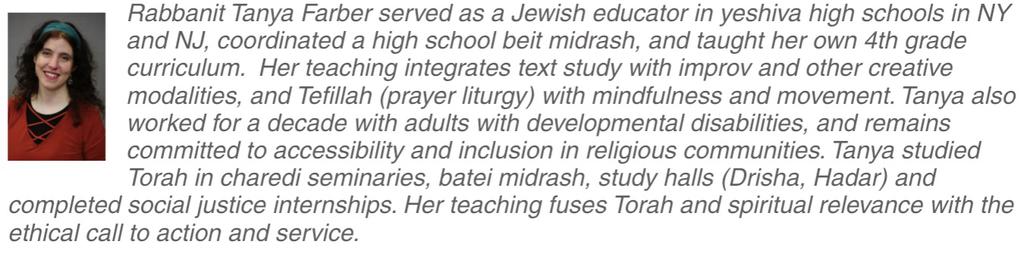
Rabbanit Tanya Farber
Class of 2021
Parshat Re'eh opens with a pronouncement of an existential choice placed before the people "today."
(26) See, this day I set before you a blessing and curse:
While six tribes stood upon Har Gerezim, a verdant, lush mountain, and another six tribes atop Har Eval, a mountain of limestone, the kohanim and Levites stood in the valley between the two mountains and proclaimed blessings and curses and the tribes would respond with "Amen" to each pronouncement.
Rather than God's voice resounding as on Sinai, on these mountains, there is only human call and response. The tribes stand at the peaks; whereas at revelation, God's presence had hovered on the mountaintop. The blessings and curses emerge from the valley upward, an inverted מעמד הר סיני - standing at Sinai, revelation, as it were.
However, Rabbi Elazar in Devarim Rabbah connects these two events, that is the events of Sinai and Mounts Gerezim and Eval so that they flow together:
אָמַר רַבִּי אֶלְעָזָר מִשֶּׁאָמַר הַקָּדוֹשׁ בָּרוּךְ הוּא הַדָּבָר הַזֶּה בְּסִינַי, בְּאוֹתָהּ שָׁעָה (איכה ג, לח): מִפִּי עֶלְיוֹן לֹא תֵצֵא הָרָעוֹת וְהַטּוֹב, אֶלָּא מֵאֵלֶיהָ הָרָעָה בָּאָה עַל עוֹשֵׂי הָרָעָה, וְהַטּוֹבָה בָּאָה עַל עוֹשֵׂי הַטּוֹבָה.
Rabbi Elazar said: Once the Holy One said this matter [of the blessings and curses] at Sinai, from that moment evil and good do not emerge from God’s lips, but rather evil automatically befalls those who do evil and good automatically upon those who do good.
Rabbi Elazar retrojects this proclamation of free choice of blessing and curse all the way back to Sinai. Thus, when Hashem utters it then, Bnai Yisroel are subject, from then on, to the consequences of their own actions, unmediated by God. At first glance the narratives of Bnai Yisroel in the desert seem to contradict Rabbi Elazar's version. In the desert, Bnai Yisroel were often struck down for their misdeeds. It's hard to read the Book of Bamidbar without seeing God as directing the show.
Before exploring the framing of the blessing/curse proclamation as linked to Har Sinai, let's read the verse in its own context of "היום - today."
The interpretation of "נותן לפניכם, set before you," does imply, as Rabbi Elazar teaches, that God is empowering each person to chart their own destiny and take responsibility for their consequences, which fits contextually with the themes of Parshat Re'eh.
In Parshat Re'eh, Bnai Yisroel are instructed how to encounter the Divine after coming to the Promised Land, when the Mishkan is not in their immediate midst of the desert camp; when, not manna, but agriculture and livestock are their means of sustenance. Suddenly, one has to seek out the מקום אשר-יבחר ה' אלוקיכם the Place that Hashem your God will choose [Devarim 12:5], and so there are mitzvot requiring a visit to the Mikdash: tithes and firstborn to be brought there, and holiday pilgrimages. Without the daily portions of manna, kashrut is relevant and without heaven's bread, there are now disparities of wealth, and so commandments that oblige caring for needy are dictated in the parsha. The Torah warns of the immoral practices of the Canannitee and ways to prevent their influence. The pagans could bring offerings to their gods anywhere; whereas for Bnai Yisroel there is only one place reserved for God.
Parshat Re'eh as a whole, sets forth an expectation of responsibility both in relationship to the Holy One and obligations towards the community. Even though the details of the ceremony of Har Gerezim and Har Eval are specified later in Sefer Devarim, parshat Ki Tavo, chapter 27, the opening line of:
means the investiture of free choice, and moral responsibility frames this parsha well.
Rabbi Elazar traces this imperative for independence and moral initiative back to Har Sinai. Though Bnai Yisroel were in their spiritual adolescence in the desert, Hashem's ultimate vision for Klal Yisroel since inception of Brit Sinai was for our spiritual maturity: an inverted Sinai where the voice of God is channelled through human aspiration and rising from the valley.
This shabbos will be Rosh Chodesh Elul, may we have the moral courage to face ourselves, others and God.
כִּֽי־יִרְחַ֨ק מִמְּךָ֜ הַמָּק֗וֹם
If the Makom is too far from you
Then
לְשִׁכְנ֥וֹ תִדְרְשׁ֖וּ וּבָ֥אתָ שָּֽׁמָּה׃
Seek His Presence.