


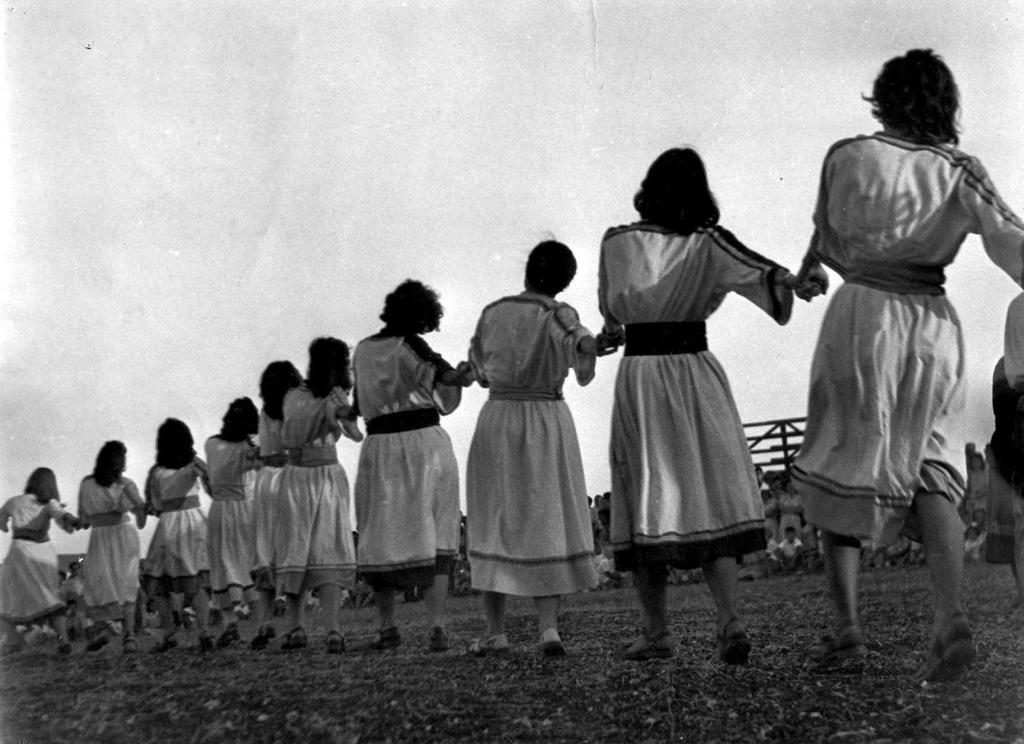
Women dancing in a vineyard in Kibbutz Ein HaShofet in 1944, celebrating the harvest, as has been done for thousands of years. Credit: Ein Hashofet archive
“What is to be gained from my death, from my descent into the Pit? Can dust praise You? Can it declare Your faithfulness? Hear, Adonai and have mercy on me; Adonai, be my help!” You turned my lament into dancing, you undid my sackcloth and girded me with joy, that whole being might sing hymns to You endlessly; O LORD my God, I will praise You forever. (Psalms 30:10-13)
“And I will turn your Festivals into mourning” (Amos 8:10).
כִּי ט"וּ בְּאָב הוּא בְּחִינַת הַתִּקּוּן וְהַהַמְתָּקָה שֶׁל תִּשְׁעָה בְּאָב...
...therefore the fifteenth of Av is in the nature of a sweetening and a repair of the ninth of Av...
(ח) אָמַר רַבָּן שִׁמְעוֹן בֶּן גַּמְלִיאֵל, לֹא הָיוּ יָמִים טוֹבִים לְיִשְׂרָאֵל כַּחֲמִשָּׁה עָשָׂר בְּאָב וּכְיוֹם הַכִּפּוּרִים, שֶׁבָּהֶן בְּנוֹת יְרוּשָׁלַיִם יוֹצְאוֹת בִּכְלֵי לָבָן שְׁאוּלִין, שֶׁלֹּא לְבַיֵּשׁ אֶת מִי שֶׁאֵין לוֹ...וּבְנוֹת יְרוּשָׁלַיִם יוֹצְאוֹת וְחוֹלוֹת בַּכְּרָמִים. וּמֶה הָיוּ אוֹמְרוֹת, בָּחוּר, שָׂא נָא עֵינֶיךָ וּרְאֵה, מָה אַתָּה בוֹרֵר לָךְ. אַל תִּתֵּן עֵינֶיךָ בַנּוֹי, תֵּן עֵינֶיךָ בַמִּשְׁפָּחָה. שֶׁקֶר הַחֵן וְהֶבֶל הַיֹּפִי, אִשָּׁה יִרְאַת ה' הִיא תִתְהַלָּל (משלי לא).
Rabbi Shimon ben Gamaliel said: There were no days of joy in Israel greater than the fifteenth of Av and Yom Kippur. On these days the daughters of Jerusalem would go out in borrowed white garments in order not to shame any one who had none...The daughters of Jerusalem would come out and dance in the vineyards. What would they say? "Young man, lift up your eyes and see what you choose for yourself. Do not set your eyes on beauty but set your eyes on the family. 'Grace is deceitful, and beauty is vain, but a woman that fears the Lord, she shall be praised' (Proverbs 31:30)."
"[the day] on which the deaths ceased in the desert" - As it was taught in a braita, all 40 years that they were in the desert, every Erev Tisha B’av, the proclaimer would go out and say: let each individual go out and dig [his grave]. And every single person would go out and dig for themselves a grave, and sleep in it, in case they would die before they had dug. And the next day, the proclaimer would go out and proclaim: let the living separate themselves from the dead. And every one who had the soul of life would rise and go out [of his grave]. And every year they would do this. And in the 40th year, they did it, and the next morning everyone stood up alive. And when they saw this, they were astonished, and they said, ‘perhaps we made a mistake in calculating the month [and it is not yet Tisha B’Av].’ They returned and slept in their graves each night until the 15th, and since they saw that the moon was full on Tu [B’av] and no one had died among them, they knew that the calculation of the month was in line, and that the 40 years of the decree had been completed, they established that day as a Yom Tov.
§ It was related that Rabbi Ḥiyya bar Abba, Rabbi Ami, and Rabbi Yitzḥak Nappaḥa were once sitting in the pavilion of Rabbi Yitzḥak ben Elazar and were conversing. A matter emerged from among them: From where is it derived that the rites of mourning are observed for seven days? As it is written: “And I will turn your Festivals into mourning” (Amos 8:10). Just as a Festival lasts for seven days, so too mourning lasts for seven days.
Seven days later,
The full moon strings silver beads on branches,
Diamonds of light among the leaves,
Shafts of liquid light on summer-dried ground.
The black and white of moonlight
Creates illusions of wholeness.
Blood-soaked ground only darker shadow.
The full moon of the month of Av,
A month of nightmares now behind us,
Memories satiated with prophecies fulfilled,
Death unassuaged,
Blackest despair.
Seven days of shiva for the fallen
For loss of sovereignty,
Freedom, Dreams,
Might-have-beens,
The hope that, just this once,
The end would be different.
Seven days.
And now we dance,
In white garments silvered by moonlight.
Dance over the hollow places of the world,
Our feet skipping lightly over our scorched earth.
Unafraid of the deeper shadows.
Whole in our brokenness.
Only seven days…
And here we are,
Dancing under the full moon,
Dancing over the abyss,
Weaving the sirens of incoming rockets into songs of faith.
Trusting.
Somehow, still trusting.
-Rabbi Jill Jacobs "Rising From The Grave," The Jewish Week, July 24, 2012