9 Nisan 5780 | April 3, 2020
Parshat Tzav
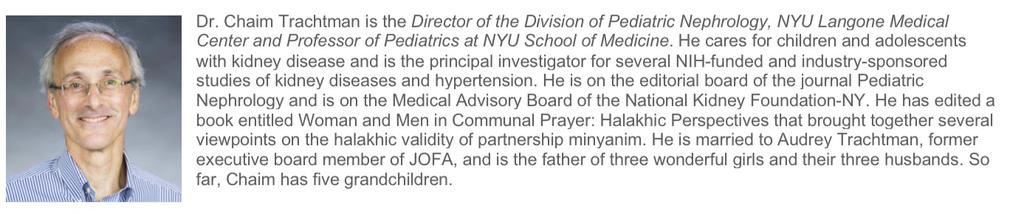
Dr. Chaim Trachtman
Maharat Board Member
A lunar year ago, I gathered on Shabbat morning with much more than 10 people. We hugged, we kissed, we shook hands – we were all there to celebrate my granddaughter Leora’s bat mitzvah. It was chilly in the tent and the space heater grumbled in the background. But nothing could get in the way of the joy everyone felt as we listened to Leora flawlessly read parshat Tzav, say the haftorah, and give an engaging dvar Torah.
This year, all of that is, in the words of that very cute Israeli girl on YouTube, ASSUR. We are homebound with our core partners, husband and wives, parents and children, roommates, elderly and aides. There is no exit and no mixing. True, there is no ball and chain around our legs, most people have enough food and supplies, and the computer offers a virtual commons. But we feel disoriented, disjointed, and dysfunctional as we cope with an anxiety that rests like a shroud over the globe.
For myself, I know that people of my vintage have been called the sandwich generation, caught between the concerns of aging parents and hardworking children. I can verify the truth in this label. But the coronavirus has suddenly put things into a different perspective. While I perseverate over the health of my parents living in an assisted living facility in Riverdale, I realize my children are worrying about their 65 year OLD parents in the exactly same way that I think about the wellbeing of my parents. The concern is symmetrical with me and my wife placed in the center. At the outer edge is the relative safety of youth and the vulnerability of the elderly. And in the middle sit my wife and I, status uncertain.
This is now intriguing. There has always been something special about three generations. It means there are grandchildren, a sign of stability and enduring love. In Kohelet (4:12), Shlomo Hamelech wrote that “Though one may be overpowered, two can defend themselves. A cord of three strands is not easily broken.” According to this image, children, parents, and grandparents contribute equal strength and power to the thread that binds us together. It sounds appealing but the coronavirus demonstrates the flaw in the picture. Although there is a randomness to who gets ill, we are not equally susceptible to severe disease. My parents are much more likely to get very sick if they contract COVID-19 and I am probably more are at risk than my wife. But what I am witnessing as I call my family (more than once) each day is the universal concern for each other. When I listen to my family and friends talk, I hear each generational strand, looking out for the other two, help one another get to other side of the pandemic.
The first half of Tzav is a technical manual for the sacrifices outlined in Parshat Vayikra. But the second half gets exciting. It describes the seven day preparation for the formal inauguration of the mishkan. The utensils and the clothing have to be prepared. Aharon and his sons need to be anointed and made ready for the big day. There are animals to be sacrificed, blood to be placed on earlobes and big toes, and lots of dressing up. The parsha then ends on a very hard stop. Aharon and his sons are told to eat the sacrificial meat and confine themselves to the entrance to the mishkan for the entire week. There is a mortal price to pay if they leave the mishkan. That surely has a contemporary ring to it. What is going on here? I suggest that as Moshe gets things ready for his brothers and nephews, he understands that there are only two generations on hand. He is searching for the critical third generation that he recognizes is required to solidify the chain of transmission that he is constructing. He then realizes that it will be the children born to the young married people in the camp. To make sure that the people would appreciate how important these descendants would be in the tradition, Moshe kept his brother and his sons separate until the start of the ceremony on eight day. The social isolation reinforced the intergenerational awareness and connectedness of the people, Moshe, Aharon, his sons and their Israelite contemporaries in the present and the people’s children destined to be born in the future. COVID19 will not eliminate differences between people. However, it may foster stronger bonds between people of all ages, appreciation of their strengths and weaknesses, and an awareness of the need to help each other.