Pesach 5780 | April 2020
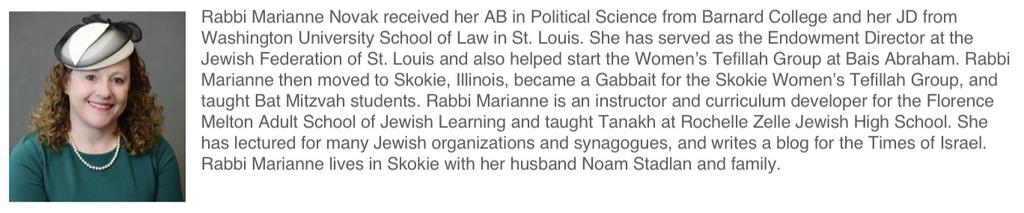
Rabbi Marianne Novak
Class of 2019
There is a certain kind of relief when at our Passover Seders, after saying Grace After Meals and pouring the third cup and possibly also at this time pouring the cup for Eliyahu, we rise from our reclining positions, open our doors to let in some fresh air and sing the traditional song about Eliyahu HaNavi, Elijah the Prophet. While this break is most welcome, the bigger questions are, ‘Why do I invite Eliyahu to the Seder? And given his history, what is his purpose at my Seder? (Do I really want a guy like Eliyahu having carte blanche to enter my home and partake of the wine, albeit the cup left for him, at my Seder Table?) Why do we then ask God to ‘pour out his wrath’?
Before looking at the mechanics of the Seder at this point, it is important to do a little review of who Eliyahu was in Torah text and how he transforms in the Rabbinic imagination such that he is included in the Haggadah and Seder ritual.
The first place we find Eliyahu is in the book of Kings. After King Solomon’s demise, the Jewish kingdom has been split in two; the Land of Israel and the Land of Judah, each with its separate king and monarchy. Israel, the northern Kingdom was led by the King line of Yerav-am and the Kingdom of Judah followed the Solomonic line of King Rehav-am.
The Kings of Israel by and large did not follow Torah, and each King was more corrupt and more enmeshed with idol worship than his predecessor. As the navi opens in I Kings 17, Ahav and his evil wife Ezevel rule over the northern kingdom, practicing idol worship, specifically the worship of Baal. Ezevel also campaigns to kill and rout out all true prophets of the true God of Israel.
In I Kings 17, Eliyahu shows up, somewhat out of the blue (possibly a marker for how his character later appears in history), to tell King Ahav the following:
(1) Elijah the Tishbite, an inhabitant of Gilead, said to Ahav, “As the LORD lives, the God of Israel whom I serve, there will be no dew or rain except at my bidding.”
Ahav is told by Eliyahu, God’s servant, that there will be no rain except when I, Eliyahu, decide it should come. Eliyahu is right in understanding that from our tradition, if the people do not follow the word of God, the result could be a drought. (see Deuteronomy 11:13-21, Second Paragraph of the Shema prayer). However, Eliyahu doesn’t cast the directive as going through God but going through him- '...except at my bidding... כי אם לפי דברי...' Eliyahu doesn’t tell Ahav of a way to gain favor back with God but tells him simply, I, Eliyahu will decide and you must go through me.
Immediately after this incident, God sends Eliyahu away on a somewhat solitary journey to Wadi Cherith. God, although grateful for Eliyahu’s loyalty, senses that perhaps his zealotry and his personification of himself as the source of God’s power might lead to some disastrous results. God needs allies on earth especially at this time in history, but they must be allies who will affirm God’s mission on earth instead of undermining it.
In his solitude, Eliyahu’s food runs out and God tells him to go to Zarpata where a widow would feed him. The widow was without food yet she followed Eliyahu’s specific directions and miraculously she had enough food to last a lifetime. Soon after the woman's son fell ill and Eliyahu called out for God to heal the boy and he was healed. (I Kings 17:24)
Eliyahu now is filled with God’s spirit and believes in his power to perform miracles. He is called a man of God and when he speaks his words are seen as truly coming from God. And it is with this power and confidence that three years later God tells Eliyahu to go before Ahav and tell him that God will now bring rain upon the earth.
Eliyahu arranges to meet with Ahav and have a powerful showdown with the prophets of Ba’al at Mount Carmel. Eliyahu succeeds in bringing fire down from Heaven to consume his sacrifice and proves the emptiness of Ba’al worship. The prophets of Ba’al are executed, the people of Israel declare their faith in the One True God, and by the end of the day, the rains have come. Eliyahu has succeeded in his mission!
Until the morrow, when Ezevel, furious at uprooting of Ba’al worship,,threatens to kill Eliyahu. Eliyahu then goes into exileץ He arrives at a dry bush, without food, water or hope. (I Kings 19:4)
God hears his cries and an angel brings him food. The angel appears to Eliyahu again to give him and to help him prepare for a journey of 40 days and 40 nights to the Mountain of Horeb, otherwise known as Har Sinai. Once he arrives, he goes into a cave and God asks him why he is here. (I Kings 19:10)
Eliyahu characterizes the situation from his point of view only. Hinting, that only he, Eliyahu, alone is loyal to God. The Jews have betrayed God and there is no hope for them in Eliyahu’s estimation.
The rabbis of the Midrash however are uncomfortable with not only Eliyahu’s zealotry and violence but his insistence that there is no hope for the Jewish people. True prophets, like Moshe, worked hard to get the people to repent. They plead with God the destruction of the people of Israel.
In Shir HaShirim Rabbah 1:6:1, the Midrash elaborates on this interaction between God and Eliyahu reflecting these concerns.
וְדִכְוָתֵיהּ כְּתִיב בְּאֵלִיָּהוּ, שֶׁנֶּאֱמַר (מלכים א יט, יד): וַיֹּאמֶר קַנֹּא קִנֵּאתִי לַיקוק אֱלֹקֵי [ישראל] [צבאות] כִּי עָזְבוּ בְרִיתְךָ בְּנֵי יִשְׂרָאֵל, אָמַר לוֹ הַקָּדוֹשׁ בָּרוּךְ הוּא, בְּרִיתִי, שֶׁמָּא בְּרִיתֶךָ. אֶת מִזְבְּחֹתֶיךָ הָרָסוּ, אָמַר לוֹ, מִזְבְּחוֹתַי, שֶׁמָּא מִזְבְּחוֹתֶיךָ. וְאֶת נְבִיאֶיךָ הָרְגוּ בֶחָרֶב, אָמַר לוֹ נְבִיאַי, וְאַתְּ מָה אִיכְפַּת לָךְ, אָמַר לוֹ וָאִוָּתֵר אֲנִי לְבַדִּי וַיְבַקְּשׁוּ אֶת נַפְשִׁי לְקַחְתָּהּ. תָּא חֲמִי מַה כְּתִיב תַּמָּן וַיַּבֵּט וְהִנֵּה מְרַאֲשֹׁתָיו עֻגַּת רְצָפִים, מָה הוּא רְצָפִים, אָמַר רַבִּי שְׁמוּאֵל בַּר נַחְמָן, רוֹץ פֶּה, רְצוֹץ פִּיּוֹת בְּכָל מִי שֶׁאָמַר דֵּילָטוֹרְיָא עַל בָּנַי.
..As is written about Elijah: (I Kings 19:14)
And he said, I have been very jealous for the Lord, the God of hosts; for the children of Israel have foresaken Thy covenant.
The Holy one replied to Elijah: This is MY covenant. Is it yours?
Elijah: Thrown down Thine altars.
The Holy one: These are MY altars. Are they yours?
Elijah: And slain Thy prophets with the sword
The Holy one : They are MY prophets. What concern is it of yours?
Elijah: And I alone remain and they seek my life, to take it away.
See what is written in that context: And he looked and behold there was at his head a cake baked on the hot stones (retzaphim) (I Kings, 19:6). What is meant by retzaphim? R. Samuel bar Nachman said: Retz peh, 'silence (break/smash) the mouth'- silence the mouth of him who spoke slander of My children...
In the rabbinic imagination of this scene, God scolds Eliyahu and reminds him that his role as prophet is to instruct the Jewish people and help them to repent and choose God. God appreciates Eliyahu’s zeal and fortitude but he is worried that such zeal when misplaced could lead to even greater destruction for the Jewish people. aAs the narrative continues, God takes Eliyahu up to Horev, much like He took Moshe, in a way to teach him a Torah of loyalty and zeal but without such violence towards and lack of hope for the Jewish people. Again God asks Eliyahu why he is there and he again repeats the same rejoinder: (I Kings 19: 14)
God listens and sets up a way for Eliyahu to protect himself and set up the ruling governments. God also sets up a successor to Eliyahu in Elisha. All these directives hint that God, despite trying to curb his violent nature at the incident at Horeb, has created safeguards in case Eliyahu goes back to his warring ways including taking him, as Ovadiah stated before, ‘...the spirit of the LORD will carry you off, I don’t know where... ורוח ה' ישאך על אשר לא אדע-- a place somewhat suspended from earth and heaven, a place where God could send Eliyahu into action when needed.
But as we begin the second book of Kings, it seems that Eliyahu is back to his old tricks, killing anyone he perceives as his enemy or an enemy of God. Ahav the evil king of Israel dies and his successor, Ahaziah is injured. Ahaziah asks his messengers to go ask the god of Ekron, the Baal- Zevuv (The Lord of the Flies) if he would recover. Eliyahu receives prophecy from an angel of God that king Ahaziah will die.
Eliyahu tells this information to the Ahaziah’s messengers who then relay the information back to the King. The King’s captain summons Eliyahu but, (II Kings 1: 10)
Eliyahu proceeds to then rain fire down the sky and kill 100 additional messengers. In the very next chapter, we are told that God is preparing to take Eliyahu to heaven not necessarily killing him. (II Kings 2:1-12)
While Eliyahu will no longer be on earth, it is not completely clear from the narrative that he is truly dead. None of the traditional biblical language used to explain death--such as sheol or being gathered to his kin, are used here. Elisha watches his mentor being taken away in a very unusual manner. (II Kings 2: 11-12)
Eliyahu, becomes in our tradition, suspended between heaven and earth. His job as agent of God is not over, not only in the rabbinic imagination but in the prophetic literature as well. Eliyahu completely transforms from one who would kill anyone not loyal to God to one who will be seen as kind and loving. Eliyahu will no longer give up hope in the Jewish people from repenting from their evil ways, as the agent of God that shows up every time the Jewish people actively affirm covenant. Eliyahu changes from being the only one who believes in God to one who will usher in the Moshiach, the Messiah and the Messianic age.
We see the beginnings of Eliyahu’s radical makeover in the prophet Malachi where he states: (Malachi 3:22-24)
הנה אנכי שולח לכם את אליה הנביא לפני בוא יום יקוק הגדול והנורא
The Book of Malachi in general implores the Jewish people to return from their evil ways and follow Torah - both its ethical and ritual requirements.If they follow the law, God will end their suffering and bring a messenger, the Messiah, and institute the final redemption. Malachi however does not describe Eliyahu as one bringing the punishments and the fire but rather as one who will foster peace in the microlevel in families so that peace can arrive on the macro-level with the complete redemption.
This part of the prophets is read before Pesach in the Haftarah for Shabbat Ha-Gadol. The Eliyahu who then arrives at our Seder is one who has been transformed into a peace seeking, kindly elder who will lead us with love and reconciliation when the Messiah comes. His in limbo status as alluded to in the prophetic narrative is now used to paint an optimistic future.
This transformation is echoed over and over again in the Rabbinic literature. No longer do we see Eliyahu as the raging, fire breathing zealot but as a wise old man who gives good advice about life, Halakha, relationships and Moshiach. Talmud Bavli, Sanhedrin 98a reflects the new Eliyahu. He encounters Rabbi Yehoshua ben Levi and advises him about how to find the messiah:
אמר ליה אימת אתי משיח אמר ליה זיל שייליה לדידיה והיכא יתיב אפיתחא דקרתא ומאי סימניה יתיב ביני עניי סובלי חלאים וכולן שרו ואסירי בחד זימנא איהו שרי חד ואסיר חד אמר דילמא מבעינא דלא איעכב
אזל לגביה אמר ליה שלום עליך רבי ומורי אמר ליה שלום עליך בר ליואי א"ל לאימת אתי מר א"ל היום אתא לגבי אליהו א"ל מאי אמר לך א"ל שלום עליך בר ליואי א"ל אבטחך לך ולאבוך לעלמא דאתי א"ל שקורי קא שקר בי דאמר לי היום אתינא ולא אתא א"ל הכי אמר לך (תהלים צה, ז) היום אם בקולו תשמעו
Rabbi Yehoshua ben Levi said to Elijah: When will the Messiah come? Elijah said to him: Go ask him. Rabbi Yehoshua ben Levi asked: And where is he sitting? Elijah said to him: At the entrance of the city of Rome. Rabbi Yehoshua ben Levi asked him: And what is his identifying sign by means of which I can recognize him? Elijah answered: He sits among the poor who suffer from illnesses. And all of them untie their bandages and tie them all at once, but the Messiah unties one bandage and ties one at a time. He says: Perhaps I will be needed to serve to bring about the redemption. Therefore, I will never tie more than one bandage, so that I will not be delayed.
Rabbi Yehoshua ben Levi went to the Messiah. He said to the Messiah: Greetings to you, my rabbi and my teacher. The Messiah said to him: Greetings to you, bar Leva’i. Rabbi Yehoshua ben Levi said to him: When will the Master come? The Messiah said to him: Today. Sometime later, Rabbi Yehoshua ben Levi came to Elijah. Elijah said to him: What did the Messiah say to you? He said to Elijah that the Messiah said: Greetings [shalom] to you, bar Leva’i. Elijah said to him: He thereby guaranteed that you and your father will enter the World-to-Come, as he greeted you with shalom. Rabbi Yehoshua ben Levi said to Elijah: The Messiah lied to me, as he said to me: I am coming today, and he did not come. Elijah said to him that this is what he said to you: He said that he will come “today, if you will listen to his voice” (Psalms 95:7).
Eliyahu’s change is reflected also in where he shows up in our ritual practice specifically at the Passover Seder and at a circumcision, a Brit Milah. In both places, Eliyahu is present to see the Jewish people actively renew their covenant with God. Whereas in the book of Kings, Eliyahu twice complains bitterly to God, that (I Kings 19:10, 14)
כִּֽי־עָזְב֤וּ בְרִֽיתְךָ֙ בְּנֵ֣י יִשְׂרָאֵ֔ל
for the Israelites have forsaken Your covenant
כִּֽי־עָזְב֤וּ בְרִֽיתְךָ֙ בְּנֵ֣י יִשְׂרָאֵ֔ל
for the Israelites have forsaken Your covenant
But now Eliyahu, appears specifically for renewal of the that very covenant.
At a Brit Milah, we designate Eliyahu’s chair and say:
זה הכסא של אליהו הנביא זכור לטוב
This is the throne of Eliyahu the prophet, may he be remembered for good.
We want to remember Eliyahu for his new good role of bringing in the Messianic age. His zeal should be used for the good i.e. Moshiach and not the bad i.e. raining fire down on nonbelievers.
This is why we bring Eliyahu to our Seder. Eliyahu comes in order to see the Jewish people telling the Pesach story and passing it on to generation after generation. It is as if God is telling Eliyahu, “You had little faith in our people. But I, God, refuse to give up on them and will now make you, Eliyahu, see with your own eyes their jubilant affirmations of faith and covenant. Eliyahu you will usher in the messianic era of the fifth cup promise -’V’hayvayti-’ ‘..and I will bring you (to a land, to the final land of redemption).’
There is however, a slight vestige of the old Eliyahu, God’s violent zealot, in his placement in the Passover Seder. No sooner than we open the door for him and sing ‘Eliyahu HaNavi’ we continue with this part of the liturgy:
מוזגים כוס של אליהו ופותחים את הדלת:
שְׁפֹךְ חֲמָתְךָ אֶל־הַגּוֹיִם אֲשֶׁר לֹא יְדָעוּךָ וְעַל־מַמְלָכוֹת אֲשֶׁר בְּשִׁמְךָ לֹא קָרָאוּ. כִּי אָכַל אֶת־יַעֲקֹב וְאֶת־נָוֵהוּ הֵשַׁמּוּ. שְׁפָךְ־עֲלֵיהֶם זַעֲמֶךָ וַחֲרוֹן אַפְּךָ יַשִּׂיגֵם. תִּרְדֹף בְּאַף וְתַשְׁמִידֵם מִתַּחַת שְׁמֵי יקוק.
We pour the cup of Eliyahu and open the door.
Pour your wrath upon the nations that did not know You and upon the kingdoms that did not call upon Your Name! Since they have consumed Ya'akov and laid waste his habitation (Psalms 79:6-7). Pour out Your fury upon them and the fierceness of Your anger shall reach them (Psalms 69:25)! You shall pursue them with anger and eradicate them from under the skies of the Lord (Lamentations 3:66).
But unlike Eliyahu’s old story, here, in the Seder we ask God directly to punish those nonbelievers who specifically are out to hurt us, the Jewish people. This juxtaposition of Eliyahu shepherding peace and God pouring out his wrath is by design and perhaps reflects the message of the Haggadah that only God can redeem us. If we have any zealotry for God, we should channel those instincts into one of prayer, renewal of covenant and transmission of our sacred narrative in a peaceful way to our children.
As we open the door for Eliyahu, especially in these trying times, let us indeed hope that he gets to bring us to a true complete and everlasting redemption or at least a redemption from illness and disease and the hope that we will be able to celebrate Pesach next year full of joy and happiness.