14 Iyar 5780 | May 8, 2020
Parshat Emor
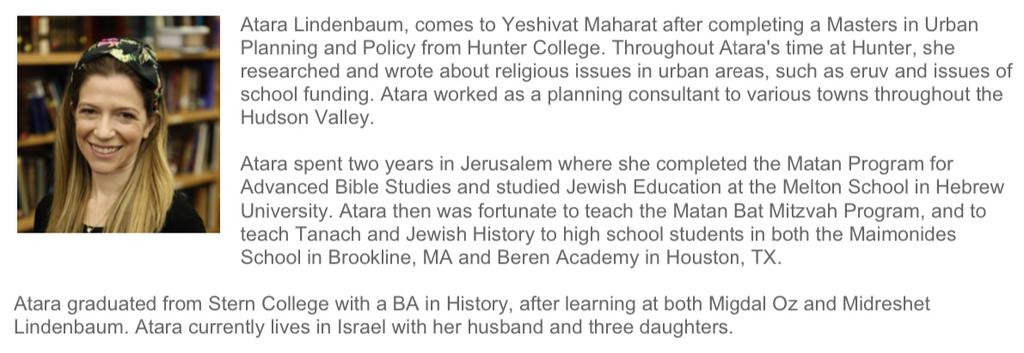
Rabbanit Atara Lindenbaum
Class of 2022
Counting days, as is the practice between Pesach and Shavuot, can seem dull and monotonous when compared to the elaborate methods of recounting the Exodus on Seder night. The commandment to count days comes on the heels of the commandment to recount the Exodus story - לספר ביציאת מצרים. Parshat Emor introduces the mitzvah of counting the Omer- "And you shall count" - "וספרתם לכם ". The phrase וספרתם לכם uses a word that has the exact same letters as the word to tell or to recount, לספר, perhaps suggesting that the counting of the Omer is a subtle form of recounting a narrative.
Numbers and data are indeed powerful tools for storytelling. Numbers are concrete and charts with data can inform readers of nuanced points in a short amount of space and time. However, numbers cannot tell a story alone. Changing the way that numbers are presented or how data is formulated in a chart can alter the way that otherwise sterile numbers are understood. What story are we telling when we count the Omer? And how are we telling this story?
The biblical commandment to count is deeply rooted in agricultural practice. Pesach marked the beginning of the barley harvest, and the first sheaf of barley, called the Omer, was offered in the Temple on the second day of Pesach. The Torah commands the Jewish people to count 49 days between the offering of the Omer until the holiday of Shavuot, when two loaves of bread from wheat, the שתי הלחם were offered in the Temple, and when farmers began to bring their first fruits to the Temple. The biblical commandment of counting tells a story of the connection between the beginning of the harvest and the bringing of the first fruit.
However, Chazal understood Shavuot as not just an agricultural holiday, but also a holiday that commemorates and celebrates the giving of the Torah. According to the Rambam (and many others), the counting of the days between Pesach and Shavuot is therefore a way of recreating the anticipation the Jewish people felt as they looked forward to receiving the Torah. The story we tell when we count, to the Rambam, is perhaps just a culmination of the telling of the Exodus, a way of indicating that the entire purpose of the Exodus was the giving of the Torah.
This counting, which commemorates both the harvest and the anticipation of receiving the Torah, is done with a look towards the past. We count how far we have come, but not how much time remains. The method of counting backwards is striking. When we count before momentous events, we generally count how much time we have left until we reach the anticipated event. A child may count how many days left until his or her birthday, or we might count how much time left until we reunite with loved ones after a trip abroad.
The method of counting backwards, though, helps us re-enact the way the Jewish people felt when they left Egypt. Bnei Yisrael did not know when they would receive the Torah, they did not know how their journey in the desert would continue, and therefore could not possibly count towards anything, since that day was unknown and perhaps unimaginable. As we count only the days that have passed since Pesach, we can imagine how our ancestors felt in the desert as each day passed, as they had no idea what tomorrow would bring. Perhaps they also kept a count of how many days they managed to keep going in the desert, not knowing exactly from where their sources of food, water, and spirituality would come.
Bnei Yisrael are praised for doing just that; for journeying into the unknown. The prophet Yirmiyahu describes that God’s love for the Jewish people is based on their embracing the unknown the in the desert:
Every day they continued into the unknown was a demonstration of their deep faith and growing commitment. Counting these days, from the Exodus onward, is recounting the faith of Bnei Yisrael in times of deep uncertainty, not knowing how their journey would end. It is a story of spiritual survival, and we reinforce this story over generations, telling the long but promising story of our faith in the face of the unknown.
This way of telling the story, of an unknown future, also shapes the narrative of the Omer offering. Bnei Yisrael gave their first Omer offering once they got to the land of Israel. The bringing of the Omer coincided with the cessation of the manna, the food that fell from the sky. A nation that received their sustenance directly from God in the desert would maintain their understanding that all sustenance comes from God through the bringing of the Omer, through giving thanks to and having faith in God who gave them the Land and a world where food can grow and sustain them.
The Omer is a physical reminder of manna (which was measured by the Omer3 ), and counting the Omer is reminiscent of those days in the desert, where everything was unknown. Manna received its name, precisely because it was unknown:
The Sefat Emet explains that this theme of the unknown encapsulates the experience of Bnei Yisrael in the desert; it was a journey of not knowing, but continuing in the journey nonetheless. But to the Sfat Emet, the purpose of knowing, is to remember and realize that you at one point, did not know. The purpose of the manna was to lean into the unknown, to an element of vulnerability that leads to discovery and faith.
The chesed, the kindness that Yirmiayhu describes is the simple walking in the wilderness; it is not that we did anything, it is just that we went. We continued. Uncertainty is unsettling. We feel especially vulnerable when we can’t decide what is true and what is not. We feel at times that we are barely at the edge of what we know; all that we think we know is behind us, and we are staring into an abyss. This is the mitzvah of counting every day. Each day into the unknown is a step of faith. In a time of uncertainty, it takes great courage to live as if each day counts.