28 Iyyar 5780 | May 22, 2020
Parshat Bamidbar
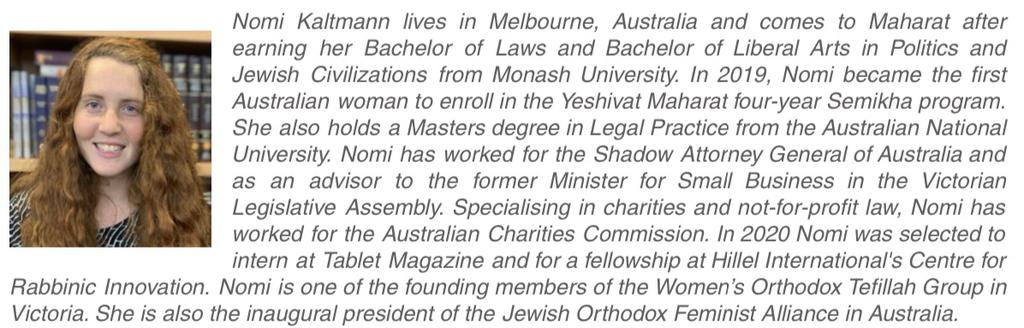
Nomi Kaltmann
Class of 2023
"Every soul is a diamond. Can one grow tired of counting diamonds?" - Seventh Lubavitcher Rebbe
Jews often seem obsessed with counting ourselves. Our communal discourse is centered on our shifting numbers as a nation and our demographics. There is hardly a year in which we are not warned of the shrinking numbers of Jews living in countries around the world, whether due to low birth rates, assimilation or historical disastersm such as the holocaust, that have befallen our people. The significance of the counts that are undertaken can be used for different purposes and agendas.
On the one hand, we love knowing that there are a lot of Jews. Indeed, it is a fulfillment of God’s promise to our patriarchs and matriarchs that their descendants would be as numerous as the sands of the sea and the stars in the sky. This assurance, reiterated by later prophets, demonstrates that strength in numbers is important for our worth and power as a people.
However, counting the Jewish people in the Bible is a complex issue. In some cases, it leads to severe punishments and plagues (see Samuel II, chapter 24) and the Talmud, Yoma (22b) teaches: "It is forbidden to count the people of Israel, even for a Mitzvah…"
When we want to know the number of people in a group today, we have various methods to avoid conventional counting - we say “not one, not two” or use verses with a specific number of words that then indicate the number of persons.
While we actively avoid counting our people, this week’s Parsha, Bamidbar describes how Moshe is commanded by God to take a census of the people of Israel according to their families counting the names of all males from 20 years and upwards. The census results are recorded in depth in the Torah reading this week.
Why would the Torah dedicate an entire portion to the census results? What do these numbers teach us?
On one hand counting demonstrates God’s love for the Jewish people. An omniscient God surely knows how many people of Israel there were, yet God orders the census because the people of Israel were so important that God wanted to count them and treasure them.
This brings to me a famous story about the seventh Lubavitcher Rebbe. Starting from 1986 the Lubavitcher Rebbe would stand in a small room next to his office in Brooklyn and would hand out dollar bills to the thousands of people who would line up to receive them. The Rebbe wanted these dollars to be used for Mitzvot, either Tzedakah or as a form of Shliach Mitzvah, particularly with a focus on a mitzvah that benefits another.
When this phenomenon began, the Rebbe was already in his 80s. He would stand there for hours at a time without interruption, handing these dollars out to thousands of people, giving our blessings and hoping to spread Torah and Mitzvot. One time, an elderly woman who witnessed the Rebbe giving out these dollars for hours on end, asked him “Rebbe, how do you do it? How is it that you do not tire?" The Rebbe smiled and replied: "Every soul is a diamond. Can one grow tired of counting diamonds?"
So too it is with our tradition, Jewish tradition is also obsessed with counting, not just people but all kinds of things. We do this to demonstrate their preciousness and importance.
We are currently in the middle of Sefirat HaOmer, the 7 weeks between Pesach and Shavuot which we count nightly until Shavuot. This counting not only symbolizes that the start of our redemption as a people which begins at Exodus retold at Passover, is not just an end but also a means to celebrate the Torah and the laws that we were given as a people which has provided us for the framework for our lives. We count in anticipation. We count when we want to demonstrate how important something is to our lives. And we count when we are excited and want to convey a sense of longing and enthusiasm for the future.
As we sit in homes across the world, waiting for this global pandemic to end, we surely will count down to the end of this difficult time we are living in and count towards better days ahead in the future.