13 Sivan 5780 | June 5th, 2020
Parshat Naso
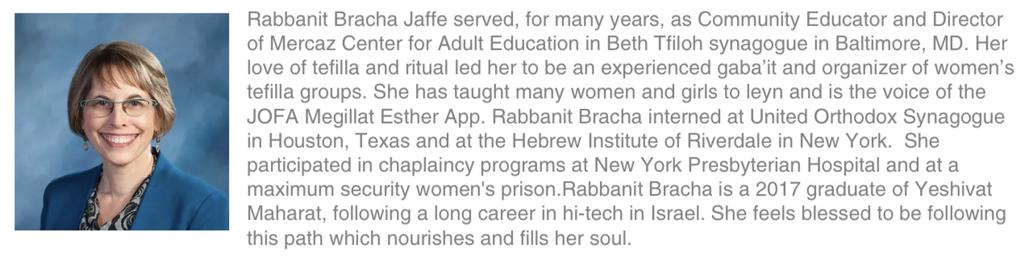
Rabbanit Bracha Jaffe
Class of 2017
Shabbat Shalom to our Bayit family. This has been such a difficult week. I’d like to share with you some personal reflections and then offer some suggestions going forward.
Three months ago our world shifted on its axis as the pandemic exploded into our lives; going into Pesach was a whirlwind. By Shavuot we seemed to have gotten the hang of it, we put out a Shavuot reader, we concluded with a peaceful feeling, listening to Megilat Rut being read by Bayit members.
But as we opened our devices - our phones, our ipads, our laptops - after Shavuot, we found that the world had exploded again - this time in a way that felt somehow even more insidious and scary.
We were aware that there was a horrible police killing of another person of color - George Floyd - but now over and over we were seeing and hearing the words “I can’t breathe”, postings and repostings of that video we couldn’t bear to watch but couldn’t afford not to watch”. And so much more: Riots, looting, violence, anger, lockdowns and curfews all across the country.
I was aghast and horrified. I struggled to figure out how to respond. My heart said: “How do we contend with these compounded horrors?” My brain said: “What can we do to make a real impact and change this time?” I was reeling and trying to get an idea of what others were feeling.
Looking around on Facebook, I was struck by this text from Shabbat 54b being quoted as a call to action and accountability.
כׇּל מִי שֶׁאֶפְשָׁר לִמְחוֹת לְאַנְשֵׁי בֵיתוֹ וְלֹא מִיחָה — נִתְפָּס עַל אַנְשֵׁי בֵיתוֹ. בְּאַנְשֵׁי עִירוֹ — נִתְפָּס עַל אַנְשֵׁי עִירוֹ. בְּכָל הָעוֹלָם כּוּלּוֹ — נִתְפָּס עַל כָּל הָעוֹלָם כּוּלּוֹ.
One who had the capability to effectively protest or object to the conduct of members of one’s household and did not protest, that person is held responsible for the actions of the members of the household. If one is in a position to effectively protest or object to the conduct of the people of one’s town, and fails to do so, that person is held responsible for the actions of the citizens of the town. If one is in a position to effectively protest or object to the conduct of the whole world, and one fails to do so, that person is held responsible for the actions of the whole world.
What kind of behavior is the Gemara referring to?
Rambam - Maimonides - explains:
וְכָל שֶׁאֶפְשָׁר בְּיָדוֹ לִמְחוֹת וְאֵינוֹ מוֹחֶה הוּא נִתְפָּשׂ בַּעֲוֹן אֵלּוּ כֵּיוָן שֶׁאֶפְשָׁר לוֹ לִמְחוֹת בָּהֶם:
One who is in a position to protest the sinful behavior of another and fails to do so is punished for that person’s sins (Rambam Sefer HaMadda, Hilkhot De’ot 6:7)
That can feel overwhelming and daunting for each of us to be responsible for the actions of our households, our cities and even the whole world! Perhaps we can protest or object. But what can we do to become the agents of change? What can we do to make our actions meaningful?
The Chafetz Chaim - an influential rabbi and ethicist of the 19th & 20th centuries offers us a path forward with this teaching.
“When asked how he had made such an impact as a great sage and leader in the 20th century Jewish world, the Chofetz Chaim answered, ‘I set out to try to change the world, but I failed. So I decided to scale back my efforts and only try to influence the Jewish community of Poland, but I failed there too. So I targeted the community in my hometown, but achieved no greater success. Then I gave all my effort to changing my own family, and failed with that as well. Finally, I decided to change myself, and that’s how I had such an impact on the Jewish world.’”
The Chafetz Chaim is telling us: we can only make a change in others by first making a change in ourselves. Still - what could that change look like? I know there are many kinds of responses, and I know that there are lively and essential debates about which kinds of ways are best, and we all may have different approaches. I would like to share one story that really spoke to me about how we can be agents for change.
Caroline Crokett Brock from Myrtle Beach, South Caroline posted this story to her Facebook page - it has since gone viral. Here’s what she wrote: “I am a 45 year old white woman living in the south, and today was the first time I spoke frankly about racism with a black man.”
Ernest Skelton, a middle-aged black repairman, was in her home repairing her appliances. She took a deep breath and did something that she had never done before. She stepped out of her comfort zone and asked him straight out what he was feeling in the current national climate. At first he thought that she must be referring to the pandemic. He was taken by surprise by her willingness to raise the subject of racism. They then had a frank discussion which opened her eyes to what it means to be a black man in America today.
He told her that he is pulled over at least 6 times a year for no apparent reason. He has stopped answering service calls at night because it isn’t safe for him to be out after dark. He was offended when he was called “boy” by his superior numerous times but when he complained about it - he was fired.
He told her: “I don't have hope that racism will change. My dad taught me “It’s a white man’s world”, and I’ve done my best to live within it.” But - when Caroline asked what she could do, he responded: “everyone needs to pray and realize we’re all just one country and one people”.
Caroline asked Ernest if she could take his picture and post their conversation on facebook. He thought it was a great idea. As he left her house an hour later, he looked her in the eye and said, "If you ever march, or have a meeting on this topic, or want to change things in Myrtle Beach, I'll stand with you."
By making a small change in herself and then sharing her story, Caroline was able to make a change in her household, in her community, and beyond. One of the first changes came from John Peterson, the city manager of Myrtle Beach who was troubled by the allegations and is starting an investigation.
This could be a great start for any of us: having one-on-one conversations and listening deeply may be the best way to learn about other people’s true feelings and experiences.
Keeping in mind the Chafetz Chaim’s words that we can only change others by making a change in ourselves, here are some additional ideas that I’d like to offer.
Educating ourselves by reading books that delve into the history and culture of African Americans and reading articles listing different ways to become an advocate for racial justice . Watching movies and 1 documentaries about racism. Joining peaceful vigils and protests. Following this motto found on the walls of Shaker Heights middle school: Don't be a bystander, be an upstander.
And perhaps most important of all, I leave us with this powerful thought from Caroline Crockett Brock: “Kindness is more infectious than any virus.”
Watch the video here: