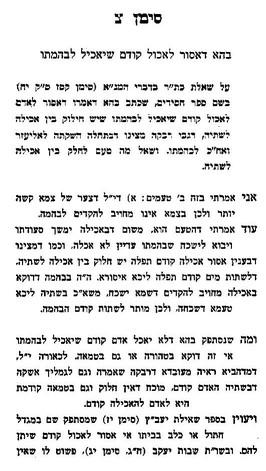
וְרַב שֵׁשֶׁת אָמַר: אֲפִילּוּ ״גַּבֵּיל לְתוֹרֵי״ נָמֵי אֵינוֹ צָרִיךְ לְבָרֵךְ, דְּאָמַר רַב יְהוּדָה אָמַר רַב: אָסוּר לָאָדָם שֶׁיֹּאכַל קוֹדֶם שֶׁיִּתֵּן מַאֲכָל לִבְהֶמְתּוֹ, שֶׁנֶּאֱמַר: ״וְנָתַתִּי עֵשֶׂב בְּשָׂדְךָ לִבְהֶמְתֶּךָ״ וַהֲדַר ״וְאָכַלְתָּ וְשָׂבָעְתָּ״.
And Rav Sheshet said: Even if he said: Mix for the oxen, he need not recite a blessing a second time, as that is also considered to be for the purpose of the blessing, as Rav Yehuda said that Rav said: One is prohibited from eating before feeding his animals, as it is stated: “And I will give grass in your fields for your animals” first and only then: “And you shall eat and be satisfied” (Deuteronomy 11:15).
Rav Huna and Rav Ḥisda said to Geneiva: Does the Master wish to taste something? Geneiva said to them: So says Rav Yehuda that Rav says: It is prohibited for a person to taste anything until he gives food to his animal, as it is stated in the verse: “And I will give grass in the field for your animals” (Deuteronomy 11:15), and only afterward is it written in that verse: “And you shall eat and be satisfied.” I have yet to feed my animal, so I may not eat.
(ב) ומכל מקום לכתחלה לא יפסיק כלל - ...והנה המ"א הביא בסימן רע"א בשם תשובת מהר"מ דלאכול קודם הבהמה הוא איסור דאורייתא ומשמע דס"ל דהוא דרשה גמורה ולא אסמכתא ולפ"ז פשוט דאפילו בירך המוציא צריך להפסיק אבל מהפוסקים הנ"ל מוכח דלא ס"ל הכי...
והוצרך להזכיר עדה ובעירם, להקדים העדה לבהמות, והגם שאמר הכתוב ונתתי עשב בשדך לבהמתך ואכלת וגו' ואמרו ז''ל (ברכות מ.), שצריך להקדים מאכל לבהמתו ואחר כך הוא, כל זה אם אין סכנה בדבר אבל כשיש גדר סכנה חייו קודמין, ועיין מה שפירשתי בפרשה דרבקה (בראשית כ''ד) בהשקאת אליעזר וגמליו:
עוד יתבאר על דרך אומרם ז"ל (ברכות מ.) בפסוק (דברים יא טו) ונתתי עשב בשדך לבהמתך וגו' שצריך אדם להקדים לתת מזון לבהמתו ואח"כ את עצמו. ויש לך לדעת כי דוקא דאין כאן סכנה או צער אבל בסכנה או בשיש צער קודם יש לחוש לצערו ואחר כך בהמתו, ולזה כששאל האיש הגמיאיני מעט הרגישה הצדקת כי צמא למים היה ומצטער היה לזה אמרה לו שתה וכשנתנה לו שיעור ששיערה כי ודאי אין כאן חשש לצער הצמא ותכל להשקותו ותאמר גם לגמליך אשאב כי בגדר זה שאינך מצטער אותם צריך להקדים, והוא שסמך הכתוב לותכל להשקותו ותאמר גם לגמליך וגו'.
We may view the matter also in light of what the Talmud teaches in Berachot 40, based on Deuteronomy 11,15 that one must feed one's animals before eating oneself. This ruling applies only when there is no danger to the life of the person involved. If his life is in danger, concern for his own health takes precedence over the wellbeing of his animals. When Rebeccah heard Eliezer ask for some water she concluded that she faced a man whose need for water was immediate. This is why she said to him: "drink!" As soon as she had given him sufficient water to ensure he was not in danger of dehydrating she suggested giving water to his camels, the ones which normally should have been looked after first. This is why the Torah phrases Rebeccah's action in such a way that we understand that as soon as was practicable she turned her attention to the camels, giving them to drink.