


Major Fasts
- Yom Kippur
- Tisha B'Av
- Tzom Gedaliah
- Asara B'Tevet
- Shiva Asar B'Tamuz
- Taanit Ester
After Moses died, Joshua brought the Israelites into the Land of Canaan. For about 200 years, the Israelites were organized by tribes until they appointed a king (Saul, then David, then Solomon) who unified the tribes into one nation. When King Solomon died in 922 BCE, the nation split into two kingdoms, a northern kingdom called Israel and a southern one called Judah.
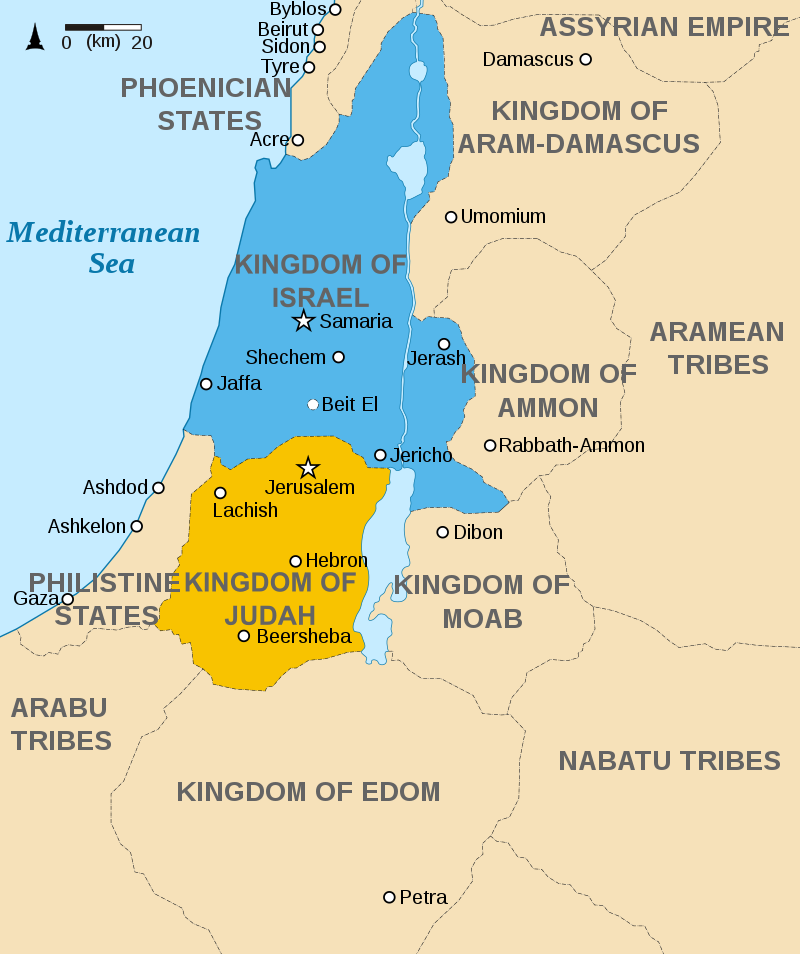
Oldtidens_Israel_&_Judea.svg: FinnWikiNo derivative work: Richardprins (talk), Kingdoms of Israel and Judah map 830, CC BY-SA 3.0
Each kingdom had its own capital, temple, kings, priests, prophets, and history. The northern kingdom was destroyed in 722 BCE by the Assyrians; it is not completely clear what happened to the northerners (they are popularly called the Ten Lost Tribes). The southern kingdom of Judah was destroyed in 586 BCE by the Babylonians. The Temple in Jerusalem was burnt down, and the Judeans were sent into exile to Babylonia. Most Jews today are descendants of those southern Judeans, not of the northern Israelites.
The events that led to the destruction of the Temple in Jerusalem occurred in stages, and at certain points, various Judean leaders argued that they should submit to the dominion of the Babylonian superpower.
However, the dominant voice argued in favor of rebellion, and they silenced the opposition. Early on, for example, the Judean prophet Jeremiah, who had warned the Judean king that the leadership was bringing destruction upon itself, was taunted and thrown into prison.
Shortly after two large waves of Judeans were exiled to Babylonia and the Temple in Jerusalem was destroyed, the Babylonians appointed Gedaliah to serve as governor over the Judeans who were not deported. Gedaliah came from noble Judean stock. His father Ahikam had once saved Jeremiah's life (Jeremiah 26:24). His grandfather Shaphan had been a leader in an important religious reform that took place during the time of King Josiah (to learn more about the reform, see II Kings Chapter 22).
Gedaliah believed it was possible to come to some accommodation with the Babylonians and that life could continue in Judea for those who remained there.
(ז) וַיִּשְׁמְעוּ֩ כָל־שָׂרֵ֨י הַחֲיָלִ֜ים אֲשֶׁ֣ר בַּשָּׂדֶ֗ה הֵ֚מָּה וְאַנְשֵׁיהֶ֔ם כִּֽי־הִפְקִ֧יד מֶֽלֶךְ־בָּבֶ֛ל אֶת־גְּדַלְיָ֥הוּ בֶן־אֲחִיקָ֖ם בָּאָ֑רֶץ וְכִ֣י ׀ הִפְקִ֣יד אִתּ֗וֹ אֲנָשִׁ֤ים וְנָשִׁים֙ וָטָ֔ף וּמִדַּלַּ֣ת הָאָ֔רֶץ מֵאֲשֶׁ֥ר לֹֽא־הָגְל֖וּ בָּבֶֽלָה׃ (ח) וַיָּבֹ֥אוּ אֶל־גְּדַלְיָ֖ה הַמִּצְפָּ֑תָה וְיִשְׁמָעֵ֣אל בֶּן־נְתַנְיָ֡הוּ וְיוֹחָנָ֣ן וְיוֹנָתָ֣ן בְּנֵֽי־קָ֠רֵחַ וּשְׂרָיָ֨ה בֶן־תַּנְחֻ֜מֶת וּבְנֵ֣י ׀ עופי [עֵיפַ֣י] הַנְּטֹפָתִ֗י וִֽיזַנְיָ֙הוּ֙ בֶּן־הַמַּ֣עֲכָתִ֔י הֵ֖מָּה וְאַנְשֵׁיהֶֽם׃ (ט) וַיִּשָּׁבַ֨ע לָהֶ֜ם גְּדַלְיָ֨הוּ בֶן־אֲחִיקָ֤ם בֶּן־שָׁפָן֙ וּלְאַנְשֵׁיהֶ֣ם לֵאמֹ֔ר אַל־תִּֽירְא֖וּ מֵעֲב֣וֹד הַכַּשְׂדִּ֑ים שְׁב֣וּ בָאָ֗רֶץ וְעִבְד֛וּ אֶת־מֶ֥לֶךְ בָּבֶ֖ל וְיִיטַ֥ב לָכֶֽם׃ (י) וַאֲנִ֗י הִנְנִ֤י יֹשֵׁב֙ בַּמִּצְפָּ֔ה לַֽעֲמֹד֙ לִפְנֵ֣י הַכַּשְׂדִּ֔ים אֲשֶׁ֥ר יָבֹ֖אוּ אֵלֵ֑ינוּ וְאַתֶּ֡ם אִסְפוּ֩ יַ֨יִן וְקַ֜יִץ וְשֶׁ֗מֶן וְשִׂ֙מוּ֙ בִּכְלֵיכֶ֔ם וּשְׁב֖וּ בְּעָרֵיכֶ֥ם אֲשֶׁר־תְּפַשְׂתֶּֽם׃ (יא) וְגַ֣ם כָּֽל־הַיְּהוּדִ֡ים אֲשֶׁר־בְּמוֹאָ֣ב ׀ וּבִבְנֵֽי־עַמּ֨וֹן וּבֶאֱד֜וֹם וַאֲשֶׁ֤ר בְּכָל־הָֽאֲרָצוֹת֙ שָֽׁמְע֔וּ כִּֽי־נָתַ֧ן מֶֽלֶךְ־בָּבֶ֛ל שְׁאֵרִ֖ית לִֽיהוּדָ֑ה וְכִי֙ הִפְקִ֣יד עֲלֵיהֶ֔ם אֶת־גְּדַלְיָ֖הוּ בֶּן־אֲחִיקָ֥ם בֶּן־שָׁפָֽן׃ (יב) וַיָּשֻׁ֣בוּ כָל־הַיְּהוּדִ֗ים מִכָּל־הַמְּקֹמוֹת֙ אֲשֶׁ֣ר נִדְּחוּ־שָׁ֔ם וַיָּבֹ֧אוּ אֶֽרֶץ־יְהוּדָ֛ה אֶל־גְּדַלְיָ֖הוּ הַמִּצְפָּ֑תָה וַיַּאַסְפ֛וּ יַ֥יִן וָקַ֖יִץ הַרְבֵּ֥ה מְאֹֽד׃
Despite Gedaliah's efforts to restore the land to some semblance of normalcy, there were those who were intent on fighting the Babylonians to the end. They viewed people like Gedaliah as collaborationists and eventually assassinated him. The events are described in both Jeremiah and II Kings.
(1) In the seventh month, Ishmael son of Nethaniah son of Elishama, who was of royal descent and one of the king’s commanders, came with ten men to Gedaliah son of Ahikam at Mizpah; and they ate together there at Mizpah. (2) Then Ishmael son of Nethaniah and the ten men who were with him arose and struck down Gedaliah son of Ahikam son of Shaphan with the sword and killed him, because the king of Babylon had put him in charge of the land. (3) Ishmael also killed all the Judeans who were with him—with Gedaliah in Mizpah—and the Chaldean soldiers who were stationed there. (4) The second day after Gedaliah was killed, when no one yet knew about it...
The Babylonians saw this as the final act of rebellion, and they carried the remaining Judeans into captivity in Babylonia.
The end of any possibility of sovereignty for the Jews in Judea came, therefore, when one Judean took up arms and murdered another Judean. The fast that was established in memory of Gedaliah is meant to remind us of the deep internal rift within the Judean community and its tragic consequences: the final downfall of the Judean kingdom.
Two generations after the loss of sovereignty in Judea, the Bible mentions four fasts that commemorate the tragic events surrounding the downfall of Judea. The prophet Zechariah, who lived around 510 BCE, lists the fasts in relation to the first month on the biblical calendar.
- The fast of the fourth month = Shiva Asar B'Tamuz, the breach of the walls of Jerusalem
- The fast of the fifth month = Tisha B'Av, the destruction of the Temple
- The fast of seventh month = Tzom Gedaliah, the end of Jewish life in Judea
- The fast of the tenth month = Asara B'Tevet, the beginning of the siege of Jerusalem
(יט) כֹּֽה־אָמַ֞ר יְהוָ֣ה צְבָא֗וֹת צ֣וֹם הָרְבִיעִ֡י וְצ֣וֹם הַחֲמִישִׁי֩ וְצ֨וֹם הַשְּׁבִיעִ֜י וְצ֣וֹם הָעֲשִׂירִ֗י יִהְיֶ֤ה לְבֵית־יְהוּדָה֙ לְשָׂשׂ֣וֹן וּלְשִׂמְחָ֔ה וּֽלְמֹעֲדִ֖ים טוֹבִ֑ים וְהָאֱמֶ֥ת וְהַשָּׁל֖וֹם אֱהָֽבוּ׃
The Talmud in the passage from Rosh Hashanah 18b below makes two important comments regarding the verse in Zechariah. First, the fasts will turn into feasts when peace prevails in the world.
Second, just as the "fast of the fifth month" (Tisha B'Av) commemorates the burning of the Temple, so too the "fast of the seventh month" commemorates the assassination of the righteous governor Gedaliah. This juxtaposition leaves us with our final lesson: "the death of the righteous is equivalent to the burning of the Temple of our Lord."
דְּאָמַר רַב חָנָא בַּר בִּיזְנָא אָמַר רַבִּי שִׁמְעוֹן חֲסִידָא מַאי דִּכְתִיב ״כֹּה אָמַר ה׳ צְבָאוֹת צוֹם הָרְבִיעִי וְצוֹם הַחֲמִישִׁי וְצוֹם הַשְּׁבִיעִי וְצוֹם הָעֲשִׂירִי יִהְיֶה לְבֵית יְהוּדָה לְשָׂשׂוֹן וּלְשִׂמְחָה.״
קָרֵי לְהוּ ״צוֹם״ וְקָרֵי לְהוּ ״שָׂשׂוֹן וְשִׂמְחָה.״
בִּזְמַן שֶׁיֵּשׁ שָׁלוֹם יִהְיוּ לְשָׂשׂוֹן וּלְשִׂמְחָה. אֵין שָׁלוֹם צוֹם....
וְאַמַּאי קָרֵי לֵיהּ רְבִיעִי? רְבִיעִי לֶחֳדָשִׁים. ״צוֹם הַחֲמִישִׁי״ זֶה תִּשְׁעָה בְּאָב שֶׁבּוֹ נִשְׂרַף בֵּית אֱלֹהֵינוּ. וְאַמַּאי קָרֵי לֵיהּ חֲמִישִׁי? חֲמִישִׁי לֶחֳדָשִׁים.
״צוֹם הַשְּׁבִיעִי״ זֶה שְׁלֹשָׁה בְּתִשְׁרִי שֶׁבּוֹ נֶהֱרַג גְּדַלְיָה בֶּן אֲחִיקָם. וּמִי הֲרָגוֹ? יִשְׁמָעֵאל בֶּן נְתַנְיָה הֲרָגוֹ.
לְלַמֶּדְךָ שֶׁשְּׁקוּלָה מִיתָתָן שֶׁל צַדִּיקִים כִּשְׂרֵיפַת בֵּית אֱלֹהֵינוּ.
As Rav Ḥana bar Bizna said that Rabbi Shimon Ḥasida said: What is the meaning of that which is written: “Thus said the Lord of hosts: The fast of the fourth month, and the fast of the fifth, and fast of the seventh, and the fast of the tenth, shall become times of joy and gladness, and cheerful seasons, to the house of Judah” (Zechariah 8:19).
It calls them days of “fast” and it calls them “times of joy and gladness.” How so? When there is peace in the world, they will be times of joy and gladness, on which eulogies and fasting are forbidden; but when there is no peace, they are days of fasting....
And why does the prophet call it the fast of the fourth? Because it is in Tammuz, the fourth of the months when counting from Nisan. “The fast of the fifth,” this is the Ninth of Av, on which the Temple of our Lord was burnt. And why does he call it the fast of the fifth? Because it falls in the fifth of the months.
“The fast of the seventh,” this is the third of Tishrei, on which Gedaliah, son of Ahikam, was killed. And who killed him? Ishmael, son of Nethaniah, killed him (see II Kings 25:25; Jeremiah, chapter 41).
The Sages established a fast to commemorate Gedaliah’s death to teach you that the death of the righteous is equivalent to the burning of the Temple of our Lord.