


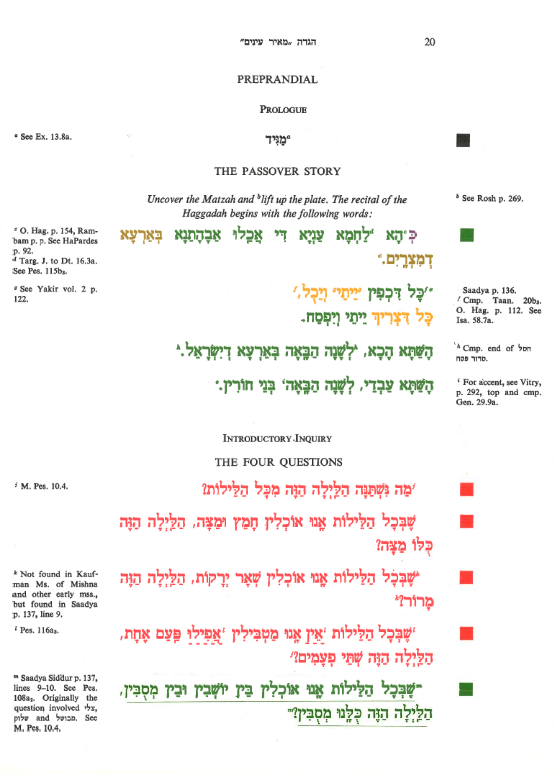
מסיר את הקערה מעל השולחן. מוזגין כוס שני. הבן שואל:
מַה נִּשְׁתַּנָּה הַלַּיְלָה הַזֶּה מִכָּל הַלֵּילוֹת?
1. שֶׁבְּכָל הַלֵּילוֹת אָנוּ אוֹכְלִין חָמֵץ וּמַצָּה, הַלַּיְלָה הַזֶּה – כֻּלּוֹ מַצָּה.
2. שֶׁבְּכָל הַלֵּילוֹת אָנוּ אוֹכְלִין שְׁאָר יְרָקוֹת – הַלַּיְלָה הַזֶּה (כֻּלּוֹ) מָרוֹר.
3. שֶׁבְּכָל הַלֵּילוֹת אֵין אָנוּ מַטְבִּילִין אֲפִילוּ פַּעַם אֶחָת – הַלַּיְלָה הַזֶּה שְׁתֵּי פְעָמִים.
4. שֶׁבְּכָל הַלֵּילוֹת אָנוּ אוֹכְלִין בֵּין יוֹשְׁבִין וּבֵין מְסֻבִּין – הַלַּיְלָה הַזֶּה כֻּלָּנוּ מְסֻבִּין.
He removes the plate from the table. We pour a second cup of wine. The son then asks:
What differentiates this night from all [other] nights?
1. On all [other] nights we eat chamets and matsa; this night, only matsa?
2. On all [other] nights we eat other vegetables; tonight (only) marror.
3. On all [other] nights, we don't dip [our food], even one time; tonight [we dip it] twice.
4.On [all] other nights, we eat either sitting or reclining; tonight we all recline.
(ג) הֵבִיאוּ לְפָנָיו, מְטַבֵּל בַּחֲזֶרֶת, עַד שֶׁמַּגִּיעַ לְפַרְפֶּרֶת הַפַּת. הֵבִיאוּ לְפָנָיו מַצָּה וַחֲזֶרֶת וַחֲרֹסֶת וּשְׁנֵי תַבְשִׁילִין, אַף עַל פִּי שֶׁאֵין חֲרֹסֶת מִצְוָה. רַבִּי אֱלִיעֶזֶר בְּרַבִּי צָדוֹק אוֹמֵר, מִצְוָה. וּבַמִּקְדָּשׁ הָיוּ מְבִיאִים לְפָנָיו גּוּפוֹ שֶׁל פָּסַח:
(ד) מָזְגוּ לוֹ כוֹס שֵׁנִי, וְכָאן הַבֵּן שׁוֹאֵל אָבִיו, וְאִם אֵין דַּעַת בַּבֵּן, אָבִיו מְלַמְּדוֹ, מַה נִּשְׁתַּנָּה הַלַּיְלָה הַזֶּה מִכָּל הַלֵּילוֹת, שֶׁבְּכָל הַלֵּילוֹת אָנוּ אוֹכְלִין חָמֵץ וּמַצָּה, הַלַּיְלָה הַזֶּה כֻלּוֹ מַצָּה. שֶׁבְּכָל הַלֵּילוֹת אָנוּ אוֹכְלִין שְׁאָר יְרָקוֹת, הַלַּיְלָה הַזֶּה מָרוֹר. שֶׁבְּכָל הַלֵּילוֹת אָנוּ אוֹכְלִין בָּשָׂר צָלִי, שָׁלוּק, וּמְבֻשָּׁל, הַלַּיְלָה הַזֶּה כֻלּוֹ צָלִי. שֶׁבְּכָל הַלֵּילוֹת אָנוּ מַטְבִּילִין פַּעַם אַחַת, הַלַּיְלָה הַזֶּה שְׁתֵּי פְעָמִים. וּלְפִי דַעְתּוֹ שֶׁל בֵּן, אָבִיו מְלַמְּדוֹ. מַתְחִיל בִּגְנוּת וּמְסַיֵּם בְּשֶׁבַח, וְדוֹרֵשׁ מֵאֲרַמִּי אוֹבֵד אָבִי, עַד שֶׁיִּגְמֹר כֹּל הַפָּרָשָׁה כֻלָּהּ:
(3) The attendants brought vegetables before the leader of the seder prior to the meal, if there were no other vegetables on the table. He dips the ḥazeret into water or vinegar, to taste some food before he reaches the dessert of the bread, i.e., the bitter herbs, which were eaten after the matza. They brought before him matza and ḥazeret and ḥaroset, and at least two cooked dishes in honor of the Festival. The tanna comments that this was the practice, although eating ḥaroset is not a mitzva but merely a custom. Rabbi Eliezer ben Tzadok says: Actually, it is a mitzva to eat ḥaroset. And in the period when the Temple stood and they offered the Paschal lamb, they brought before him the body of the Paschal lamb.
(4) The attendants poured the second cup for the leader of the seder, and here the son asks his father the questions about the differences between Passover night and a regular night. And if the son does not have the intelligence to ask questions on his own, his father teaches him the questions. The mishna lists the questions: Why is this night different from all other nights? As on all other nights we eat leavened bread and matza as preferred; on this night all our bread is matza. As on all other nights we eat other vegetables; on this night we eat bitter herbs. The mishna continues its list of the questions. When the Temple was standing one would ask: As on all other nights we eat either roasted, stewed, or cooked meat, but on this night all the meat is the roasted meat of the Paschal lamb. The final question was asked even after the destruction of the Temple: As on all other nights we dip the vegetables in a liquid during the meal only once; however, on this night we dip twice. And according to the intelligence and the ability of the son, his father teaches him about the Exodus. When teaching his son about the Exodus. He begins with the Jewish people’s disgrace and concludes with their glory. And he expounds from the passage: “An Aramean tried to destroy my father” (Deuteronomy 26:5), the declaration one recites when presenting his first fruits at the Temple, until he concludes explaining the entire section.
What is odd about the placement of the four questions in our seders in contrast to the seder of the Mishna?
"In the course of the centuries, the ritual of the Seder has undergone only one decisive change: the Questions and the Haggadah recital were advanced to a position before the meal. The reason for this change, which already makes its appearance in the Talmud, was probably a fear lest the recital of the Haggadah suffer after the meal and the drinking of wine. This change, however, caused the loss of direct immediate relation between the Questions and the ritual of the meal." (The Passover Haggadah, edited by Nahum N. Glatzer, p. 6)

Mishnah Pesachim 10:4. Kaufmann Manuscript (10th or 11th century), Library of the Hungarian Academy of Sciences in Budapest (MS A50).
Kaufmann Manuscript
1. שבכל הלילות [אין] אנו מטבילין אפילו פעם אחת, הלילה הזה שתי פעמים.
2. שבכל הלילות אנו אוכלין חמץ ומצה, הלילה הזה כולו מצה.
3. שבכל הלילות אנו אוכלין בשר צלי, שלוק, ומבושל, הלילה הזה כולו צלי.
1. On all nights, we [don't] dip even once; tonight twice.
2. On all nights we eat chamets and matsa; tonight, only matsa.
3. On all nights we eat meat roasted, stewed or boiled; this night only roasted.
Passover Haggadah
3. שֶׁבְּכָל הַלֵּילוֹת אֵין אָנוּ מַטְבִּילִין אֲפִילוּ פַּעַם אֶחָת – הַלַּיְלָה הַזֶּה שְׁתֵּי פְעָמִים.
1. שֶׁבְּכָל הַלֵּילוֹת אָנוּ אוֹכְלִין חָמֵץ וּמַצָּה, הַלַּיְלָה הַזֶּה – כֻּלּוֹ מַצָּה.
2. שֶׁבְּכָל הַלֵּילוֹת אָנוּ אוֹכְלִין שְׁאָר יְרָקוֹת – הַלַּיְלָה הַזֶּה (כֻּלּוֹ) מָרוֹר.
4. שֶׁבְּכָל הַלֵּילוֹת אָנוּ אוֹכְלִין בֵּין יוֹשְׁבִין וּבֵין מְסֻבִּין – הַלַּיְלָה הַזֶּה כֻּלָּנוּ מְסֻבִּין.
3. On all nights, we don't dip even once; tonight twice.
1. On all nights we eat chamets and matsa; this night, only matsa?
2. On all nights we eat other vegetables; tonight (only) marror.
4.On all nights, we eat either sitting or reclining; tonight we all recline.
מַתְחִיל בִּגְנוּת וּמְסַיֵּים בְּשֶׁבַח. מַאי בִּגְנוּת? רַב אָמַר: ״מִתְּחִלָּה עוֹבְדֵי עֲבוֹדָה זָרָה הָיוּ אֲבוֹתֵינוּ״. [וּשְׁמוּאֵל] אָמַר: ״עֲבָדִים הָיִינוּ״.
It was taught in the mishna that the father begins his answer with disgrace and concludes with glory. The Gemara asks: What is the meaning of the term: With disgrace? Rav said that one should begin by saying: At first our forefathers were idol worshippers, before concluding with words of glory. [And Shmuel] said: The disgrace with which one should begin his answer is: We were slaves.
מחזיר את הקערה אל השולחן. המצות תִהיינה מגלות בִשעת אמירת ההגדה.
עֲבָדִים הָיִינוּ לְפַרְעֹה בְּמִצְרָיִם, וַיּוֹצִיאֵנוּ ה' אֱלֹקֵינוּ מִשָּׁם בְּיָד חֲזָקָה וּבִזְרֹעַ נְטוּיָה. וְאִלּוּ לֹא הוֹצִיא הַקָּדוֹשׁ בָּרוּךְ הוּא אֶת אֲבוֹתֵינוּ מִמִּצְרָיִם, הֲרֵי אָנוּ וּבָנֵינוּ וּבְנֵי בָנֵינוּ מְשֻׁעְבָּדִים הָיִינוּ לְפַרְעֹה בְּמִצְרָיִם. וַאֲפִילוּ כֻּלָּנוּ חֲכָמִים כֻּלָּנוּ נְבוֹנִים כֻּלָּנוּ זְקֵנִים כֻּלָּנוּ יוֹדְעִים אֶת הַתּוֹרָה מִצְוָה עָלֵינוּ לְסַפֵּר בִּיצִיאַת מִצְרָיִם. וְכָל הַמַּרְבֶּה לְסַפֵּר בִּיצִיאַת מִצְרַיִם הֲרֵי זֶה מְשֻׁבָּח.
He puts the plate back on the table. The matsot should be uncovered during the saying of the Haggadah.
We were slaves to Pharaoh in the land of Egypt. And the Lord, our God, took us out from there with a strong hand and an outstretched forearm. And if the Holy One, blessed be He, had not taken our ancestors from Egypt, behold we and our children and our children's children would [all] be enslaved to Pharaoh in Egypt. And even if we were all sages, all discerning, all elders, all knowledgeable about the Torah, it would be a commandment upon us to tell the story of the exodus from Egypt. And anyone who adds [and spends extra time] in telling the story of the exodus from Egypt, behold he is praiseworthy.
מִתְּחִלָּה עוֹבְדֵי עֲבוֹדָה זָרָה הָיוּ אֲבוֹתֵינוּ, וְעַכְשָׁיו קֵרְבָנוּ הַמָּקוֹם לַעֲבדָתוֹ, שֶׁנֶּאֱמַר: וַיֹאמֶר יְהוֹשֻעַ אֶל־כָּל־הָעָם, כֹּה אָמַר ה' אֱלֹקֵי יִשְׂרָאֵל: בְּעֵבֶר הַנָּהָר יָשְׁבוּ אֲבוֹתֵיכֶם מֵעוֹלָם, תֶּרַח אֲבִי אַבְרָהָם וַאֲבִי נָחוֹר, וַיַּעַבְדוּ אֱלֹקִים אֲחֵרִים.
וָאֶקַּח אֶת־אֲבִיכֶם אֶת־אַבְרָהָם מֵעֵבֶר הַנָּהָר וָאוֹלֵךְ אוֹתוֹ בְּכָל־אֶרֶץ כְּנָעַן, וָאַרְבֶּה אֶת־זַרְעוֹ וָאֶתֵּן לוֹ אֶת־יִצְחָק, וָאֶתֵּן לְיִצְחָק אֶת־יַעֲקֹב וְאֶת־עֵשָׂו. וָאֶתֵּן לְעֵשָׂו אֶת־הַר שֵּׂעִיר לָרֶשֶׁת אתוֹ, וְיַעֲקֹב וּבָנָיו יָרְדוּ מִצְרָיִם.
בָּרוּךְ שׁוֹמֵר הַבְטָחָתוֹ לְיִשְׂרָאֵל, בָּרוּךְ הוּא. שֶׁהַקָּדוֹשׁ בָּרוּךְ הוּא חִשַּׁב אֶת־הַקֵּץ, לַעֲשׂוֹת כְּמוֹ שֶּׁאָמַר לְאַבְרָהָם אָבִינוּ בִּבְרִית בֵּין הַבְּתָרִים, שֶׁנֶּאֱמַר: וַיֹּאמֶר לְאַבְרָם, יָדֹעַ תֵּדַע כִּי־גֵר יִהְיֶה זַרְעֲךָ בְּאֶרֶץ לֹא לָהֶם, וַעֲבָדוּם וְעִנּוּ אֹתָם אַרְבַּע מֵאוֹת שָׁנָה. וְגַם אֶת־הַגּוֹי אֲשֶׁר יַעֲבֹדוּ דָּן אָנֹכִי וְאַחֲרֵי־כֵן יֵצְאוּ בִּרְכֻשׁ גָּדוֹל.
מכסה המצה ומגביה את הכוס בידו, ואומר:
וְהִיא שֶׁעָמְדָה לַאֲבוֹתֵינוּ וְלָנוּ. שֶׁלֹּא אֶחָד בִּלְבָד עָמַד עָלֵינוּ לְכַלּוֹתֵנוּ, אֶלָּא שֶׁבְּכָל דּוֹר וָדוֹר עוֹמְדִים עָלֵינוּ לְכַלוֹתֵנוּ, וְהַקָּדוֹשׁ בָּרוּךְ הוּא מַצִּילֵנוּ מִיָּדָם.
From the beginning, our ancestors were idol worshipers. And now, the Place [of all] has brought us close to His worship, as it is stated (Joshua 24:2-4), "Yehoshua said to the whole people, so said the Lord, God of Israel, 'Over the river did your ancestors dwell from always, Terach the father of Avraham and the father of Nachor, and they worshiped other gods.
And I took your father, Avraham, from over the river and I made him walk in all the land of Canaan and I increased his seed and I gave him Yitschak. And I gave to Yitschak, Ya'akov and Esav; and I gave to Esav, Mount Seir [in order that he] inherit it; and Yaakov and his sons went down to Egypt.'"
Blessed be the One who keeps His promise to Israel, blessed be He; since the Holy One, blessed be He, calculated the end [of the exile,] to do as He said to Avraham, our father, in the Covenant between the Pieces, as it is stated (Genesis 15:13-14), "And He said to Avram, 'you should surely know that your seed will be a stranger in a land that is not theirs, and they will enslave them and afflict them four hundred years. And also that nation for which they shall toil will I judge, and afterwards they will go out with much property.'"
He covers the matsa and lifts up the cup and says:
And it is this that has stood for our ancestors and for us; since it is not [only] one [person or nation] that has stood [against] us to destroy us, but rather in each generation, they stand [against] us to destroy us, but the Holy One, blessed be He, rescues us from their hand.
רב אמר מתחילה צריך להתחיל (יהושוע כד) בעבר הנהר ישבו אותיכם וגו'. ואקח את אביכם את אברהם מעבר הנהר וגו'. וארבה.
Rav said: "From the beginning, one needs to begin: 'Over the river did your ancestors dwell ... But I took your father Abraham from beyond the Euphrates ... and multiplied ...' (Joshua 24:2-3)
מַתְחִיל בִּגְנוּת וּמְסַיֵּים בְּשֶׁבַח. מַאי בִּגְנוּת? רַב אָמַר: ״מִתְּחִלָּה עוֹבְדֵי עֲבוֹדָה זָרָה הָיוּ אֲבוֹתֵינוּ״. [וּשְׁמוּאֵל] אָמַר: ״עֲבָדִים הָיִינוּ״.
It was taught in the mishna that the father begins his answer with disgrace and concludes with glory. The Gemara asks: What is the meaning of the term: With disgrace? Rav said that one should begin by saying: At first our forefathers were idol worshippers, before concluding with words of glory. [And Shmuel] said: The disgrace with which one should begin his answer is: We were slaves.

Babylonian Talmud Pesachim 116a, Jewish Theological Seminary - Rab. 1623
Joshua Kulp in The Schecter Haggadah: Art, History and Commentary, p. 202
Whereas the Yerushalmi's version may have emphasized the disgrace of living outside of the land of Israel, and at the least did not specify the moral degradation of being idol worshippers, the Babylonian version of Rav places the emphasis specifically on idolatry. The "disgrace" is that the Israelites were originally idol worshippers, a spiritual disgrace to which Babylonian Jews living in the midst of an idolatrous society could easily relate.
Joshua Kulp in The Schecter Haggadah: Art, History and Commentary, p. 212
Why does the Talmud specify the "disgrace" but not the "praise"?
What is the "praise" according to Rav and Rava?
חָכָם מָה הוּא אוֹמֵר? מָה הָעֵדוֹת וְהַחֻקִּים וְהַמִּשְׁפָּטִים אֲשֶׁר צִוָּה ה' אֱלֹקֵינוּ אֶתְכֶם. וְאַף אַתָּה אֱמוֹר לוֹ כְּהִלְכוֹת הַפֶּסַח: אֵין מַפְטִירִין אַחַר הַפֶּסַח אֲפִיקוֹמָן:
רָשָׁע מָה הוּא אוֹמֵר? מָה הָעֲבוֹדָה הַזּאֹת לָכֶם. לָכֶם – וְלֹא לוֹ. וּלְפִי שֶׁהוֹצִיא אֶת עַצְמוֹ מִן הַכְּלָל כָּפַר בְּעִקָּר. וְאַף אַתָּה הַקְהֵה אֶת שִׁנָּיו וֶאֱמוֹר לוֹ: "בַּעֲבוּר זֶה עָשָׂה ה' לִי בְּצֵאתִי מִמִּצְרָיִם". לִי וְלֹא־לוֹ. אִלּוּ הָיָה שָׁם, לֹא הָיָה נִגְאָל:
What does the wise [son] say? "'What are these testimonies, statutes and judgments that the Lord our God commanded you?' (Deuteronomy 6:20)" And accordingly you will say to him, as per the laws of the Pesach sacrifice, "We may not eat an afikoman [a dessert or other foods eaten after the meal] after [we are finished eating] the Pesach sacrifice (Mishnah Pesachim 10:8)."
What does the evil [son] say? "'What is this worship to you?' (Exodus 12:26)" 'To you' and not 'to him.' And since he excluded himself from the collective, he denied a principle [of the Jewish faith]. And accordingly, you will blunt his teeth and say to him, "'For the sake of this, did the Lord do [this] for me in my going out of Egypt' (Exodus 13:8)." 'For me' and not 'for him.' If he had been there, he would not have been saved.
Why is the wicked child punished for saying that this Passover is "for you", when that is exactly what the wise son said?
Deuteronomy 6:20 - Septuagint
Καὶ ἔσται ὅταν ἐρωτήσῃ σε ὁ υἱός σου αὔριον λέγων· τί ἐστι τὰ μαρτύρια καὶ τὰ δικαιώματα καὶ τὰ κρίματα, ὅσα ἐνετείλατο Κύριος ὁ Θεὸς ἡμῶν ἡμῖν;
Deuteronomy 6:20 - Septuagint Translation (2001)
Then if your son should ever ask you, What are the words, rules, and decisions that Jehovah our God has given to us?
תני ר' חייה כנגד ארבעה בנים דיברה תורה בן חכם בן רשע בן טיפש בן שאינו יודע לשאול.
Rabbi Hiyya taught: Corresponding to four sons did the Torah speak; a wise son, an evil son, a stupid son and a son who doesn't know to ask.
בן חכם מהו אומר (דברים ו) מה העדות והחקים והמשפטים אשר צוה ה' אלקינו אותנו אף אתה אמור לו (שמות יג) בחזק יד הוציאנו ה' ממצרים מבית עבדים.
...
טיפש מה אומר (שם) מה זאת אף את למדו הלכות הפסח שאין מפטירין אחר הפסח אפיקומן שלא יהא עומד מחבורה זו ונכנס לחבורה אחרת.
What does the wise son say? "'What are these testimonies, statutes and judgments that the Lord our God commanded us?' (Deuteronomy 20:6)" And accordingly you will say to him, "'With the strength of [His] hand did the Lord take us out from Egypt, from the house of slaves.' (Exodus 13:14)"
...
What does the stupid [son] say? "'What is this?' (Exodus 13:14)" And accordingly you will teach him the laws of the Pesach sacrifice, that "We may not eat an afikoman [a dessert or other foods eaten after the meal] after [we are finished eating] the Pesach sacrifice, so that a person should not get up from one eating group to another eating group."
In the Haggadah, the wise child is answered with halakha, Jewish law, but in the Jerusalem Talmud the stupid child is answered with halakha. In the Haggadah, the simple child is answered with a story, but in the Jerusalem Talmud the wise child is answered with a story.
Which answer is more appropriate for which child?