


בָּרוּךְ אַתָּה ה' אֱלהֵינוּ מֶלֶךְ הָעולָם אֲשֶׁר קִדְּשָׁנוּ בְּמִצְותָיו וְצִוָּנוּ לַעֲסוק בְּדִבְרֵי תורָה:
Blessing for Torah Study
Barukh Atah Adonai Eloheinu Melekh Ha'Olam Asher Kideshanu Bemitzvotav Vetzivanu La'asok Bedivrei Torah
Blessed are you Adonai, our God, Sovereign of Eternity, who has made us holy through Your sacred obligations and obligated us to immerse ourselves in the words of Torah.
(א) וַיְדַבֵּ֥ר יְהוָ֖ה אֶל־מֹשֶׁ֥ה לֵּאמֹֽר׃ (ב) דַּבֵּר֙ אֶל־בְּנֵ֣י יִשְׂרָאֵ֔ל וְיִקְחוּ־לִ֖י תְּרוּמָ֑ה מֵאֵ֤ת כָּל־אִישׁ֙ אֲשֶׁ֣ר יִדְּבֶ֣נּוּ לִבּ֔וֹ תִּקְח֖וּ אֶת־תְּרוּמָתִֽי . . . (ח) וְעָ֥שׂוּ לִ֖י מִקְדָּ֑שׁ וְשָׁכַנְתִּ֖י בְּתוֹכָֽם׃ (ט) כְּכֹ֗ל אֲשֶׁ֤ר אֲנִי֙ מַרְאֶ֣ה אוֹתְךָ֔ אֵ֚ת תַּבְנִ֣ית הַמִּשְׁכָּ֔ן וְאֵ֖ת תַּבְנִ֣ית כָּל־כֵּלָ֑יו וְכֵ֖ן תַּעֲשֽׂוּ׃ (ס)
(1) The LORD spoke to Moses, saying: (2) Tell the Israelite people to bring Me gifts; you shall accept gifts for Me from every person whose heart so moves him... (8) And let them make Me a sanctuary that I may dwell among them. (9) Exactly as I show you—the pattern of the Tabernacle and the pattern of all its furnishings—so shall you make it.
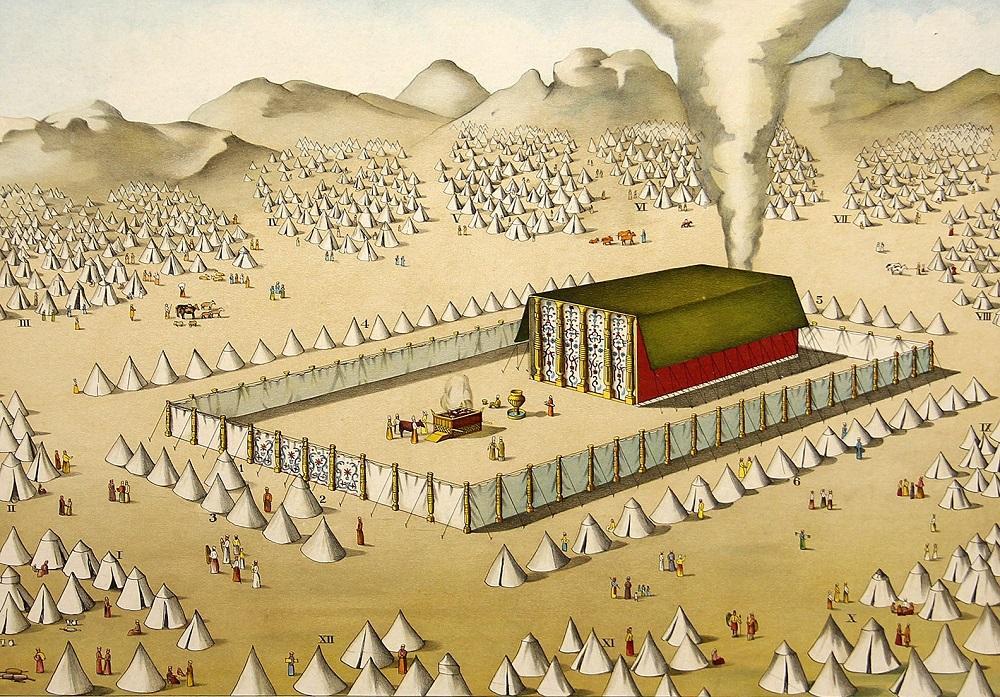

The function of the Tabernacle is the settling of the Shekhinah (Divine Presence) in Israel. Thus it is written, "And let them make Me a sanctuary that I may dwell among them" (Exodus 25:8)... This conforms to what the Rabbis said: "The Holy One desired an abode in the lower world."
Now this must be understood: Why did God seek to dwell in this world? After all, even without this we already know that God is present here, as it is written: "Do I not fill heaven and earth?" (Jeremiah 23:24).
בשעה שאמר לו ועשו לי מקדש (שמות כה:ח), אמ' משה לפני הקב"ה, רבונו של עולם הנה השמים ושמי השמים לא יכלכלוך ואתה אמרת ועשו לי מקדש, א' לו הקב"ה, משה לא כשאתה סבור, אלא עשרים קרש בצפון ועשרים קרש בדרום שמונה במערב ואני יורד ומצמצם שכינתי ביניכם למטן
When God said to Moses, ‘Let them make Me a sanctuary,’ Moses responded, ‘Master of the Universe, the highest heavens cannot contain You, and yet You say, Let them make Me a sanctuary?!’” The Holy Blessed One said to Moses, “Moses, not as you think. Rather, twenty boards to the north, twenty boards to the south, and eight to the west—and I will descend and contract My presence among you below.
Traditional Jewish theology affirms that God is all-powerful, but also that God usually refrains from making use of this power. One of the premises of biblical thinking, for example, is that God makes space for human agency, and allows us the freedom and the power to impact upon the world in significant ways. God is, a modern Bible scholar writes, a “power- sharing” rather than a power-hoarding God.4 This means that we can obey God’s will or thwart it. We can care for a person in pain or ignore her. We can cure illness or invent new ways of inflicting death and devastation. We can sanctify Shabbat or utterly profane it. God wants human beings to have meaningful freedom, and that means that God has to contract some—most, and sometimes all—of God’s power...
[In a] form of divine self-restraint, God does not make the divine presence always and everywhere obvious. If human beings are to choose relationship with God rather than having it imposed upon them, if we are to discern God’s presence rather than be bludgeoned by it, then God has to render the divine presence more subtle, and even elusive, than we would sometimes like. In order that there be space for us, God does not exercise all of God’s power; in order that God’s presence be discovered and freely embraced, God does not make God’s presence manifestly obvious at all times. So God withdraws and pulls back—but at the same time, God remains radically present. God is “with us in our afflictions” (Psalm 91:15)...
In order to summon us as partners, God needs to affirm and respect our independence. This is not absolute, ontological independence, to be sure—we still depend on God for our being—but it is a form of independence nevertheless. Jewish theology insists that God wants relationship, and the possibility of relationship only emerges when both partners are honored in their separateness, and then choose to come together.
Jewish-Belgian-American psychotherapist (daughter of two Holocaust surviors), known for her work on human relationships
Love rests on two pillars: surrender and autonomy. Our need for togetherness exists alongside our need for separateness. One does not exist without the other. With too much distance, there can be no connection. But too much merging eradicates the separateness of two distinct individuals. Then there is nothing to transcend, no bridge to walk on, no one to visit on the other side, no other internal world to enter.... When two become one—connection can no longer happen. There is no one to connect with.