


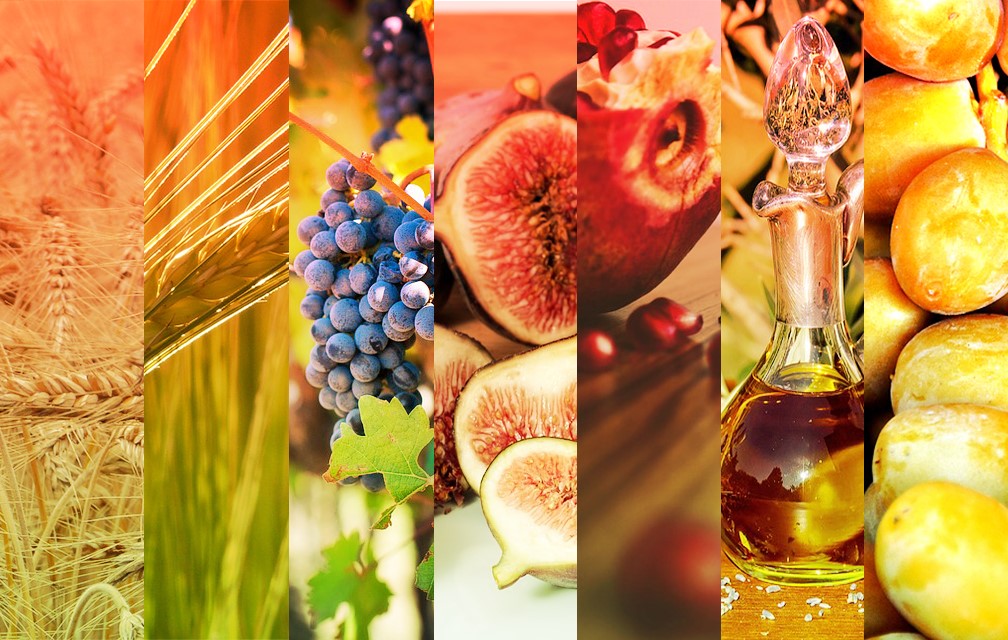
The Seven Species of the Land of Israel
WHEN DOES CHANGE HAPPEN?
The tree goes through cycles in its life. The heavy-laden tree of summer empties itself of fruit in the autumn, and then slowly loses its leaves, one by one. By winter time, the tree stands shorn of its previous glory. For all purposes, it appears to have died.
But then comes Tu B'Shevat! In the midst of the cold winter days, when all vegetation seems frozen or dead, the sap of the tree starts to flow beneath the surface bark. Rising slowly from roots buried in the hardened soil, the sap pushes its way up, pumping new life into outstretched branches that reach towards the heavens.
In life, we too often go through cycles of growth. Periods of renewal and growth may alternate with times of stagnation or dormancy. Rabbi Shlomo Wolbe cites that this cycle is part of human nature. He adds that a person must not become disillusioned when spiritual growth seems halted; the "low" period will usually be followed by a "high" period that will yield new opportunities for growth.
That is the message of Tu B'Shevat: Even when we feel lethargic, in a rut, and seem to have lost the drive to achieve, we must not despair. Just as winter is an annual hiatus in the life cycle of trees, so bouts of lethargy and unproductivity are necessary phases in the human cycle. Just as with the coming of spring, life-giving sap moves imperceptibly through the trees to branches stretching to the sky, so we too will have renewed energy from deep within our spiritual reservoirs, so long as we set our goal heavenward.
- Rabbi Ephraim Nisenbaum

Tu b'Shevat is a time for us to remember our bond with the earth, and renew our covenant with God. Midrash teaches us that “There is no plant without an angel in Heaven tending it and telling it, 'Grow!'"(Genesis Rabbah 10:7). Tu b'Shevat is a time for us to live as angels, to recreate heaven here on earth. The Jewish name for heaven is Gan Eden, the Garden of Eden. Today, as we eat, sing, and pray together, let us envision a paradise that we are partners in, shaping, cultivating, and guarding.
בָּרוּךְ אַתָּה ה' אֱלֹהֵינוּ מֶלֶךְ הָעוֹלָם,
שֶׁהֶחֱיָנוּ וְקִיְּמָנוּ וְהִגִיעָנוּ לַזְּמַן הַזֶּה.
Praised be You, Eternal our God, Ruler of the universe, who has kept us alive, sustained us and permitted us to reach this season.
Now that we have made our first blessing, we ask a question:
Just how important are trees?
The text below starts to give us an answer.
אם היתה נטיעה בתוך ידך ויאמרו לך הרי לך המשיח. בוא ונטע את הנטיעה (ואח”כ צא והקביל).
Midrash Avot Derabbi Natan, Version B, Chapter 31
If you had a sapling in your hand and were told that the Messiah had come, first plant the sapling and then go out to greet the Messiah.

Here, during the seder of Tu b'Shevat, we are afforded an opportunity to eat, as is true of many of our sacred occasions. On other holidays we eat to mark a victory, our salvation, to live through great moments in our history and to rejoice in our triumph. Here, on the birthday of the trees, we eat not in order to celebrate, but rather in order to recenter ourselves in our holy work.
Much has been destroyed in this world from the time of the Tree of Knowledge to our own time through mindless eating, consumption without intention. Rabbi Chaim Vital wrote that his teacher, the Ari z"l, explained that through the intentional eating of the fruits at the seder one could come to repair the world. By learning to eat and engage with our world while filled with holy intention, we can restore the Garden of Eden, Paradise.
As we move through our seder, let this be a time for you of resetting intentions. A tree does not appear to be growing this time of year, not in the diaspora and not in Israel. But, it does not lie fully dormant. At this time of year, the sap is starting to flow, the energy needed for growth is stirring inside the tree. This is true for us as well.
Now, in these moments of cold, our energy is stirring within us, waiting for the right moment to burst forth in growth. Let us set our intentions to create and consume carefully in our world. Let these intentions, plans, and eventual actions help the world to grow and peace to blossom.
We now raise our voices to join in song with the whole natural world which sings praises to our Creator!

(12) The fields and everything in them exult; then shall all the trees of the forest shout for joy
Az yiraninu kol atsay ya'ar.
A prayer from the original Tu BiSh’vat haggadah, Pri Etz Hadar:
O God, who makes, forms, creates, and emanates the highest worlds! You made the trees and grasses grow from the ground in the shape and pattern of these highest worlds. And this full moon is the beginning of Your work to renew and ripen the fruit trees, to bring forth the fruit of ‘the Tree of Life in the midst of the garden.’ May it be Your will that our eating and blessing and meditating on these fruits will strengthen the flow of love and blessing over the trees, to make them grow and bloom, for good life, for blessing and for peace. May all Creation return to its original strength and may we see the rainbow rejoicing in its colors. And may all the sparks of divine energy, whether scattered by our hands, or by the hands of our ancestors, or by the sin of the first human against the fruit of the tree, be returned and included in the majestic might of the Tree of Life.

As we take a moment to eat and drink, having pulled away the tough shells, we think about our own tough shells. Our society's tough shells. Let us join together in song and set our intentions to work together to reveal what is concealed. Let us see the seed of the Divine in each of us and work to support and love each other.
עולם העשייה Olam Ha’Asiyah — The World of Action
We live in the world of assiyah, action and physicality. This is the tangible world of flesh, stone, wood. Here the spark of the Divine is hidden by the shell of appearance. We live in the world of assiyah. This is the world of tangible physicality. Each of the Four Worlds is associated with a season and an element; this world is associated with Winter and with earth. In winter the ground is frozen, but we know it contains the life of the spirit below. The white wine or juice we drink symbolizes winter’s pale light and white snow.
The First Cup of Wine - all White
בָּרוּךְ אַתָּה יי אֱלֹהֵינוּ מֶלֶךְ הָעוֹלָם בּוֹרֵא פְּרִי הַגָּפֶן
Baruch atah Adonai Eloheinu melech ha’olam, borei pri hagafen.
Blessed are You, Adonai our God, Source of all being, creator of the fruit of the vine.
In winter we layer ourselves in clothing, blanketing ourselves from the cold just as the earth is insulated by snow. The fruit we eat for the world of assiyah likewise has a protective outside and soft interior. Removing the hard shells of pomegranates, walnuts, almonds, coconuts, or pecans exposes a vulnerable inside.
The shell which conceals these fruits also protects. We know what that feels like. In the world of school, work, and everyday activity, our spiritual selves require protection and nurturing. Sometimes we wrap ourselves in a tough outer shell, to protect our feelings and our hearts. As we eat these fruits representing assiyah, may we find healing in our physical lives: in our relationships with our bodies, in our strength, in all matters physical and practical, in our environment.
We recite together the blessing for the fruits of assiyah:
בָּרוּךְ אַתָּה יי אֱלֹהֵינוּ מֶלֶךְ הָעוֹלָם בּוֹרֵא פְּרִי הָעֵץ
Baruch atah Adonai Eloheinu melech ha’olam, borei pri ha’etz.
Blessed are You, Adonai our God, Source of all being, creator of the fruit of the tree
Lyrics derived from Charles Tindley's gospel "I'll Overcome Some Day" (1900)
We shall overcome, we shall overcome
We shall overcome someday;
Oh, deep in my heart, I do believe,
We shall overcome someday.
We'll walk hand in hand, we'll walk hand in hand,
We'll walk hand in hand someday:
Oh, deep in my heart, I do believe,
We'll walk hand in hand someday.
We are not afraid, we are not afraid,
We are not afraid today;
Oh, deep in my heart, I do believe,
We are not afraid today.
The truth shall make us free, the truth shall make us free,
The truth shall make us free someday;
Oh, deep in my heart, I do believe,
The truth shall make us free someday.
We shall live in peace, we shall live in peace,
We shall live in peace someday;
Oh, deep in my heart, I do believe,
We shall live in peace someday.
ויקרא רבה פרשה כה:ג
ר”י ב”ר סימון פתח (דברים יג) אחרי ה’ א-להיכם תלכו, וכי אפשר לבשר ודם להלוך אחר הקב”ה… אלא מתחלת ברייתו של עולם לא נתעסק הקב”ה אלא במטע תחלה הדא הוא דכתיב (בראשית ב) ויטע ה’ א-להים גן בעדן, אף אתם כשנכנסין לארץ לא תתעסקו אלא במטע תחלה הדא הוא דכתיב כי תבאו אל הארץ.
Vayikra Rabbah 25:3
Rabbi Yehudah ben Shimon began his discourse with the text, “After Adonai your God shall you walk” (Deuteronomy 12:5). But can a person of flesh and blood walk after the Holy One of Blessing?… But in truth the Holy One, blessed be God, from the very beginning of the creation of the world, was before all else occupied with planting, as is proved by the text, “And God planted a garden in Eden” (Genesis 2:8), and so do you also, when you enter into the land, occupy yourselves first with nothing else but planting; hence it is written, “And when you shall come into the land, you shall plant (Lev. 19:23).”
Before anything else! Not only must we complete the task of planting trees before we greet the messiah, we must set to planting them as the first part of accepting our redemption!
To plant a tree, especially a fruit tree, is to give a gift of blessings and sustenance to ourselves. But, more importantly, it is an opportunity to give these gifts to the next generation.
Want to walk in the ways of the Divine? From the beginning of creation and to our last moment of toil: plant seeds that will sprout fruit for you and all of humankind!


עולם היצירה Olam HaYetzirah — The World of Formation
We live in the world of yetzirah: change, emotion, transformation. In this world we turn clay into bricks, iron into plows, words into poetry. In this sphere we celebrate creative power: both ours, and God's. The world of yetzirah is the world of emotions and heart. In this realm we celebrate change and creativity, flux and flow. This world is associated with the season of Spring and the element of water. To symbolize this world, we drink white wine or juice with a dash of red. This gradual deepening of color parallels the reawakening of colors in nature as the sun brings the earth back to life. In spring the sun’s rays begin to thaw the frozen earth and the first flowers appear on the hillsides. As we drink the second cup of wine or juice, white with a dash of red, may we, like the flowers, blossom into our full potential.
We add a bit of red wine or juice to the white and recite together:
The Second Cup of Wine - White with some Red
בָּרוּךְ אַתָּה יי אֱלֹהֵינוּ מֶלֶךְ הָעוֹלָם בּוֹרֵא פְּרִי הַגָּפֶן.
Baruch atah Adonai Eloheinu melech ha’olam, borei pri hagafen.
Blessed are You, Adonai our God, Source of all being, creator of the fruit of the vine.
The world of yetzirah is connected with springtime. We eat fruits without protective shells — olives, dates, apricots, peaches and plums — to symbolize how, in spring, we will forget our protective attire and expose our soft bodies to the sun. Still, these fruits contain pits, reminding us that we may still have hardness around our hearts. Despite the wondrous expressions of our spirit, each of us is still tied to the hard stone of ego. We still feel the need to protect what makes us vulnerable.
As we eat the fruit of yetzirah, may our hearts be open to the feelings and needs of ourselves and others, allowing the warmth of our care to extend to the whole the world. May we find healing in the realm of emotions; may we find healing in our hearts.
We recite together the blessing for the fruits of yetzirah:
בָּרוּךְ אַתָּה יי אֱלֹהֵינוּ מֶלֶךְ הָעוֹלָם בּוֹרֵא פְּרִי הָעֵץ.
Baruch atah Adonai Eloheinu melech ha’olam, borei pri ha’etz.
Blessed are You, Adonai our God, Source of all being, creator of the fruit of the tree.

James Weldon Johnson, 1871 - 1928
Lift every voice and sing,
Till earth and heaven ring,
Ring with the harmonies of Liberty;
Let our rejoicing rise
High as the list’ning skies,
Let it resound loud as the rolling sea.
Sing a song full of the faith that the dark past has taught us,
Sing a song full of the hope that the present has brought us;
Facing the rising sun of our new day begun,
Let us march on till victory is won.
Stony the road we trod,
Bitter the chast’ning rod,
Felt in the days when hope unborn had died;
Yet with a steady beat,
Have not our weary feet
Come to the place for which our fathers sighed?
We have come over a way that with tears has been watered.
We have come, treading our path through the blood of the slaughtered,
Out from the gloomy past,
Till now we stand at last
Where the white gleam of our bright star is cast.
God of our weary years,
God of our silent tears,
Thou who hast brought us thus far on the way;
Thou who hast by Thy might,
Led us into the light,
Keep us forever in the path, we pray.
Lest our feet stray from the places, our God, where we met Thee,
Lest our hearts, drunk with the wine of the world, we forget Thee;
Shadowed beneath Thy hand,
May we forever stand,
True to our God,
True to our native land.
"A person should work forever, doing full and honest labor in order to rise step by step in the service of God. But do not look back every few minutes to see if you are progressing. For a person is like a tree. And do you look at a tree continually to see how it is growing? If you did, you would see nothing and become tired of looking, unless you prune it and protect it, trim and fertilize and water it to protect it from damage and danger and strong winds. Then the tree will grow and prosper and become beautiful. So must a person rid themselves of all those things which spoil them, and tend all the qualities which aid them in the service of God so that they will grow and prosper. It is, however, not a virtue to measure from hour to hour how much one has grown."
-Rabbi Uri of Strelisk (1757–1826)

What drives this change?
What can you learn from the journey from your beginning to here, to now?
עולם הבריאה Olam HaBriyah — The World of Creation
We live in the world of Briyah: air, thought, contemplation. We recall the words of Genesis: “God formed a human from the dust of the Earth, and blew into its nostrils the breath of life, and the human became a living being…placed in the Garden of Eden, to cultivate and protect it.” The world of briyah is the ethereal realm of thought; it is associated with the season of Summer and the element of air. One name for God is “The Breath of Life.” We breathe out what the trees breathe in; God breathes in us and through us. Briyah is the world of the holy breath of creation. In the world of briyah, we drink red wine or juice with a dash of white, reminding us that as the land becomes warmer and the colors of the fruits deepen as they ripen, we too become warmer and more open.
We add a more red wine or juice to the white and recite together:
The Third Cup
בָּרוּךְ אַתָּה יי אֱלֹהֵינוּ מֶלֶךְ הָעוֹלָם בּוֹרֵא פְּרִי הַגָּפֶן.
Baruch atah Adonai Eloheinu melech ha’olam, borei pri hagafen.
Blessed are You, Adonai our God, Source of all being, creator of the fruit of the vine.
We eat soft fruits (Figs, Blueberries) to remind ourselves to relinquish both our shells and the stones we carry inside us. In our deepest relationships, may we be like the fruit of briyah, with no inner shell and no outer façade.
As we eat the fruits representing briyah, may we find healing in our intellectual lives: in our minds, in our thoughts, in the heat of passionate argument and the light of brilliant insight.
We recite together the blessing for the fruits of briyah:
בָּרוּךְ אַתָּה יי אֱלֹהֵינוּ מֶלֶךְ הָעוֹלָם בּוֹרֵא פְּרִי הָעֵץ.
Baruch atah Adonai Eloheinu melech ha’olam, borei pri ha’etz.
Blessed are You, Adonai our God, Source of all being, creator of the fruit of the tree.

The Byrds from Kohelet
** To everything; turn, turn, turn,
There is a season; turn, turn,
turn,
And a time to every purpose
under
heaven.
A time to be born, a time to die,
A time to plant, a time to reap,
A time to kill, a time to heal,
A time to laugh...... a time to weep, **
A time to build up, a time to break down,
A time to dance, a time to mourn,
A time to cast away stones,
A time to gather stones together **
A time of war, a time of peace,
A time of love, a time of hate,
A time you may embrace,
A time to refrain from embracing **
A time to gain, a time to lose,
A time to rend, a time to sew,
A time of love, a time of hate,
A time of peace, I swear it's not too late. **
We live in the world of atzilut, essence, divine emanation. Physics tells us that what seems solid is actually filled with impossibly small spaces. Atzilut affirms this knowing: what seems like creation is actually just God. The world of atzilut is the world of essence and spirit. This world is associated with the season of Fall and the element of fire. This is the world of that which is intangible. To represent atzilut, we drink deep red wine or juice. The pure red liquid represents the full bloom of nature before the cold winter. As nature expends its last bit of energy in an explosion of colorful leaves, a full cycle is completed. As we drink the fourth cup of pure red wine or juice, may we become strong, like healthy trees, with solid roots in the ground and with our arms open to the love that surrounds us.
We take up a cup of red wine or juice and recite together:
Fourth Cup of Wine
בָּרוּךְ אַתָּה יי אֱלֹהֵינוּ מֶלֶךְ הָעוֹלָם בּוֹרֵא פְּרִי הַגָּפֶן.
Baruch atah Adonai Eloheinu melech ha’olam, borei pri hagafen.
Blessed are You, Adonai our God, Source of all being, creator of the fruit of the vine.
In the world of atzilut we eat no fruit, for this world cannot be represented by any fruit. In this spiritual world, we become aware of God’s love, mercy, and wisdom perceived with our hearts, not our senses. Our hearts are full and we praise the Source that renews all creation. The Four Worlds (Action, Emotion, Thought, and Spirit) are each nested inside each of the others. We live in all four realms at once. Sometimes we have hard shells, like the nuts of assiyah. Sometimes we have a rock inside us, like the stone fruits of yetzirah. Sometimes we are soft all the way through, like the fruits of briyah. And sometimes we are so connected with the Holy One of Blessing that we melt beyond our bodies altogether, living in atzilut. May we find blessing in each of these four ways of being, each of these four seasons, each of these four worlds.

בשעה שברא הקב“ה את אדם הראשון, נטלוֹ והחזירוֹ על כל אילני גן עדן ואמר לו: ראה מעשי כמה נאים ומשובחין הן וכל מה
שבראתי בשבילך בראתי; תן דעתך שלא תקלקל ותחריב את עולמי, שאם קלקלת, אין מי שיתקן אחריך.
Ecclesiastes Rabbah 7:13.
When God created the first human, God led the human around all the trees in the Garden of Eden. God said to the human, “See My works, how beautiful and praiseworthy they are. Everything I have created has been created for your sake. Think of this, and do not corrupt or destroy My world; for if you corrupt it, there will be no one to set it right after you.”

Our time is precious, so join us in song.
I see trees of green, red roses too
I see them bloom for me and you
And I think to myself what a wonderful world
I see skies of blue and clouds of white
The bright blessed day, the dark sacred night
And I think to myself what a wonderful world
The colors of the rainbow so pretty in the sky
Are also on the faces of people going by
I see friends shaking hands saying how do you do
They're really saying I love you
I hear babies crying, I watch them grow
They'll learn much more than I'll never know
And I think to myself what a wonderful world
Yes I think to myself what a wonderful world
Songwriters: George Weiss / Robert Thiele
What a Wonderful World lyrics © BMG Rights Management, Concord Music Publishing LLC, Carlin America Inc
“Banishment from Eden”. In the Beginning.
God sent Adam forth from the Garden to till the soil from which he had been taken, work that requires sorting out, sowing, plowing, and harvesting. In order to be able to live from the earth, a person has to keep digging, weeding and drawing forth from the ground. The point is that the work of weeding out the harmful and proliferating the good can be done only in and with the earth itself. The war of humanity against thorns and thistles, insects and rodents, is an incessant struggle, and it is part of our work of Tikkun, correcting the world.
-Rabbi Adin Even-Israel Steinsaltz.