אָמְרִי: עַד כַּמָּה נְצַעֲרֵיהּ וְנֵיזִיל, בְּרֹאשׁ הַשָּׁנָה אֶשְׁתָּקַד צַעֲרֵיהּ. בִּבְכוֹרוֹת בְּמַעֲשֵׂה דְרַבִּי צָדוֹק צַעֲרֵיהּ. הָכָא נָמֵי צַעֲרֵיהּ, תָּא וְנַעְבְּרֵיהּ! מַאן נוֹקֵים לֵיהּ? נוֹקְמֵיהּ לְרַבִּי יְהוֹשֻׁעַ — בַּעַל מַעֲשֶׂה הוּא. נוֹקְמֵיהּ לְרַבִּי עֲקִיבָא — דִּילְמָא עָנֵישׁ לֵיהּ, דְּלֵית לֵיהּ זְכוּת אָבוֹת. אֶלָּא נוֹקְמֵיהּ לְרַבִּי אֶלְעָזָר בֶּן עֲזַרְיָה, דְּהוּא חָכָם, וְהוּא עָשִׁיר, וְהוּא עֲשִׂירִי לְעֶזְרָא. הוּא חָכָם — דְּאִי מַקְשֵׁי לֵיהּ, מְפָרֵק לֵיהּ. וְהוּא עָשִׁיר — דְּאִי אִית לֵיהּ לְפַלּוֹחֵי לְבֵי קֵיסָר, אַף הוּא אָזֵל וּפָלַח. וְהוּא עֲשִׂירִי לְעֶזְרָא — דְּאִית לֵיהּ זְכוּת אָבוֹת, וְלָא מָצֵי עָנֵישׁ לֵיהּ. אֲתוֹ וַאֲמַרוּ לֵיהּ: נִיחָא לֵיהּ לְמָר דְּלֶיהְוֵי רֵישׁ מְתִיבְתָּא? אֲמַר לְהוּ: אֵיזִיל וְאִימְּלִיךְ בְּאִינָשֵׁי בֵּיתִי. אֲזַל וְאִמְּלִיךְ בִּדְבֵיתְהוּ.
The Gemara relates that in their murmuring they said: How long will Rabban Gamliel continue afflicting him? Last year on Rosh HaShana, he afflicted him; Rabban Gamliel ordered Rabbi Yehoshua to come to him carrying his staff and bag, on the day on which Yom Kippur occurred, according to Rabbi Yehoshua’s calculations. Regarding the firstborn, in the incident involving the question of Rabbi Tzadok, he afflicted him just as he did now, and forced him to remain standing as punishment for his failure to defend his differing opinion. Here too, he is afflicting him. Let us remove him from his position as Nasi. It was so agreed, but the question arose:
Who shall we establish in his place?
Shall we establish Rabbi Yehoshua in his place? The Sages rejected that option because Rabbi Yehoshua was party to the incident for which Rabban Gamliel was deposed. Appointing him would be extremely upsetting for Rabban Gamliel.
Shall we establish Rabbi Akiva in his place? The Sages rejected that option because Rabbi Akiva, who descended from a family of converts, would be vulnerable. Perhaps due to Rabban Gamliel’s resentment he would cause him to be divinely punished as he lacks the merit of his ancestors to protect him.
Rather, suggested the Sages, let us establish Rabbi Elazar ben Azarya in his place, his outstanding characteristics set him apart from the other candidates. He is wise, rich, and a tenth generation descendant of Ezra. The Gemara explains: He is wise, so if Rabban Gamliel raises a challenge in matters of Torah, he will answer it and not be embarrassed. And he is rich, so if the need arises to pay homage to the Caesar’s court and serve as a representative of Israel to lobby and negotiate, he has sufficient wealth to cover the costs of the long journeys, taxes, and gifts, so he too is able to go and pay homage. And he is a tenth generation descendant of Ezra, so he has the merit of his ancestors, and Rabban Gamliel will be unable to cause him to be punished. They came and said to him: Would the Master consent to being the Head of the Yeshiva? He said to them: I will go and consult with my household. He went and consulted with his wife.
-Michelle Obama
A Promised Land by Barack Obama, 2020
Rabbi Yehoshua is rejected because he was involved in the impeachment and so his establishment could be perceived as having been driven by his own lust for power.
Rabbi Akiva is rejected because he would be subject to personal invective for not coming from a rabbinic dynasty. His lack of distinguished stock leaves him open to criticism.
What makes Rabbi Elazar ben Azaryah attractive?
Wise = He can take on his predecessor in a debate.
Wealth = When he calls, the Caesar answers.
Lineage = His dignity cannot be impugned.
How does a head of state lead the country?
THERE ARE TWO FORMS or dimensions of leadership. One is power, the other, influence. Often we confuse the two. After all, those who have power often have influence, and those who have influence have a certain kind of power. In fact, however, the two are quite different, even opposites.
We can see this by a simple thought-experiment. Imagine you have total power, and then you decide to share it with nine others. You now have one-tenth of the power with which you began. Imagine, by contrast, that you have a certain measure of influence, and now you share it with nine others. How much do you have left? Not less. In fact, more. Initially there was only one of you; now there are ten. Your influence has spread. Power operates by division, influence by multiplication. With power, the more we share, the less we have. With influence, the more we share, the more we have.
So deep is the difference that the Torah allocates them to two distinct leadership roles: king and prophet. Kings had power. They could levy taxes, conscript people to serve in the army, and decide when and against whom to wage war. They could impose non-judicial punishments to preserve social order. Hobbes famously called kingship a “Leviathan” and defined it in terms of power. The very nature of the social contract, he argued, was the transfer of power from individuals to a central authority. Without this, there could be no government, no defence of a country and no safeguard against lawlessness and anarchy.
Prophets, by contrast, had no power at all. They commanded no armies. They levied no taxes. They spoke G-d’s word, but had no means of enforcing it. All they had was influence – but what influence! To this day, Elijah’s fight against corruption, Amos’ call to social justice, Isaiah’s vision of the end of days, are still capable of moving us by the sheer force of their inspiration. Who, today, is swayed by the lives of Ahab or Jehoshaphat or Jehu? When a king dies, his power ends. When a prophet dies, his influence begins.
MISHNA: The king “shall not accumulate many horses for himself” (Deuteronomy 17:16), but only enough for his chariot in war and in peace. “Neither shall he greatly accumulate silver and gold for himself” (Deuteronomy 17:17), but only enough to provide his soldiers’ sustenance [aspanya]. And the king writes himself a Torah scroll for his sake, as stipulated in Deuteronomy 17:18. When he goes out to war, he brings it out with him. When he comes in from war, he brings it in with him. When he sits in judgment, it is with him. When he reclines to eat, it is opposite him, as it is stated: “And it shall be with him and he shall read it all the days of his life” (Deuteronomy 17:19).
2. The king should have the needs of his subjects foremost in his mind.
3. The king must write his own copy of the law to consult with during war, peacetime and when sitting in judgment.
What is the significance of a king writing his own Torah scroll? Would our democracy be any different if the first thing the president/prime minister did was write a personal copy of the Constitution?
אמר להם כמדומין אתם ששררה אני נותן לכם עבדות אני נותן לכם שנאמר (מלכים א יב, ז) וידברו אליו לאמר אם היום תהיה עבד לעם הזה:
Rabban Gamliel said to them: Do you imagine that I am granting you authority, and since you did not want to accept the honor you did not come when I sent for you? I am granting you servitude, as it is stated: “And they spoke to him saying: If you will be a servant to this people today” (I Kings 12:7).
וישב בבית החפשית. אמרו רז"ל כי המלכות היא עבודה שהרי צריך לשאת כל משא העם עליו ולשמוע אליהם ולשפוט משפטיהם בין ברצונו בין שלא ברצונו.
Rabbi David Kimhi
1160-1235; Narbonne, Provence, France
And he sat in the House of Freedom: Our sages of blessed memory said in Horayot 10a, that being a King is work; You need to carry the burdens of the nation, listen to them, and judge their cases in court whether you want to or not.
Discussion: How much does the Jewish understanding of leadership dovetail with today's heads of state?
In what ways does workload increase/decrease with responsibility? What is the feeling associated with knowing other people put their trust in your decision-making?
אשר לא יקים את דברי התורה הזאת
על הדבר הזה קרע יאשיהו ואמר עלי להקים אמר רבי אסי בשם רבי תנחום בר חייא למד ולימד ושמר ועשה והיה ספק בידו להחזיק ולא החזיק הרי זה בכלל ארור ידרשו בהקמה הזאת בית המלך והנשיאות שבידם להקים את התורה ביד המבטלים אותה.
"... For this reason King Josiah rent his garments (as a sign of mourning) and said: 'I must uphold it' ... and by upholding he meant that the monarchy or the presidency (nesiut) have it in their power to uphold the laws of the Torah against those who ignore them".
(1) The king has the right to levy a tax for his own needs or for wars, and to set rates for the tax. It is forbidden to avoid paying his tax. For the king is entitled to everything about which is written in the Chapter Regarding Kings I Samuel 8.
(2) He can recruit and conscript, from anywhere in Israel, courageous and strong men and make them soldiers for his chariots, horsemen, and members of his guard.
(3) He can enlist artisans Or, craftsmen., any he so needs, to do his work. But, he must pay them their wages.
(5) He can compel those who are qualified to be his ministers, and may appoint them to be the officers in charge of the thousands and the fifties.
(10) All lands which he conquers are his. He can give them to his servants or his soldiers, however he so wishes. He retains for himself whatever he wants. However he so decides is the law. This is as long as all his doings are done for the Sake of Heaven, and his orientation and thoughts are to promote the True Religion, fill the world with righteousness, break the arm of the wicked, and fight G-d’s war. For we do not, a priori, appoint a king except to execute justice and fight wars, as it says, “and that our king will judge us, and go out before us, and fight our battles” (I Samuel 8:20).
Nissim of Gerona
1320-1376; Catalonia, Spain
(3) I understand the plain meaning of the verse as follows: It is accepted that men need judges to judge between them, for in their absence (Avoth 3:2) "One man would swallow the other alive" and the world would become corrupt. And every people requires some form of government, the sage going so far as to say: "Even thieves recognize the necessity of justice within their society." And Israel needs this just as the other nations do...And because the needs of society are not completely served with this alone, G-d provides for the appointment of a king.
Drafting assisted by legal advisor Isaac Albert Mosse, a German Jew.
Article 1. The Empire of Japan shall be reigned over and governed by a line of Emperors unbroken for ages eternal.
Article 2. The Imperial Throne shall be succeeded to by Imperial male descendants, according to the provisions of the Imperial House Law.
Article 3. The Emperor is sacred and inviolable.
Article 4. The Emperor is the head of the Empire, combining in Himself the rights of sovereignty, and exercises them, according to the provisions of the present Constitution.

Constitutional and Statutory Duties of the Prime Minister:
- Exercises "control and supervision" over the entire executive branch
- Presents bills to the Diet on behalf of the Cabinet
- Signs laws and Cabinet orders (along with other members of the Cabinet)
- Appoints all Cabinet ministers, and can dismiss them at any time
- May permit legal action to be taken against Cabinet ministers
- Must make reports on domestic and foreign relations to the Diet
- Must report to the Diet upon demand to provide answers or explanations
- May advise the Emperor to dissolve the Diet's House of Representative.
- Presides over meetings of the Cabinet.
- Commander-in-chief of the Japan Self-Defense Forces.
- May override a court injunction against an administrative act upon showing of cause
Article 2, Section 2:
The President shall be Commander in Chief of the Army and Navy of the United States, and of the Militia of the several States, when called into the actual Service of the United States; he may require the Opinion, in writing, of the principal Officer in each of the executive Departments, upon any Subject relating to the Duties of their respective Offices, and he shall have Power to grant Reprieves and Pardons for Offences against the United States, except in Cases of Impeachment.
He shall have Power, by and with the Advice and Consent of the Senate, to make Treaties, provided two thirds of the Senators present concur; and he shall nominate, and by and with the Advice and Consent of the Senate, shall appoint Ambassadors, other public Ministers and Consuls, Judges of the supreme Court, and all other Officers of the United States, whose Appointments are not herein otherwise provided for, and which shall be established by Law: but the Congress may by Law vest the Appointment of such inferior Officers, as they think proper, in the President alone, in the Courts of Law, or in the Heads of Departments.
The President shall have Power to fill up all Vacancies that may happen during the Recess of the Senate, by granting Commissions which shall expire at the End of their next Session.
Section 3.
He shall from time to time give to the Congress Information of the State of the Union, and recommend to their Consideration such Measures as he shall judge necessary and expedient; he may, on extraordinary Occasions, convene both Houses, or either of them, and in Case of Disagreement between them, with Respect to the Time of Adjournment, he may adjourn them to such Time as he shall think proper; he shall receive Ambassadors and other public Ministers; he shall take Care that the Laws be faithfully executed, and shall Commission all the Officers of the United States.
Discussion: How do the duties of a King of Israel compare to those of the Emperor, the Prime Minister and the President? What aspects are similar/different?
תנו רבנן שלשה הקב"ה בוכה עליהן בכל יום על שאפשר לעסוק בתורה ואינו עוסק ועל שאי אפשר לעסוק בתורה ועוסק ועל פרנס המתגאה על הצבור
The Sages taught that there are three types of people for whom the Holy One, Blessed be He, cries every day: For one who is able to engage in Torah study and does not engage in it; and for one who is unable to engage in Torah study and nevertheless he endeavors and engages in it; and for a leader who lords over the community.
With regard to Bezalel’s appointment, Rabbi Yitzḥak said: One may only appoint a leader over a community if he consults with the community and they agree to the appointment, as it is stated: “And Moses said unto the children of Israel: See, the Lord has called by name Bezalel, son of Uri, son of Hur, of the tribe of Judah” (Exodus 35:30). The Lord said to Moses: Moses, is Bezalel a suitable appointment in your eyes? Moses said to Him: Master of the universe, if he is a suitable appointment in Your eyes, then all the more so in my eyes. The Holy One, Blessed be He, said to him: Nevertheless, go and tell Israel and ask their opinion. Moses went and said to Israel: Is Bezalel suitable in your eyes? They said to him: If he is suitable in the eyes of the Holy One, Blessed be He, and in your eyes, all the more so he is suitable in our eyes.
§ The verse states: “This is the generation of them that seek after Him, that seek Your face, Jacob. Selah” (Psalms 24:6). This verse teaches that the level of the generation and those who lead them, i.e., those who seek after Him, are the same. Rabbi Yehuda Nesia and the Rabbis disagree about this. One says: The level of the generation follows the level of the leader, and one says: The level of the leader follows the level of his generation. The Gemara asks: With regard to what halakha, i.e., matter, is this stated?...The Gemara answers: Rather, we are speaking in terms of harshness and gentleness. One Sage holds that if the leader is harsh, then the generation will be harsh. If the leader is gentle and kind, the generation will be the same. The other Sage holds that if the people of a certain generation are harsh, they will have a harsh leader; if the generation is gentle and kind, the leader will be similar.
Discussion: Does political leadership reflect the country or vice versa?

Born in London 1928-
Vice-President of the Rabbinical Court and the Ra'avad (Chief) of the Edah HaChareidis in Jerusalem
רב משה שטרנבוך
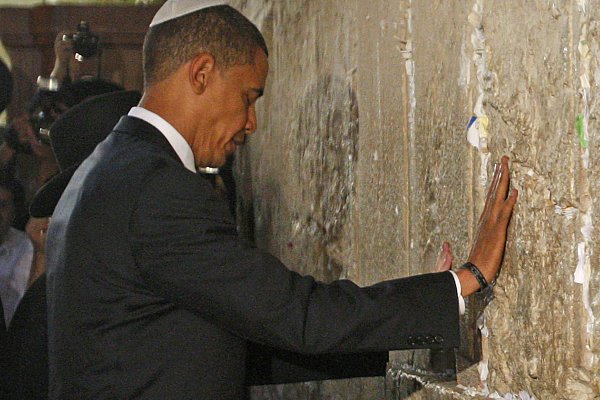
בזכרוני נכשהגיע לארץ ישראל לביקור הנשיא מאמריקא נחלקו הרבנים אם
לברך שנתן מכבודו או לא ולדעתי כיון שמעמדו הוא תלוי ועומד בהחלטת בית הנבחרים שמה שבכחם להדיח אותו וסמכויותיו מוגבלים מאד אין לברך ולא דמי למלוכה באנגליה אפי' בזמננו שעל כל חוק חדש המלכה חותמת ולא מתחלפת אלא המלוכה בידה וביד צאצאיה וכבודה ככבוד מלכים ממש... ולא דומה לכבוד מלך כלל והוא רק כעין ראש ממשלה ולא בגדר מלך כלל
Rav Moshe Shternbuch, Teshuvos VeHanhagos 2:139
I remember when the President of the United States came to America for a visit, and the rabbis disagreed on whether to treat him like a king who we must give high levels of respect to. My position is that, since the President of the U.S is only in power for a limited period of time, and is based on a decision of the people, and because his powers are limited constitutionally, we do not need to say a blessing when we see him. He is not parallel to the English king/queen, even in our time, as any new piece of legislature must be signed by the king/queen, and the power is passed down hereditarily. Furthermore, the queen is actually royalty, unlike in America where it is just an elected office...thus the American president is not at all like the British queen, and is not considered royalty at all.
Chaim Halberstam of Sanz (1793–1876)
Great-grandson Rabbi Yekusiel Yehudah Halberstam survived the Holocaust and founded Laniado Hospital in Netanya
When the rabbis wrote in their legal decisions that it is forbidden to follow the ways of the nations, their intention was not, heaven forbid, to not give their leaders respect. Conversely, the rabbis warned us many times to respect the leaders and citizens of the nation, even included the nations that have made our lives much more difficult and painful...We know from our tradition that the greatest sages of the Talmud, like Rava and Shmuel, like R' Abahu and Rabbi Yehoshua ben Kisar were part of the government, and thus there is no problem in welcoming nations to join forces with the government.
The residents of a town can force one another (even the minority can force the majority - Rabbneu Yerucham 6:31) to put up a wall with gates and a bolt for the town; and to build a synagogue and to buy a book of the Torah, Prophets and Writings so that anyone from the community may read from them. Gloss/Rema: And the same is true for all the needs of the town ...And with a matter that the community is not able to be in agreement about, all the heads of households that pay taxes should convene and accept upon themselves that each one proclaim his opinion for the sake of heaven, and [then] go according to the majority. And if the minority [refuses to go along], the majority can force them [to comply]...
אמר ר' שמואל בר נחמני: שכל מה שהגדולים עושין, הדור עושה. כיצד? הנשיא מתיר ואב ב"ד אוסר?! הנשיא מתיר ואני אוסר?! והדיינים אומרים: אב ב"ד מתיר ואנו אוסרים?! ושאר הדור אומרים: הדיינין מתירין ואנו אוסרים?! מי גרם לכל הדור לחטוא? הנשיא שחטא תחילה...
Rabbi Samuel bar Nahmani said: "It is natural that people should imitate their leaders. How? If the Patriarch gives permission to do that which is forbidden by the Torah, the chief of the court says to himself: 'If the Patriarch permits this, why should I forbid it?' The Justices say: 'If the chief of the court has given permission, why should we forbid?' And the people say: 'If the Justices have given permission shall we consider it forbidden?' It is clear that it is the initial sin of the Patriarch which has caused the entire generation to be sinful...
Discussion: Here we read an echo of Richard Nixon's "When the President does something it's not illegal." How much latitude ought we give our elected officials in the discharge of their duties?
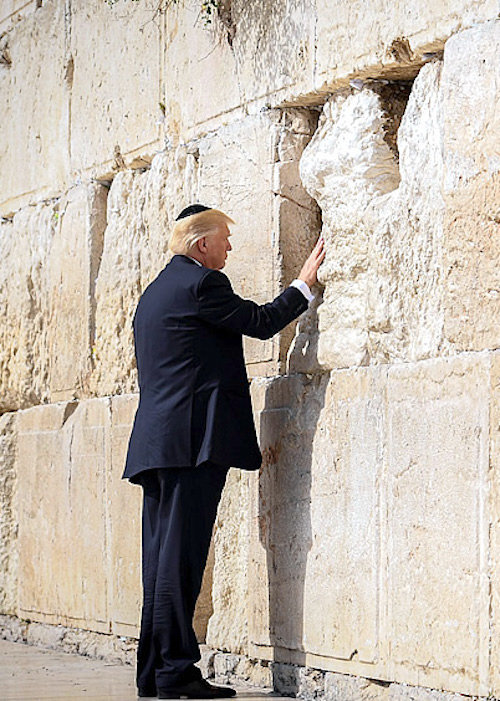
Speak up for those who cannot speak for themselves, For the rights of all the unfortunate. Speak up, judge righteously, Champion the poor and the needy.