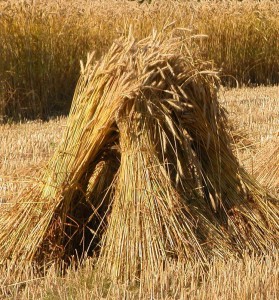
Save "המגדיש בשדה חברו
"
המגדיש בשדה חברו

מתני׳ המגדיש בתוך שדה חבירו שלא ברשות ואכלתן בהמתו של בעל השדה פטור ואם הוזקה בהן בעל הגדיש חייב ואם הגדיש ברשות בעל השדה חייב:

And Rav ruled that the halakha is in accordance with the opinion of Rabbi Shimon, as we learned in the mishna: Rabbi Shimon says: If one’s animal ate ripe produce, the owner pays the value of ripe produce eaten. Therefore, if it ate one se’a of produce, he pays the value of one se’a of produce, and if it ate two se’a, he pays for two se’a. Although Rabbi Shimon’s opinion is the minority one, Rav ruled in accordance with it. MISHNA: In a case of one who stacks his produce in another’s field without permission from the owner of that field, and an animal belonging to the owner of the field eats the produce, the owner of the field is exempt. And if the animal is injured by the produce, the owner of the stack is liable. But if he stacked them in that field with permission, the owner of the field is liable for damage caused to the produce. GEMARA: The Gemara asks: Shall we say that that which we learned in the mishna is not in accordance with the opinion of Rabbi Yehuda HaNasi? As, if the mishna were in accordance with the opinion of Rabbi Yehuda HaNasi, doesn’t he say: A homeowner who gives another permission to bring items into his courtyard is not responsible for them unless the homeowner accepts on himself to safeguard them? The mishna does not mention any such acceptance of responsibility. Rav Pappa said: Here we are dealing with the supervisor of the threshing floors, to whom people would entrust their produce. As, since the supervisor says to the owner of the produce: Bring it in and stack it, it is as though he had said to him: Bring it in and I will supervise it for you.

גמ׳ לימא תנן דלא כרבי דאי כרבי האמר עד שיקבל עליו בעל הבית לשמור אמר רב פפא הכא בנטר בי דרי עסקינן דכיון דא"ל עייל וגדוש עייל ואנטר לך הוא:

was wearing black shoes, unlike the Jewish custom of that time, and standing in the market of Neharde’a. Officials of the house of the Exilarch found him and said to him: What is different about you that causes you to wear these shoes? He said to them: I am wearing them because I am in mourning over the destruction of the Temple and Jerusalem, and so I wear black shoes, as is the custom of mourners. They said to him: Are you a man of such importance to publicly mourn over Jerusalem? They thought that it was simply presumptuousness on his part. Since he was acting against the prevalent Jewish custom, they brought him to the prison and incarcerated him. Eliezer Ze’eira said to them: I am a great man, a scholar, and it is fitting for me to mourn publicly over the destruction of Jerusalem. They said to him: How do we know that you are a scholar? He said to them: Either you ask of me a matter of halakha and I will answer you, or I will ask you a matter of halakha and you will answer me. They said to him: You ask. He said to them: With regard to one who cuts a cluster of flowers on the stem of a date palm belonging to another, what is he required to pay? They said to him: He pays the value of the date stem. He said to them: But ultimately they will become ripe dates, which are worth more. They said to him: If so, he pays the value of the future dates. He said to them: But he did not take ripe dates from the other person, so how can the court obligate him to pay for damage that he did not cause? They said to Eliezer Ze’eira: You tell us the correct appraisal for the date stem. He said to them: The court appraises the damage relative to a similar piece of land sixty times the size. They said to him: Who says an opinion as you do, so that you can prove you are correct? He said to them: Shmuel is alive and his court exists; you can ask him. They sent the question before Shmuel, together with the ruling of Eliezer Ze’eira. Shmuel said to them: He is saying well to you, because the halakha is as he says; the appraisal is relative to an area sixty times greater. Upon hearing this, the officials of the Exilarch realized that he was a great man and they released him. § The mishna (55b) teaches that Rabbi Shimon says: If the animal ate ripe produce, the owner pays the value of the ripe produce eaten. What is the reason for Rabbi Shimon’s opinion? This that the Merciful One states in the Torah: “And it feed in another’s field” (Exodus 22:4), which teaches that the court appraises the damage relative to another field, this statement applies specifically with regard to produce that requires a field to grow. For one’s animal eating this produce, which do not require the field in order to ripen further, the animal’s owner must pay their value as they are. Rav Huna bar Ḥiyya says that Rabbi Yirmeya bar Abba says: Rav judged a practical halakha on a certain issue in accordance with the opinion of Rabbi Meir, despite the fact that in general the halakha is not in accordance with his opinion. And furthermore, he ruled that the halakha is in accordance with the opinion of Rabbi Shimon, even though in that case his was a minority opinion. Rav Huna bar Ḥiyya explains: Rav judged a practical halakha in accordance with the opinion of Rabbi Meir, as it is taught in a baraita: In the case of a field designated by its owner as a lien for his wife’s marriage contract, which he subsequently wants to sell, if he wrote a document of sale to a first buyer, but his wife did not sign for him to endorse the sale, and subsequently the husband wrote a document of sale to a second buyer, and his wife signed for him, she thereby loses the lien of her marriage contract, since the sale is effective and she can no longer collect from this field; this is the statement of Rabbi Meir. Rabbi Yehuda says that she can say: I did it only to please my husband, but I did not mean it and never intended to forgo my rights. What claim do you, the purchasers, have against me? Therefore, the lien is still in effect. Rav judged a case in accordance with the opinion of Rabbi Meir. And Rav ruled that the halakha is in accordance with the opinion of Rabbi Shimon, as we learned in the mishna: Rabbi Shimon says: If one’s animal ate ripe produce, the owner pays the value of ripe produce eaten. Therefore, if it ate one se’a of produce, he pays the value of one se’a of produce, and if it ate two se’a, he pays for two se’a. Although Rabbi Shimon’s opinion is the minority one, Rav ruled in accordance with it. MISHNA: In a case of one who stacks his produce in another’s field without permission from the owner of that field, and an animal belonging to the owner of the field eats the produce, the owner of the field is exempt. And if the animal is injured by the produce, the owner of the stack is liable. But if he stacked them in that field with permission, the owner of the field is liable for damage caused to the produce. GEMARA: The Gemara asks: Shall we say that that which we learned in the mishna is not in accordance with the opinion of Rabbi Yehuda HaNasi? As, if the mishna were in accordance with the opinion of Rabbi Yehuda HaNasi, doesn’t he say: A homeowner who gives another permission to bring items into his courtyard is not responsible for them unless the homeowner accepts on himself to safeguard them? The mishna does not mention any such acceptance of responsibility. Rav Pappa said: Here we are dealing with the supervisor of the threshing floors, to whom people would entrust their produce. As, since the supervisor says to the owner of the produce: Bring it in and stack it, it is as though he had said to him: Bring it in and I will supervise it for you. MISHNA: One who sends a fire, i.e., places a burning object, in the hand of a deaf-mute, an imbecile, or a minor is exempt for any damage later caused by the fire according to human laws but liable according to the laws of Heaven. If he sent it in the hand of a halakhically competent person, the halakhically competent person is liable, not the one who sent him. If one person brought the fire, and one other person subsequently brought the wood, causing the fire to spread, the one who brought the wood is liable for any damage caused. Conversely, if one person first brought the wood, and subsequently one other person brought the fire, the one who brought the fire is liable, since it was he who actually kindled the wood. If another came and fanned the flame, and as a result the fire spread and caused damage, the one who fanned it is liable, since he is the proximate cause of the damage. If the wind fanned the flames, all the people involved are exempt, since none of them actually caused the damage. GEMARA: Reish Lakish says in the name of Ḥizkiyya: They taught that one who sends fire in the hand of a deaf-mute, an imbecile, or a minor is exempt only when he conveyed to him a glowing coal and one of these people fanned it himself and set it alight. But if one conveyed a torch to a deaf-mute, imbecile, or minor, the one who gave it to him is liable. What is the reason for this halakha? The action of the one who gave it to him directly caused the fire to spread. And Rabbi Yoḥanan says: Even if he conveyed a torch to him, he is exempt. What is the reason? It is the tongs of the deaf-mute that caused the damage, since torches do not cause fires on their own. And the one who gives dangerous objects to a deaf-mute is not rendered liable for the damage caused, unless he conveys branches [gavza] to him
1.
לימא =
הכא ב____ עסקינן =
לפי שני התמרורים מה יהיה מהלך הסוגיה?

מתני׳ הקדר שהכניס קדרותיו לחצר בעל הבית שלא ברשות ושברה בהמתו של בעל הבית - פטור, ואם הוזקה בהן בעל הקדרות - חייב, ואם הכניס ברשות - בעל החצר חייב.

הכניס פירותיו לחצר בעה"ב שלא ברשות, ואכלתן בהמתו של בעל הבית - פטור, ואם הוזקה בהן - בעל הפירות חייב, ואם הכניס ברשות - בעל החצר חייב.

הכניס שורו לחצר בעל הבית שלא ברשות ונגחו שורו של בעל הבית או שנשכו כלבו של בעל הבית - פטור, נגח הוא שורו של בעל הבית - חייב, נפל לבורו והבאיש מימיו - חייב, היה אביו או בנו לתוכו - משלם את הכופר, ואם הכניס ברשות - בעל החצר חייב. רבי אומר: בכולן אינו חייב עד שיקבל עליו לשמור:

MISHNA: In the case of a potter who brought his pots into a homeowner’s courtyard without permission, and the homeowner’s animal broke the pots, the homeowner is exempt. If the owner’s animal was injured by the pots, the owner of the pots is liable. But if the potter brought them inside with permission, the owner of the courtyard is liable if his animal caused damage to the pots. Similarly, if someone brought his produce into the homeowner’s courtyard without permission, and the homeowner’s animal ate them, the homeowner is exempt. If his animal was injured by them, e.g., if it slipped on them, the owner of the produce is liable. But if he brought his produce inside with permission, the owner of the courtyard is liable for the damage caused by his animal to them. Similarly, if one brought his ox into the homeowner’s courtyard without permission, and the homeowner’s ox gored it or the homeowner’s dog bit it, the homeowner is exempt. If it gored the homeowner’s ox, the owner of the goring ox is liable. Furthermore, if the ox that he brought into the courtyard without permission fell into the owner’s pit and contaminated its water, the owner of the ox is liable to pay compensation for despoiling the water. If the homeowner’s father or son were inside the pit at the time the ox fell and the person died as a result, the owner of the ox pays the ransom. But if he brought the ox into the courtyard with permission, the owner of the courtyard is liable for the damage caused. Rabbi Yehuda HaNasi says: The homeowner is not liable in any of the cases in the mishna, even if he gave his permission for the items to be brought into his premises, unless he explicitly accepts responsibility upon himself to safeguard them.
2. (א) איזה מהמקרים המופיעים במשנה דומה למקרה המופיע במשנתנו?
(ב) מה אומר רבי על כל המקרים המופיעים במקור הנ"ל? מהי המחלוקת שלו עם חכמים?
(ג) לאור תשובותיך איזה מקרה מהמקרים שבמשנתנו אינו כדעת רבי? מהו הניגוד?
(ד) כיצד מסביר רב פפא את המשנה גם לפי דעת רבי?

המגדיש לתוך שדה חבירו שלא ברשות אכלתן בהמתו של בעל השדה - פטור ואם הוזק בהן בעל הגדיש חייב ואם הגדיש ברשות בעל השדה חייב: א"ר יצחק: גדישין בשדה ככלים בבית? א"ר יוסי בי ר' בון: תיפתר בההיא דאית ליה מסגר:

הירושלמי תמה על עצם ההשוואה בין דיני השמירה בבית לדיני השמירה בשדה - בבית זה הגיוני שנתינת רשות תהיה שווה שמירה, אולם מדוע שיהיה כך בשדה?
תשובת הירושלמי היא שהשדה המדובר הוא מגודר, כלומר שיש בו שמירה.
אם כן, הירושלמי מגיע לאותה מסקנה אך בדרך שונה מהבבלי, ולפי זה יוצא שתהיה מחלוקת בין התלמודים במקרה שהשדה אינו שמור - לפי הבבלי נראה שבעל השדה יהיה חייב, לפחות לשיטת חכמים, ואילו לפי הירושלמי הוא יהיה פטור.
למה המשנה של הגדיש מופיעה בפרק שלנו ולא כחלק מרשימת המקרים בדף מז?
המגדיש בתוך שדה חבירו וכו' - אצטריך למיתנייא או למסתמא דלא כרבי או לאשמועינן דאפילו רבי מודה בהא כדמפרש בגמרא:
המשנה שלנו נצרכה ואינה מהמשנה בפרק רביעי משתי סיבות:
א. להראות שההלכה לא כרבי (וזו שיטת התוספות, לעומת ראשונים רבים אחרים);
ב. להוכיח שאפילו רבי מודה במקרה של שומר הגרנות

המגדיש בתוך שדה חברו וכו'. אע"פ ששנינו בפרק הפרה הכניס פירותיו לחצר ב"ה שהיא כיוצא במשנה זו ממש הכא אצטריך למתנייה או לאפוקי מדר' דאמר בכולן עד שיקבל עליו ב"ה לשמור או לאשמועינן דינא דנטר בי דרי דלכ"ע (=דלכולי עלמא) הו"ל (=הוה ליה) כמ"ד (=כמאן דמאר) עול ואנטר לך כדאיתא בגמרא.

הרשב"א מסכים עם דברי התוספות ואומר שמיקום המשנה כאן מראה שאינה כדעת רבי, או שלפחות בדבר שומר הגרנות אין מחלוקת בינו לבין חכמים
כמי ההלכה?

ואם הכניס ברשות בעל חצר חייב [כו']: איתמר רב אמר הלכתא כת"ק ושמואל אמר הלכתא כרבי...

In a case of two people who were both somewhere with permission, or two people who were both somewhere without permission, if they injure each other directly, they are both liable. If they were injured by one another through stumbling over one another, they are exempt. From this statement, it may be inferred that the reason both are liable if either damages the other is specifically that the two of them were both there with permission or the two of them were both there without permission. But if one, i.e., the homeowner, was there with permission, and the other entered without permission, then the one who was there with permission is exempt if he injured the other, but the one who entered without permission is liable if he injured the homeowner, in accordance with the opinion of Rava and Rav Pappa. § The mishna teaches: If the ox that he brought into the courtyard without permission fell into the owner’s pit and contaminated its water, the owner of the ox is liable. Rava says: They taught this halakha only in a case where the ox contaminated the water at the time of the fall. But if it contaminated the water after the fall, e.g., the animal died there and the decomposing carcass despoiled the water, he is exempt. What is the reason? The ox, in this case, is considered as a pit, and the water has the status of utensils that fall into a pit, and we have not found a case of damage categorized as Pit that renders one liable for causing damage to utensils. Therefore, he is exempt. The Gemara asks: This works out well according to the opinion of Shmuel, who says: Any obstruction is categorized as Pit, and the same halakha exempting the one responsible for the pit from damage to utensils applies to them as well. But according to the opinion of Rav, who says that one’s property is not categorized as Pit until he renounces ownership of it, what is there to say? Presumably, the owner did not renounce ownership of the ox or even of the carcass. Rather, if this statement was stated, it was stated like this: Rava says that they taught this halakha only in the case where the ox contaminated the water with its body, i.e., its carcass. But if it contaminated the water with its stench, the owner is exempt. What is the reason? It is because the damage is caused merely by an indirect action. Although the ox’s owner was initially responsible for his animal falling into the pit, the stench did not result directly from this action. It subsequently occurred on its own, and one is not liable for damage that is caused merely by an indirect action. § The mishna teaches: If the homeowner’s father or son were inside the pit at the time the ox fell and the person died as a result, the owner of the ox pays the ransom. The Gemara asks: But why does he pay a ransom? Isn’t the ox innocuous, in which case its owner is not liable to pay a ransom? Rav says: Here we are dealing with an ox that is forewarned for falling on people in pits. The Gemara asks: If so, the ox is liable to be put to death, because if it is forewarned for this behavior, it is considered to have acted intentionally. Rav Yosef said in response: This is a case where it saw some grass that it intended to eat on the edge of the pit, and fell in the pit instead. Since there was no intention to cause damage by falling, the ox is not liable to be put to death, but since it was forewarned for this behavior, its owner still pays ransom. Shmuel said: This ox mentioned in the mishna is innocuous, and in accordance with whose opinion is this? It is the opinion of Rabbi Yosei HaGelili, who says: The owner of an innocuous ox that caused damage pays half a ransom. Therefore, when the mishna states that he pays a ransom, it means that he pays half a ransom. Ulla said: The mishna is in accordance with the opinion of Rabbi Yosei HaGelili, who maintains that payment of a ransom is applicable even in the case of an innocuous ox, but he states his ruling in accordance with the opinion of Rabbi Tarfon, who says: For damage categorized as Goring that is carried out by an innocuous ox in the courtyard of the injured party, the ox’s owner pays the full cost of the damage. So too, he pays a full ransom despite the fact that the ox is innocuous. The Gemara asks: Granted, according to Ulla, this explanation is consistent with that which the mishna teaches: If his father or his son were inside the pit at the time the ox fell and the person died as a result, the owner of the ox pays the ransom. The mishna thereby provides a case of damage categorized as Goring in the courtyard of the injured party. But according to Shmuel’s explanation, why mention his father or his son specifically? Even if the injured party were another person, not a close relative of the owner of the property, the owner of the animal would be required to pay half a ransom, and even if it was in the public domain. The Gemara answers: Indeed, that is the case, and the mishna is simply teaching this ruling by means of the typical scenario, that presumably it was someone from the family of the one who owns the property containing the pit that was inside the pit. § The mishna teaches: But if he brought the ox into the courtyard with permission, the owner of the courtyard is liable for the damage caused. Rabbi Yehuda HaNasi says: The homeowner is not liable in any of the cases in the mishna, even if he gave his permission for the items to be brought onto his premises, unless he explicitly accepts responsibility upon himself to safeguard them. It was stated that the Sages disagreed with regard to the halakha in this dispute: Rav said that the halakha is in accordance with the opinion of the first tanna, and Shmuel said that the halakha is in accordance with the opinion of Rabbi Yehuda HaNasi. The Sages taught a case similar to that of the mishna: If the owner of the courtyard said to the owner of the ox: Bring your ox into my courtyard and safeguard it, then if the ox caused damage to the property of the owner of the courtyard, the animal’s owner is liable. And if the ox was injured, the owner of the courtyard is exempt. If he said to him: Bring your ox in and I will safeguard it, then if the ox was injured, the owner of the courtyard is liable; if the ox caused damage, its owner is exempt. The Gemara asks: This matter itself is difficult: You said in the first clause that if the courtyard’s owner said to him: Bring your ox into my courtyard and safeguard it, then if the ox caused damage, its owner is liable. And if it was injured, the owner of the courtyard is exempt. The Gemara infers: The reason that the owner of the ox is liable and the owner of the courtyard is exempt is specifically that the owner of the courtyard said to the owner of the ox: Safeguard it. One can infer that if he granted permission for the ox to enter without specifying that the owner of the animal safeguard it, the owner of the courtyard is liable if the ox was injured, and the owner of the ox is exempt if it caused damage. The reason the owner of the courtyard is liable is that the tanna of this baraita holds that in an unspecified case, where the obligation to safeguard the animal was not mentioned, the owner of the courtyard implicitly accepts upon himself responsibility for safeguarding the ox. The Gemara continues its analysis of the baraita: Say the latter clause: If he said to him: Bring your ox in and I will safeguard it, then if the ox was injured, the owner of the courtyard is liable; if the ox caused damage, its owner is exempt. The Gemara infers: The reason that the owner of the courtyard is liable and the owner of the ox is exempt is specifically that the homeowner said to the owner of the ox: And I will safeguard it. One can infer that if the owner of the courtyard granted permission for the ox to enter without specifying that the owner of the animal safeguard it, the owner of the ox is liable if it damages the property of the owner of the courtyard, and the owner of the courtyard is exempt if the ox is damaged. The reason the owner of the courtyard is not liable is that the tanna of this baraita holds that in an unspecified case, where the obligation to safeguard the animal was not mentioned, the owner of the courtyard does not accept upon himself responsibility for safeguarding the ox. The Gemara concludes its analysis: We come to the opinion of Rabbi Yehuda HaNasi, who says that unless the homeowner explicitly accepts upon himself responsibility for safeguarding, he is not liable. Based on this understanding, the first clause of the baraita is in accordance with the opinion of the Rabbis, and the latter clause is in accordance with the opinion of Rabbi Yehuda HaNasi. Rabbi Elazar said: Indeed, the baraita is disjointed, and the one who taught this clause did not teach that clause. Rava said: The entire baraita is in accordance with the opinion of the Rabbis, and no inference should be drawn from the extra words: And I will safeguard it, in the latter clause. Since the first clause mentions that the owner of the courtyard instructed: Safeguard it, the latter clause also teaches that he said: And I will safeguard it, to maintain symmetry. The same halakha applies even when granting permission to enter without specification, since, according to the Rabbis, granting permission to enter includes an implicit acceptance of responsibility for safeguarding. Rav Pappa said: The entire baraita is in accordance with the opinion of Rabbi Yehuda HaNasi, who holds that if no specification was made, the owner of the courtyard does not accept responsibility, as inferred from the latter clause of the baraita. And as for the inference drawn from the first clause, he holds in accordance with the opinion of Rabbi Tarfon, who says: For damage categorized as Goring that is carried out by an innocuous ox in the courtyard of the injured party, the ox’s owner pays the full cost of the damage. Therefore, if the owner of the courtyard said to the owner of the ox: Safeguard it, he is clearly not transferring the rights to any portion of the courtyard to him, as evident from the fact that the owner of the ox must safeguard it and may not treat the courtyard as if it were his own. Consequently, if the ox gored, it is a case of damage categorized as Goring in the courtyard of the injured party, and one responsible for damage categorized as Goring in the courtyard of the injured party pays the full cost of the damage. By contrast, if the owner of the courtyard did not say to the owner of the ox: Safeguard it, then by granting him permission to bring the ox onto his courtyard, he effectively transfers rights to an area within the courtyard. Therefore, with regard to damages, it becomes a courtyard of partners, and the one responsible for damage categorized as Goring in the courtyard of partners pays only half the cost of the damage. MISHNA: In the case of an ox that was intending to gore another ox but struck a pregnant woman, and her offspring, i.e., the fetuses, emerged due to miscarriage, the owner of the ox is exempt from paying compensation for miscarried offspring. But in the case of a person who was intending to injure another but struck a pregnant woman instead, and her offspring emerged due to miscarriage, he pays compensation for miscarried offspring. How does he pay compensation for miscarried offspring, i.e., how is their value assessed? The court appraises the value of the woman by calculating how much she would be worth if sold as a maidservant before giving birth, and how much she would be worth after giving birth. He then pays the difference in value to the woman’s husband. Rabban Shimon ben Gamliel said:

מחלוקת של גדולי אמוראי בבל, רב פוסק כחכמים ושמואל כרבי, הסוגיה שם דנה במחלוקת וראוי לעיין בה.

ואם הכניס ברשות בעל החצר חייב וכו': איתמר (בגמ' ליתא אמר רב הונא) אמר רב הונא אמר רב: הלכתא כתנא קמא, ושמואל אמר: הלכתא כרבי,

והלכתא כשמואל דקי"ל הלכתא כשמואל בדיני

הרי"ף פוסק כרבי מכיוון ששמואל פסק כמוהו, ויש הכלל 'הלכה כשמואל בדיני' - כשיש מחלוקת רב ושמואל, ההלכה תהיה כשמואל בדיני ממונות וכרב בדיני איסורים. ומאחר שלפנינו מחלוקת בדין ממוני ההלכה כשמואל.

נטר בי דרי - שומר הגרנות שמנהגן היה לעשות כל בני הבקעה בגורן אחד זה גדישו וזה גדישו וממנין שומר ובההיא אפי' רבי מודה:

רש"י על הגמרא מבהיר שהאחריות היא של בעל השדה, אולם מי ששומר בפועל הוא שומר הגרנות. כלומר לא מדובר באותו אדם.

הַמַּגְדִּישׁ בְּתוֹךְ שְׂדֵה חֲבֵרוֹ שֶׁלֹּא בִּרְשׁוּת וַאֲכָלָתָן בְּהֶמְתּוֹ שֶׁל בַּעַל הַשָּׂדֶה פָּטוּר. וְאִם הֻחְלְקָה בָּהֶן וְהֻזְּקָה בַּעַל הַפֵּרוֹת חַיָּב. אֲכָלָתָן וְהֻזְּקָה בַּאֲכִילָתָן פָּטוּר. וְאִם הִגְּדִישׁ בִּרְשׁוּת בַּעַל הַשָּׂדֶה חַיָּב אַף עַל פִּי שֶׁלֹּא קִבֵּל עָלָיו לִשְׁמֹר, שֶׁהַשּׁוֹמֵר בָּגֳרָנוֹת כֵּיוָן שֶׁאָמַר לוֹ הַגְדֵּשׁ בְּכָאן כְּמִי שֶׁאָמַר לוֹ הַגְדֵּשׁ וַאֲנִי אֶשְׁמֹר לְךָ הוּא חָשׁוּב:

הרמב"ם פוסק כרבי, והסביר את מקרה שומר הגרנות כך: ההסכמה היא של בעל הבית, אולם מי שמורה בפועל למגדיש הוא השומר. אמנם בעל השדה לא קיבל עליו אחריות לשמירה, אך מכיוון שהשומר מראה למגדיש בדיוק היכן להגדיש, פירוש הדבר שהוא מקבל על הגדיש את אחריות השמירה.
לא ברור מהרמב"ם מי יהיה חייב, בעל השדה או השומר.
לא ברור על מה יצא קצפו של הראב"ד, שהרי הרמב"ם הסביר שיהיה חייב גם אם לא קיבל אחריות לשמור רק במקרה של שומר הגרנות. אולי לפני הראב"ד עמדה גרסה אחרת בלי המילים 'ששומר הגרנות'.
המגדיש בתוך של חבירו שלא ברשות וכו'. לימא תנן סתמא דלא כרבי וכו' אמר רב פפא הכא בנטר בי דרי עסקינן וכו'. אין להביא ראיה מכאן דהלכה כרבי שכן דרך הגמרא להדורי ולאוקמי מתניתין אליבא דכולהו תנאי אף ע"ג דלית הלכה כותייהו. כדאמרינן בריש שנים אוחזין לימא מתניתין דלא כסומכוס נימא מתניתין דנא כבן ננס. ואפשר דנפקא מינה בהך דרב פפא אף לרבנן. דכי היכי דלרבי בנטר בי דרי היכא דאמר ליה עייל עייל ואינטר לך קאמר הכא נמי לרבנן נטר בי דרי העלהו מעלה אחת. ויהא שלא ברשות דידיה כסתמא דעלמא ואם אכלתם בהמתו של בעל השדה חייב:
הרא"ש פותח בדבריו ואומר שלא ניתן להוכיח מסוגיית הגמרא שהלכה כרבי, שהרי גם התאמצה להתאים את המשנה לשיטתו, אין זה אומר שהלכה כמותו, שכן זו דרך הגמרא להתאים משניות גם לדברי תנאים שדבריהם נדחו מן ההלכה.
לאחר מכן הוא מחדש ואומר שהאוקימתא של רב פפא יכולה להיות תקפה גם בדעת חכמים. כלומר כפי שבדעת רבי הסיטואציה של שומר הגרנות העבירה את הדין של 'אשמור לך' גם למקרה שהסכים רק להכניס, כך בדעת חכמים הסיטואציה מעלה את הדין 'רמה אחת', ומעתה הכנסת שומר הגרנות כמוה כהסכמת בעל השדה, ויהיה חייב אלא אם כן מיחה בו.

וכיוצא בזה מי שהגדיש בשדה חבירו שלא ברשות חייב אם הוזקה בהן בהמת בעל שדה ובעל שדה פטור אם הזיקתו בהמתו: ואם א"ל שומר השדה כנוס ותגדיש אע"פ שלא א"ל בעל השדה כנוס הוה ליה כאילו נתן לו רשות ליכנס ופטור הוא בנזקי בעל שדה והשומר חייב בנזקי פירותיו אע"פ שלא קבל עליו שמירתם:

הטור לוקח את חידושו של אביו, הרא"ש, ופוסק אותו להלכה. להבדיל מקודמיו הוא פוסק כחכמים, כלומר שהכנסה לשדה פירושה קבלת השמירה, וכך הוא מסביר את המקרה של שומר הגרנות: בעלי השדה לא נתן רשות והשומר מיוזמתו הכניס את המגדיש לשדה חברו. כמובן שבמקרה זה השומר יהיה זה שחייב אם תינזק התבואה, גם אם לא קיבל אחריות על השמירה.

המגדיש בתוך שדה חבירו שלא ברשות ואכלתם בהמתו של בעל השד' פטור ואם הוחלק' בהם והוזק' בעל הפירות חייב אכלתן והוזק' באכילתן פטור ואם הגדיש ברשות בעל השד' חייב אע"פ שלא קבל עליו לשמור שהשומר בגרנות כיון שא"ל הגדש בכאן כמי שאמר לו הגדש ואני אשמר לך הוא חשוב :

שולחן ערוך חוזר לפסיקה המקורית, ומסביר כמו הרמב"ם: בדרך כלל צריך את הסכמתו המפורשת לשמור על החפץ/הפירות, כבדברי רבי, אולם אם נתן בעל הבית את הסכמתו להגדיש והשומר הוא זה שהראה לו בפועל היכן לגדוש, הרי שזו למעשה קבלת שמירה ואחריות.