


Read through text of Akedat Yitzhak, "The Binding of Isaac." As you read, ask yourself, what is the climax of the story? Write down or highlight the climax.
Akedat Yitzhak
(א) וַיְהִ֗י אַחַר֙ הַדְּבָרִ֣ים הָאֵ֔לֶּה וְהָ֣אֱלֹהִ֔ים נִסָּ֖ה אֶת־אַבְרָהָ֑ם וַיֹּ֣אמֶר אֵלָ֔יו אַבְרָהָ֖ם וַיֹּ֥אמֶר הִנֵּֽנִי׃ (ב) וַיֹּ֡אמֶר קַח־נָ֠א אֶת־בִּנְךָ֨ אֶת־יְחִֽידְךָ֤ אֲשֶׁר־אָהַ֙בְתָּ֙ אֶת־יִצְחָ֔ק וְלֶ֨ךְ־לְךָ֔ אֶל־אֶ֖רֶץ הַמֹּרִיָּ֑ה וְהַעֲלֵ֤הוּ שָׁם֙ לְעֹלָ֔ה עַ֚ל אַחַ֣ד הֶֽהָרִ֔ים אֲשֶׁ֖ר אֹמַ֥ר אֵלֶֽיךָ׃ (ג) וַיַּשְׁכֵּ֨ם אַבְרָהָ֜ם בַּבֹּ֗קֶר וַֽיַּחֲבֹשׁ֙ אֶת־חֲמֹר֔וֹ וַיִּקַּ֞ח אֶת־שְׁנֵ֤י נְעָרָיו֙ אִתּ֔וֹ וְאֵ֖ת יִצְחָ֣ק בְּנ֑וֹ וַיְבַקַּע֙ עֲצֵ֣י עֹלָ֔ה וַיָּ֣קׇם וַיֵּ֔לֶךְ אֶל־הַמָּק֖וֹם אֲשֶׁר־אָֽמַר־ל֥וֹ הָאֱלֹהִֽים׃ (ד) בַּיּ֣וֹם הַשְּׁלִישִׁ֗י וַיִּשָּׂ֨א אַבְרָהָ֧ם אֶת־עֵינָ֛יו וַיַּ֥רְא אֶת־הַמָּק֖וֹם מֵרָחֹֽק׃ (ה) וַיֹּ֨אמֶר אַבְרָהָ֜ם אֶל־נְעָרָ֗יו שְׁבוּ־לָכֶ֥ם פֹּה֙ עִֽם־הַחֲמ֔וֹר וַאֲנִ֣י וְהַנַּ֔עַר נֵלְכָ֖ה עַד־כֹּ֑ה וְנִֽשְׁתַּחֲוֶ֖ה וְנָשׁ֥וּבָה אֲלֵיכֶֽם׃ (ו) וַיִּקַּ֨ח אַבְרָהָ֜ם אֶת־עֲצֵ֣י הָעֹלָ֗ה וַיָּ֙שֶׂם֙ עַל־יִצְחָ֣ק בְּנ֔וֹ וַיִּקַּ֣ח בְּיָד֔וֹ אֶת־הָאֵ֖שׁ וְאֶת־הַֽמַּאֲכֶ֑לֶת וַיֵּלְכ֥וּ שְׁנֵיהֶ֖ם יַחְדָּֽו׃ (ז) וַיֹּ֨אמֶר יִצְחָ֜ק אֶל־אַבְרָהָ֤ם אָבִיו֙ וַיֹּ֣אמֶר אָבִ֔י וַיֹּ֖אמֶר הִנֶּ֣נִּֽי בְנִ֑י וַיֹּ֗אמֶר הִנֵּ֤ה הָאֵשׁ֙ וְהָ֣עֵצִ֔ים וְאַיֵּ֥ה הַשֶּׂ֖ה לְעֹלָֽה׃ (ח) וַיֹּ֙אמֶר֙ אַבְרָהָ֔ם אֱלֹהִ֞ים יִרְאֶה־לּ֥וֹ הַשֶּׂ֛ה לְעֹלָ֖ה בְּנִ֑י וַיֵּלְכ֥וּ שְׁנֵיהֶ֖ם יַחְדָּֽו׃ (ט) וַיָּבֹ֗אוּ אֶֽל־הַמָּקוֹם֮ אֲשֶׁ֣ר אָֽמַר־ל֣וֹ הָאֱלֹהִים֒ וַיִּ֨בֶן שָׁ֤ם אַבְרָהָם֙ אֶת־הַמִּזְבֵּ֔חַ וַֽיַּעֲרֹ֖ךְ אֶת־הָעֵצִ֑ים וַֽיַּעֲקֹד֙ אֶת־יִצְחָ֣ק בְּנ֔וֹ וַיָּ֤שֶׂם אֹתוֹ֙ עַל־הַמִּזְבֵּ֔חַ מִמַּ֖עַל לָעֵצִֽים׃ (י) וַיִּשְׁלַ֤ח אַבְרָהָם֙ אֶת־יָד֔וֹ וַיִּקַּ֖ח אֶת־הַֽמַּאֲכֶ֑לֶת לִשְׁחֹ֖ט אֶת־בְּנֽוֹ׃ (יא) וַיִּקְרָ֨א אֵלָ֜יו מַלְאַ֤ךְ יְהֹוָה֙ מִן־הַשָּׁמַ֔יִם וַיֹּ֖אמֶר אַבְרָהָ֣ם ׀ אַבְרָהָ֑ם וַיֹּ֖אמֶר הִנֵּֽנִי׃ (יב) וַיֹּ֗אמֶר אַל־תִּשְׁלַ֤ח יָֽדְךָ֙ אֶל־הַנַּ֔עַר וְאַל־תַּ֥עַשׂ ל֖וֹ מְא֑וּמָה כִּ֣י ׀ עַתָּ֣ה יָדַ֗עְתִּי כִּֽי־יְרֵ֤א אֱלֹהִים֙ אַ֔תָּה וְלֹ֥א חָשַׂ֛כְתָּ אֶת־בִּנְךָ֥ אֶת־יְחִידְךָ֖ מִמֶּֽנִּי׃ (יג) וַיִּשָּׂ֨א אַבְרָהָ֜ם אֶת־עֵינָ֗יו וַיַּרְא֙ וְהִנֵּה־אַ֔יִל אַחַ֕ר נֶאֱחַ֥ז בַּסְּבַ֖ךְ בְּקַרְנָ֑יו וַיֵּ֤לֶךְ אַבְרָהָם֙ וַיִּקַּ֣ח אֶת־הָאַ֔יִל וַיַּעֲלֵ֥הוּ לְעֹלָ֖ה תַּ֥חַת בְּנֽוֹ׃ (יד) וַיִּקְרָ֧א אַבְרָהָ֛ם שֵֽׁם־הַמָּק֥וֹם הַה֖וּא יְהֹוָ֣ה ׀ יִרְאֶ֑ה אֲשֶׁר֙ יֵאָמֵ֣ר הַיּ֔וֹם בְּהַ֥ר יְהֹוָ֖ה יֵרָאֶֽה׃
(1) Some time afterward, God put Abraham to the test, saying to him, “Abraham.” He answered, “Here I am.” (2) “Take your son, your favored one, Isaac, whom you love, and go to the land of Moriah, and offer him there as a burnt offering on one of the heights that I will point out to you.” (3) So early next morning, Abraham saddled his ass and took with him two of his servants and his son Isaac. He split the wood for the burnt offering, and he set out for the place of which God had told him. (4) On the third day Abraham looked up and saw the place from afar. (5) Then Abraham said to his servants, “You stay here with the ass. The boy and I will go up there; we will worship and we will return to you.” (6) Abraham took the wood for the burnt offering and put it on his son Isaac. He himself took the firestone and the knife; and the two walked off together. (7) Then Isaac said to his father Abraham, “Father!” And he answered, “Yes, my son.” And he said, “Here are the firestone and the wood; but where is the sheep for the burnt offering?” (8) And Abraham said, “It is God who will see to the sheep for this burnt offering, my son.” And the two of them walked on together. (9) They arrived at the place of which God had told him. Abraham built an altar there; he laid out the wood; he bound his son Isaac; he laid him on the altar, on top of the wood. (10) And Abraham picked up the knife to slay his son. (11) Then a messenger of יהוה called to him from heaven: “Abraham! Abraham!” And he answered, “Here I am.” (12) “Do not raise your hand against the boy, or do anything to him. For now I know that you fear God, since you have not withheld your son, your favored one, from Me.” (13) When Abraham looked up, his eye fell upon a ram, caught in the thicket by its horns. So Abraham went and took the ram and offered it up as a burnt offering in place of his son. (14) And Abraham named that site Adonai-yireh, whence the present saying, “On the mount of יהוה there is vision.”
Please print out this chart. We will be using it as we look at several pieces of art. You can put all of your answers on one chart, or you can print out a different chart for each artwork. Please note the artist of the work as you record your answers.

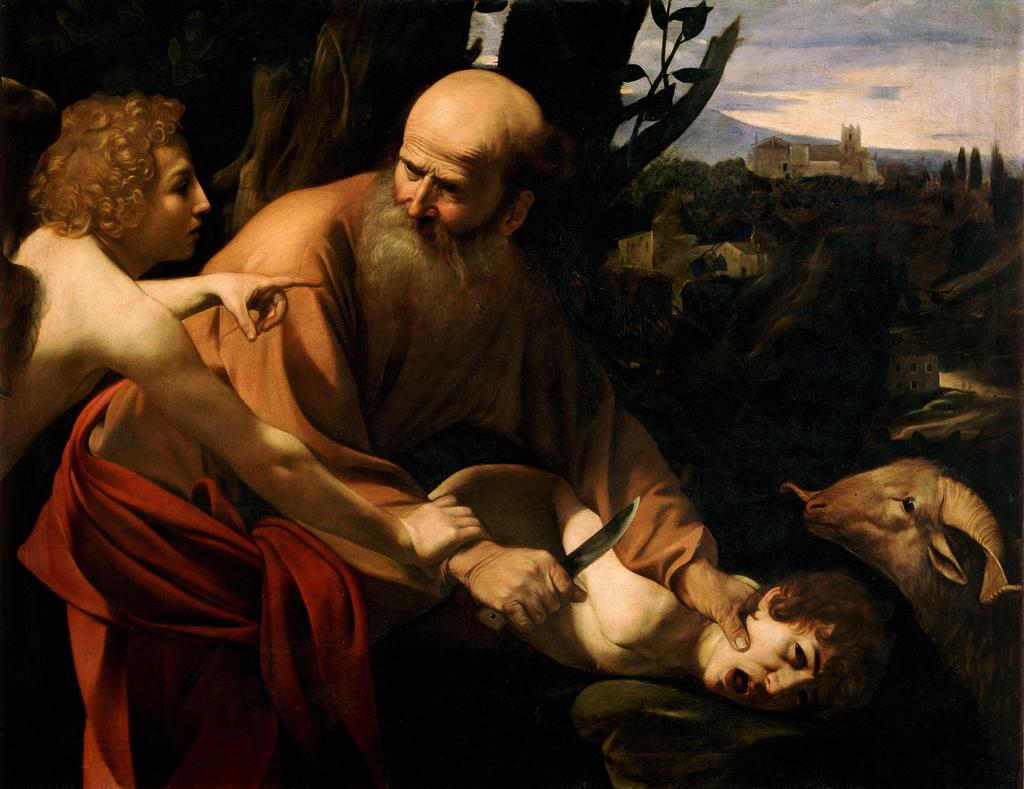
Now look at "Sacrifice of Isaac" (1603) by Caravaggio and answer the following questions.
- What do you see in the painting?
- What do you think is going on in the painting? How does it fit into the Biblical narrative?
- What do you wonder when you see this painting?
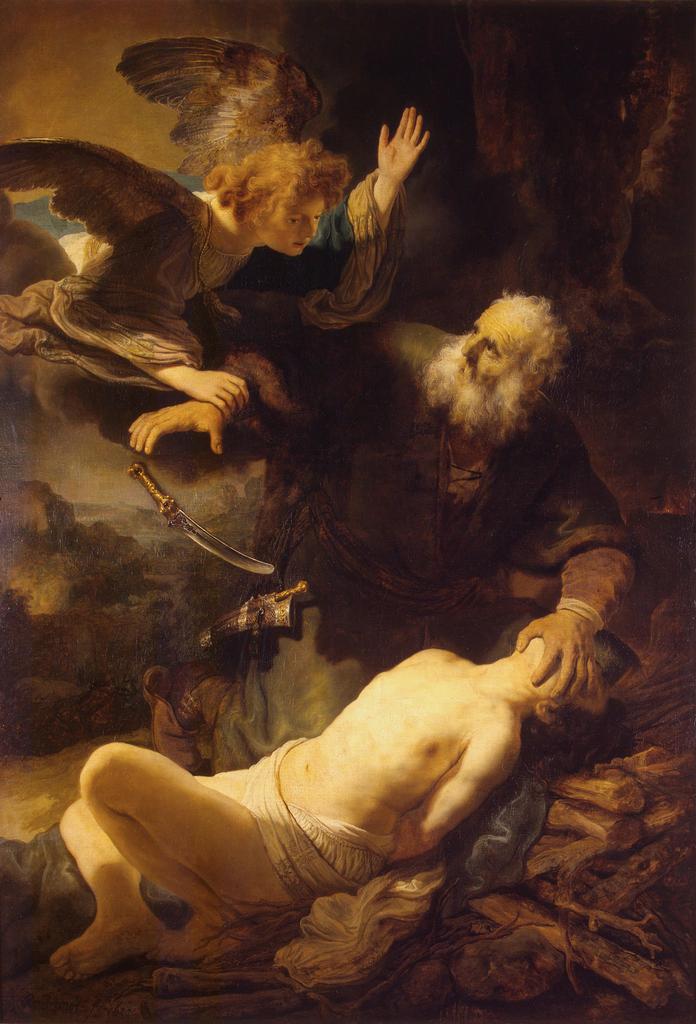
Next, examine "Sacrifice of Isaac" (1635) by Rembrandt. Then answer the following questions.
- What do you see in the painting?
- What do you think is going on in the painting? How is it similar to the Caravaggio? How is it different? Why do you think Rembrandt chose to include different details than Caravaggio?
- What do you wonder when you see this painting?
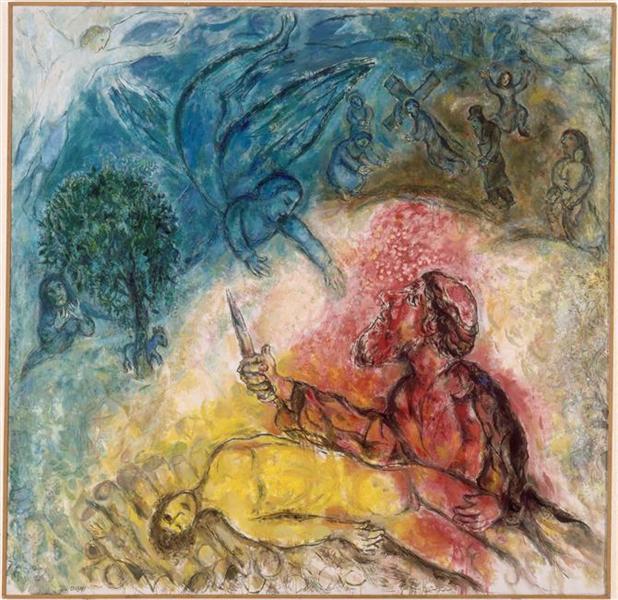
Now we will move onto something more modern. Observe "The sacrifice of Isaac" (1966) by Marc Chagall and then answer the following questions.
- What do you see in the painting?
- What do you think is the message of this painting? Is it the same message conveyed in the 17th century painting?
- What do you wonder when you see this painting?
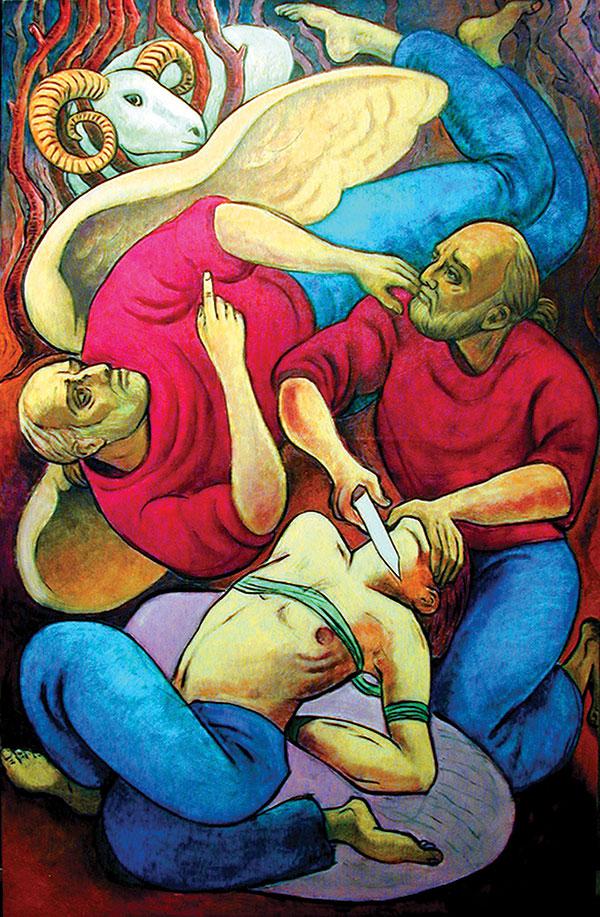
Finally, let's think about "The Binding of Isaac" (2002) by Alan Falk. Spend a few moments considering the painting, and then answer the following questions (if you need more room on your chart, just flip it over).
- What do you see in the painting?
- What do you think is the message of this painting? How is this painting different from the earlier ones?
- What do you wonder when you see this painting?
Each piece of art was a visual midrash, an artistic interpretation of the Biblical text. Now it is your turn to create your own visual midrash. Begin by answering the following questions:
- What part of the story do you want to represent (hint: go back to the verses that you chose as the climax of the story)?
- What do you wonder about the story? What questions are you trying to answer in your art?
- What medium do you want to use? Why? Can that medium help add to your understanding of the story?
- What do you want people to see when they look at your art?
- What do you want people to think about when they look at your art?
- What do you want people to wonder about when they look at your art?